

I happen to live in the next county/parish over from where there is 2019-nCoV patient confirmed by CDC. This describes symptoms for under 60’s
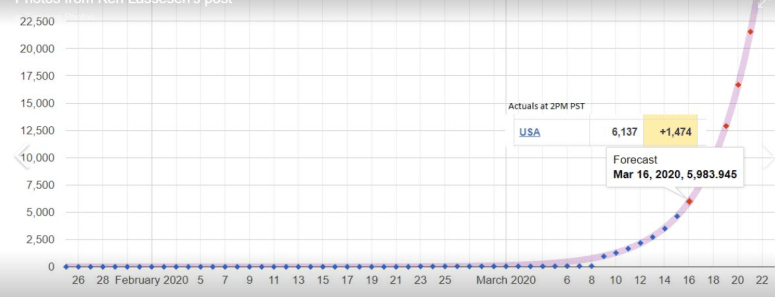
US was at 6,500 later that day
http://microbiomeprescription.com/covid/chart
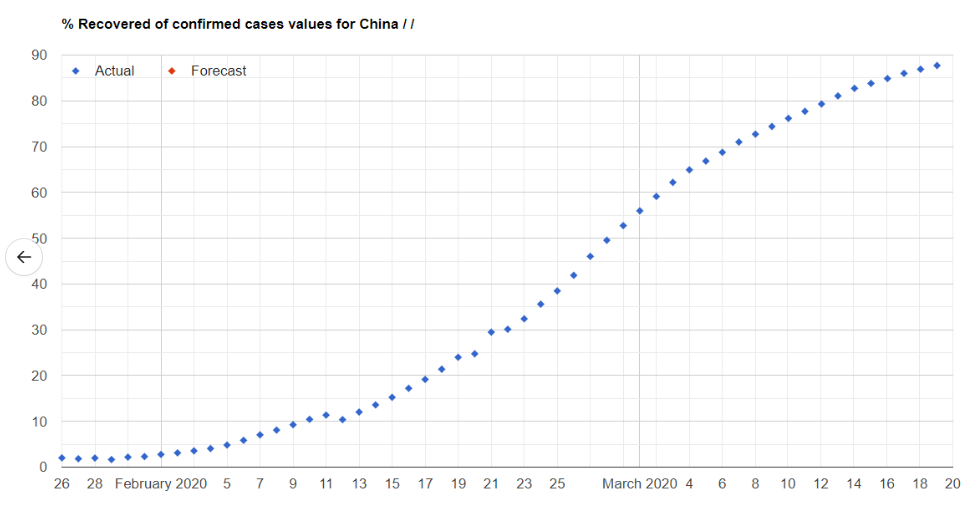
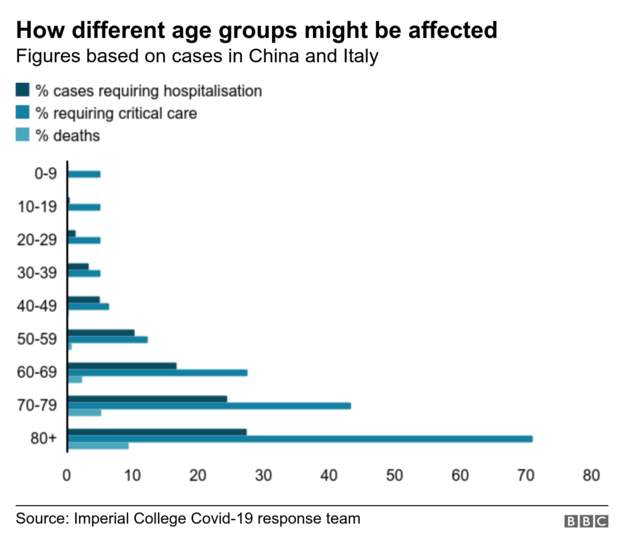
These are some basic notes…..
- WHO Daily Reports
- World Map of Cases maintained by John Hopkins University
- US will likely be out of hospital beds by early May and other bad news forecasts.
- From Times Magazine: What went wrong with US Handling
- Summary by Prof of Biology
- Average time to Symptoms: 5 days (can be up to 14)
- Average Time to recover and discharge: 22 days
- Average Time to die: 19 days
- Percent with no symptoms: 35%
- Summary of Current Forecasts and challenges to it.
- See this post for information on Curves.
- Interactive Time Series Charts are now available here
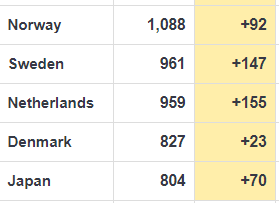
I have stopped updating these daily, go to http://microbiomeprescription.com/covid/chart for the latest with forecasts.
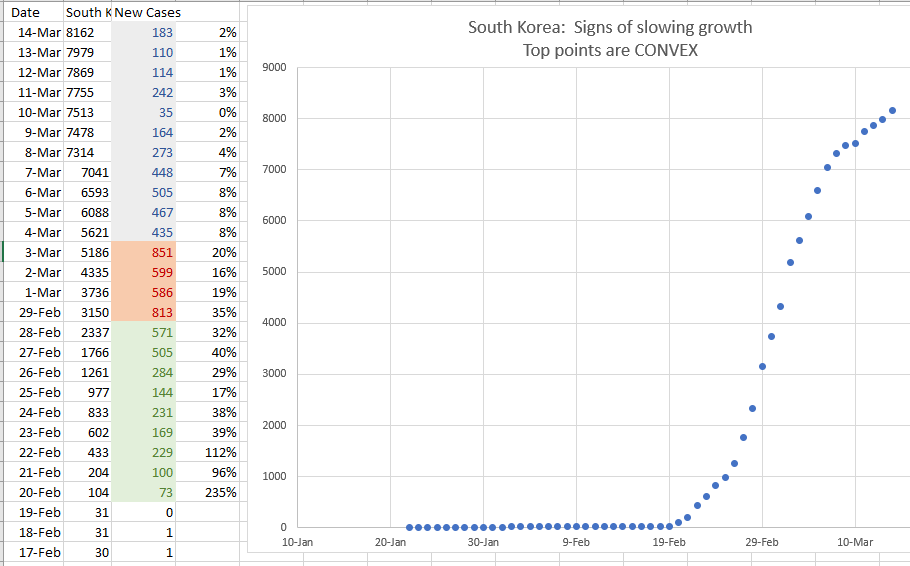
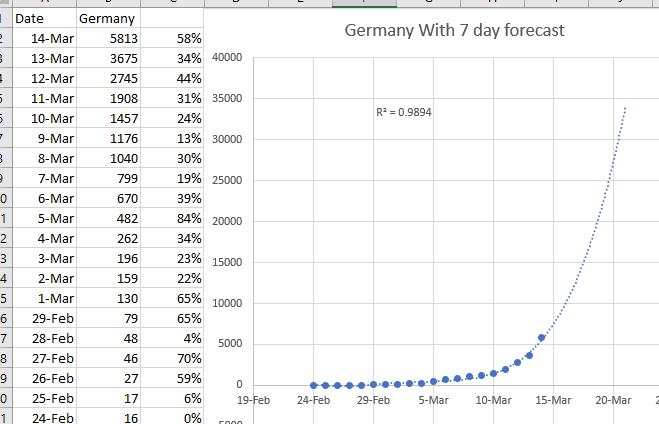
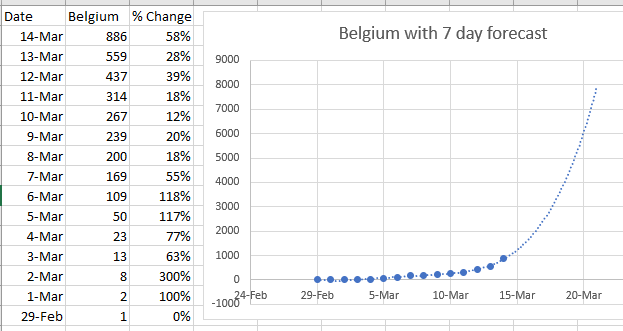
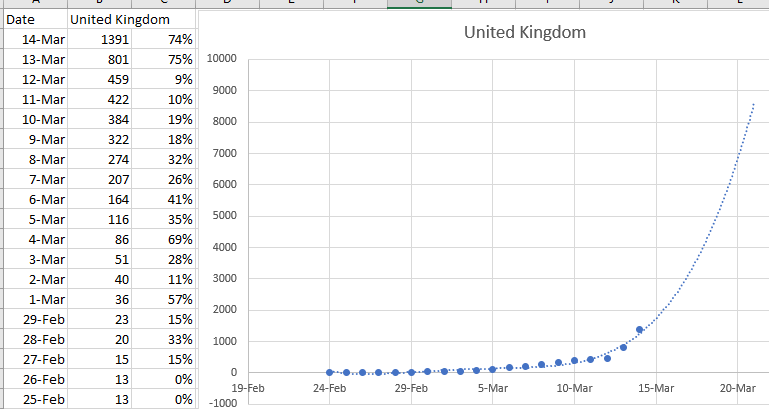
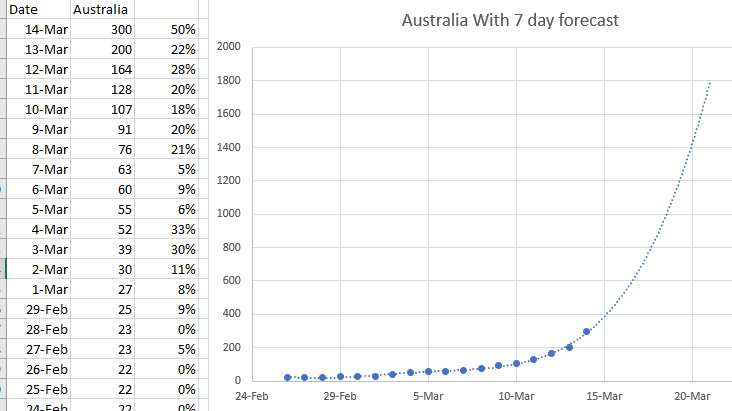
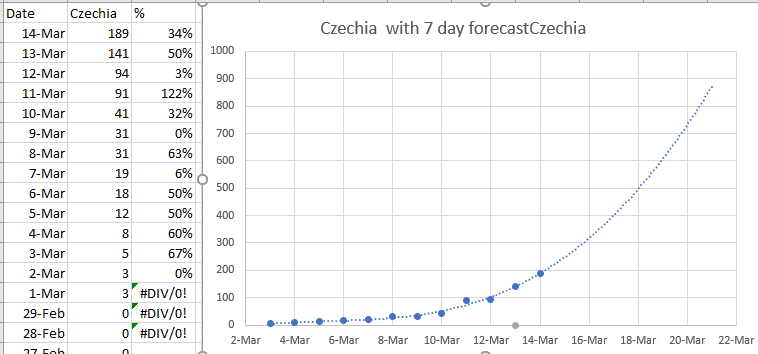
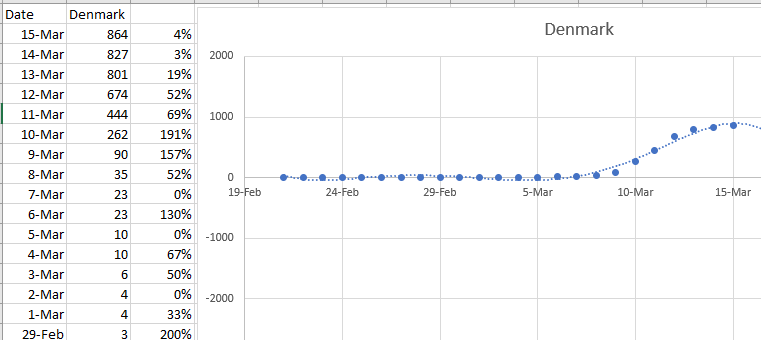
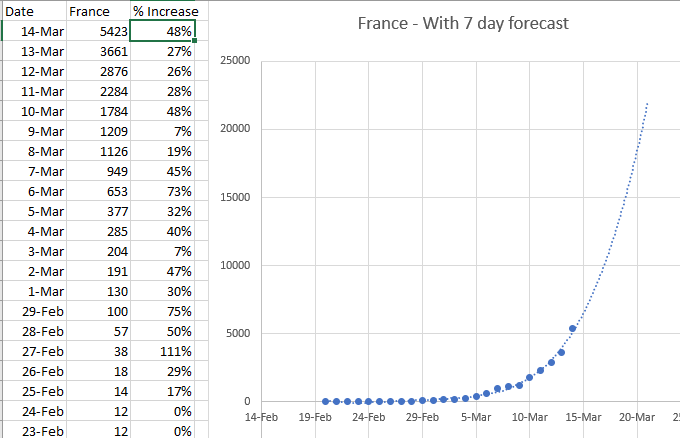
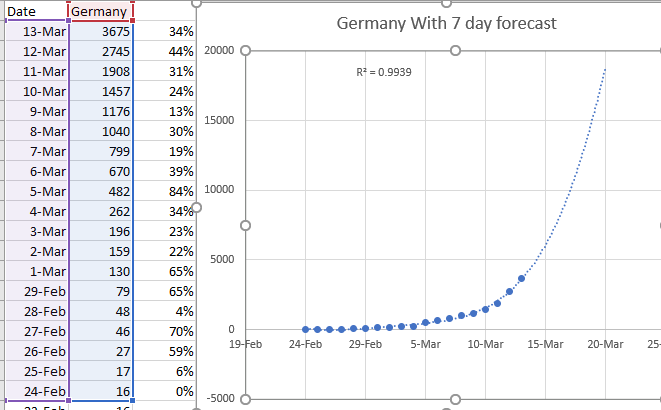
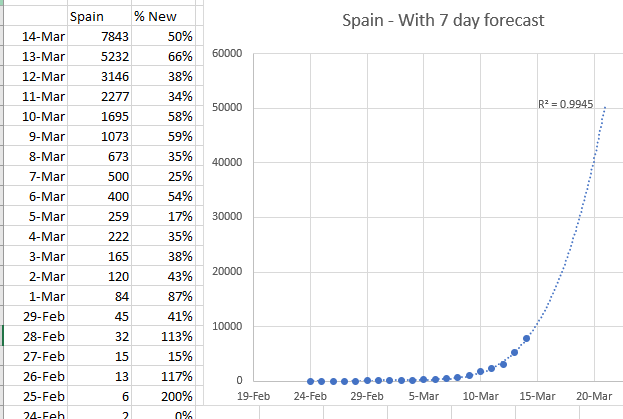
- 14% of Recovered Covid-19 Patients in Guangdong Tested Positive Again – implies that recovered patients could be spreaders
- A pet dog is in quarantine after testing “weak positive” for coronavirus Feb 28
- The US has its first novel coronavirus-related drug shortage Feb 28
CNN Daily Press Summaries
While there are a lot of stories, often > 100 per day. A read thru is very informative
- Mar 25, Mar 24, Mar 23, Mar 22, Mar 21, Mar 20, Mar 19, Mar 18, Mar 17, Mar 16, Mar 15, Mar 14, Mar 13, Mar 12, Mar 11, Mar 10, Mar 9, Mar 8, Mar 7, Mar 6, Mar 5, Mar 4, Mar 3, Mar 2, Mar 1,
- Feb 29, Feb 28, Feb 27, Feb 26, Feb 25, Feb 24, Feb 23, Feb 22, Feb 21, Feb 20, Feb 19, Feb 18, Feb 17, Feb 16, Feb 15th, Feb 14th, Feb 13th ,Feb 12th, Feb 11th, Feb 10th, Feb 9th, Feb 8th, Feb 7th, Feb 6th, Feb 5th, Feb 4th, Feb 3rd, Feb 2nd, Feb 1st,
- Jan 31, Jan 30, Jan 29, Jan 28, Jan 27
Some probably correct information
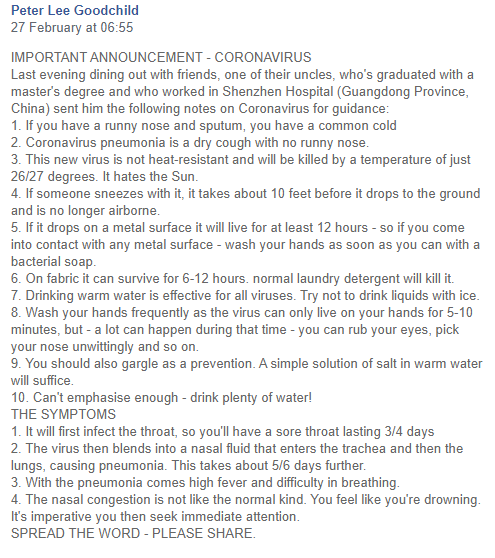
Mutations are seen
Corona virus are well known to mutate easily, see this article on Scientific American.

The Mug Shots
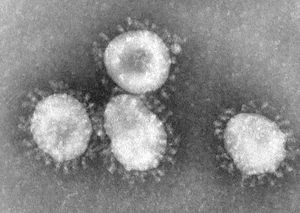
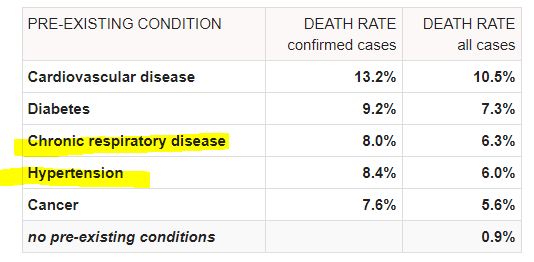
First 4 virus have a 3% Mortality, except for Cancer patients where it is 24% [2019]
- HCoV 229E (alpha coronavirus) – common cold
- HCoV NL63 (alpha coronavirus)
- HCoV OC43 (beta coronavirus) – common cold
- HCoV HKU1 (beta coronavirus)
- MERS-CoV (the beta coronavirus that causes Middle East Respiratory Syndrome, or MERS)
- 851 dead in 2468 laboratory-confirmed cases[2019]: 34.5% Mortality
- SARS-CoV (the beta coronavirus that causes severe acute respiratory syndrome, or SARS)
- 774 dead in 8099: 9.6% Mortality
- 2019 Novel Coronavirus (2019-nCoV)
- “China’s mystery new coronavirus has so far infected at least 555 people and killed 17, ” Jan 22 Mortality rate is based on those that recover. This means that Mortality is at least 3% (assuming no one else dies). Actual mortality may be easily 20+% or more.
Seasonality
Several high ranking officials in the US and China cite that it will “die down”. Since we are dealing with a cold virus, we have past studies available. Yes – the infection rate will go down, but instead of 100 dead per day, we may be talking just 40 dead per day during the summer.
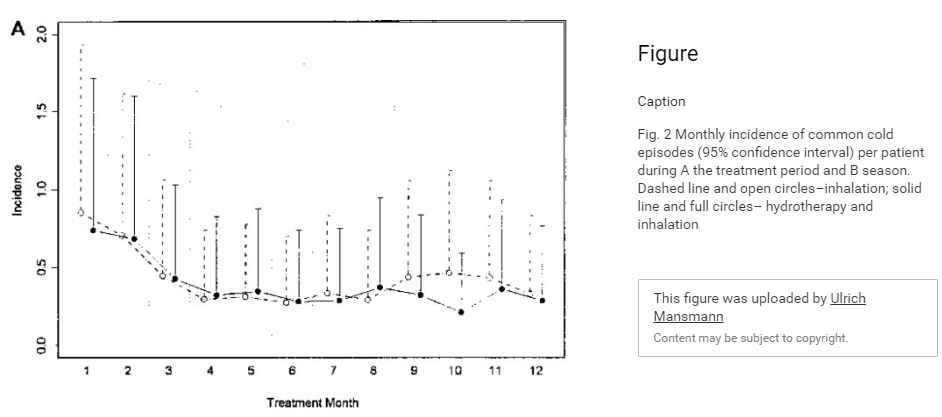
Deaths etc
See World Map of Cases maintained by John Hopkins University
The falling mortality may be due to the increasing use of various anti-viral drugs: ” A 35-year-old Seattle-area man identified as the nation’s first person with coronavirus developed pneumonia while in the hospital but has improved after getting antiviral medication, according to a new study. ” [Src] Thailand: anti-HIV and anti-influenza drugs [src]
And the Wuhan Municipal Health Commission also said on Monday that at least 15 health workers in Wuhan have been infected with the virus, with one of those workers put in a critical condition. Jan 20

Scientists have revealed each infected person is passing the virus onto between 1.4 and 2.5 people. It is known as the virus’s basic reproduction number – anything higher than 1.0 means it’s self-sustaining. .. The fact only 25% of reported cases are severe is a mixed blessing. Yes, that is less dangerous than Sars, but if those hard-to-detect mild or maybe symptomless cases are contagious too, then it is much harder to contain.
BBC
Incubation Period
This is the time from meeting someone with the virus and getting it until you show symptoms.
- “the incubation period is approximately 2–14 days; median incubation period is slightly more than 5 days. ” CDC on MERS
- “The incubation period for SARS is typically 2 to 7 days, although in some cases it may be as long as 10 days. In a very small proportion of cases, incubation periods of up to 14 days have been reported. ” CDC on SARS
Example: Patient X arrives by airline on January 1st, infecting 10 fellow passengers. January 6th, five are showing symptoms. January 15th, we have 11 patients with symptoms. Assuming each infects 5 more, we have 65 patients by the end of the month. 330 by Valentine’s day, 1600 by the end of February.
“[they will not seek treatment] if they believe they merely have a common cold. In fact, previous iterations of the coronavirus are very similar to a common cold. ” New Scientist
Shedding Duration
This is the time between symptoms showing until the person is no longer likely to infect others.
- Positive rates peaked at 6-11 days after onset of illness for nasopharyngeal aspirates … and 9-14 days for faeces [2004]
- The median duration of shedding was 14 days (4–60 days), and 17 of 42 patients had prolonged shedding (≥21 days). Among 31 available nasal samples, 35% were OC43, 32% were NL63, 19% were HKU1, and 13% were 229E. The median shedding duration of HCoV in nasal samples did not differ between strains. [2017] This is for the common cold varieties.
“The common cold is infectious from a few days before your symptoms appear until all of the symptoms are gone. Most people will be infectious for around 2 weeks. Symptoms are usually worse during the first 2 to 3 days, and this is when you’re most likely to spread the virus.”
UK’s NHS (equivalent to US CDC)
“Third US coronavirus case confirmed in California; infection can spread before symptoms show” USA Today Jan 26 Excuse me, the moment it was identified as a coronavirus that should have been assumed!
Mutates Easily
” Bovine coronavirus and canine respiratory coronavirus diverged from a common ancestor in 1951.[34] Bovine coronavirus and human coronavirus OC43 diverged in 1899. Bovine coronavirus diverged from the equine coronavirus species at the end of the 18th century. ” [wikipedia]
” China is warning that the mysterious Wuhan coronavirus is mutating, meaning it could spread further and become harder to control. ” [Jan 22]
Protection
Dr. Mark Loeb, an infectious disease specialist at McMaster University in Hamilton, Ontario, said a study during an outbreak of the SARS coronavirus found that any type of protection — whether a mask or a respirator — reduced the risk of infections in health care workers by about 85 percent. [src]
- We estimate that if the entire cohort had used masks consistently, SARS risk would have been reduced from 6% to 1.4% per shift. https://www.ncbi.nlm.nih.gov/pmc/articles/PMC3322898/
- ” At Hospital A, the risk for developing SARS was 12.6 times higher in individuals not using a mask than in those using a mask. ” https://www.ncbi.nlm.nih.gov/pubmed/18806349
- A case-control study with 36 cases and 50 controls was conducted of factors associated with the transmission of SARS within the hospital. In univariate analysis, contact with respiratory secretions elevated the odds ratio to 6.9 (95 % CI 1.4-34.6, P= 0.02). Protection was conferred by hand washing (OR 0.06, 95% CI 0.007-0.5, P=0.03) and wearing of N95 masks (OR 0.1, 95% CI 0.03-0.4, P=0.001). https://www.ncbi.nlm.nih.gov/pmc/articles/PMC2870165/
- “2 surgical masks, which originated from the same manufacturer, showed tremendously different penetration levels of the MS2 virions: 20.5% and 84.5%” i.e. up to 85% of virus particles will make it thru!
- ” The N95 filtering face piece respirators may not provide the expected protection level against small virions. ( the particle size range of 10 to 80 nm)”
- Note: “The virion shape is spherical, with an average size of 125 nm [src]. ” so N95 should provide advertised protection.
Approach #1 wear masks always outside of home, #2 home prepared food (wrapped) or prepackaged food heated wash hands before meals. Buy packaged food or food that can be heavily washed. No restaurant or take-away food. When you get home, take clothes off outside (so underwear and mask), then straight to shower (especially work on hair) and new clothes is route #1… external clothes are handled with gloves and go directly into wash each time.
Misc Items
The following may or may not be relevant
- Surface-displayed porcine IFN-λ3 in Lactobacillus plantarum inhibits porcine enteric coronavirus infection of porcine intestinal epithelial cells. [2019]
- Characteristics of flavonoids as potent MERS-CoV 3C-like protease inhibitors.[2019] ” Herbacetin, isobavachalcone, quercetin 3-β-d-glucoside and helichrysetin were found to block the enzymatic activity of MERS-CoV 3CLpro. ”
- Antiviral effects of a probiotic Enterococcus faecium strain against transmissible gastroenteritis coronavirus. [2013]
- Since respiratory issues is often the cause of death, I advocate Symbioflor-1 (literature on PubMed). Make sure you READ AND FOLLOW the directions. It is NOT taken in the usual manner.
- Source: Paul’s Mart Europe
- Putative probiotic Lactobacillus spp. from porcine gastrointestinal tract inhibit transmissible gastroenteritis coronavirus and enteric bacterial pathogens. [2010] Lactobacillus plantarum Probio-38 and Lactobacillus salivarius Probio-37
- ” Finally, based on our results, it should be expected and worth to test if ACE2 targeting or SARS-CoV targeting drugs can be used for nCoV-2019 patients. ” [2020] – Zinc has been discussed as a moderator in an online discussion group.
At what point do you lock down a City
” Huanggang on Thursday became the second Chinese city to go into lockdown over the coronavirus outbreak that has killed 17 people and infected more than 630. Huanggang had reported 12 cases of the coronavirus as of the end of Monday. ” [Jan 23] The Chinese is applying lessons learnt from the SARS outbreak.
Rational way to Constain it
It is simple, and already happening in China. Make it a legal requirement to wear a protective mask in public.
Consider this scenario: a 22 y.o. Barista at a Starbucks has it and symptoms do not show up for 7 days. During those 7 days, she is shedding virus on to customer’s coffee. She develop very mild symptoms (typical for that age) and continue to work. She may continue to shed virus onto customers for 2 more weeks. If this is a busy Starbucks, we are talking thousands of potential infections.
Bottom Time Lines
- From contact to Infection
- 2-14 days, average 5 days
- From contact until no longer infectious
- 6 – 74 days, average 19 days
- Time from last reported case recovered until “all clear”
- At least 3 weeks, up to 10 weeks.
If the 35% increase of cases per day keeps up (i.e. governments not taking radical action SOON)… on March 17th, 2020. Everyone in the world will have gotten the infection – just simple mathematics.. 2000 * (1.35 ^50) = 8 billion people.
The latest case to be confirmed is in the German state of Bavaria, only the fourth so far in Europe.
It involves a man who contracted the virus at a training event from a visiting Chinese colleague who reportedly did not show symptoms until she returned to China days later.”
https://www.bbc.com/news/world-asia-china-51279726
THIS is statistically why I advocate that a rational approach is to shut down travel (planes especially, trains, etc) world wide. If regions are free for 3 weeks. Travel between those regions can resume. If you have just 1 case… you are shut down until that case resolves (dead or recovered) plus three weeks…
Supply List
Someone asked about a supply list. My suggestions would be:
- Prophylactic
- Symbioflor-1 probiotics (Paul’s Mart Europe ), or shin biofermin (jp) /s (Amazon) – slowly dissolved in mouth. Both probiotics are targeting the nasal cavity, not the gut
- Quercetin Supplements
- Lactobacillus Plantarum (Custom Probiotics)
- Masks
- N95 – sufficient for 3 months, or
- Powered Air-Purifying Respirator (PAPR) with spare filters
- Gloves
- 2-4 boxes
- Emergency food supply (long life)
- In case of distribution disruption
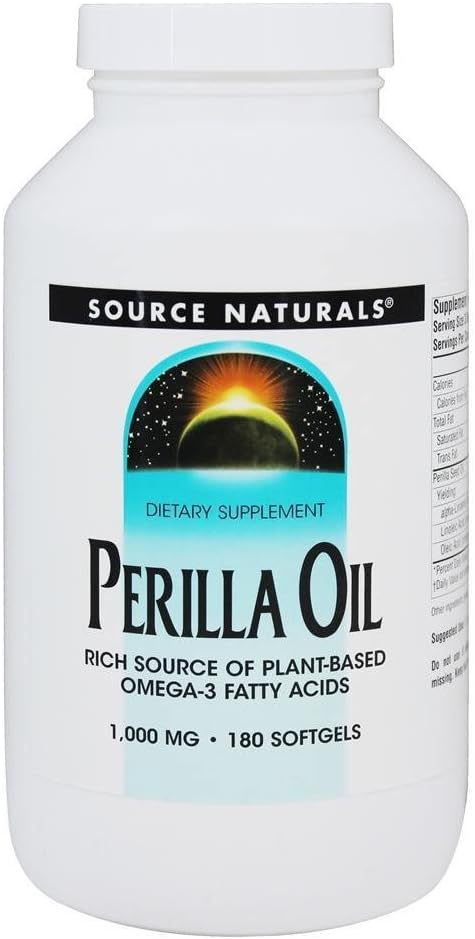
![EidolonGreen [China Medicinal Herb] Perilla Frutescens (Perillae Folium/Zisuye/紫苏叶/자소엽) Dried Loose Leaves 3 Oz (88 g)](https://m.media-amazon.com/images/I/61gNVul8AzL._AC_UL320_ML3_.jpg)




 CFS Remission