Natural Killer Cells and Microbiome

A reader with ME/CFS wrote:

One of the many tests over the years has been Natural Killer cell function. Many CFS patients from what I understand have low NK cell function.
 Any clue how this is related to microbiome and ways to possibly reverse this or restore NK function? Could this just be due to gut dysregulation?

This has been my assumption for over 6 years. The following is what I could find that has been documented:

  • “Some effects of modulation by probiotics include cytokine production by epithelial cells, increased mucin secretion, increased activity of phagocytosis, and activation of T and natural killer T cells, stimulation of immunoglobulin A production and decreased T cell proliferation. Intestinal microbiota has a major impact on the systemic immune system. ” [2019]
  • ”  Some probiotics have been found to regulate immune responses via immune regulatory mechanisms. T regulatory (Treg) cells, T helper cell balances, dendritic cells, macrophages, B cells, and natural killer (NK) cells can be considered as the most determinant dysregulated mediators in immunomodulatory status.  ” [2019]

The gut microbiota is a key element to support host homeostasis and the development of the immune system. The relationship between the microbiota and immunity is a 2-way road, in which the microbiota contributes to the development/function of immune cells and immunity can affect the composition of microbes…. Our results indicate that intestinal NKT cells are important modulators of intestinal homeostasis and that gut microbiota composition may be a potential target in the management of inflammatory bowel diseases.  

Fecal IgA Levels and Gut Microbiota Composition Are Regulated by Invariant Natural Killer T Cells. [2019]

The review compiles data from multiple studies on the role of microbiota in the innate immune response and the development and differentiation of CD4+ T cells, a major component of the adaptive arm of the immune response. As a result of dysbiosis, invariant natural killer T cells may induce T helper 2 cell differentiation and immunoglobulin E isotype switching through the release of Interleukin-4 and Interleukin-13. Furthermore, degradation of immunoglobulin A antibodies, increased circulating mast cells and basophils, and inflammation are among other mechanisms by which dysbiosis can induce or exacerbate asthma. 

The Role of Gut Microbiota in Atopic Asthma and Allergy, Implications in the Understanding of Disease Pathogenesis. [2019]

Some bacterial species (e.g. Prevotella, Citrobacter rodentium, Collinsella aerofaciens, Segmented filamentous bacteria) participate in the creation of the pro-inflammatory immune status, presumably via epitope mimicry, modification of self-antigens, enhanced cell apoptosis mechanisms, and destruction of tight junction proteins and intestinal barrier integrity, all leading to the development and maintainance of inflammatory arthropathies… The underlying mechanisms include dysbiosis-mediated changes in the functional activity of the intestinal immune cell subsets, such as innate lymphoid cells, mucosa-associated invariant T cells, invariant natural killer T cells, T-follicular helper and T-regulatory cells. In turn, disturbed functionality of the gut-associated immune system is shown to promote the overgrowth of many bacteria, thus establishing a detrimental vicious circle of actively maintaining arthritis.

A cross talk between dysbiosis and gut-associated immune system governs the development of inflammatory arthropathies. [2019]

Recent evidence indicates that memory is also present in the innate immune cells such as monocytes/macrophages and natural killer cells. These cells exhibit pattern recognition receptors (PRRs) that recognize microbe- or pathogen-associated molecular patterns (MAMPs or PAMPs) expressed by the microbes. Interaction between PRRs and MAMPs is quite crucial since it triggers the sequence of signaling events and epigenetic rewiring that not only play a cardinal role in modulating the activation and function of the innate cells but also impart a sense of memory response. 

Potential Role of Gut Microbiota in Induction and Regulation of Innate Immune Memory. [2019]

Bottom Line

I stopped following studies on natural killer cells a few years ago because the evidence pointed to them being a secondary effect of issues with the microbiome. In other words, a symptom and not a cause. Symptom relief is good but it does not deal with the root cause. Altering natural killer function by drugs do have a chance of causing a cascade into the microbiome ( it is a 2-way road ), unfortunately drugs also have unknown side effects. I have focused on the microbiome because it is easier to do in one sense (no need to talk a MD into prescribing, no fight with insurance company to pay for it), it is also more complex to do — which is why I ended up writing a fuzzy logic artificial intelligence system to do it.
http://microbiomeprescription.com/
Prebiotic and probiotic Enemas

A reader asked me about doing this. I have no personal experience (I am sure some readers will add their own experiences to this post). I did find a few items on Pub Med

 The preliminary clinical trials and animal experiments show that the probiotics biologicals from Lactobacillus acidophilus or Bifidobacterium, and the prebiotics including inulin and galactooligosaccharides, as well as lubiprostone and activated carbon adsorbents can be used for improving dysfunction of CKD patients with the gut microbiota dysbiosis via reducing uremic toxins and inhibiting the systemic micro-inflammation. But not only that, it is reported that, to some extent, a number of the single Chinese herbal medicine(CHM), the CHM prescriptions and the CHM extracts(emodin, etc.)with oral or enema administration can also regulate the gut microbiota dysbiosis, protect the intestinal epithelial barrier, reduce uremic toxins accumulation and delay CKD progression.

[Pathomechanism and treatment of gut microbiota dysbiosis in chronic kidney disease and interventional effects of Chinese herbal medicine]. 2017

Bottom Line

No adverse reactions were cited. Results were either positive or none. It presents an interesting alternative for some people.

Histamine reducing probiotics

A reader asked not for probiotics that do not produces histamine (the usual ask), but ones that reduces histamine and mask cell issues. The following is what I could find in the literature. Mast cell issues are increasingly implicated with digestive issues. Release of histamine from mast cells cause inflammation.

” a growing body of publications clearly showed that patients with postinfectious IBS have increased Mast Cell [MC] activation… it has been recently demonstrated that dietary administration of S. cerevisiae‐derived β‐glucan was able to attenuate MC‐induced intestinal hyperpermeability in patients affected by Crohn’s disease ileitis as well as in noninflammatory IBD subjects,”

Mast cells at the crossroads of microbiota and IBD. [2018]

This article Mast cells at the crossroads of microbiota and IBD. [2018], lists some specific impacts. “several commensal bacteria such as Enterococcus fecalisLactobacillus paracaseii, and nonpathogenic Escherichia coli are able to suppress murine MC degranulation  “

  • Enterococcus faecalis – Suppression of IgE/Ag‐induced degranulation, Reduction of MC infiltration and serum IgE levels in a murine model of atopic dermatitis
  • Lactobacillus paracasei – Suppression of IgE/Ag‐induced degranulation
  • Escherichia coli – Suppression of IgE/Ag‐ and PMA/ionomycin‐induced degranulation
  • Saccharomyces cerevisiae – Attenuation of MC‐induced intestinal hyperpermeability

Oral administration of Clostridium butyricum CGMCC0313-1 reduces ovalbumin-induced allergic airway inflammation in mice.[2017]

Enterococcus faecium has some evidence;

Lactobacillus rhamnosus GG has some evidence

DNA Aspect

There are some mutations of DNA that can result in low levels of  DAO or diamine oxidase (what counteracts histamine). This can be a factor for histamine. See this site for how to look up in your 23andMe or Ancestry DNA.

Bottom Line

My personal recommendations, based on the literature (and ranked), are:

FUT2 and the microbiome

fucosyltransferase 2 (FUT2) is a DNA variation with ” Intestinal microbiome analyses have also revealed differences in the microbiota structure based on FUT2 status, with non-secretors showing reduced microbial richness compared to secretors[2017]. “Heritability analysis of the microbiota has demonstrated the importance of host genotype in defining the human microbiota “[2018]

The gene coding for your blood type lies on chromosome 9q34. However, a separate gene (called FUT2) actually interacts with your blood type gene, and determine your ability to secrete your blood type antigens into body fluids and tissues. …
A Secretor is defined as a person who secretes their blood type antigens into body fluids and secretions like the saliva in your mouth, the mucus in your digestive tract and respiratory cavities, etc. Basically what this means is that a secretor puts their blood type into these body fluids. A Non-secretor on the other hand puts little to none of their blood type into these same fluids. As a general rule, in the U.S. about 20% of the population are Non-secretors (with the remaining 80% being Secretors).

Importance of Secretor Status, DR. PETER J. D’ADAMO

In other words, both your blood type and your FUT2 status may also have impacts on your microbiome. This adds more layers to what is “normal” for you as an individual. For nursing mothers, they alter their milk microbiome for their infants [2019].

  • These are the first results indicating that the O blood group and FUT2 secretor status are protective factors against Crohn’s Disease in Asians. [2019]
  • Secretor Status Is Strongly Associated with Microbial Alterations Observed during Pregnancy. [2015]
  • ” Additionally, we demonstrate that both secretor status and blood group antigen expression especially affect the Lachnospiraceae family of bacteria within the gut microbiome, with lower abundances noted in nonsecretors and higher abundances in secretors of various blood groups. We further note specific differences in blood group A-secretors demonstrating that the genus Blautia is lower in the group A-secretors compared with the non-A-secretors and that this reduction is accompanied by higher abundances of members of the Rikenellaceae, Peptostreptococcaceae, Clostridiales, and Turicibacter” [2017]
  • Faecal microbiota composition in adults is associated with the FUT2 gene determining the secretor status.[2014]
    • ” Several other genera, including the mucus-degrader Akkermansia , showed a trend towards a lower relative abundance in the non-secretors “
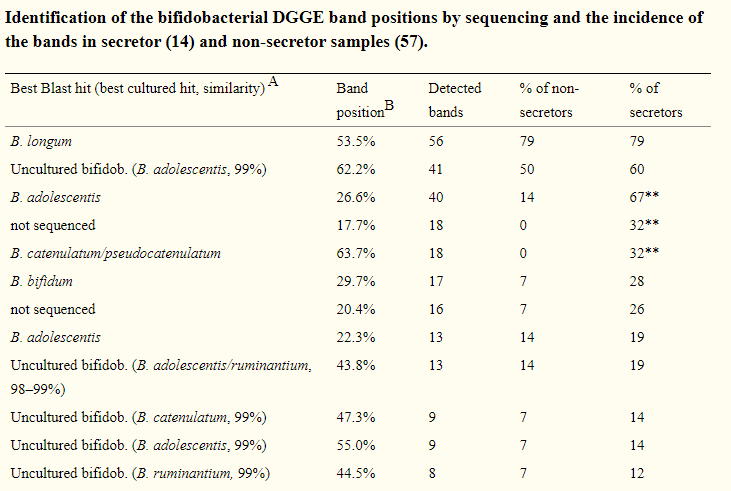
    • “Enzymes for the degradation of the ABO glycan structures have also been identified in Bifidobacterium species and the mucus degrading genera RuminococcusClostridium and Akkermansia , which were among the significantly abundant bacteria in the secretors in this study “
Secretor genotype (FUT2 gene) is strongly associated with the composition of Bifidobacteria in the human intestine.[2011]

Wait there’s more!

  • ” Recent report showed that NOD2 genotypes have an influence also on human microbiome ” [2014]
  • FUT2 may be a factor for autism [2019]
  • Fut2 induces epithelial fucosylation and exacerbates airway inflammation in asthmatic patients  [2020]
  • The FUT2 (fucosyltransferase-2) gene determines blood group secretor status. Being homozygous for the inactive “non-secretor” rs601338(A) allele confers resistance to certain infections (e.g. NorovirusRotavirus) and susceptibility to others (e.g. Haemophilus influenzaStreptococcus pneumonia). Non-secretors also have an increased risk of type 1 diabetes and inflammatory bowel disease.  [2018]
  • Our results identify an association between FUT2 secretor status and self-reported kidney disease, and confirm a recently reported association with susceptibility to mumps infection.  [2018]

On the flip side:

From larger studies, we found these earlier reports were not replicated.

  • ” Despite previous reports, the taxonomic composition of the microbiota does not appear to be strongly associated with ABO or secretor status in 1503 individuals from the United Kingdom.  ” [2016]
  •  Thus, FUT2 genotype and inferred phenotype are not associated with human fecal microbial composition and imputed function. [2018]

Bottom Line

My reading is that the impact is at the species or strain level often. We need more and better studies to come to firm conclusions. The two negative studies had weakness in not accounting for several possible factors and in contrary to multiple previous studies.

The real interesting aspect is in selecting probiotics. Depending on your secretor status, you may wish to avoid those that are not seen with your secretor status.

If you have done 23andMe, this is how you can check your status. I am a  A/A on rs601338:  non-secretor of blood type, lower amounts of bifidobacteria, resistant to norovirus.

I had just added FUT2 secretor and FUT2 non-secretor to the “symptom list” for people that have uploaded.

Both Holigos™ products currently available contain 2’FL. This key ingredient nourishes your good bacteria and your intestinal wall and has been clinically proven to increase the abundance of bifidobacteria in FUT2 non-secretors.

Also, in a trial involving more than 1,400 people, the vast majority are either satisfied or very satisfied with their experience and find the product easy to take. Several FUT2 non-secretors have tried Holigos™, one of whom, also suffers from IBS-D and celiac disease. She told us that after using Holigos™ for 3 weeks, she felt a significant improvement in her symptoms. She explained, “My IBS symptoms have somehow calmed down a great deal, which of course makes me feel a lot better, more energized and indeed stronger.” As described by this user, if you are a FUT2 non-secretor, Holigos™ provides you with the specific nutrient you need to support your journey to good digestive health.

We recommend our Digestive Health product for non-secretors without severe gastrointestinal issues but with low abundance of bifidobacterial.

The FUT2 gene and non-secretors (Holigos web site)

As a personal FYI, Holigos has made major difference for a family member that is also a non-secretor of blood type.

Child with Autism, etc Microbiome Tool

This technically can be used for any microbiome dysfunction when there are multiple people living in the same house that are related.

Background

You will see in my earlier post There is no normal or reference microbiome! illustrates that a “typical” microbiome varies greatly by many factors. This makes it extremely difficult to know if there are atypical values in a microbiome.

Known factors that can shift the microbiome includes:

  • Diet
  • Age
  • Gender
  • Longitude (distance from the equator)
  • DNA (thus race and ethnic group)
    • Epigenetic changes should be included here
    • For example FUT2, see this post.

When dealing with conditions known to be microbiome responsive, that is a change of microbiome can improve or deteriorate symptoms, we prefer not to be chasing a bacteria/taxa that is actually irrelevant to the condition because the shift was due to other factors described above.

About a year ago I worked with a mother with an autistic son, and put up my first attempt to doing a family analysis. Over the last year, the site and my understanding has evolved. I have just updated this feature to be closer to what a useful tool may be. I have a personal interest because I am a high function autism spectrum individual. Some prior posts.

The purpose of the tool is attempt to control for as many known variations of the microbiome as possible. The ideal solution would be a child with some condition, say autism, that have two same gender siblings — one older and one younger. With this combination we have restricted DNA impact, diet impact, longitude impact, gender impact, and age impact. Any aspect of the microbiome that is shifted away from the siblings are suspect.

Unfortunately, such families have become rare. With a single child family, we end up needing mom’s and dad’s as the best available control for DNA.

The Tool

At the top of the sample page there is a compare between family members button which will be there if you have two or more samples.

On the next page you will see the samples available. You can only compare samples that have been processed in the same manner. uBiome and Thryve are not compatible (see this post for why). You can select the source at the top (and only those from that source are listed).

In this case, we know that we are dealing with autism, so we include information about what published studies have reported. Our page before we view the taxonomy data may look like this:

You can only pick one Unhealthy and as many healthy as you wish.

Now we are ready to click the button at the bottom of the page.

On the next page you will useful information. Under Direction are letters for a few taxa. This come from published studies.

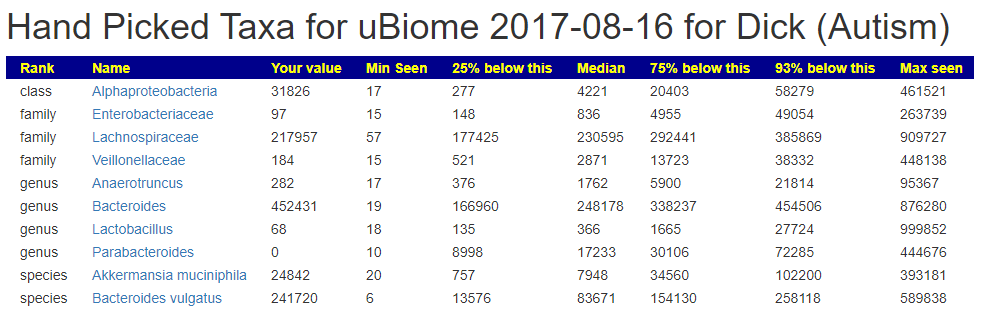
We have Alphaproteobacteria being reported as “High”. We see that the middle 50% are between 277 and 20493, Dick is way above this range with 31826. This looks like a good match. On the left, by the bacteria name is a checkbox. Check it.

Continuing down the page you may see further agreements. Put checkboxes on all of them.

This one should not be checked, because it looks like the household diet results in low for everyone. Thus Dick’s values (none) are not unusual.
This should be checked, because everyone has some and Dick has none AND low values have been reported in studies.
Rest of family is in the normal range, Dick is high and studies report high

When you are done, click the button at the top of the page.

Why are there duplicates with different values?

Each published study is a line. Some found high and some found low. There are many reasons why studies may differ. It is up to you to include or exclude.

Progressing

This will return you to the sample page and a golden row of buttons will appear.

Clicking “View Hand Picked Taxa” will show the bacteria picked

Getting suggestions that may improve

Clicking the gold suggestion button, takes you to a screen that shows groups of microbiome modifiers that you wish to consider. I have covered these in previous videos.

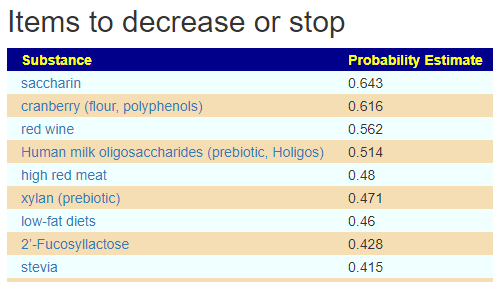
In this case, we see the following suggestions:

Looks like all of the sugar replacements are bad.
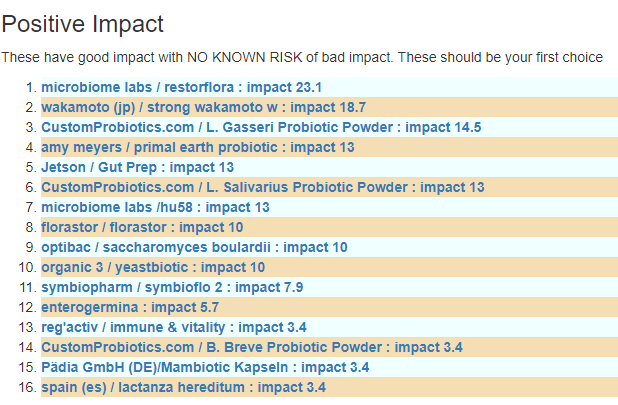
And a list of recommended probiotics

Bottom Line

This tool can be used in many ways — for example a mother has a condition and eats close to what the family does. She would be the unhealthy one and the husband and kids for be the healthy one.

The goal is to create a ‘familial microbiome’ reference to compare to. We also use information from published studies to try focusing on the most probable bacteria involved.