The key aspect is that it results in modification of the microbiome.
The db/db obese mice showed an increase in microbes in the genera Lactobacillus and Alistipes. The db/db type 2 diabetes mellitus (T2DM) mice also showed an increase of microbes in the genus Alistipes. …. Alistipes increased by 17 times.
Oh to be a mouse..
It is well known that many many studies dealing with mice do not replicate with humans. Some do. My take-away from the above is simple:
Vibration appear to help the microbiome,
The vibration may well trigger exercise like responses from the microbiome.
If we run with this hypothesis, then all of the following may be beneficial:
Walking in place or other light activity causing bounce
Skipping rope (if you still have coordination)
Rebounder Chair
Whole body vibrator
Massaging chair
Trampoline
From the study: 20 min/day for 7 days per week for 4 weeks
When dealing with Gut/Microbiome issues, people tend to disconnect that the mouth and the gut are connected beyond one passing food to the other. They are often viewed as independent and isolated systems. This is dangerously untrue.
In terms of correcting this in myself, I am following the advice that I wrote in this earlier post: (I covered available commercial oral probiotics in a 2014 post also)
A scope of monolaurin into the mouth and chews until it is fully dissolved – nasty strong taste, but you get use to it.
Sublingual (dissolve under tongue) B-12
Using sublingually the following probiotics that come as tablets:
Recently, we (for other reasons) decided to swing over to old-fashion homemade toothpaste. Dr.Axe has some formula, from the choices (checking each against what bacteria it modifies and suggestions) I came up with
4 tablespoons coconut oil
2–4 tablespoons baking soda or a combination of baking soda and sea salt
20 drops peppermint essential oil (flavonoids in it are recommended for me)
small glass jar
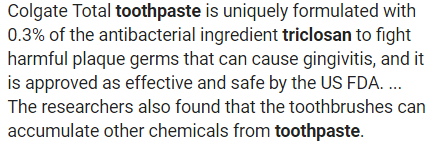
Dr. Axe also lists a ton of issues with commercial toothpaste, for example, Triclosan:
Triclosan exposure is practically unavoidable in the United States, but little is known how ingestion may affect our health. Yang and colleagues used mouse models of colitis and colon cancer to see how brief exposures of triclosan could affect inflammation. They observed that triclosan altered mouse gut microbiota and increased inflammation in a TLR4-dependent manner. Triclosan increased the severity of colitis symptoms and spurred colitis-associated colon cancer cell growth.
Mouth Wash – Keep the Breath Sweet and the gut Sick!
There are many sites that have formula similar to the above toothpaste. Although you just rinse and spit with commercial mouth wash — some will cling and eventually makes it way to the gut … oh, yes, remember we are also talking about the mouth bacteria — which is constantly acting as a reserve to repopulate the gut… Perhaps not such a good idea after all.
This site reported (via Citizen Science) that dry mouth is associated with a distinctive gut microbiome pattern. The logical conclusion is that the bacteria in the oral cavity causing dry mouth is seeding the digestive system with bacteria that results in the discovered shift.
A reader forwarded to me a blog post, Could Fisetin Be A New Treatment for ME/CFS and Autism? The name fisetin did not ring any bells for me (so it is not someone’s bright idea being recycled for the nth time); when there is something new showing up I want to do a quick fast analysis. This is below. For full declaration, I have just ordered some for a few people close to me with mast cell and multiple chemical sensitivity issues. The down side risk for the upside potential made it an easy decision.
In my very first post on this site, I reported that I have a remarkable response to high dose biotin. It reduces my ME/CFS (myalgic encephalomyelitis/chronic fatigue syndrome) symptoms like severe fatigue and the mental confusion that people with ME/CFS call brain fog. It also reduces my autistic symptoms, relieving anxiety and irritability while improving my ability to read people.
Fisetin is a senotherapeutic that extends health and lifespan.[2018] “Of the 10 flavonoids tested, fisetin was the most potent senolytic… Administration of fisetin to wild-type mice late in life restored tissue homeostasis, reduced age-related pathology, and extended median and maximum lifespan.”
There are no direct studies on it’s impact on the microbiome, hence it cannot be added to the microbiome prescription site. In terms of ME/CFS it is well documented to help some key factors (beyond the above blogger’s observations).
Neuroprotective
Anti-histamine / reduce mast cell activation
Antidepressant (which suggests it acts against the bacteria associated with depression)
Anti-inflammatory
It is a viable supplement to buy one bottle and see what the effects are. Remember to post your experience here.
Lots of Strawberries or supplements?
This is a classic question for most supplements — get it from a natural source or get it as a supplement. The typical supplement is 100 milligrams, 1 gram of strawberries provides 160 μg (micro grams) so to get the same amount means consuming 100,000 grams of strawberries (or 220 lbs of strawberries PER DAY).
This is useful for those who multiple report and wish to see what is trending. On the [Compare Samples to Each Other] page
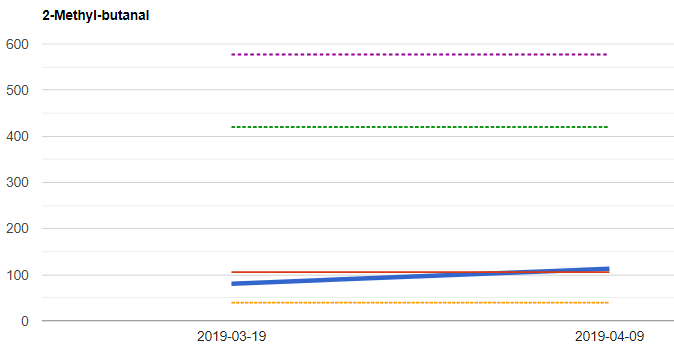
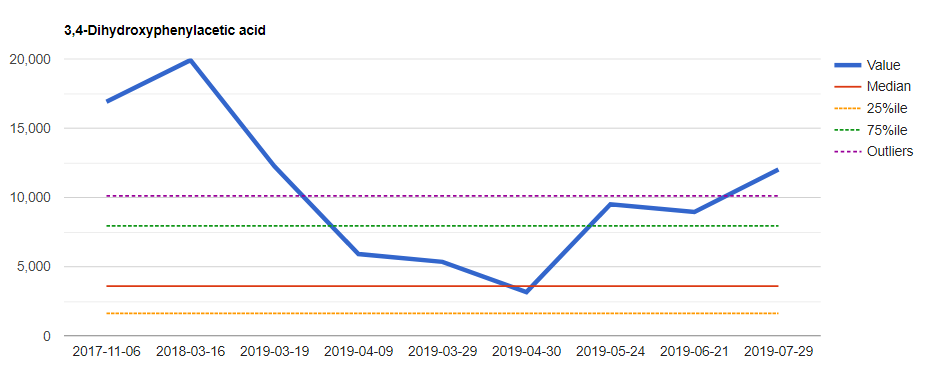
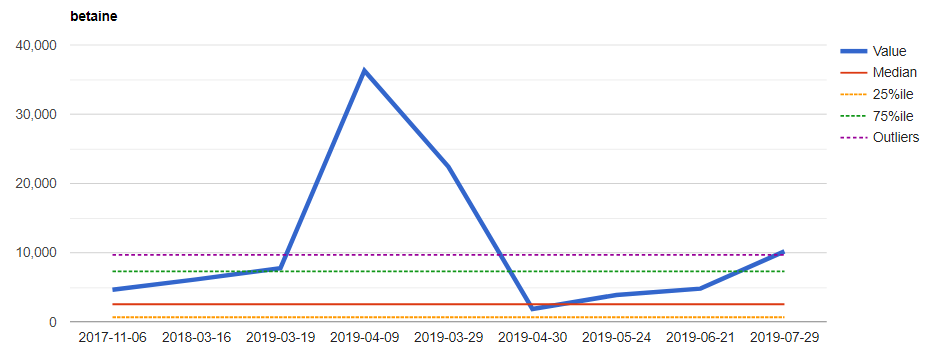
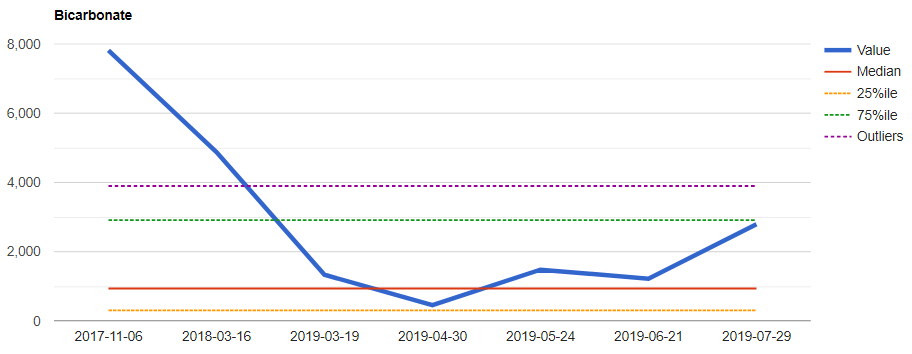
Below I have all of my samples being included and picked a few interesting charts for illustration. The Outlier line is from BoxPlot methodology and when crossed, suggests something may be interesting.
This showed up on set and then disappeared quicklyMy normal is a high amount of this End Product — it dropped and in recoveryRapidly increase at onset and subsequently reduced.Collapsed with onset and slowly recovering
I have been contacted over the years of parents of children of various ages – one of the questions is how do their microbiome compare to adult ones. Can you detect abnormalities with them. This reviews the literature that I have been able to locate. I excluded studies for under 1 year.
In a small study of urban visitors to a traditional rainforest village, the microbiome of children was found to be more prone to change compared with a relatively stable microbiome in adults, highlighting the higher plasticity of the microbiome in children [74].
In a comparison of 20 children and adolescents with ASD and 20 neurotypical control individuals between the ages of 3 and 16 years, those with ASD had lower abundances of the gut microbiota Coprococcus, Prevotella, and unclassified Veillonellaceae.9 A more recent study also found differences in gut microbial composition among children between the ages of 3 and 12 years with ASD and gastrointestinal symptoms compared with 41 typically developing controls also with gastrointestinal symptoms.10 However, in cross-sectional analyses, it is difficult to know the directionality of observed associations. … The postnatal gut microbiome is remarkably dynamic up to 3 years of age, which is also a critical period for brain development.22
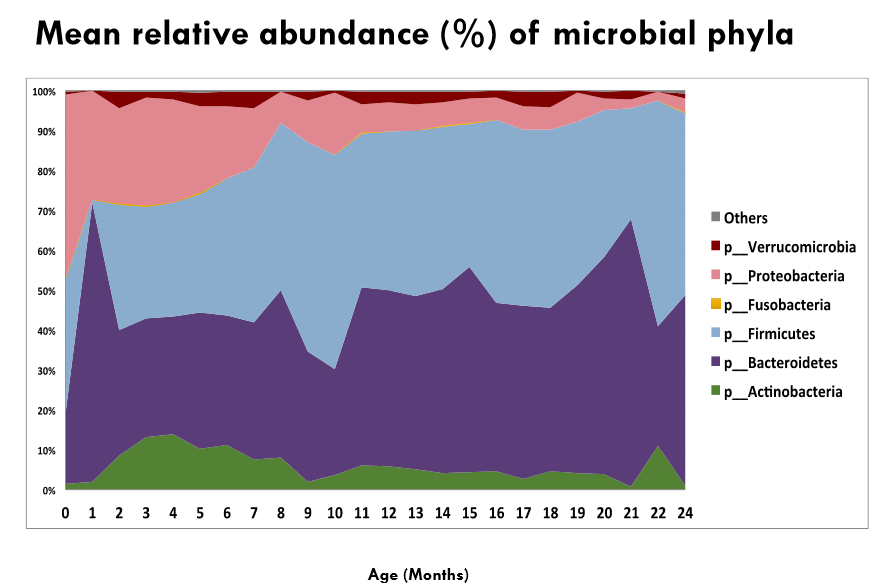
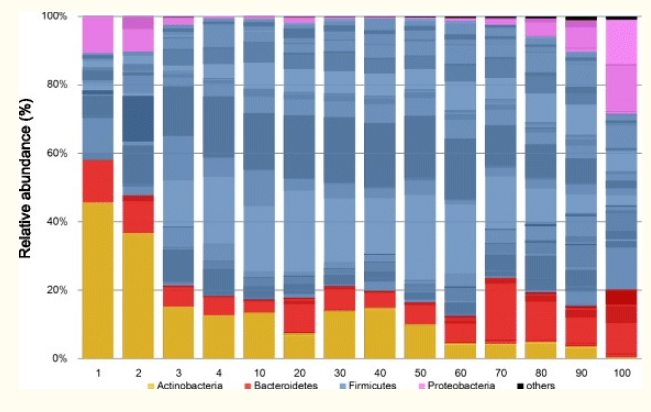
It is very difficult to come to any conclusions about whether a microbiome is dysfunctional or now before the age of three unless there are extreme shifts. From the age of three onwards, there is relative stability that changes around 60 as shown below. As a result, I am adding age to the symptoms entry.
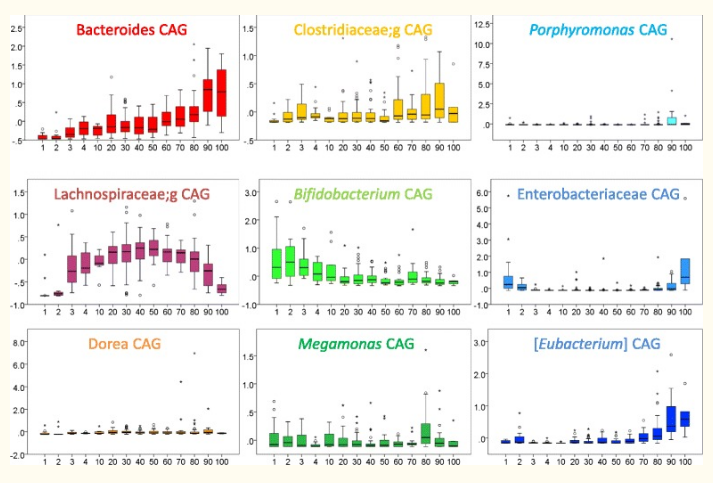
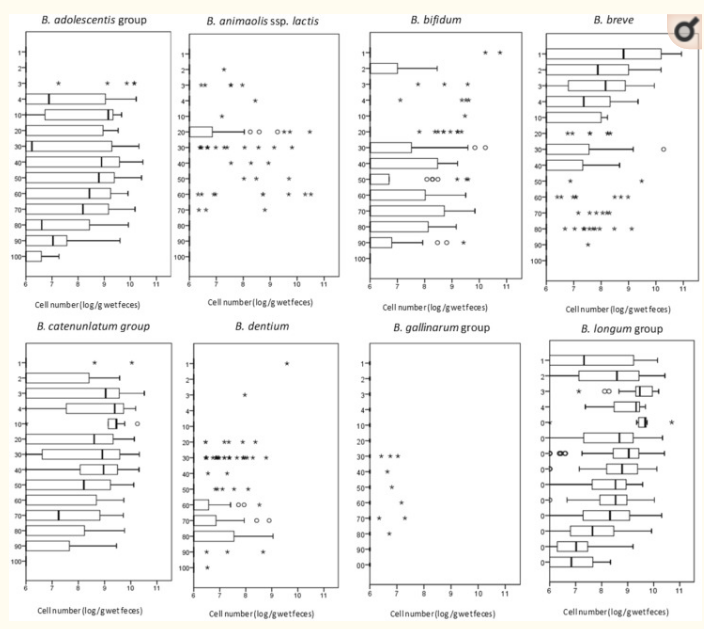
At finer level, we see the wide variety of measures (Note: these are showing boxplot lines – the range of normal is age dependent!!). Once I get enough samples with ages added, I will update the boxplot numbers to match age also – the study only had 371 samples. These plots also illustrate why averages can rarely (if ever!) be used to reliably determine it there is a problem!
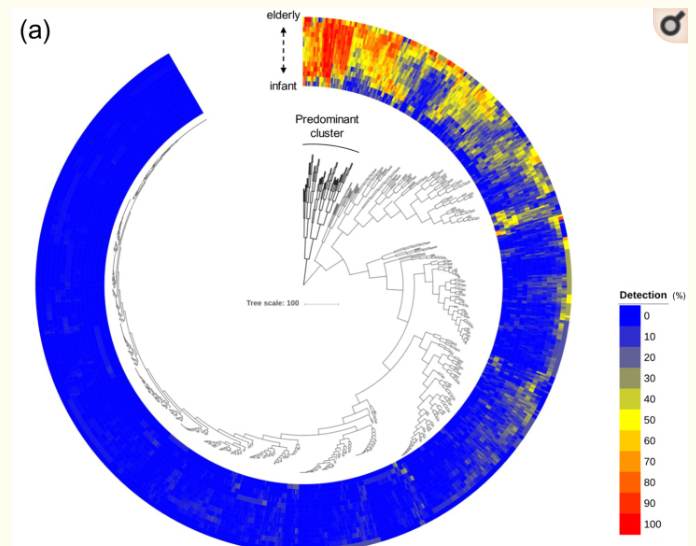
The next chart takes a few brain cells to understand, but it is informative once the presentation kicks in
For a child under 10, sudden great changes of a bacteria is a indicator of dysfunction — but this implies ongoing measurements. All of the sample sizes in studies that I found are too small to have great confidence in evaluating a sample. Having reference data is essential for the microbiome (with my relapse and recovery, having two ubiome results from before the relapse gave me a basis to work from).
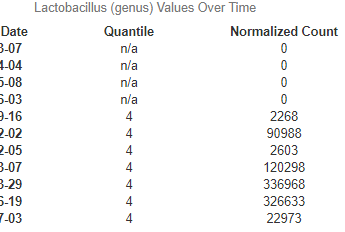
Lactobacillus became 33% of the microbiome from none.
If you (or your child) is in poor health and a sibling is in good health, because of the amount of inheritability of the microbiome, their microbiome to use as a reference is better than nothing. Healthy parents are the next step for getting a reference (much weaker).





 CFS Remission