More uBiome Scandal….

This crossed my news feed today. NOTE: the accuracy of their test results is not in question. The interpretation and how they choose to do analysis of their data is the issue. Most of this is focused on the data that they used to claim that SmartGut was accurate.

The science behind uBiome’s products is flawed, according to insiders and outside experts. They say that raises new questions about the company’s future. ….. uBiome built a big set of data based on the human microbiome, but the data was flawed in ways that risk making uBiome’s tests unreliable….uBiome confirmed problems with the data and said it’s conducting an internal review.

That test, called SmartGut, would become uBiome’s biggest money-maker, according to 11 former employees. It was designed to tell people about the health of their guts and their risk of diseases like irritable bowel syndrome. ….the dataset Bik described included data from 45 minors and at least one non-human….. If a customer’s levels were on par with the results in the database, the report told them so, and gave them a “wellness score” out of 100. If their levels diverged from the database, the report noted it, and suggested a possible link to illness. In fine print at the bottom of each report, it read, “These statements have not been evaluated by the Food and Drug Administration. This product is not intended to diagnose, treat, cure, or prevent any disease.” Scientists and clinicians have questioned the utility of such a test.The new test was designed for adults, according to uBiome’s website, but relied on the same volunteer database that powered the Explorer test, according to 21 former employees. Only now, if the data in the analysis was off, it could have clinical repercussions: healthy people might be told they were sick, while sick people might be told they were healthy.

Adult patients who took the SmartGut test on a doctor’s recommendation might now use it to make medical decisions.

Consider one issue, they said: poop samples from infants and pets had likely been included in the data, which was then used to create the adults-only test.

People who’d taken the drugs would often fail to disclose they’d done so, they said, because they believed enough time had passed for their effects to disappear. But antibiotics are thought to impact the microbiome for up to a year. One ex-employee who worked on the science likened taking a uBiome test to pseudoscience. “It’s like going to a really expensive homeopathic doctor,” the person said…..

In other words, people sampled their poop at home, in private, and then answered a series of key questions that included asking whether they were healthy or sick. If the answers were wrong or incomplete, it could provide a distorted sketch of the microbiome, insiders and outside experts have said. Volunteers could have been sick at the time they submitted their samples. They could also have taken antibiotics, which can distort the microbiome. ….The three ex-employees said the babies were easily identifiable based on the high presence in their samples of Bifidobacteria, a strain of microbe that’s specially suited to breaking down the ingredients in breast milk. Another handful of the samples likely belong to people’s pets, said Bik and two of the other ex-employees, pointing to data in the paper which shows strains of bacteria at levels not found in humans.

https://www.businessinsider.com/ubiome-poop-testing-startup-problems-science-microbiome-2019-8

Bottom line

The reports on the microbiome are accurate. Charts and values based on their samples is suspect.

As a side note, the database at http://microbiomeprescription.com/ is slightly bigger than uBiome reference set cited above, is open data (so people can slice and dice as they wish – i.e. exclude samples with high bifidobacterium (babies) ), and very likely much better data quality. Also, the preferred analysis path is using non-parametric approaches which I believe for microbiome data is superior to the parametric approaches that uBiome appear to have used. …. is Citizen Science superior to commercial Science in this scenario????
Two Enhancements to Advance Suggestions

The first one is quiet and behind the scene. Ubiome reports E.Coli as it’s cousin Kluyvera (genus). I have updated the modifiers to apply E.Coli modifiers to Kluyvera (adding some 1300 more facts for the AI Engine to use). Most people will not see a change of suggestions due to this.

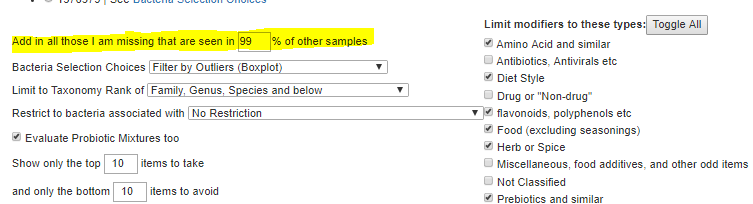
I have added in the ability to include common bacteria that you are missing into the analysis. This is on the advance page.

You can reduce it to as low as 70% (Not advised)

Use caution with this — the microbiome is a complex society. If you look at cities around the world you may find that 95% have homeless people. Trying to get homeless people for your town with no homeless people there — may not be the best path forward and have side-effects on your low crime rates.

PreforPro® (phage) Literature Review

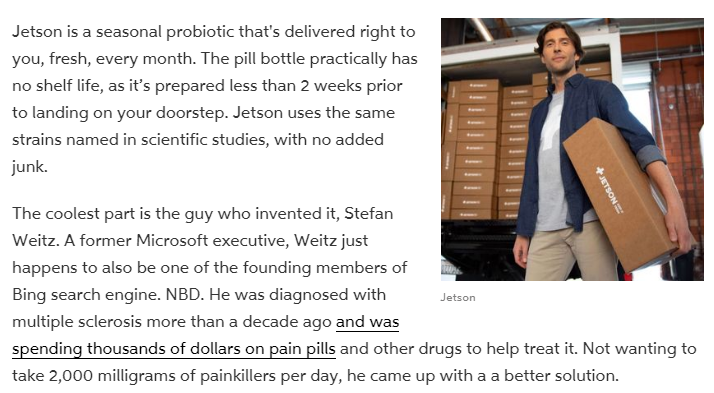
An old Microsoft work colleague also came down with an autoimmune condition and remedy it with the use of probiotics, story below. We had some good times together in London, Dublin etc. prior to autoimmune issues.

https://www.bestproducts.com/lifestyle/a28637068/jetson-probiotic-subscription-review/

I have added his products to the list of probiotic mixture (and given two with the same rating — would definitely prefer his because he uses only strains cited in research studies).

One of his offerings, Gut Prep, I noticed included PreforPro with Bacillus subtilis (which is sweet, because unlike the more common Bacillus Coagulans, it is not a histamine producer). PreforPro is made by Deerland.

Biophages are virus that are extremely specific for certain bacteria. Almost all that are available in the U.S. are specific to Escherichia coli.

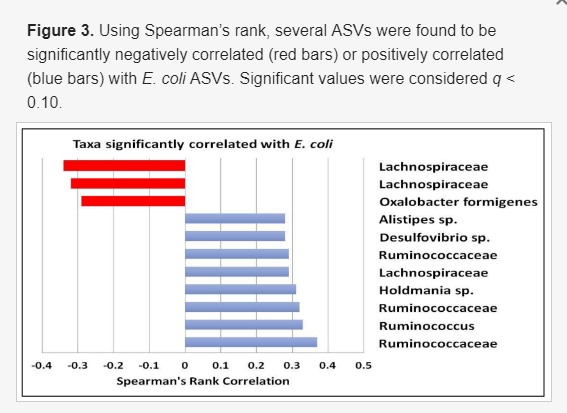
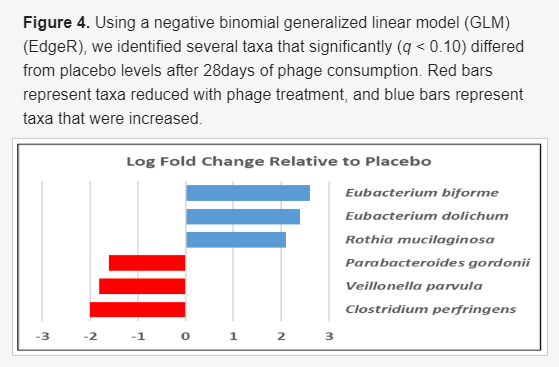
This specific combination was study in 2019, PHAGE Study: Effects of Supplemental Bacteriophage Intake on Inflammation and Gut Microbiota in Healthy Adults . This does not mean that’s its impact is only on E.Coli, because E.Coli helps or hinders other bacteria

This generally agrees with DataPunk’s summary

https://www.datapunk.net/substrata/display.pl?562+S

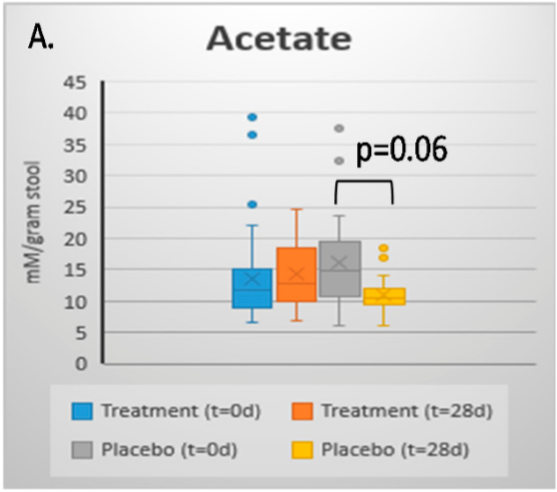
What they actually observed is below:

The study suffers from typical problems: Done on healthy individuals only; too small study sizes (as shown below from their supplemental material).

Placebo populations should NOT change readings significantly. They do

Bottom Line

If you suggestions include Bacillus probiotics or you have a conditions associated with Escherichia coli, I would suggest giving Gut Prep, a try.

Needless to say, DO NOT take with Mutaflor or SymbioFlor-2 probiotics.

I will be adding this to the AI engine database later this week.

Microbiome adjusters: Bounce Back Chair, Whole Body Vibration….

Some 4 years ago, I revisited a therapy advocated by Dr. Cheney back in 1998 in a post on the Bounce Back Chair. Today, a similar item crossed my email: “Whole Body Vibration-Induced Omental Macrophage Polarization and Fecal Microbiome Modification in a Murine Model” [2019]

The key aspect is that it results in modification of the microbiome.

 The db/db obese mice showed an increase in microbes in the genera Lactobacillus and Alistipes. The db/db type 2 diabetes mellitus (T2DM) mice also showed an increase of microbes in the genus Alistipes. …. Alistipes increased by 17 times. 

Oh to be a mouse..

It is well known that many many studies dealing with mice do not replicate with humans. Some do. My take-away from the above is simple:

  • Vibration appear to help the microbiome,
  • The vibration may well trigger exercise like responses from the microbiome.

If we run with this hypothesis, then all of the following may be beneficial:

  • Walking in place or other light activity causing bounce
  • Skipping rope (if you still have coordination)
  • Rebounder Chair
  • Whole body vibrator
  • Massaging chair
  • Trampoline

From the study: 20 min/day for 7 days per week for 4 weeks 

Changes in blood glucose among trained normoglycemic adults during a mini-trampoline exercise session.[2016]

Beware of the additives applied to you mouth!

When dealing with Gut/Microbiome issues, people tend to disconnect that the mouth and the gut are connected beyond one passing food to the other. They are often viewed as independent and isolated systems. This is dangerously untrue.

For ME/CFS, your mouth bacteria is different than a healthy person:  Chronic fatigue syndrome patients have alterations in their oral microbiome composition and function. [Sep 2018].

And across a much wider spectrum we read:

In terms of correcting this in myself, I am following the advice that I wrote in this earlier post: (I covered available commercial oral probiotics in a 2014 post also)

  • A scope of monolaurin into the mouth and chews until it is fully dissolved – nasty strong taste, but you get use to it.
  • Sublingual (dissolve under tongue) B-12
  • Using sublingually the following probiotics that come as tablets:
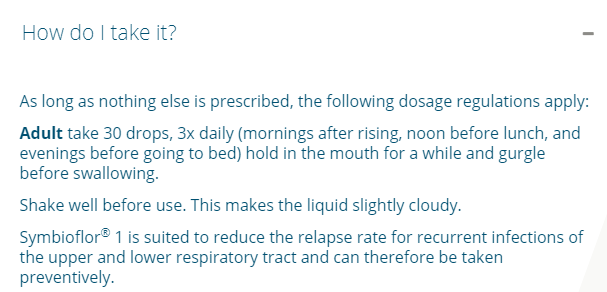
  • Symbioflor-1 – per instructions!~
https://www.symbiopharm.de/en/products/symbioflorr-1.html

Replace your toothpaste!

Recently, we (for other reasons) decided to swing over to old-fashion homemade toothpaste. Dr.Axe has some formula, from the choices (checking each against what bacteria it modifies and suggestions) I came up with

  • 4 tablespoons coconut oil
  • 2–4 tablespoons baking soda or a combination of baking soda and sea salt
  • 20 drops peppermint essential oil (flavonoids in it are recommended for me)
  • small glass jar

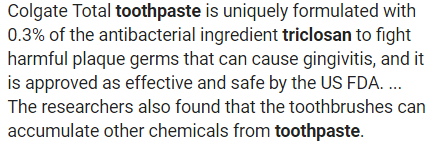
Dr. Axe also lists a ton of issues with commercial toothpaste, for example, Triclosan:

Triclosan exposure is practically unavoidable in the United States, but little is known how ingestion may affect our health. Yang and colleagues used mouse models of colitis and colon cancer to see how brief exposures of triclosan could affect inflammation. They observed that triclosan altered mouse gut microbiota and increased inflammation in a TLR4-dependent manner. Triclosan increased the severity of colitis symptoms and spurred colitis-associated colon cancer cell growth. 

A common antimicrobial additive increases colonic inflammation and colitis-associated colon tumorigenesis in mice [2018]
https://time.com/4995690/triclosan-toothpaste/

Natural Source does mean it is safe..

Lists ” Carrageenan
Binder / Gum
Derived from seaweed (Eucheuma sp.) “
https://www.medicalnewstoday.com/articles/323117.php

Mouth Wash – Keep the Breath Sweet and the gut Sick!

There are many sites that have formula similar to the above toothpaste. Although you just rinse and spit with commercial mouth wash — some will cling and eventually makes it way to the gut … oh, yes, remember we are also talking about the mouth bacteria — which is constantly acting as a reserve to repopulate the gut… Perhaps not such a good idea after all.

This site reported (via Citizen Science) that dry mouth is associated with a distinctive gut microbiome pattern. The logical conclusion is that the bacteria in the oral cavity causing dry mouth is seeding the digestive system with bacteria that results in the discovered shift.