GcMAF – Bravo Probiotic – an Update

Recently I have seen a number of comments from a person whose email begins with “homeBiz..” on my Sept,2013 post on Bravo Probiotic, implying that this was a promoter of Bravo Probiotics. I am sure that dealers get a very good margin on sales given that the species in this probiotic are common ones in most probiotics.

See 2017’s Update #2 also. In 2017, the discoverer has invented a new magic, Rerum, and in videos has trashed this product, see this post.

I thought that I should revisit what is on PubMed. There have been 10 articles on GcMAF since my last review. None dealing with CFS.

  • “commercially available formula of GcMAF… may significantly contribute to neutralizing the neurotoxicity “[2015]
  • “Oleic Acid with GcMAF.. with significant effects on immune system stimulation [2014] – Oleic Acid is very high in Olive Oil.
  • “The use of the Gc protein-derived Macrophage Activating Factor (GcMAF), an endogenous glycosylated vitamin D binding protein responsible for macrophage cell activation has demonstrated positive effects in the treatment of autistic children.”[2014]
  • “The administration of GC protein-derived macrophage-activating factor (GcMAF) to cancer patients with elevated levels of nagalase has been associated with a decrease of serum nagalase activity and with significant clinical benefits.”[2013]

What I found very interesting in the studies is that there was no controlling for Vitamin D levels in patients.  GcMAF may increase vitamin D levels AND we know that cancers, FM and CFS are more likely to occur with low Vitamin D levels. In the case of  FM and CFS, symptoms are less severe with higher levels of Vitamin D.

Bottle line, unless you are already at the very top of Vitamin D levels, supplementing with Vitamin D3 is likely the best.  I am in the early 60’s and find that I need 20,000 IU/day of Vitamin D3 to maintain my levels. The ability to absorb decreases with age and likely also decreases with the shift of gut bacteria seen with CFS/FM.

In terms of news on the sale of GcMAF

  • 3 July, 2014. Immuno Biotech was shut down. They sell Bravo Probiotic , BBC
  • One of the published GcMAF paper has been retracted and three others are being strongly challenged (i.e. the results reported were not accurate)
  • US safety studies on the use of GcMAF has not yet started.
  • One Israeli company is attempting to scientifically test the impact, their post appears to be a (reasonable) objective view.

This organization, as well as others, point out that the articles written by Yamamoto have been removed from the websites of the journals in which they appeared, owing to a range of ethical problems, including the listing of names of writers unrelated to the subject, and the presentation of “research bodies” established solely for that purpose, or which never existed.” This has echos of the methods observed by some with the Marshall Protocol.

Bottom Line

GcMAF reduces Nagalase which is a factor for Cancers.

In other words, there is “no scientific, medical, or alternative medical evidence” supporting the use of Bravo Probiotics for Chronic Fatigue Syndrome. CFS is very sensitive to placebo effects — believe in a placebo will change the degree of stress in a person and thus the gut bacteria as a result of changing levels of stress chemicals.

Get your Vitamin D3 up and wait for objective studies to be published. The financial cost of this hyped-product is far too high for most CFSers.

News Story BBC: Unlicensed blood drug GcMAF still for sale
Histamine Producing Bacteria and their treatment

The histamine model for CFS may apply to some. I know two people that had CFS which ?progressed? to histamine intolerance. With the gut model for CFS, a percentage could go down that pathway. My thinking is that a percentage of histamine intolerance patients is caused by overgrowth in the gut some histamine producing species, thus reducing them should reduce symptoms.

Tonight I decided to gather up as much information about known histamine producing species as a start point. A 1991 study found just 55 of 568 examined bacteria produced histamines (about 10%) and of these 55, 51 were Enterobacteriaceae.

  • Proteus morganii, All species. This is a species that is normally in the gut, thus it’s overgrowth is reasonable.
  • Klebsiella pneumoniae, 5/6 of the species
  • Escherichia coli, just 1/3 of the species
  • Enterobacter aerogenes,
  • Enterobacter cloacae ,
  • Proteus sp., (vulgaris, mirabilis.
  • Edwardsiella sp. ,
  • Vibrio spp.
  • Source: [ref] [1991]

The Proteus species were more active at a pH of 5(acid) than pH 7 (Neutral), which may account for severe reaction to lemon and grapefruit juices because they will grow much better in that environment. It also hints that using baking soda (high pH) may reduce the histamine production.

Fish: Many species have high or even extreme level of histamines, these include: saury, tuna, bonito, butterfly kingfish, mackerel and mahi mahi.

What are the convention symptions of histamine excess?

“Onset of the poisoning symptoms ranges from a few minutes to a few hours after eating. Victims generally experience a flushing of the face and neck, a throbbing headache, dizziness, faintness, and an itching, burning sensation in the
mouth and throat. The fish, as consumed, may have a sharp, peppery flavor and invariably contain high levels of free histamine, usually in excess of 100 mg/100 g”. Fresh tuna have been reported to be often at 600 mg/100 g.

Treatment of Morganii

According to Wikipedia, the following have a high success rate, but more and more resistance is reported.

  • Ticarcillin
  • Piperacillin
  • Ciprofloxacin
  • Third-generation and fourth-generation cephalosporins

In terms of herbs, Salvia officinalis (common sage) has a 75% inhibitory rate[2004 Full Text] (versus 90% with the above antibiotics). Clove Oil, lemongrass and sweet basil oils are also reported effective (listed in order of effectiveness)[2013]. Another study found Cinnamon and clove did better(significant effect) than turmeric and cardamon(moderate effect) [1996]

So we do have a set of easy to obtain spices and herbs that would inhibit Morganii (assuming that the histamine issue was cause by an overgrowth of them).

How to find treatment for a DNA Mutation: Treating GSTP1 as an example

A reader wrote ” I was surprised at how many reds and yellows I have [on Yasko and other panels]. But I’m not sure what the next step is to try and find info about and treatments relating to all of this info? I’m not well and maybe this could help.”

In an ideal world, you would take the panels into your MD and s/he would know exactly how to treat each mutation. The reality is that the vast majority of MDs would not know what to do with the panels, or how to treat different mutations. My own experience recently was with a recent graduate in Internal medicine and apart from a mutation(where she had a cookbook recipe to follow), she wanted to ship all of these issues to specialist (usually 20 years out of medical school and even less aware of DNA panels!).

With CFS, brain fog is common so I am going to write it out as a checklist.

  1. Got through all of the panels and list them from highest percentage of RED to lowest risk
  2. From the list above, write down in the same order all reds that have a named mutation for them (far left column)
  3. You will now start the search for information. Say that the mutation is “GSTP1“, which I used in my prior post on MCS.
    1. First, a mutation may cause many conditions — any thing that helps the condition for those with mutation is GOOD.
      1. If it helps a male with prostate cancer with this mutation, do not dismiss it because you are a woman. We want to treat the mutation and NOT the condition.
    2. For treatment, you will find a small number of actual professional studies, a few speculations from professionals on what could help, many suggestions from people trying to infer what will help from limited knowledge.  Ideally, we want reliable proven treatments, but if such information is not available then we need to tread carefully and make sure that there are no known negative effects from speculations.
  4. How to search for the most authoritative information, the best source is PubMed.
    1. GSTP1 Herb – 7+ articles
    2. GSTP1 Supplement – 19+ article
    3. GSTP1 Vitamin – 93+ articles
    4. GSTP1 Treatment -1399+ articles
  5. The next step is to work thru these articles, at least to scan them looking for gems. The sequence above is what I found produces the best results in the least articles… with luck I may only need to scan the first 26 articles.
  6. If the above fails to find gems, then I take the same phrases and add a “MD” to filter to more authoritative pages.


What did I find for treating GSTP1?

First, for some mutations you can be really lucky, for others you may not find a single bit of useful information. In the latter case, just smile and move on to the next red mutation. In a year, research may have found something.

  • roots of licorice (Glycyrrhiza species) [2014]
  • Indigofera suffruticosa Mill [2013]
  • Andrographis paniculata [2011] [2010][2008][2008]
  • tomato and broccoli.[2013] [2011]
  • the ability of α-tocopherol (vitamin-E) to affect IL-6 production was influenced by the GSTP1 313 polymorphism [2012]
  • supplement of recombinant GSTP1 [2009]
  • curcumin (turmeric) [2008]
  • “However, in multivariable conditional logistic regression models, we identified a significant interaction between GSTP1 and GSTT1 in relation to  Autism Spectrum Disorder (ASD)” [2014] – having a MCS parent seems to increase the odds of a ASD child greatly
  • “Herbicide exposure modifies GSTP1 haplotype association to Parkinson onset age” [2013] [2006]
  • alpha lipoic acid [2010] [2004] – but the 2004 study suggested a very narrow range of action.
  •  Lycopene [2008][2002]

While there were many people suggesting Glutathione supplementation (for example Amy Myers MD “Taking glutathione or the precursors (NAC, alpha lipoic acid, milk thistle) often help my patients dramatically with fatigue.”), I was unable to find any PubMed studies on the effectiveness of glutathione supplementation.

So this is my approach, typically it takes 1-2 hours to do a reasonable treatment of a single mutation.

Stress impact: case study

Over the last month, there have been significant stress in my life from health concerns for someone close to me. The stress has resolved and my stress response is dropping. Since I had a Thryve report before the stress and another one during the stress, I thought that it would be nice to see if my changes matched any of the changes reported in the literature. The literature tend to be from long term stress, hence the results of cascading changes. Nevertheless, I thought it would be interesting to see what changed against what was reported in the study.

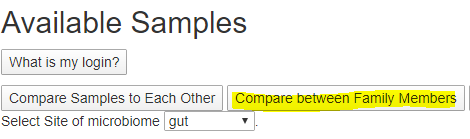
The process is simple, go to the Samples page and click the compare (you will be comparing against yourself).

http://microbiomeprescription.com/email/samples

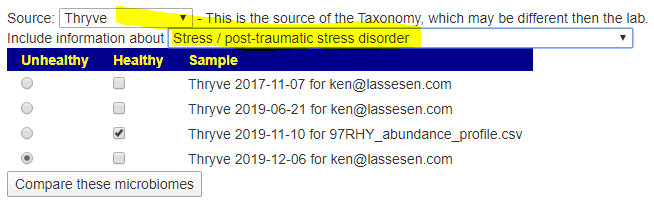
The next page is just selecting the sample and any reference literature you want to compare against. In this case, stress

http://microbiomeprescription.com/family/FamilyNorms?source=Thryve

This takes you to the comparison page. I am only interested in items with Direction where my before values as between 25-75%ile and the value shifted to match the literature. There were three genus as shown below

http://microbiomeprescription.com/family/CompareMicrobiome

I then went and checked these 4 genus to create a hand-pick sample to get suggestions for.

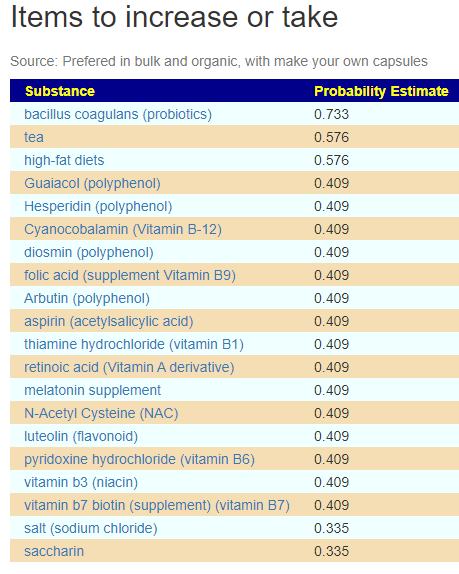
The suggestions actually included many things that I had started taking due to a gut feeling (bad pun).

Digging deeper, bacillus probiotics was in general positive.
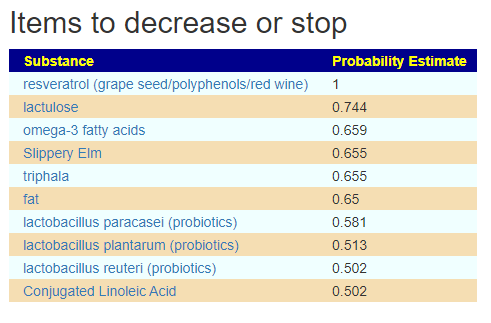
The decrease list had a few surprises.

Bottom Line

Stress is something that can rarely be avoided. If you have an unstressed reference sample then when stress happens, you may be able to identify critical shifts and counteract the stress impact on the microbiome..

Of course, this is all theoretical.

Case Study on Using DNA: Multiple Chemical Sensitivity

One of the panels available on    deals with Multiple Chemical Sensistivy. One of my readers shared their profile and asked for suggestions on where to go from that. This shows how I would proceed. In this case the issue was simple and I could find suggestions.

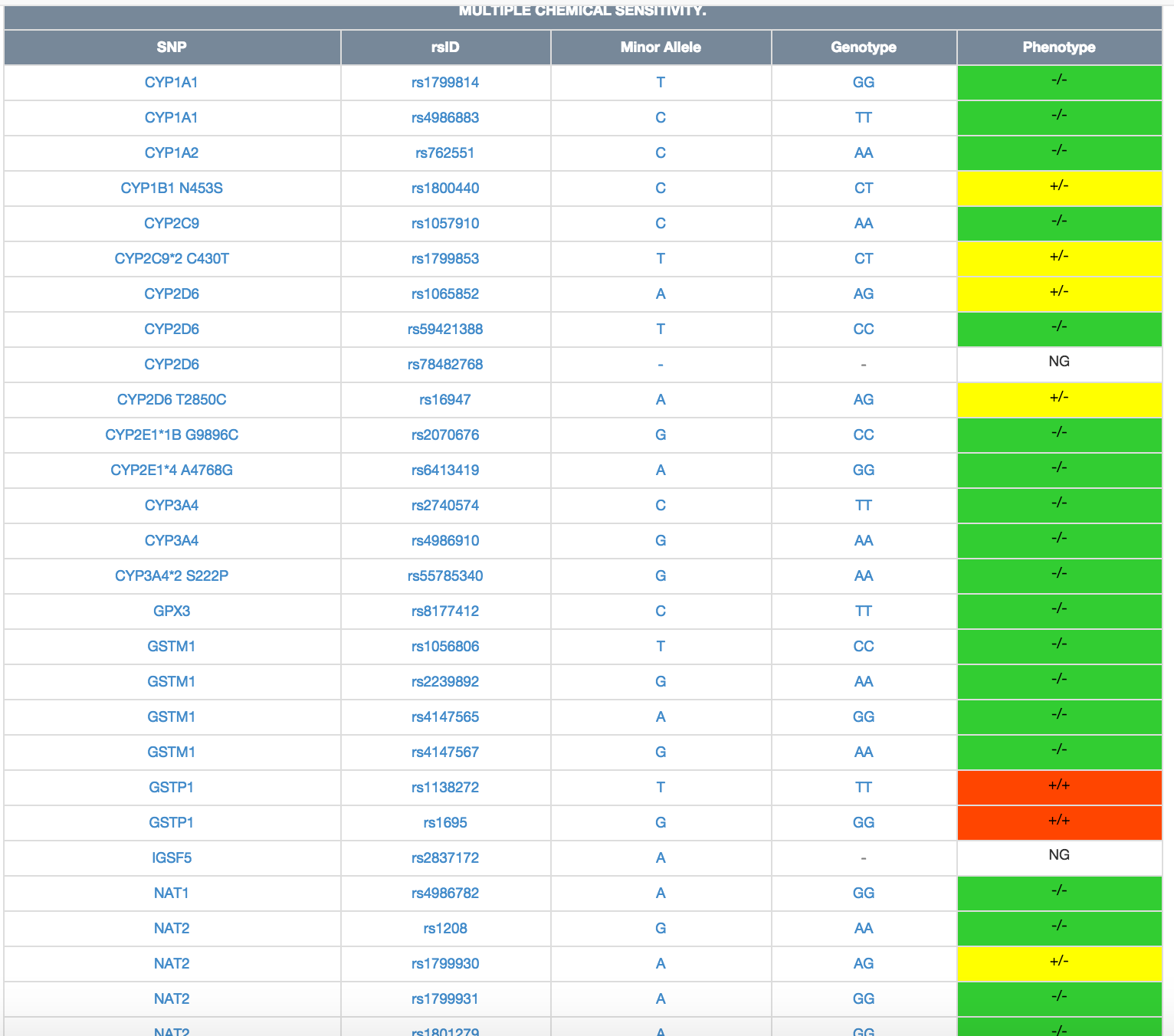
First the results — we have two REDs

Screen Shot 2015-01-07 at 3.42.50 PM


We are actually lucky because both REDS are on the same mutation (but different SNPs): GSTP1

Click the link we get the usual type of information which lacks any information about treatment.


NCBI Gene Info

Telomerase is a ribonucleoprotein polymerase that maintains telomere ends by addition of the telomere repeat TTAGGG. The enzyme consists of a protein component with reverse transcriptase activity, encoded by this gene, and an RNA component which serves as a template for the telomere repeat. Telomerase expression plays a role in cellular senescence, as it is normally repressed in postnatal somatic cells resulting in progressive shortening of telomeres. Deregulation of telomerase expression in somatic cells may be involved in oncogenesis. Studies in mouse suggest that telomerase also participates in chromosomal repair, since de novo synthesis of telomere repeats may occur at double-stranded breaks. Alternatively spliced variants encoding different isoforms of telomerase reverse transcriptase have been identified; the full-length sequence of some variants has not been determined. Alternative splicing at this locus is thought to be one mechanism of regulation of telomerase activity. [provided by RefSeq, Jul 2008]


The next step is simple, take the gene mutation and google it with “treatment” and then “supplements” and see what you can find.

The first item to be aware of is to ignore the condition they are dealing with – if it is prostate cancer and you are a woman, you would normally stop reading.. WRONG… we are interested in compensating for the SNP/Gene/Mutation and not for a specific diagnosis. Some of the items I found are:

Some health professionals recommend individuals with GSTP1 SNP’s minimize their exposure to cigarette smoke, charred food, herbicides, fungicides, insect sprays, industrial solvents, and toxic metals. In addition to ensure GSH support it is important to supply GSH precursors and cofactor such as, methionine, NAC, glutamine, glycine, magnesium, and pyridoxal-5-phosphate (B6). It is possible to reduce GSH depletion by supplementing with alpha lipoic acid, milk thistle, and taurine.   Certain foods such as onions, leeks, garlic, broccoli, cauliflower, cabbage, kale, Brussels sprouts, and radish can increase GST activity.   It is always recommended to consume an antioxidant-rich diet to prevent oxidative stress..[link]

What! We have a supplement list provided. Checking carefully to the source and it was a forum — which is not my preferred information source. So while noting the above, I will move all to published studies….

PubMed Articles on Supplements and GSTP1

I found some 1250 articles on GSTP1 and grabbed two of the more well documented supplements.

High cruciferous vegetable (cauliflower, cabbage, garden cress, bok choy, broccoli, brussels sprouts) intake reduced the impact[book – 2008 Study]

Alpha Lipoic Acid

Lycopene