Misc Notes on the Microbiome

Proteins can cause a microbiome cascade that leads to disease

a neurologist at Johns Hopkins School of Medicine, and his team created an animal model of the disease by injecting particular proteins into the stomachs of mice. About a month later, the animals showed symptoms of Parkinson€  ’²s disease. The model not only demonstrates how the disease protein can travel up from the gut to the brain, but also presents nonmotor symptoms rarely seen in other animal models.

Source – It was not bacteria added, just proteins — which alter the microbiome and cascaded from there.

Commensal bacteria from the mouth, skin, and gut produce an ortholog of the human protein Ro60. Some of these bacteria and bacterial Ro60 activated T cells from the blood of a patient with lupus. Ro60-specific antibodies from lupus patients also bound to bacterial Ro60, suggesting commensals could have a hand in activating antibody-producing B cells involved in the autoimmune disease.

source – similar to above, bacteria produce proteins activate nasty things

Is this why ME/CFS are so tired?

Veillonella acts like a “metabolic sink” for lactate, the scientists suspect, converting into fuel the by-product of hard-working muscles runners blame for their aching legs in the latter part of long-distance races. The bacteria turn lactate into propionate, a short-chain fatty acid that’s a source of energy and can also be an anti-inflammatory, a Harvard-affiliated team of scientists reported Monday in Nature Medicine

source

Using our contributed data: LOW Veillonella is associated at a statistically significant level with:

  • General: Fatigue
  • Neurological-Audio: hypersensitivity to noise
  • Autonomic Manifestations: Postural orthostatic tachycardia syndrome (POTS)
  • Neuroendocrine Manifestations: sweating episodes
  • Neuroendocrine Manifestations: intolerance of extremes of heat and cold
  • Immune Manifestations: tender lymph nodes
  • Immune Manifestations: general malaise
  • Sleep: Waking up early in the morning (e.g. 3 AM)
  • Autonomic: Dizziness or fainting
  • Post-exertional malaise: Post-exertional malaise
  • Post-exertional malaise: Next-day soreness after everyday activities
  • Official Diagnosis: Chronic Fatigue Syndrome

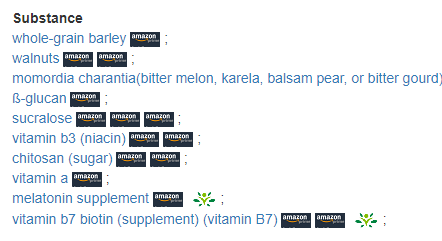
This suggests that the Veillonella probiotics being considered for fitness jocks may also cause a major improvement with ME/CFS. Until that happens, we have to depend on things that feed it and avoid items that diminish it. What is know is listed here.

Another important story

Given the immense antigenic load present in the microbiome, we hypothesized that microbiota mimotopes can be a persistent trigger in human autoimmunity via cross-reactivity. Using antiphospholipid syndrome (APS) as a model, we demonstrate cross-reactivity between non-orthologous mimotopes expressed by a common human gut commensal, Roseburia intestinalis ( R. int), and T and B cell autoepitopes in the APS autoantigen β 2-glycoprotein I (β 2GPI). 

source

As above, using our contributed data: HIGH Roseburia intestinalis is associated at a statistically significant level with:

  • General: Fatigue
  • Post-exertional malaise: Inappropriate loss of physical and mental stamina,
  • Sleep: Unrefreshed sleep
  • General: Myalgia (pain)
  • General: Headaches
  • Neurological: Impairment of concentration
  • Neurological: Short-term memory issues
  • Neurological: Word-finding problems
  • Neurological-Audio: hypersensitivity to noise
  • Neurological: emotional overload
  • Autonomic Manifestations: Orthostatic intolerance
  • Autonomic Manifestations: irritable bowel syndrome
  • Autonomic Manifestations: urinary frequency dysfunction
  • Post-exertional malaise: General
  • Neuroendocrine Manifestations: subnormal body temperature
  • Neuroendocrine Manifestations: cold extremities
  • Neuroendocrine Manifestations: intolerance of extremes of heat and cold
  • Neuroendocrine Manifestations: worsening of symptoms with stress.
  • Immune Manifestations: tender lymph nodes
  • Immune Manifestations: recurrent flu-like symptoms
  • Immune Manifestations: general malaise
  • Onset: Gradual
  • Neuroendocrine Manifestations: Muscle weakness
  • Neurological: Cognitive Overload
  • Neurological-Sleep: Insomnia
  • Immune Manifestations: Bloating
  • Neurological-Sleep: Night Sweats
  • Immune Manifestations: Hair loss
  • Neurological-Sleep: Inability for deep (delta) sleep
  • Neuroendocrine Manifestations: Rapid muscular fatiguability
  • Gender: Female
  • Sleep: Problems staying asleep
  • Sleep: Waking up early in the morning (e.g. 3 AM)
  • Pain: Pain or aching in muscles
  • Pain: Joint pain
  • Pain: Myofascial pain
  • Neuroendocrine: Cold limbs (e.g. arms, legs hands)
  • Neuroendocrine: Feeling hot or cold for no reason
  • Immune: Recurrent Sore throat
  • Immune: Sensitivity to smell/food/medication/chemicals
  • Neurocognitive: Problems remembering things
  • Neurocognitive: Difficulty paying attention for a long period of time
  • Neurocognitive: Can only focus on one thing at a time
  • Neurocognitive: Slowness of thought
  • Neurocognitive: Absent-mindedness or forgetfulness
  • Post-exertional malaise: Post-exertional malaise
  • Post-exertional malaise: Next-day soreness after everyday activities
  • Joint: Stiffness and swelling
  • Neurocognitive: Brain Fog

The CFS Researcher, Dave Berg back in 1999 wrote:

Our hypothesis is that a majority of individuals diagnosed as Chronic Fatigue Syndrome (CFS) &/or Fibromyalgia (FM) on clinical criteria may be defined as AntiPhospholipid Syndrome (APS) with the endothelial cell (EC) as the disease target with or without platelet activation (PA). 

Chronic Fatigue Syndrome (CFS) &/or Fibromyalgia (FM) 
as a Variation of Antiphospholipid Antibody Syndrome (APS): An Explanatory Model and Approach to Laboratory Diagnosis.
   BLOOD COAGULATION & FIBRINOLYSIS 1999,10:p 1 – 4. 

That’s it for the moment, more coming as time permits.

Comparing suggestions from uBiome and Thrive on same Sample

I will not look at the differences of what is reported. Many people have done blogs and articles complaining about differences. What I care about is the differences between analysis and suggestions — the actual application of the reports. Reader reports: “same sample, same time.”

Comparison tools

Reader Beware: There is no gold standard for matching rDNA to bacteria.- firms use different algorithms. Second, analysis is done using box-plot. The base data for box-plat is at present: 731 ubiome, 44 Thryve so there is a bias to ubiome’s processing.

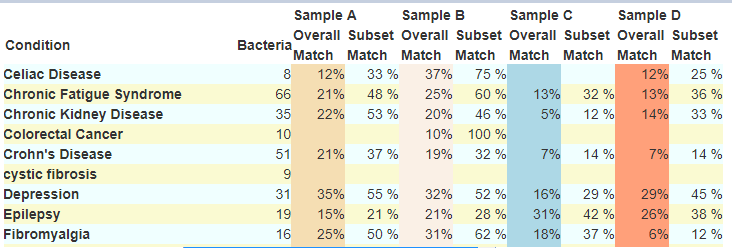
1-15 is the Thryve sample, 7-11 is the uBiome sample

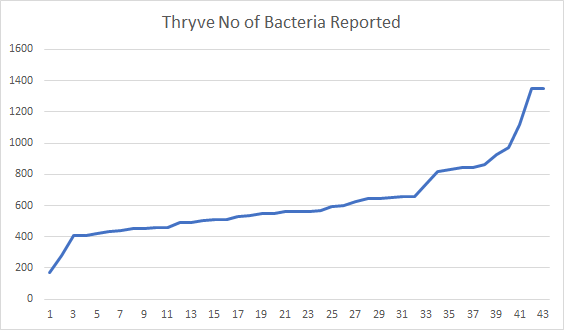
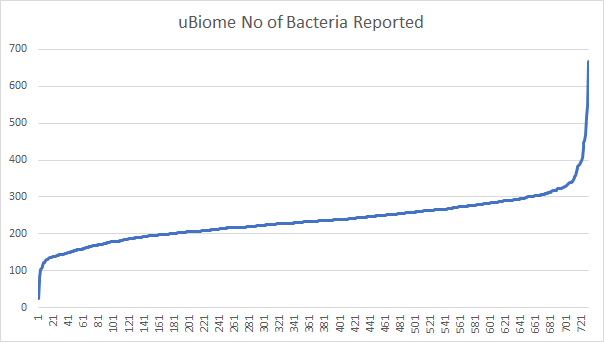
Thrye had more condition matches (113) compared to ubiome (88) – but is more bias to the low levels.

This may be explained by the number of bacteria reported, a major difference. The number for ubiome seemed very low (bad sample taken or processing issue).

  • ubiome: 335
  • thryve: 657

Let us look at what is reported by each.

So we are at the 72%ile for Thryve samples and 96%ile for uBiome samples. The median counts: 234 for ubiome, 560 for thryve.

Conclusion: Thryve on average provide more bacteria reported. I look forward to comparing SunGenomics.com tests which should have even a higher count than Thryve.

Details

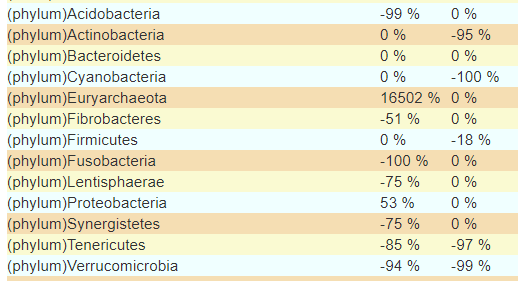
Looking at the highest level, Phylum, we see very great differences, especially in the more uncommon phylum.

Suggestions

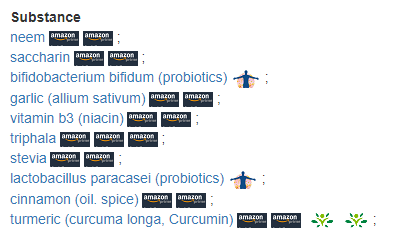
This is what most interests me. The suggestions prediction algorithms are not based on any lab results but on pubmed studies. The data used may be lab-dependent.

ubiome top suggestions
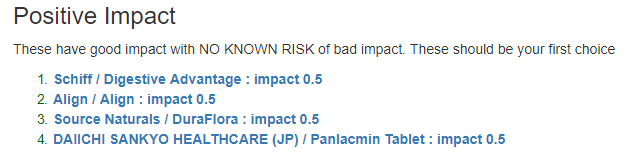
thryve top suggestions

We have just one commonality: niacin.

Thryve top probiotics : Ubiome had none.

Bottom Line

This has been interesting. Which is more accurate? I do not know; clearly results are very different (as reported by many other bloggers). Is the difference because of the computer algorithm used by each lab (known to be different), natural variation in a stool sample, sample collection process, etc.

Although the literature is generally conflicting with regard to sampling methodology, it is important to consider that comparisons of data obtained using different approaches should be avoided.

The Madness of Microbiome: Attempting To Find Consensus “Best Practice” for 16S Microbiome Studies

All steps of the complex analysis workflow significantly influenced microbiome profiles, but the magnitude of variation caused by PCR primers for 16S rDNA amplification was clearly the largest. In order to advance microbiome research to a more standardized and routine medical diagnostic procedure, it is essential to establish uniform standard operating procedures throughout laboratories and to initiate regular proficiency testing.

Multicenter quality assessment of 16S ribosomal DNA-sequencing for microbiome analyses reveals high inter-center variability

Before everyone goes to Thryve — be aware of the following:

  • Box-Plot detection is based largely on ubiome samples. When I get 100 (at present 44, half-way there), I will split the reference numbers into a Thryve and a uBiome set.
  • Averages were all reversed engineered from ubiome values.
  • Symptom matching is based on submitted samples (94% from ubiome)
  • Condition Templates are based on published research which uses a wide variety of tests methodologies.

So, the reality is that the site favors uBiome data.

There is a natural desire to get absolute, precise information. We are dealing with methods that are evolving. My attitude is to take the best data currently available (factoring in costs) and use it. It is better than working from no information.

Science based mouth wash for ME/CFS

This post comes out of a 2018 article: Chronic fatigue syndrome patients have alterations in their oral microbiome composition and function. [Sep 2018]. The basic findings was:

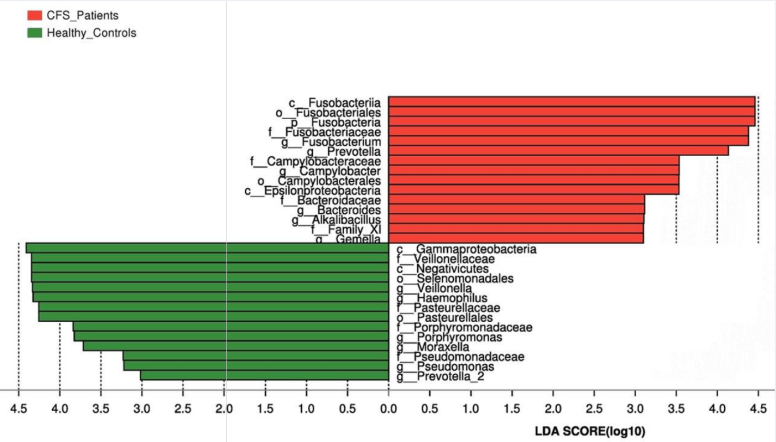
Of these, Veillonella abundance was significantly different between CFS patients and healthy controls, with 9.81 ± 8.26% and 13.97 ± 8.91% 

In addition, many of the genera with a relative abundance greater than 1% were significantly different in CFS patients compared to healthy controls. For example, FusobacteriumPrevotellaLeptotrichia, and Campylobacter had increased abundance in CFS patients compared to healthy controls, while HaemophilusPorphyromonas, and Moraxella had decreased abundance in CFS patients compared to healthy controls.

In the past, I have written that oral/mouth bacteria was likely a reserve for ME/CFS bacteria. This study appears to confirm my earlier inference.

Constructing a Mouth Wash Conceptually

This is done by using the Genus Lab report page, The results of which summarize below (Some are in some commercial alternative mouth washes):

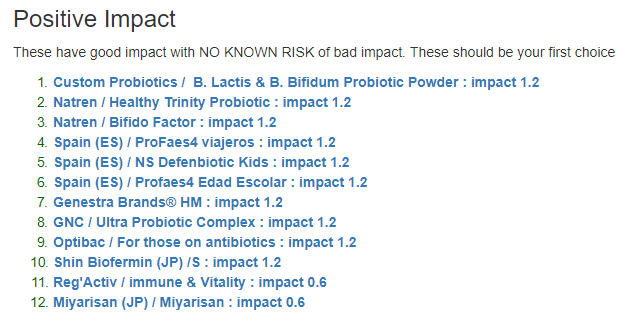
In terms of probiotics, the following should be dissolved in the mouth (capsules open) and not swallowed:

For dissolving in the mouth (not to swallow)

Bottom Line

The above is an a priori formulation based on the report cited above. It is interesting to note that saccharin is a to avoid (and found in some commercial mouth washes)

Self Experiment: Of the above probiotics, Shin Biofermin (JP) /S seemed the best to try — small hard tablets (Normal dosage is 18) that lends itself to dissolving in the mouth. At bedtime, I slowly dissolved two in the mouth. That night I slept the hardest that I have in months. (I have added a link to a world wide shipper on the above probiotic link)

Shin Biofermin, 120 Tablets

Quick Images of a Reader’s Progress

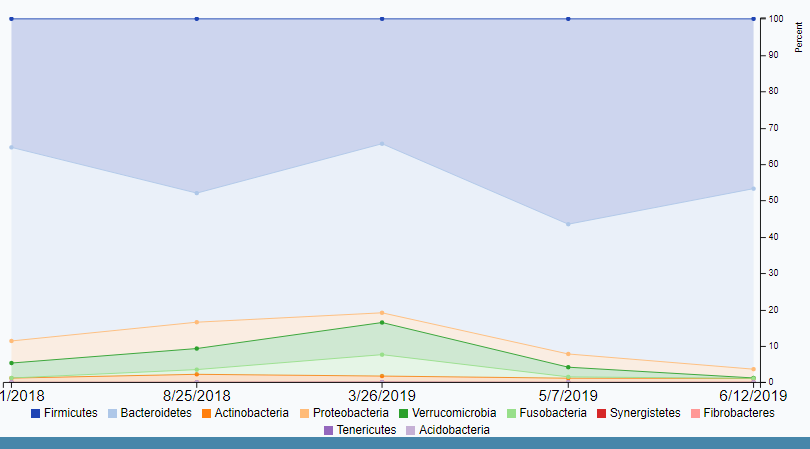
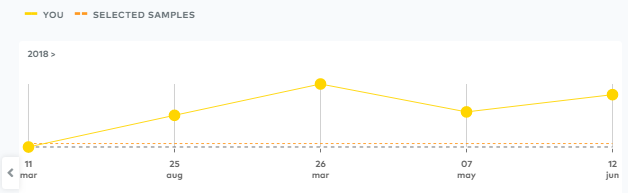
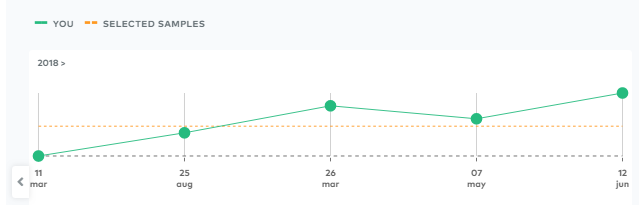
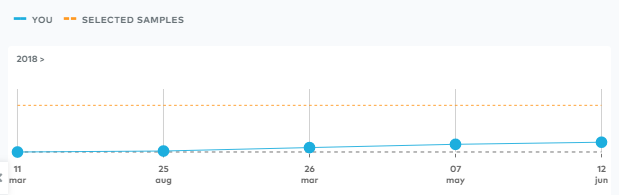
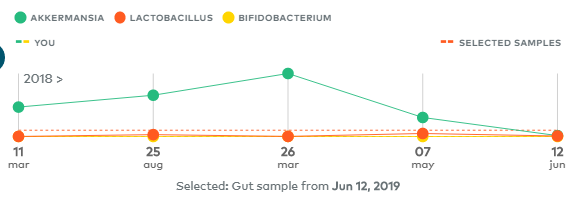
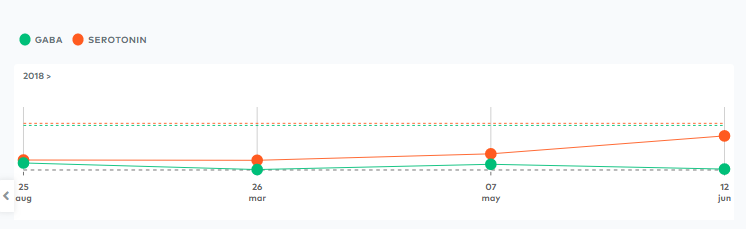
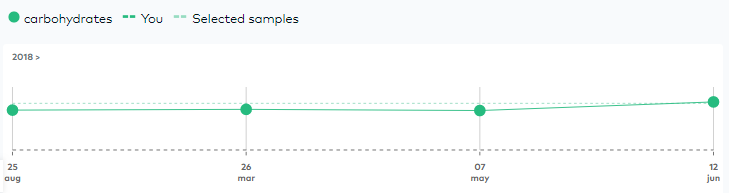
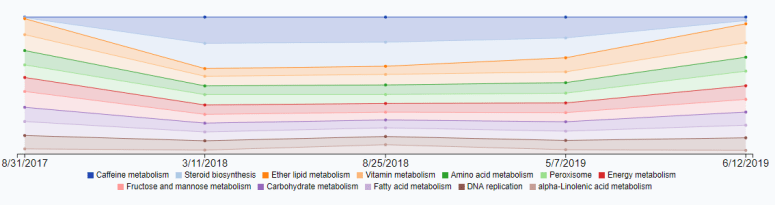
This is largely a visual post — showing the results of a reader who has taken frequent ubiome sample, uploaded them and then started following the suggestions generally. It appears to confirm that the microbiome may be manipulated. Dates of samples

  • 3/11/2018 – first set of suggestions tried
  • 8/25/2018 –
  • 3/26/2019 – symptoms got bad enough that ‘coasting’ was no longer acceptable. Regular testing started.
  • 5/7/2019
  • 6/12/2019
The big picture
Anti-Inflammatory: Polyamine
Anti-inflammatory: Propionate
Anti-inflammatory: Butyrate
Akkermansia went very high, change brought it back down.
The metabolism is becoming more balance
Major improvement in often co-morbid conditions — BUT depression has gone up

Bottom Line

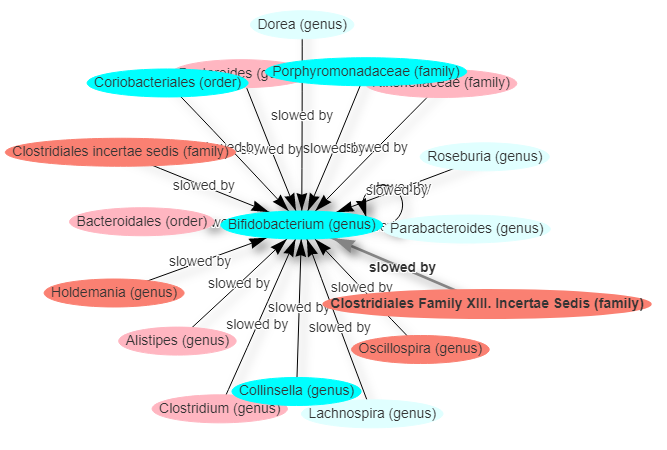
Correcting the microbiome is not a one step-dance or a direct root. This person had things drop to avoid and then re-appear as take on a later sample. The WHY charts are a nice visual representation of the known dependencies. For example, we need to reduce most of the bacteria slowing Bifidobacterium (as shown below)

A walkthru with all of the new features

A reader asked me to look at their ubiome results. They were having trouble interpreting the data (Brain Fog: 1, Site: 0)

Preferred Approach

This reader has enter their symptoms AND we have some matches in terms of patterns associated with symptoms and their microbiome.

This always gives the most targeted list

So on the Custom Suggestion page, we select this and exclude things that we are not interested in:

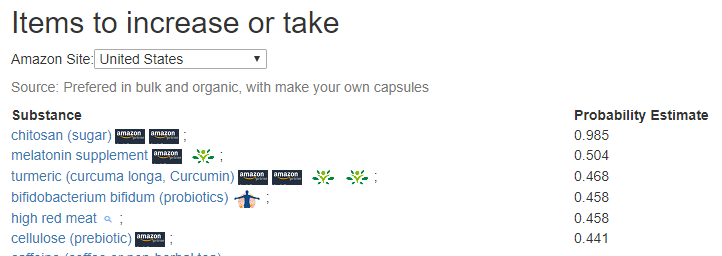
When we get the suggestions, we see that no Flavonoids are listed.

Probiotics and Flavonoid foods

We also have a list of supplements etc showing up

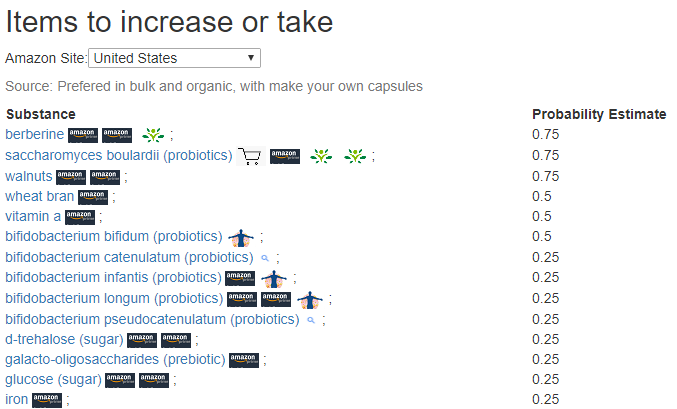
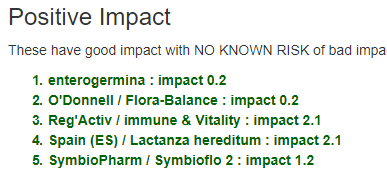
There is a long list of Postive Impact Probiotics. We want to always go for the highest impact ones that are available to you. The best is available in Germany: Probiotic PUR (DE) / RealDose Nutrition : impact 5.4

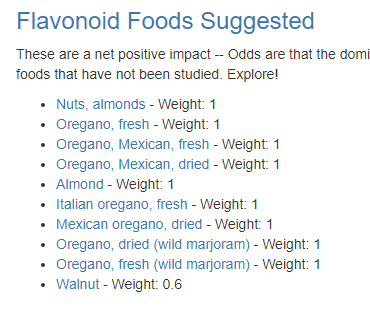
At the bottom we have Flavonoid Foods

I checked Almonds, Walnuts and Oregano to see if they had any flavonoids in common and high. No luck.

Approach 2 – Outliers

This looks at outliers compared to other samples uploaded. In this case we see one family that is massively high — Eubacteriaceae. Being focused on this alone is in Approach 3 below (targeted).

We change to this method of selecting the bacteria to be concerned about.

In this case, we get all three links at the top

The list is very different — likely because Eubacteriaceae was NOT selected above.

Our probiotic list is much smaller.

For Flavonoid foods we see cumin and rice

The interesting list is the Flavonoids list

Catechol and Curcumin dominates.

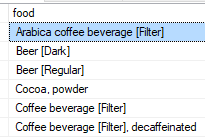
Curcumin is found only in turmeric(22.14) and curry (2.85). Catechol only in coffee… However, checking the Flavoid page, we see there are three other forms of Catechol.

4-Methylcatechol
4-Ethylcatechol

3-Methylcatechol

At this point, we enter fuzzy territory. Did the study include all of these different forms under Catechol or not? Peeking into the database, it appears that all four variations are the same or similar. They are associated with the following foods:

Approach 3 – Targeted

We see above that Eubacteriaceae was very very high. We could just go to it’s page and look at what modifies it. This often results in saturation.

An easier path is to go to the [Other Lab Analysis] and select: All Bacteria [Family] Reported. On that page, select only this one (add more if you wish)

This gives a filtered list (Sorry, I have not updated this page to the above style yet).

The risk with this approach is that you may be missing the bacteria that supports this very high bacteria. Unfortunately, we do not know what feeds this bacteria (clicking on WHY on the sample page). What we do see are odd unexpected relationships which hints at a specific strain being the issue.

Looking at the drop down, we see a lot of species that are overgrown in this family.

We counld return to the Other Lab analysis page and pick: All Bacteria [Genus] Reported This may produce a different report because some studies reported on the family impact and other on the genus impact.

We get a similar list to the above, with a few variations.

Bottom Line

I know people want things to be ultra simple — having multiple ways of looking at stuff can be a challenge. Looking at commonality in the above reports, I would suggest discussing the following with your medical professional.

  • Vitamins B9,B12,B1,B7, B6
  • Probiotics: Bifidobacterium Bifidum and possibly include other Bifidobacterium (avoid all Lactobacillus)
  • Berberine
  • Melatonin
  • Rice with turmeric