Quick Note: Study found Microbiome and DNA related

While doing my monthly update of the manually curated database behind http://microbiomeprescription.azurewebsites.net I came across this article.

The presence of genetic risk variants within PTPN2 and PTPN22 is associated with intestinal microbiota alterations in Swiss IBD cohort patients.  July 2018

Study compared two DNA variations PTPN2 (rs1893217) and PTPN22 (rs2476601)

“RESULTS:

In PTPN2 variant UC patients, we detected an increase in relative abundance of unassigned genera from Clostridiales and Lachnospiraceae families and reduction of Roseburia when compared to PTPN2 wild-type (WT) patients. Ruminoccocus was increased in PTPN22 variant UC patients. In CD patients with severe disease course, Faecalibacterium, Bilophila, Coprococcus, unclassified Erysipelotrichaeceae, unassigned genera from Clostridiales and Ruminococcaceae families were reduced and Bacteroides were increased in PTPN2 WT carriers, while Faecalibacterium, Bilophila, Coprococcus, and Erysipelotrichaeceae were reduced in PTPN22 WT patients when compared to patients with mild disease. In UC patients with severe disease, relative abundance of Lachnobacterium was reduced in PTPN2 and PTPN22 WT patients, Dorea was increased in samples from PTPN22 WT carriers and an unassigned genus from Ruminococcaceae gen. was increased in patients with PTPN2 variant genotype.”

Recap on Histamine Issues

I have done several posts on histamine issues over the last few years — some people close to me have these challenges. Past posts are below:

My Ongoing Dilemna

My problem (i.e. too well trained in scientific method) is the lack of evidence for successful treatment. There are individual stories of success — but such always occur by happenstance for every condition (Cancer, diabetes, etc).  One of the most recent pubmed summaries says it well:

Increased concentration of histamine in blood can occur in healthy individuals after ingestion of foods with high contents of histamine, leading to histamine intoxication. In individuals with histamine intolerance (HIT) ingestion of food with normal contents of histamine causes histamine-mediated symptoms. HIT is a pathological process, in which the enzymatic activity of histamine-degrading enzymes is decreased or inhibited and they are insufficient to inactivate histamine from food and to prevent its passage to blood-stream. Diagnosis of HIT is difficult.” [2015]

  • Histamine-induced food intolerance is not IgE-mediated. Skin-prick testing and specific IgE to food allergens are typically negative….The suspected reason is a diminished histamine degradation based on a deficiency of diamine oxidase.” [1993]
  • “RESULTS: Reduced diaminoxidase serum levels leading to occurrence of HIT symptoms like chronic headache, dysmenorrhea, flushing, gastrointestinal symptoms, and intolerance of histamine-rich food and alcohol were significantly more common in patients with AE than in controls. ” [2006]
  • “HIT apparently develops as a result of an impaired diamine oxidase (DAO) activity due to gastrointestinal disease or through DAO inhibition, as well as through a genetic predisposition which was proven in a number of patients.  The intake of histamine-rich foods as well as alcohol or drugs which cause either the release of histamine or the blocking of DAO can lead to various disorders in many organs (gastrointestinal system, skin, lungs, cardiovascular system and brain), depending on the expression of histamine receptors. Dermatologic sequels can be rashes, itch, urticaria, angioedema, dermatitis, eczema and even acne, rosacea, psoriasis, and other” [2012]

Reduce Histamine or Increase DAO?

My natural inclination is to work to increase DAO. DAO is the body’s natural substance and thus that restoration is important.  Reducing histamine intake runs the risk of triggering a feed-back loop: because there is less histamine coming  in, DAO production may go into atrophy because of less need — forcing histamine intake to be continuously reduced (usually by excluding most foods and having an incomplete diet.

DAO is fortunately available as a supplement, in fact, I took some this morning because my face swelled up (angioedema) which seems to happen once or twice a year to me once I passed 64. [The underlying mechanism typically involves histamine or bradykinin.[1] ].

  • “We found that 10 out of 14 patients had serum DAO activity<10 U/mL, which was the threshold suggested as a cutoff for probable histamine intolerance. Moreover, 13 out of 14 patients subjectively reported a benefit in at least one of the disturbances related to food intolerances following diamine oxidase supplementation. The mean value (±SD) of diamine oxidase activity in the cohort of patients with histamine intolerance symptoms was 7.04±6.90 U/mL compared to 39.50±18.16 U/mL in 34 healthy controls (P=0.0031).” [2016]

The problem is DAO supplements are relatively expensive: $2.00 or more per serving. There is still the risk of a feed-back loop, but at least the diet will be more complete.

DNA/SNP Dimension

The problem may be in your DNA, if you have done a DNA test, you may wish to check

  • ” The minor allele at rs2052129, rs2268999, rs10156191 and rs1049742 increased the risk for a reduced DAO activity whereas showing a moderate protective effect at rs2071514, rs1049748 and rs2071517 in the genotypic” [2011]

Microbiome

Looking data on histamine issues and microbiome at http://microbiomeprescription.com/Data/SymptomEndProductExplorer?site=gut&filter=133 we see:

  • Low 2-Butanone
  • Low 2-Methyl-butanal
  • Low Cadaverine
  • High Vitamin B12
  • Low Hydrogen cyanide
  • Low Methyl thiocycanide
  • High Vitamin B5
  • Low Vitamin K

Smaller sample size for http://microbiomeprescription.com/Metabolite/Explorer?filter=133

  • LOW D-Arginine and D-ornithine metabolism
  • LOW alpha-Linolenic acid metabolism

And by bacteria http://microbiomeprescription.com/Data/SymptomExplorer?site=gut&filter=133

At the class level — shifts everywhere, especially with Gammaproteobacteria (13/15 were low or had none)

Histamine

  • At the genus, all had some Lactobacillus, but everyone was low. Same also for Lactonifactor, Anaerotruncus, Candidatus Soleaferrea,

Bottom Line

This is an update of my ongoing posts on histamine. Due to the recent contribution of microbiome samples with symptoms, we can see some shifts that may be responsible for low DOA production. Once I get 30 samples with symptoms, I will see about generating diet suggestions based on the major shifts seen.

Addendum from a Reader

“My mom gets plugged nose especially when eating foods high in histamine like lactic producing products such as sauerkraut.
Quite by accident we found out that if we give her a little B6 and zinc, within a short time her nose starts to clear. Later I found websites that say B6 and zinc are needed for our bodies to make the DAO enzyme. Infantis also helps. “

Treatments Odds of Remission

The same reader that asked about Biological Markers for CFS/ME, came back with a tougher question:

  • “Now- another huge ask- have you written a post on the efficacy of various treatments? “

The core problem is the need to have proper control studies — which can be a challenge to both design and do.  Often in reviews of the literature we will read issues like:

  • poorly controlled sample populations
  • too small sample size
  • different studies types – observational studies (STROBE), clinical trials (CONSORT), or diagnostic studies (STARD or QUADAS),

My Assumptions

First, in the lack of better information — take things at face value. Suspend prior-beliefs and disbelief.

In my 1999-2001 episode, I reviewed all of the literature at that time and found two treatments that asserted over 50% success rate in publications or in presentations.  I, with significant effort and patience, persuade my family practice physician to do both with me. These two treatments appear to be totally unrelated.

Rickettsia Protocol

This was resurrected by Cecile Jadin, a surgeon in South Africa, from attending meals with her father and his colleagues — they were researchers at the Pasteur Institute for Tropical diseases.

From her presentation at the Manly Conference (Australia): [Paper]

  • 3 – 24 months of treatment (appropriate antibiotics pulsed)
  • 8 months average
  • maintain an 84% to 96% recovery rate (using the records of three MDs using it)
    • Dr. CL Jadin – larger number than any below
    • Dr. Phillipe Bottero – 100 patients
    • Dr. Peter Tarbelton – 300 patients

Reality: Prescribing antibiotics per protocol will often place MDs in jeopardy with Medical Boards. I know of at least two that can no longer practise medicine because of this.

For an Actual Report see A reader report — 100% elimination of symptoms

Hemex Protocol

This was an accidental discovery by Dave Berg — who operated a speciality lab that dealt with testing for coagulation issues — typically for infertility due to Hughes Syndrome. He noted that many physicians using his lab mentions that patients with CFS reported their CFS symptoms disappeared while they were on low dosage heparin.

  • “At the American Association of Chronic Fatigue Syndrome meeting, we presented a retrospective study of 20 patients looking at a hypercoagulable state that could be reversed with anticoagulant therapies” [1999 Article]
  • “Dr. James Dey suggested that we do a retrospective study and even pulled out an abstract form for us for the American Association of Chronic Fatigue Syndrome. So we went back and looked at from between April and October, 21 cases that would be considered truly Chronic Fatigue patients and in that process, how did they improve?, what were their improvements like or was it a placebo effect?, and out of 21 patients, 19 had moderate to very good improvement and the other 2 at least had some improvement. ” [1999 Transcript]
  • “In November, 1999, Dr. Joe Brewer (an Infectious Disease specialist in Kansas City) and I developed a model of pathogen activation of the immune and coagulation systems. The model proposes that the end result of such pathogenmediated activation is increased blood viscosity due to 1) an underlying coagulation regulatory protein defect, and 2) activation of the coagulation system by the pathogen. As the blood viscosity increases, the diminished blood flow creates hypoxia (lack of oxygen) and nutrient deprivation within various areas of the body. This is like trying to start your car in Wisconsin in the winter with 60- weight engine oil. This model explains the multi-organ symptomatology and also explains why the low dose heparin therapy is effective by increasing blood flow as the blood viscosity decreases. Thus, patients gain relief from their symptoms with this therapy.” [2000 Transcript]
  • Improvement: 90% or better

Reality: The full panel of inheritable coagulation defects testing is rarely covered by insurance. Most MDs will not prescribe heparin, instead, refer patients to hematologists. Hematologists will see no clear coagulation events (i.e. stroke) and deem heparin is not warranted.

Heparin is a key component of the Hemex protocol.


Fecal Matter Transplants

From 2016 Review Article because IBS is so often co-morbid, I include those statistics.

  • “fifty-patients with IBS and inflammatory bowel disease .. 36% remission, 16% subsided.”
  • 45 IBS cases with the complaint of chronic constipation.. 89% immediate recovery, 42% remained in remission after 18 month
  • 60 CFS cases .. 70% immediate… 58% remained in remission for > 15 years. 42% had remission disappear before 3 years.

Reality: In some countries (like the US), special permission must be obtained to do it.  Identifying appropriate donors is still an evolving art.

Rituximab Treatment

Øystein Fluge and Olav Mella of the Haukeland University Hospital in Bergen noticed its effect on CFS symptoms in 2004, when they used the drug to treat lymphoma in a person who happened to also have CFS.” – I have personally meet several people who went into remission from chemotherapy.

  • “repeated rituximab treatment can keep symptoms at bay for years”[2015]
  • 29 patients in study had 18 responders, remission over 3 years for 11.
    • 62% chance of responding, if you responded, 61% of it lasting 3 years

Wish List: There have been zero studies on how rituximab alters the microbiome 😦

Bottom Line

All of the above successes fit perfectly into the microbiome dysbiosis/dysfunction model — including hypercoagulation ( Gut-derived endotoxin stimulates factor VIII secretion from endothelial cells. Implications for hypercoagulability in cirrhosis 2017). and Purinergic signaling during intestinal inflammation (2017). “Heightened thrombosis, inflammation, and immune disturbances as seen in IBD appear to be associated with aberrant purinergic signaling.”

Two of the 4 items clearly alters the microbiome. One deals with the symptoms caused by the dysbiosis — and the last one, may alter the microbiome (very probable)


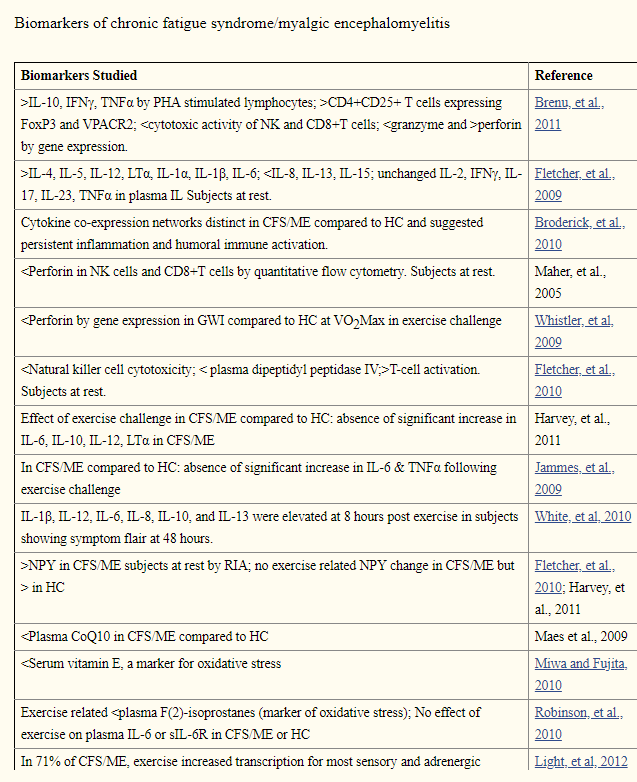
Biological markers for chronic fatigue syndrome

A reader wrote:

“This week on our ABC National TV, the head of a big city hospital’s chronic fatigue clinic stated that there are no biological markers for chronic fatigue, so the best treatment was graded exercise and CBT. Unfortunately his opinion is very powerful here in patients getting government funding for help.”

See this link: http://www.abc.net.au/news/2018-07-18/chronic-fatigue-treatments-set-for-review/10007356

Beware of demanding a marker for all!

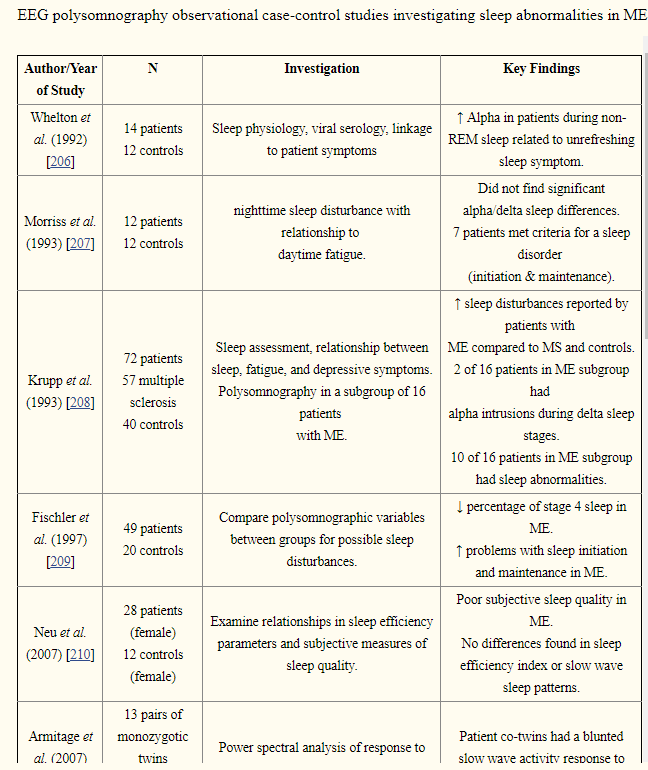
For most conditions there are multiple markers, if a significant number shows up — then conventional medical practice is to assume that condition. CFS traditionally require X out of Y symptoms that persisted for 6 months with all probable conditions accounting for those symptoms being excluded. It is unreasonable to expect every mixture of symptoms to have the same biological markers.

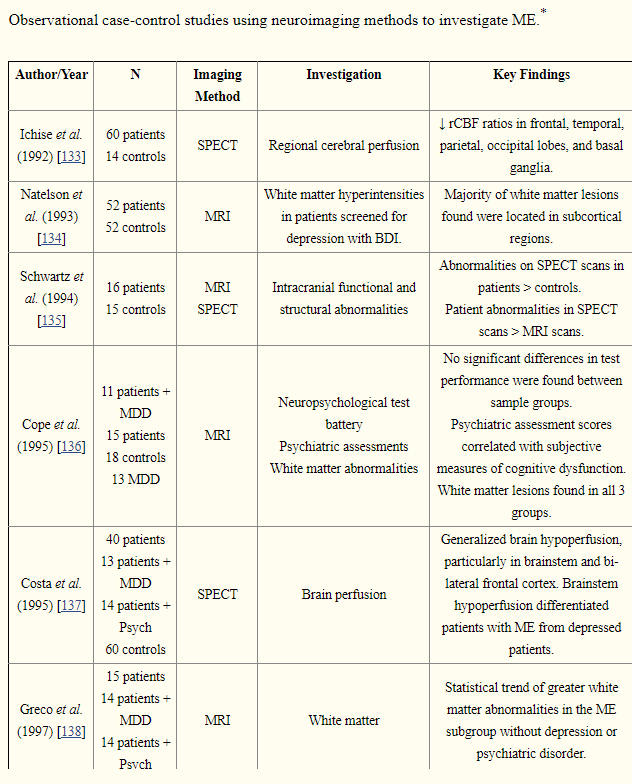
Statistically Significant Biological Markers against Control Populations

  • Brain Scans:  See this post for citations from PubMed
    • Magnetic resonance imaging (MRI)
      • Abnormalities seen in 78% of EBV-associated CFS patients
    • Positron Emission Tomography (PET):
      • 50% of CFS patients show abnormal scans
    • Single-photon emission computerized tomography (SPECT)
      • 80% of CFS patients show abnormal scans
  • Hypercoagulation [2001]
    • 80% of patients had a hypercoaguable state
    • 83% of patients had a hereditary abnormality.
  • Microbiome (gut bacteria shifts)
    • “individuals were classified correctly as ME/CFS with a cross-validation accuracy of 82.93 %.” [See post for citations]
  • Review from 2012 (PubMed)
  • bio
  • Review from 2015
  • bio1
  • bio2

Bottom Line

There are multiple markers. If a suspected CFS patient is tested for 2 (hereditary coagulation abnormality and SPECT scan), the odds of both being negative appears to be 3%.

Treatment is a different question — my focus has been on microbiome shifts. Several readers have reported major improvement with this approach — some returning to work (with some symptoms remaining). Fecal Matter Transplants have repeatedly resulted in short term remission — rarely lasted more than 6 months with several readers who have shared their experiences.

Microbiome shifts cannot be resolved with eating yogurt, kefir or even 99% of health food stores probiotics. There are overgrowths that  need to reduced and undergrowths that need to be encouraged. At present, uBiome or thryve microbiome tests appear to be the best path forward — with end product production of the microbiome population appearing to be very significant for symptoms seen.

Why you react to some probiotics – some answers

A reader wrote today:

“I have been trying B. longum BB536 as I have read it lowers d lactate producers

Seems its helping gut function but giving hot flashes and some heart palps, wondering why?”

The light went on — I have just gotten a reasonable size of end-products relationships (5800). Perhaps we may be lucky and get some idea of what B.longum does.

So I have added end products to the bacteria detail pages. For example:

http://microbiomeprescription.com/Library/Details?taxon=216816&taxname=Bifidobacterium%20longum

And you will see at the bottom of the page:

End Products

  • ?-Amino butyric acid (GABA)
  • Biotin (Vitamin B7)
  • Folate (Vitamin B9)
  • Lactic acid
  • L-Tryptophan
  • Pyridoxine
  • Thiamine (Vitamin B1)
  • Urolithins

If I go to another probiotic, Lactobacillus acidophilus,  I see a different combination,

End Products

  • ?-Amino butyric acid (GABA)
  • Acetylcholine
  • Cobalamin (Vitamin B12)
  • Lactate
  • Lactic acid
  • Trimethylamine
  • Urolithins
  • Vitamin K

Or looking at my favorite Japanese probiotic,  Miyarisan (Clostridium butyricum)  we see here

End Products

  • Acetate
  • Butanol
  • Butyrate

And another Japanese one, Lactobacillus Casei

End Products

  • ?-Amino butyric acid (GABA)
  • Acetylcholine
  • Cobalamin (Vitamin B12)
  • Histamine
  • Lactate
  • Lactic acid
  • ß-Glucan
  • Trimethylamine
  • Urolithins

Bottom Line

This presents a very different way of looking at probiotics. If you have a low amount of an end product (or symptoms associated with a low amount), then you may wish to surf thru the probiotics listed (with other bacteria) here.

For more information on EndProduct determination from a uBiome or Thryve sample, see: