A review of Simmaron Research’s latest “news”

This is an opinion piece with a little attitude.

A reader forwarded me a link to the latest newsflash from  Simmaron Research , with the comment “His findings validate your approach. ”

http://simmaronresearch.com/2018/07/subset-maker-lipkin-chronic-fatigue-syndrome-study-highlights-gut-subset/

He asked me to go thru and give my perspective on their findings. IMHO, they do good work, just slow and perhaps barking up the wrong tree often because they are following their research interests.

  • “Lipkin may have uncovered more potential subsets than any other researcher and has long emphasized the need to break ME/CFS up into its constituent parts.”
    • For paid-researchers, that may be true — but for citizen-scientists, like this blogger, we has been making that point for years. — bacteria drives symptoms… and there are massive number of bacteria variations.
  • “The large 2017 Nagy-Szakal/Lipkin gut study was notable for it’s size (n=100) and it’s breadth – it included patients from no less than six ME/CFS practitioners including Dr. Peterson.”
    • OUCH — you are measuring CFS patients whose microbiome has been tuned by likely similar supplements and therapies….
  • “That analysis suggested that the guts of the ME/CFS patients with and without IBS featured significantly different bacteria.”…
  • “The group suggested that their findings, if validated, could present some possible treatment options. They included using SMAse blockers to reduce ceramide levels and giving carnitine supplementation to increase the low levels of metabolites in the choline-carnitine pathway. ”
    • Tears — instead of addressing the gut dysfunction – the probable root cause, toss drugs at it!
  • “His metabolomic study found signs of energy production problems in all ME/CFS patients, but when Lipkin separated out the ME/CFS + IBS patients, he found altered, even at times opposite metabolic findings that could suggest a different source of fatigue was present in the ME/CFS + IBS patients. His earlier study suggested more severe energy production problems may be present in ME/CFS patients with IBS.”

Wait — what is the source of this fatigue?

IMHO, the results of the majority of SPECT scans show hypoperfusion… that is poor oxygen deliver to the brain.  When a person becomes active (physically or mentally), their brain will consume more oxygen — likely more than can be delivered…. so what happens after a short while — oxygen levels drops well below functioning levels, hypoxia like symptoms appear, etc. Tissue reserves of oxygen are released and consumed.

The person is totally exhausted of oxygen -the mind is not capable of dealing with mental tasks or controlling the body.  With low delivery, it takes time for the oxygen level to return to normal —  both circulating and reserve oxygen must be replaced. This is the infamous payback for overdoing things!

IMHO, “energy production problems” is a major red-herring.

Biohacking the Microbiome

I recently attended a meetup for Biohackers Seattle. This was a good presentation by Masha on what biohacking was — EXCEPT for one omission — nothing on the slides dealt with microbiome biohacking.

Deja Vu: Over the last two decades, I have seen many many different techniques tried to biohack myalgic encephalomyelitis. The pattern is often a few positive reports using the biohack du jour, a diverse group try it, in the larger group — the number of negative responses keep growing against a small number of positive responses. As a statistician,  I recognized the placebo effect combined with the use of only subjective evaluation and no control group. At least 80% of the items on the biohack list are familiar from these two decades of observations.

Microbiome biohacking is complex to do right

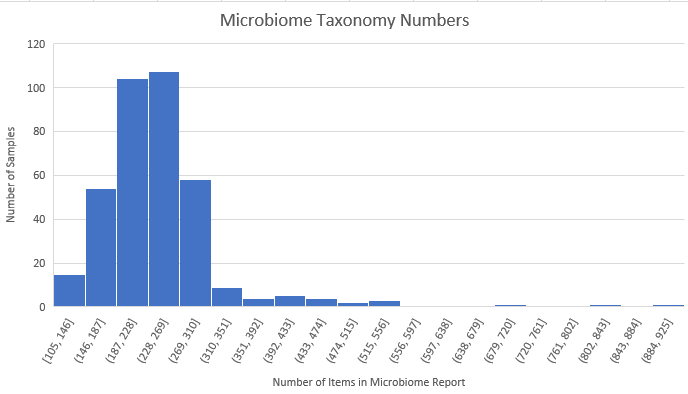
The foundation of microbiome biohacking is a comprehensive report on your gut microbiome, ideally down to the species, ideally the strain level. This report will typically have between 100 and 900 different measurements with 250 being common.

B1

Each one of the items have impact on other items. To illustrate this, doing something to increase or decrease bifidobacterium longum – for example, taking the probiotic align results in  other bacteria increasing or decreasing. See this table for more details. We still lack complete knowledge.

Taxonomy Effect
Bacteroidaceae Decreases
Clostridiaceae Decreases
Enterobacteriaceae Decreases
Erysipelotrichaceae Decreases
Lachnospiraceae Increases
Pasteurellaceae Increases
Prevotellaceae Increases
Ruminococcaceae Increases
Streptococcaceae Decreases
Sutterellaceae Decreases
Veillonellaceae Increases
Verrucomicrobiaceae Increases
Akkermansia Increases
Anaerostipes Increases
Bacteroides Decreases
Blautia Increases
Clostridium Decreases
Dorea Increases
Escherichia Decreases
Haemophilus Increases
Holdemania Decreases
Oscillospira Increases
Prevotella Increases
Roseburia Decreases
Ruminococcus Increases
Streptococcus Decreases
Sutterella Decreases
Veillonella Increases
Firmicutes Decreases
Akkermansia muciniphila Increases
Bacteroides fragilis Decreases
Bacteroides vulgatus Decreases
Blautia producta Increases
Blautia wexlerae Increases
Escherichia coli Decreases
Holdemania filiformis Decreases
Roseburia faecis Decreases
Sutterella wadsworthensis Decreases

It is unlikely that the issue is a single bacteria being too high or too low. It is more typical that bile or serotonin producing bacteria are too many or too few. A simple naive approach would be that “serotonin is made by this one bacteria only’ or “bile is made by this one bacteria only’ — totally wrong.

A shift of bacteria can produce dozens of symptoms — and with correct biohacking, cause all of them to disappear. A simple case study that I just posted is at A reader report — 100% elimination of symptoms.

In terms of conditions, the number of statistically significant bacteria shifts reported in the medical literature (and more being reported as study sizes become larger) are:

ConditionName Bacteria Shifts
ADHD 26
Allergies 18
Alzheimer’s disease 18
Autism 21
Autoimmune Disease 14
Brain Trauma 20
Chronic Fatigue Syndrome 30
Crohn’s Disease 23
Depression 28
Gout 23
Hashimoto’s thyroiditis 11
High Blood Pressure 10
Histamine Issues 35
Inflammatory Bowel Disease 24
Irritable Bowel Syndrome 18
Metabolic Syndrome 14
Mood Disorders 21
Parkinson’s Disease 9
Rheumatoid arthritis 24
Sjögren syndrome 21
Small Intestinal Bacterial Overgrowth  (SIBO) 8
Stress / post-traumatic stress disorder 19
Systemic Lupus Erythematosus 32
Type 2 Diabetes 18
Ulcerative colitis 9

So, you need to take things that would ideally modify all of the shifts back to normal. The items should not be items based on speculation or theory; but on actual published and peer-review studies.

I have assemble a list of such items of Gut Modifiers to assist those that wish to hack.

Microbiome Biohacking is the low hanging fruit

Less than $100 to get a ubiome.com report done. Even if you do not try using the Gut Modifiers, but do some other hack — you should do a before and after ubiome…. because evidence is that every biohack will alter your microbiome. Instead of a subjective report, give an objective report.  You feel less stress from eating fermented harbor seals. – There are bacteria associated with stress levels, some of those should change.

Brain Injury – special reader contribution

A reader “J.S.” asked to do a guest post — something that I am very fine with. CFS/ME often can be accurately described as  infection caused brain injury for many patients. I usually avoid the term trauma — because it implies someone being hit over the head with a physical bat.

Coping With Brain Trauma: Understanding The Long-Term Effects

Nearly 1.7milion traumatic brain injuries occur in the United States every year, according to CDC. TBI is the leading cause of death and disability, resulting in 1.5 times more deaths than AIDS. Yet, no head injury case is alike. Traumatic brain injury is the leading cause of disability in adults under forty.

Head injuries are worrisome for a number of reasons as they can lead to brain damage but also learn to devastating long-term effects. However, it is important to highlight that there are no “typical” effects of TBI but rather require an understanding of how to cope.

Long-term effects of brain injury

Depending on the severity and location of the brain affected, the consequences will vary. Survivors can be affected in a variety of issues, including:

  • Cognitive Impact – This may include short-term memory loss, poor motivation, impaired reasoning, slowed responses, and difficulty in problem-solving abilities.
  • Physical Changes – Excessive tiredness and fatigue as a common effect for most individuals who sustain brain trauma, including minor accidents. This can lead to reduced balance, coordination, sensory and mobility perceptions. Thus, the individual may need to rely on aids for mobility to walk.
  • Behavioral Effects – The individual’s personality can change after sustaining a head trauma. They will experience sudden emotional outburst and mood swings. In fact, depression, frustration, and anxiety are also quite common and might become difficult to control.

Managing fatigue after brain trauma

In the general population, fatigue is involved with 10% of incidences. But for people with TBI, it is one of the most common complains post-trauma. Consider how a car needs gas to run properly. If your tank is low, your car will start running down, reaching the end of your fuel reserve. This works the same way with fatigue after a traumatic brain injury. Chronic fatigue is caused by a decrease in physiological reserve. When the brain is low on energy, your body becomes exhausted.

Understanding sensory impairment

After a head injury, individuals may feel a loss, reduction, or exaggerated sense of touch. This can also be difficult for those with odd postures in addition to poor eyesight and the sense of smell. If the person has lost the sensation of smell or taste, they might find food unappetizing. Instead, try to present meals that look appealing.

Difficulty with speech

Rapid, slow, or indistinct speech is highly common after a brain injury. It can be hard to understand their initial speech, but listeners will slowly learn to “tune in” instinctively. While some may lose the ability to speak, it is important to remember that their disability does not mean that they have lost their intelligence. If you cannot understand their gestures, ask to repeat the statement or rephrase in another way.

Coping in the longer term is a journey – for the survivor and their loved ones. Constant monitoring is vital as you may end up missing the small, yet vital feats which are the true marks of progress.

Ken’s Notes on Microbiome Changes

There have been a few more studies since my last post in this area.

  • “Experimental stroke altered the composition of caecal microbiota, with specific changes in Peptococcaceae and Prevotellaceae  correlating with the extent of injury” [2016]
  • ” Here we show that antibiotic-induced alterations in the intestinal flora reduce ischemic brain injury in mice, an effect transmissible by fecal transplants.” [2016]
  • Microbiota Dysbiosis Controls the Neuroinflammatory Response after Stroke.[2016]
    • “Reduced species diversity and bacterial overgrowth of bacteroidetes were identified as hallmarks of poststroke dysbiosis, which was associated with intestinal barrier dysfunction and reduced intestinal motility as determined by in vivo intestinal bolus tracking. “
  • Clostridium butyricum attenuates cerebral ischemia/reperfusion injury in diabetic mice via modulation of gut microbiota [2016].
  • Clostridium butyricum exerts a neuroprotective effect in a mouse model of traumatic brain injuryvia the gut-brain axis. [2018]
  • Moderate Traumatic Brain Injury Alters the Gastrointestinal Microbiome in a Time-Dependent Manner.[2018]
  • “In regards to traumatic injury, Hayakawa and colleagues found that the intestinal microbiota becomes fundamentally disrupted within hours of injury and sudden physiologic insult including cardiac arrest and stroke [49]. Similarly, a recent study in severely injured patients demonstrated significant changes in phylogenetic composition and relative abundance in the first 72 h following injury [50]. Critically ill patients admitted with the systemic inflammatory response (SIRS), including those with traumatic injury, have also been shown to have alterations in the gut microbiome, and these disturbances are predictive of sepsis-associated mortality in their patient population. Another instance of surgical injury altering the gut microbiome was described by Shogan et al., in their study revealing that intestinal anastomotic injury can provoke changes in the gut microbiome [51]. Furthermore, amongst critically ill patients with a prolonged hospitalization, the composition of the gut microbiome dramatically changes such that pathogen communities of extremely low diversity emerge and trigger further virulence in the host [52]. Similarly, critical illness can also cause a shift in the microbiome in such a way that dysbiosis occurs in which beneficial microbes are lost and pathogenic bacteria begin to monopolize the gut [53].” [2018]

Bottom Line

There are two aspects of treatment:

  • reducing stress on the person with brain injury
  • altering the microbiome — one probiotic appears to be effective in improving brain injury, see this post on Clostridium butyricum


A reader report — 100% elimination of symptoms

A reader wrote: “I did a followup uBiome tests (5 site explorer) to compare to my 2015 gut test (from when my CFS was super bad). Diversity scores on skin and other tests seem very low since I’m on chronic doxycycline and minocycline but I’m feeling great!

“I  believe I did mark symptoms on my 2015 gut sample in your system.

The after is basically all of those things being gone and being in a long-term remission.”
The approach this reader tookis the Rickettsia/Jadin approach, covered in this earlier this month post. An approach with > 85% remission rate.

Symptoms that disappeared

    • Autonomic Manifestations: light-headedness
    • Autonomic Manifestations: Postural orthostatic tachycardia syndrome (POTS)
    • Comorbid: Multiple Chemical Sensitivity
    • General: Fatigue
    • Immune Manifestations: general malaise
    • Immune Manifestations: new food sensitivities
    • Immune Manifestations: recurrent sore throat
    • Immune Manifestations: tender lymph nodes
    • Neurocognitive: Slowness of thought
    • Neuroendocrine Manifestations: abnormal appetite
    • Neuroendocrine Manifestations: intolerance of extremes of heat and cold
    • Neuroendocrine Manifestations: sweating episodes
    • Neuroendocrine Manifestations: Excessive adrenaline
    • Neuroendocrine Manifestations: Rapid muscular fatiguability
    • Neuroendocrine Manifestations: worsening of symptoms with stress.
    • Neurological – Vision: inability to focus eye/vision
    • Neurological-Audio: hypersensitivity to noise
    • Neurological-Sleep: Chaotic diurnal sleep rhythms (Irratic Sleep)
    • Neurological-Sleep: Insomnia
    • Neurological-Sleep: Sleep Reversal
    • Neurological: Impairment of concentration
    • Neurological: emotional overload
    • Neurological: Executive Decision Making (Difficulty making)
    • Neurological: Short-term memory issues
    • Neurological: Slowed speech
    • Neurological: Word-finding problems
    • Onset: less than 02 years since onset
    • Post-exertional malaise: General
    • Post-exertional malaise: Inappropriate loss of physical and mental stamina,
    • Post-exertional malaise: Rapid cognitive fatigability,
    • Post-exertional malaise: Rapid muscular fatigability,
    • Sleep: Unrefreshed sleep


End Products Shifts

Scanning through the various comparison for the earlier and later samples, items of note:
  • Serotonin production went up almost four fold
  • Amount of bile End Product being produced almost doubled
  • Biogenic amines doubled
  • D-Galactose dropped
  • Fucose dropped
  • Histamine dropped
  • Propionate dropped

Taxonomy Changes

  • Phylum
    • Verrucomicrobia normalized
    • Synergistetes normalized
    • Proteobacteria normalized

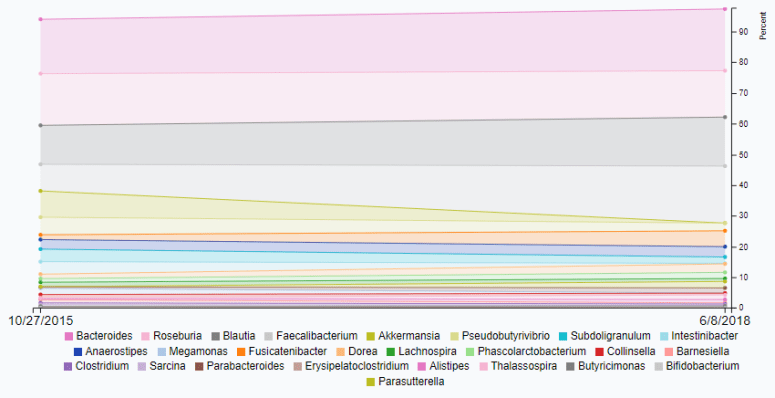
Visuals for each level of the hierarchy are below.

L1

L2

L3

L4

Bottom Line

Needless to say, I am happy about reading the changes and the reader willingness to share their results.

On the plus side for this reader:

  • Ability to get continuous antibiotics
  • First sample was done less than 2 years after onset (dysbiosis was likely not strongly established)
  • Verrucomicrobia seems to be a key player for this person (may not apply to others)

On a note: I would be tempted to take breaks between courses of antibiotics, very slowly increasing the length of the break.


Product Review: Alflorex (UK market) – aka ALIGN

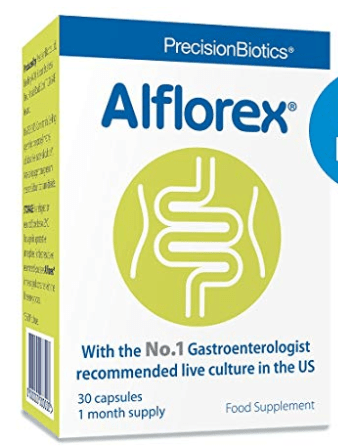
A reader asked me to review this new probiotic. It has some “compelling marketing” — which likely raised flags of concerns to the reader. (Amazon UK Link)

Alf

Analysis

Obtuse labeling:  bacterial culture 35624 — What the Taxonomy is this bacteria!!!!

Exploring on their site we see it is “Bifidobacterium 35624 ” with the claim:

“The 35624 culture in Alflorex has been shown in 2 clinical trials and in scientific publications to remain active right through the digestive system and to reach the bowel with its properties intact.”

With some digging, we find that it is Align (Bifidobacterium longum subsp. longum 35624™)  i.e. “Bifibobacterium longum subsp. longum 35624™ strain (formerly named Bifidobacterium longum subsp. infantis)” [2016]

End Products

So we know it’s end products are:

  • ?-Amino butyric acid (GABA)
  • Biotin (Vitamin B7)
  • Folate (Vitamin B9)
  • Lactic acid
  • L-Tryptophan
  • Pyridoxine
  • Thiamine (Vitamin B1)
  • Urolithins

Pub Med Studies

  • “Additionally, the treatment with Bifidobacterium infantis 35624 in CFS patients, during the same period, reduced inflammatory biomarkers” [2018] – this does not say that symptoms improved … just lab tests.
  • “This study found that 2 weeks of B. infantis 35624 (Align) supplementation affects lactulose breath test assessment for SIBO by significantly increasing methane, but not hydrogen, excretion after lactulose administration. Methane levels reached values that would be considered positive for SIBO patients. This study suggests that patients undergoing LBT should discontinue probiotics prior to the test as these supplements may alter the test results.” [2018]
  • ” Treatment with single probiotic B. infantis didn’t impact on abdominal pain, bloating/distention, or bowel habit satisfaction among IBS patients. ” [2017]
  • “B. infantis 35624 did not show a significant improvement in the mean severity of symptoms of abdominal discomfort and bloating in a non-IBS-patient population.” [2017]
  • “Supplementation significantly increased fecal B. infantis 35624 excretion vs. placebo in IBS subjects; excretion in healthy subjects receiving supplement was quantitatively similar. Fecal levels of the probiotic declined and approached baseline once dosing ceased, documenting that colonization is transient. ” [2013]

I did an earlier post in 2013 on Align —  some readers reported histamine issues (which agrees with published studies).

Bottom Line

If SIBO is your diagnosis — stop taking it, the taking of it may be causing a POSITIVE breathe test!!!!

If you have IBS or CFS, do not expect any symptom improvement.

Cost:

  • UK: £24.94 ($33) for 30 capsules for $1.10/capsule
  • US: $0.73/capsule