End Product Analysis Expanded

Over the last week, I have been expanding the end product analysis. The main reason is that the first iteration found very strong clustering of end products with patients that had certain symptoms.

A visual may help:
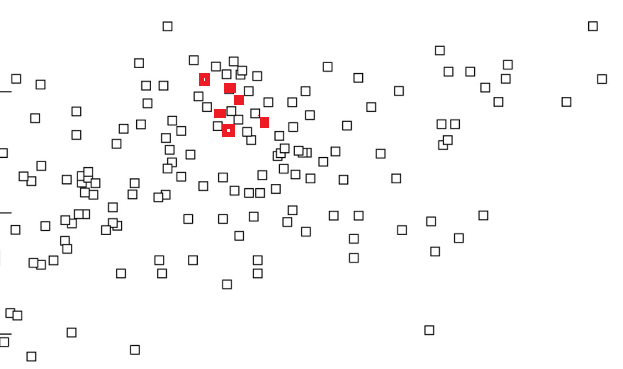
cluster

If you take all of the points and look at the red averages using the standard deviation of all of the points, it would not be significant.  If you took the red average and red standard deviation and compare to the average for all of the points — you will get statistical significance. Something that you can see visually above.

This post refers to the site: http://microbiomeprescription.com/ If you have a thryve or ubiome analysis, you can upload it there and get further analysis done.

Personal Comparison

I have added some new columns to the page for comparison to people reporting themselves as healthy.

ep0

As you can see above, you may have a very low or very high percentage and it is not deemed significant using the health population average and standard deviation.

If you go over to the symptom explorer, and  add in a symptom, i.e. Neurological-Sleep: Night Sweats , you will see discover some items are missing… for example: 2-Methyl-butanal and 2-Butanone

meh

You will also note that people with this condition are VERY LOW … having zero is not unexpected.

Bottom Line

There are now some 80 end products being reported now using more information about which bacteria produces each product.

This does not always give simple suggestions… in a few cases, it does — a specific Vitamin or amino acid is low. When dealing with high levels, that is more complex because it means killing off some bacteria 😦 .
 

Fixing suggestions issue with no Bifidobacterium or Lactobacillus

A reader query revealed a bug. The suggestions applies to what you have — if you have no lactobacillus or no bifidobacterium THEN there is no bacteria to modify!

I have just added code to add a ZERO (0) value if you have none reported. This will cause items to increase lactobacillus and bifidobacterium to be added to suggestions.


Streptococcus and it’s mental impact

A reader asked if Streptococcus was known to be associated with any psychiatric disorders.  My immediate response is YES, Dr Philippe Bottero had an reported remission rate of over 75% in treating patients at a psychiatric hospital with antibiotics back in the late 1990’s.  His success with a non-conventional approach resulted in his ability to practise being severely restricted by the establishment (according to private information) – Report is here on treatment.

Jump ahead a few decades and what do we find on PubMed?

And for other bacteria:

Bottom Line

The presence or absence of some bacteria can cause psychiatric effects. This is not restricted to Streptococcus.

Can you recover Lactobacillus if you have none?

A reader ask this question “If I have no lactobacillus, and most lactobacillus probiotics are not human source (so will not stay around), is there any hope to recover lactobacillus?”.  Looking at the data I found on 343 samples only 15 samples has no measurable lactobacillus. If the number is very low, ubiome will report it as none.

Those with subsequent ubiomes with lactobacillus.

Some Examples:

  • AC:
    • Original: null
    • 2014: 772
    • 2015 1819
  • AK
    • 2017-08: null
    • 2017-12: 52
  • TK
    • 2016-02: null
    • 2017-01: 936
    • 2017-03: 108
    • 2017-09: 1996

One reader had them wrapped out, I assume due to antibiotics or other prescription drugs.

  • 2018-03: 128092
  • 2018-05: null

Bottom Line

There appears to be evidence that Lactobacillus will repopulate over time.

Counteracting Antibiotics and Other Drugs

I have an extensive list of drugs with their impact on  http://microbiomeprescription.com/Library/GutModifiers.

The question arose in one of my facebook groups — what should I do when I am taking this or that antibiotics.

Conceptually, it is simple —

  • Lookup that antibiotic
  • See which bacteria it modifies
  • See what you can take to counteract it’s effect.

The problem is that for some items, the data volume explodes!

I have added a new link and a new page. When you click on a modifier that is an antibiotic,  for example, http://microbiomeprescription.com/Library/Modifier?mid2=534,

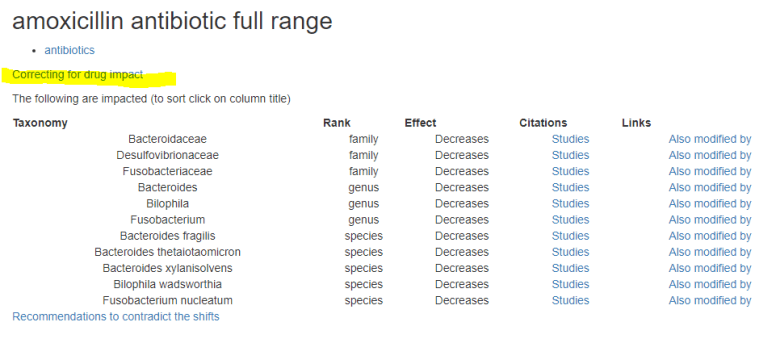
You will see a new link on some of themdrugs1

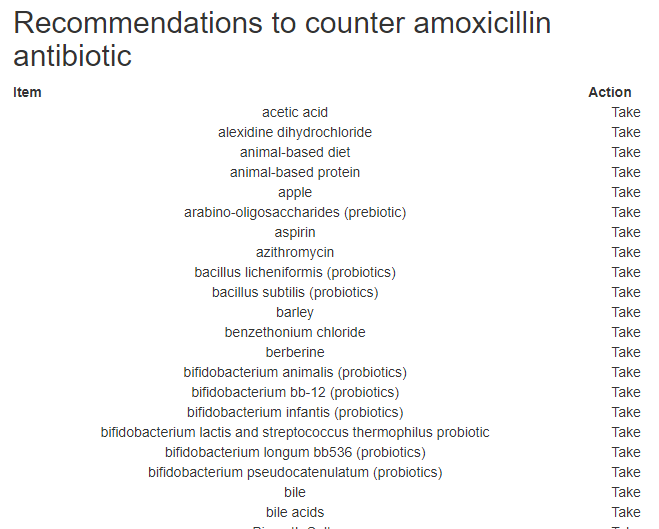
Clicking on that, takes you to the suggestions to minimize the antibiotic impact on the microbiome.

drugs2

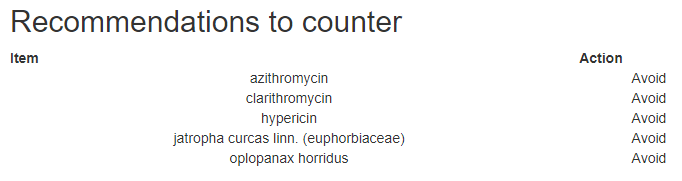
More important, at the bottom are things you may wish to give up while on the antibiotic.

drugs3

Bottom Line

I attempted to keep prescription items off the list, but data still has a lot of cleanup waiting. For example, two antibiotics snucked into the avoid list.

I believe this is the first time, anyone has given science/studies based recommendations on what to do when taking antibiotics. Most of the usual advice has been folk-lore and hearsay. We now have some science.


This is an education post to facilitate discussing this approach with your medical professionals. It is not medical advice for the treatment of any medical condition. Always consult with your medical professional before doing any  changes of diet, supplements or activity. Some items cites may interfere with prescription medicines.