A reader asked about their relationship and after doing a quick check on PubMed, there seems to be sufficient studies to attempt a summary.
- “Gut microbes are capable of producing most neurotransmitters found in the human brain. Evidence is accumulating to support the view that gut microbes influence central neurochemistry and behavior.” [2017]
- “The bacterial commensals in our gut can signal to the brain through a variety of mechanisms, which are slowly being resolved. These include the vagus nerve, immune mediators and microbial metabolites, which influence central processes such as neurotransmission and behaviour. Dysregulation in the composition of the gut microbiota has been identified in several neuropsychiatric disorders, such as autism, schizophrenia and depression. Moreover, preclinical studies suggest that they may be the driving force behind the behavioural abnormalities observed in these conditions.” [2016]
- “Numerous studies have revealed that obesity in particularly is associated with an array of modifications in vagal afferent function from changes in expression of signaling molecules to altered activation mechanics. In general, these changes in vagal afferent function in obesity further promote food intake instead of the more desirable reduction in food intake. ” [2017]
- ” lipopolysaccharide mice treated with fecal microbiotatransplantation demonstrated a better spatial memory and less EEG abnormalities, significantly attenuated levels of IL-1β, IL-6, TNF-α, and decreased number of Iba-1 positive microglia in the cortex, but these beneficial effects of FMT were reversed by vagotomy .” [2018]
- ” Recently, it has been shown that sensory cells of the gut known as enteroendocrine cells (EECs) contain α-synuclein and synapse with enteric nerves, thus providing a connection from the gut to the brain. It is possible that abnormal α-synuclein first develops in EECs and spreads to the nervous system.” [2018]
- “Psychological stress typically triggers a fight-or-flight response, prompting corticotropin-releasing hormone and catecholamine production in various parts of the body, which ultimately disturbs the microbiota. In the absence of stress, a healthy microbiota produces short-chain fatty acids that exert anti-inflammatory and antitumor effects. During stress, an altered gut microbial population affects the regulation of neurotransmitters mediated by the microbiome and gut barrier function. Meditation helps regulate the stress response, thereby suppressing chronic inflammation states and maintaining a healthy gut-barrier function” [2017]
- “Stress has an impact on symptoms in IBD; however, there is limited evidence that stress triggers increased intestinal inflammation. Although attention to stress and psychiatric comorbidity is important in the management of IBD, there are few clinical trials to direct management.” [2017]
- “A protein known as alpha-synuclein accumulates in brains of people with Parkinson’s disease that is also present in the GI before the onset of motor symptoms. Therefore, the stomach, previously thought to be a stable mechanism throughout life, might explain some etiological origins of disease. Finally, the vagus nerve of the autonomic system that extends from the brain to the abdomen and exercises both sympathetic and parasympathetic roles might be associated with PD diagnosis along with Lewy body influences.” [2017]
- “The gut-brain axis denotes communication between the enteric nervous system (ENS) of the GI tract and the central nervous system (CNS) of the brain, and the modes of communication include the vagus nerve, passive diffusion and carrier by oxyhemoglobin. Amyloid precursor protein that forms amyloid beta plaques in AD is normally expressed in the ENS by gut bacteria, but when amyloid beta accumulates, it compromises CNS functions. Escherichia coli and Salmonella enterica are among the many bacterial strains that express and secrete amyloid proteins and contribute to AD pathogenesis. Gut microbiota is essential for regulating microglia maturation and activation, and activated microglia secrete significant amounts of iNOS.” [2017]
- “The nucleus of the solitary tract (NTS) is a brain target for gastrointestinal signals modulating satiety and alterations in gut-brain vagal pathway may promote overeating and obesity. ….High Fat Diet (HFD) altered gut microbiota with increases in Firmicutes/Bacteriodetes ratio and in pro-inflammatory Proteobacteria proliferation. HFD triggered reorganization of vagal afferents and microglia activation in the NTS, associated with weight gain. Minocycline-treated HFD rats exhibited microbiota profile comparable to Low Fat Diet(LFD) animals. Minocycline suppressed HFD‑induced reorganization of vagal afferents and microglia activation in the NTS, and reduced body fat accumulation. Proteobacteria isolated from cecum of HFD rats were toxic to vagal afferent neurons in culture. Our findings show that diet‑induced shift in gut microbiome may disrupt vagal gut‑brain communication resulting in microglia activation and increased body fat accumulation.” [2017]
Bottom Line
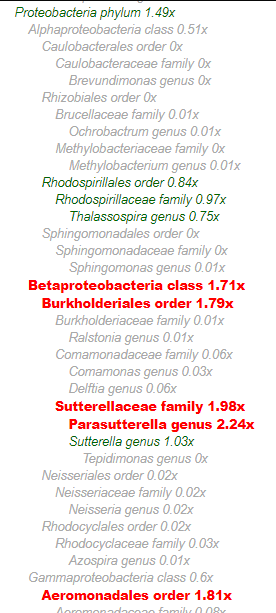
The literature suggests microbiome impacts the vagus nerve, and not the reverse. Overgrowth of Proteobacteria appears to be a significant agent.
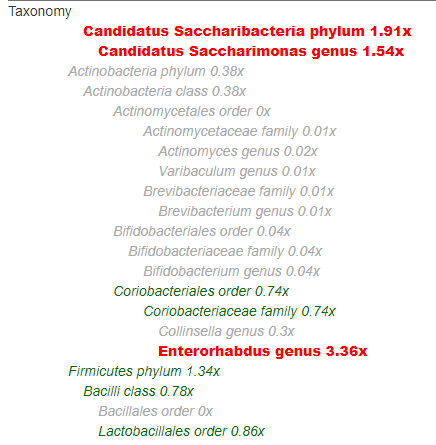
What is especially interesting is that when I averaged all of the uBiomes uploaded to date (53), we see that they share overgrowth of Proteobacteria!



 CFS Remission