Recap on what we know for treating Multiple Chemical Sensitivity

In my earlier post, DANGER: Antioxidants and Multiple Chemical Sensitivity, I cited a study on humans with MCS which indicated that clinical experience found that the following should NOT be taken:

  • alpha lipoic acid (ALA),
  • N-acetylcysteine (NAC)
  • selenium
  • ascorbic acid(Vitamin C)
  • thiol (sulfur derivatives) agents.

In a post from 2013, Multiple Chemical Sensitivity: Model of What it is, and treatment experience, I cited a study that found additional items to be ineffectual:

  • Cholestyramine therapy, sauna bathing, and fasting have all been attempted and have proven unsuccessful (AAP 1999). In fact, PCBs stored in fat can be mobilized by the patients crash dieting.”[CDC]

My model is that the chemical signatures are misread as an attack by an infection and thus the body shifts quickly into fight mode. Restricting access of the suspected infection to move in the body, i.e. reducing the flow of blood until antibodies can respond — typically hypoperfusion.

Recent Literature

A recent study with brain scans found that MCS triggers resulted in “previously observed significant activations in the prefrontal cortex (PFC)”[2013] and “activations were specifically strong in the orbitofrontal cortex (OFC)” [2015]

“The results of our study suggest that cortical activity in subjects with MCS differs from that in healthy individuals during olfactory stimulation… with an increase in glucose consumption in ..[some areas of the brain] and a reduction in glucose metabolism in ..in ..[other areas of the brain] .” [2015]

“After chemical challenge, cases showed hypoperfusion[reduced oxygen delivery] in the olfactory, right and left hippocampus, right parahippocampus, right amygdala, right thalamus, right and left Rolandic and right temporal cortex regions(p<or=0.01). By contrast, controls showed hyperperfusion[increased oxygen delivery] in the cingulus, right parahippocampus, left thalamus and some cortex regions (p<or=0.01). The clustered deactivation pattern in cases was stronger than in controls (p=0.012) and the clustered activation pattern in controls was higher than in cases (p=0.012). In comparison to controls, cases presented poorer quality of life and neurocognitive function at baseline, and neurocognitive worsening after chemical exposure. Chemical exposure caused neurocognitive impairment, and SPECT brain dysfunction particularly in odor-processing areas, thereby suggesting a neurogenic origin of MCS.” [2009]

“Activation was defined as a significant increase in regional cerebral blood flow (rCBF) during smelling of the respective odorant compared to smelling of odorless air.” [2007]

” The MCS subjects activated odor-processing brain regions less than controls, despite the reported, and physiologically indicated (decreased RR interval) distress. In parallel, they showed an odorant-related increase in activation of the anterior cingulate cortex and cuneus-precuneus. Notably, the baseline rCBF was normal. Thus, the abnormal patterns were observed only in response to odor signals. Subjects with MCS process odors differently from controls, however, without signs of neuronal sensitization. One possible explanation for the observed pattern of activation in MCS is a top-down regulation of odor-response via cingulate cortex.” [2007]

I should point out that this study was done with more inaccurate older equipment as well as PET showing low abnormality rates for CFS while SPECT scan shows high abnormality rates. IMHO – the study was poorly done with the conclusions being incorrect.

  • “This first systematic PET study in MCS patients revealed no hint of neurotoxic or neuroimmunological brain changes of functional significance.” [2002]

Note that hypoperfusion[reduced oxygen delivery] will cause brain fog and neurological issues.Parts of the brain are starving for oxygen and unable to function properly.

Not discounted suggestions

While saunas (classic saunas) have been reported ineffectual, infrared sauna (Waon theraphy) has have positive results for symptom reduction in CFS:

From a blogger on the web:”Several MCS experts, as well as patients, have found that dry sauna can be of benefit although thus far, there is no explanation of why this is so. In the past, we have written that sauna therapy is based on an ancient therapy called Waon therapy and past studies of this technique suggest it may increase the expression of Nrf2 and HO-1 and possibly influence the expression of PGC-1a.” [2010]

“One of the safest methods of overall detoxification recommended by qualified physicians is a sauna.  Dr. William Rea offers a sauna room for treatment at his clinic, the Environmental Health Center, in Dallas. ” [MSC-America.org]

From PubMed:

“Perceived fatigue significantly decreased after therapy, although no significant reductions were observed during therapy. In addition, a negative mood, including anxiety, depression and fatigue, and the performance status significantly improved after therapy. However, the levels of pain and vigor did not change significantly. No patients reported any adverse effects during the therapy.” [2015]

From a blogger on the web:”Several MCS experts, as well as patients, have found that dry sauna can be of benefit although thus far, there is no explanation of why this is so. In the past, we have written that sauna therapy is based on an ancient therapy called Waon therapy and past studies of this technique suggest it may increase the expression of Nrf2 and HO-1 and possibly influence the expression of PGC-1a.” [2010]

At the antioxidant level (which taking supplements was found to be counter productive above):

“It was shown that the effect of high temperatures promotes the development of oxidative stress that is followed by the formation of adaptive reactions in the form of activation of antioxidant protection, enhancement of non-specific responses of the cells, increase of stability and restoration of structural homeostasis of erythrocyte membranes.” [2013]

‘”indicating that FIR reduced inflammation.”[2012]

  • A study of patients with rheumatoid arthritis and ankylosing spondylitis showed a reduction in pain, stiffness, and fatigue during infrared sauna therapy [30].
  • “During the period of FIR therapy, the symptoms of eye itching, nasal itching, nasal stuffiness, rhinorrhea, and sneezing were all significantly improved. Smell impairment was improved after the last treatment.”

Hypoperfusion

Treating hypoperfusion is often done with fibrinolytic agents (serrapetase, nattokinease, lumbrokinease, bromelain), platelet agents (aspirin, willow bark), and vascular dilators (regular flushing niacin). These could cause symptom relief.

If a person is hyper coagulated (thick blood), then the exposure could (speculation) just push them over the edge. If this model is correct, then hyper coagulation testing and correction would be logical to investigate. Unfortunately, Dave Berg has retired.

Olestra Chips

This has not been tested in the lab. I do know people who claim that it quickly reduces the severity of a MCS episode.

Bottom Line

There is so little research on MCS, what I would love to see are:

  • Microbiome study and MCS
  • Formal study of Olestra
  • Coagulation defects and MCS

At the moment, Infrared saunas are the best treatment in town. We have one, it was on sale at Costco for $800 and was a Christmas present to help with health.
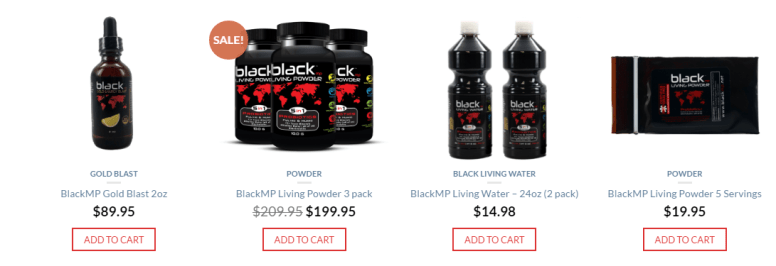


Ouch – Black Living Water, the con is on!

A reader ask me about this, and I went to their site and needed an air sickness bag looking at the prices as well as advertising contents. $15 for less than a quart of water with a dash of whatever.


black

Some translations:

So bottom line,   someone took some clay with humus and mixed it with water!

Probiotic Contents

The site states 12.5 Billion CFU, consisting of:

Not a single strain identified — and all of them are expected to be found in compost that contains hay.

Bottom Line

Find a suitable clay deposit and a compost pile from an organic farm, package it and sell it with a detail analysis of the content. You have over 70 trace minerals!!!  Likely a hundred strains of bacteria and a half dozen families.

Wrap it up with enough pretty word smithing and images and you will make a fortune selling a bottle of water with a little soil mixed in for $15/quart!

Or, go for a hike in a national forest, do not wash your hands and eat lunch — you will likely have the same health impact!!


Questions from a reader about herbs and probiotics

My usual practice is to answer questions by a post — that way people can comment (and disagree) . Also, others may have the same questions and do not have the energy to write.

1) I ran out of my encapsulated herbs awhile ago and I haven’t had the energy to make more but I have continued taking and rotating probiotics. I have noticed that, even though I am increasing the dosage (usually 2x but sometimes 3x recommended) of the probiotics, I am only noticing very minor herx (I still notice some benefits though). Without having the herbs to kill the bacteria, do you think that increasing the dosage of the probiotics is actually doing more than just the recommended dosage? I currently have recurring infections (that only go away when I take various herbs) so I’m wondering if taking the extra probiotics are actually doing anything.
  • Many probiotics produce natural antibiotics, so some killing of bacteria happens. The key issue is to prevent antibiotic resistance — antibiotic resistance to the natural antibiotics produced by the probiotics. Hence the need to constantly rotate the probiotics.
  • Since you have found that certain herbs suppress  recurring infections you should try to identify which herbs do it. If you get a short list then of herbs then you (or me) may be able to identify which family of bacteria is involved and look for additional herbs effective against this family. Again the recurring issue is the bacteria developing resistance to how each herbs kills.  With this list, you should rotate them every 7-14 days so when the bacteria adapts to one, the next one is effective against the adaptation.
2) For someone that is on a budget, and also not noticing any herx, is it more beneficial to take probiotics over a longer period of time (ie. recommended dose) or take a larger dose but over a shorter period (ie. double dose)?
  • If you do not herx severely, go for a high dosage for a short period. The key logic is to kill off more before resistance develops. Do not take the same probiotic or herb continuously – it just encourages resistance.
3) For those that can afford to, would you recommend continuing to increase the dose of probiotics so that you always (even if minor) notice a herx reaction?
  • Yes, but time-box how long you take each one.  When you rotate back to it, start with a higher dosage.
4) I’ve seen you (and others on the internet) recommend to take herbs (where possible) as a tea. Why is this? I think you did explain this before but I can’t find where. Also, would you recommend ingesting the herb while/after drinking the tea, or is there a reason to only drink the tea?


Review on Metabolome and Bacteriophages Research

This last week there were two very interesting studies published:


Metabolome Study

  • Patients were a very specific subset of CFS patients (“met diagnostic criteria for ME/CFS by Institute of Medicine, Canadian, and Fukuda criteria.” – i.e. 3 different criteria )
  • “Patients with CFS showed abnormalities in 20 metabolic pathways. Eighty percent of the diagnostic metabolites were decreased”
    • Male abnormalities were:
      • Sphingolipids
      • Glycosphingolipids
      • Phospholipids
        • “a very specific molecular species of phospholipid, PC(18:1/22:6), containing the essential omega 3 fatty acid docosahexaenoic acid (DHA, C22:6) and oleic acid (C18:1) was increased.”
      • P5C, Arg, Ornithine, Pro
      • Cholesterol, nongonadal steroids
      • Branch chain amino acids (different in males and Females)
      • Purines
      • Microbiome metabolism
      • Vitamin B2 (riboflavin) – this is a component of d-ribose which is known to help CFS
      • Serine, 1-carbon metabolism
      • SAM, SAH, methionine, glutathione
      • Very long chain fatty acid oxidation
      • Propiogenic amino acids
      • Threonine metabolism
      • Fatty acid oxidation and synthesis
      • Collagen/hydroxyproline metabolism
      • Bile salt metabolism
      • Endocannabinoids (Females only)
      • Vitamin B12 (cobalamin) metabolism (Females only)
      • Amino-sugar, galactose, and nonglucose (Females only)
  • “the metabolic features of CFS are consistent with a hypometabolic state.”
    • From 1959: “The most common signs and symptoms of hypometabolism were chronic fatigue, enlarged thyroid gland, gynecologic disorders, dry hair, and nervousness and irritability. The most frequent gynecologic disorders were adnexal congestion, pelvic pain, adnexal tenderness, and menstrual irregularity.”

I am not going to dive into each and every item above. With the above metabolites (chemicals) being low then supplementation should reduce symptoms – remember we are talking about chemicals produced by cells and bacteria. In fact, we know that B12 and B-2 (via d-ribose) does that.

What I find  interesting is Microbiome metabolism. “Aromatic Amino Acid Metabolites from the Microbiome Were Decreased….this pattern is also opposite of what is found during acute inflammation and infection “. Metabolites ” have various functions, including fuel, structure, signaling, stimulatory and inhibitory effects on enzymes, catalytic activity of their own (usually as a cofactor to an enzyme), defense, and interactions with other organisms (e.g. pigments, odorants, and pheromones).”  Metabolites are produced by cells, including bacteria in the microbiome.

Illustration:

In short — a change of metabolism can clearly be associated with a shift of bacteria in the microbiome. Different bacteria will produce different metabolites.

Questions and Answers

  • Can this be used to give a CFS diagnosis?
    • No. This allows a group of CFS patients and healthy controls to be classified. These tests may fail to tell the difference between diabetes and CFS, or migraines and CFS, IBS and CFS, UC and CFS, Crohn’s Disease and CFS, Hypothyroidism and CFS,  etc. For example, Alzheimer’s Disease had hypometabolism also. [2008]

      Further studies are needed to see if it can tell the differences between different diseases that are associated with hypometabolism.

  • Can this be used to exclude CFS?
    • Not with absolute certainty … The test is 90-95% accurate, i.e. 1 in 10 CFS patients will return a false negative.
  • What are positive conclusions?
    • CFS should not be viewed as “acute inflammation and infection” and treatment assuming that, may be counter productive
    • Supplementation for items that are low may result in symptom reductions.
  • The findings on DHA suggests we should not supplement with it?
    • There are two studies on levels and no studies on trying it as a treatment. Personally, I would not.
      • [2003] “found that the levels of … docosahexanoic acid (DHA) were decreased in patients suffered from CFS. However, the levels of the palmitic acid and oleic acid were increased.”
      • [2005] which look at the general levels
  • Does this finding agree with your model?
    • Yes — what is being measured is what is being produced by bacteria and cells. Thus a change of bacteria would result in a change of metabolites.

Bacteriophages Study

see NPR Your Gut’s Gone Viral, And That Might Be Good For Your Health (with audio)

The common (and incorrect) attitude is that all virus are bad.

  • “From the combined group of people, Young and his team identified 23 bacteriophages that seemed to be associated with a healthy gut. These viruses were common in more than half the healthy people and were much less common in people with Crohn’s or colitis”
  • “Some scientists suspect bacteriophages may determine which bacteria get to dwell in the gut and which ones aren’t allowed to stay, Eisen says. Bacteriophages are potent assassins.”

So one day, we may see capsules of virus being used to treat the microbiome dysfunction seen in CFS, IBS, etc — until that day, the best hope is snogging with healthy young people 🙂 — transfer their healthy bacteria and virus!


Survey Results on Adaptogens

As usual, the numbers of responses are low. We work with what we have. I have updated the earlier results for herbs and antibiotics (no major changes).

Adaptogens as a category does not seem to shine.  Licorice and Neem are still the preferred ones in the category of Adapatogens. They have other effects beyond being adaptogens.

You may add your experience with this survey(CLICK HERE TO DO SURVEY).

You want to start with the LOWEST RISK Ratios between benefit and risk. Neem and Ashwagandha are the leaders.

Nov 23 2016

Severe Herx Significant Worst Worst No Change Better Significant Better Have Not Tried Total Odd of Better Odds of Worst Risk Ratio
Rosavin(Rhodiola rosea) 0 1 0 3 3 0 8 15 43% 14% 0.33
Siberian Ginseng AKA Eleuthero(Eleutherococcus Senticosus) 0 0 1 4 1 0 9 15 20% 20% 1.00
Ashwagandha (Withania somnifera) 0 0 1 1 4 3 6 15 78% 11% 0.14
Dang Shen (Codonopsis pilosula, C. tangshen) 0 0 1 0 0 0 12 13 0% 100% HUGE
 Jiaogulan (Gynostemma pentaphyllum) 0 0 0 2 0 0 13 15 0% 0% Unknown
American Ginseng (Panax quinquefolius) 0 0 1 2 0 0 11 14 0% 33% #DIV/0!
Asian Ginseng (Panax ginseng) 0 0 1 2 2 0 9 14 25% 25% 1.00
 Reishi Mushroom akalingzhi mushroom(Ganoderma ludicum) 0 1 1 2 1 0 11 16 25% 50% 2.00
 magnolia-bark(Magnolia officinalis) 0 0 0 0 0 0 14 14 #DIV/0! #DIV/0! Unknown
Jujube(Ziziphus jujuba) 0 0 1 0 0 0 12 13 0% 100% Huge
Licorice 0 0 1 3 5 2 5 16 60% 10% 0.17
Neem 0 0 0 1 4 2 8 15 56% 11% 0.20