Case Study on Using DNA: Multiple Chemical Sensitivity

One of the panels available on    deals with Multiple Chemical Sensistivy. One of my readers shared their profile and asked for suggestions on where to go from that. This shows how I would proceed. In this case the issue was simple and I could find suggestions.

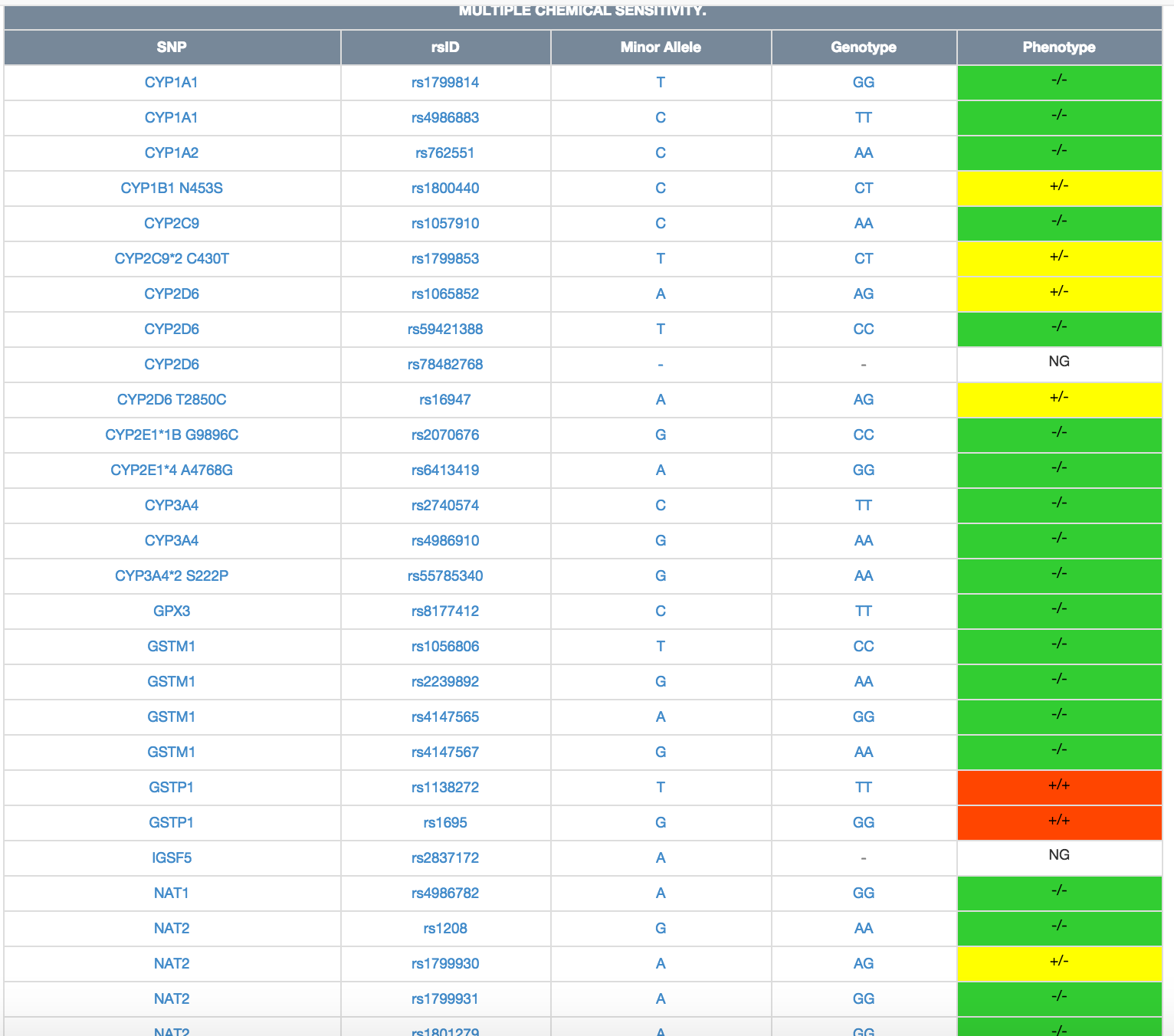
First the results — we have two REDs
Screen Shot 2015-01-07 at 3.42.50 PM


We are actually lucky because both REDS are on the same mutation (but different SNPs): GSTP1

Click the link we get the usual type of information which lacks any information about treatment.


NCBI Gene Info

Telomerase is a ribonucleoprotein polymerase that maintains telomere ends by addition of the telomere repeat TTAGGG. The enzyme consists of a protein component with reverse transcriptase activity, encoded by this gene, and an RNA component which serves as a template for the telomere repeat. Telomerase expression plays a role in cellular senescence, as it is normally repressed in postnatal somatic cells resulting in progressive shortening of telomeres. Deregulation of telomerase expression in somatic cells may be involved in oncogenesis. Studies in mouse suggest that telomerase also participates in chromosomal repair, since de novo synthesis of telomere repeats may occur at double-stranded breaks. Alternatively spliced variants encoding different isoforms of telomerase reverse transcriptase have been identified; the full-length sequence of some variants has not been determined. Alternative splicing at this locus is thought to be one mechanism of regulation of telomerase activity. [provided by RefSeq, Jul 2008]


The next step is simple, take the gene mutation and google it with “treatment” and then “supplements” and see what you can find.

The first item to be aware of is to ignore the condition they are dealing with – if it is prostate cancer and you are a woman, you would normally stop reading.. WRONG… we are interested in compensating for the SNP/Gene/Mutation and not for a specific diagnosis. Some of the items I found are:

Some health professionals recommend individuals with GSTP1 SNP’s minimize their exposure to cigarette smoke, charred food, herbicides, fungicides, insect sprays, industrial solvents, and toxic metals. In addition to ensure GSH support it is important to supply GSH precursors and cofactor such as, methionine, NAC, glutamine, glycine, magnesium, and pyridoxal-5-phosphate (B6). It is possible to reduce GSH depletion by supplementing with alpha lipoic acid, milk thistle, and taurine.   Certain foods such as onions, leeks, garlic, broccoli, cauliflower, cabbage, kale, Brussels sprouts, and radish can increase GST activity.   It is always recommended to consume an antioxidant-rich diet to prevent oxidative stress..[link]

What! We have a supplement list provided. Checking carefully to the source and it was a forum — which is not my preferred information source. So while noting the above, I will move all to published studies….

PubMed Articles on Supplements and GSTP1

I found some 1250 articles on GSTP1 and grabbed two of the more well documented supplements.

High cruciferous vegetable (cauliflower, cabbage, garden cress, bok choy, broccoli, brussels sprouts) intake reduced the impact[book – 2008 Study]

Alpha Lipoic Acid

Lycopene


Using Panels Created By Others: FIBROMYALGIA DNA

User contributed panels are available, for example,

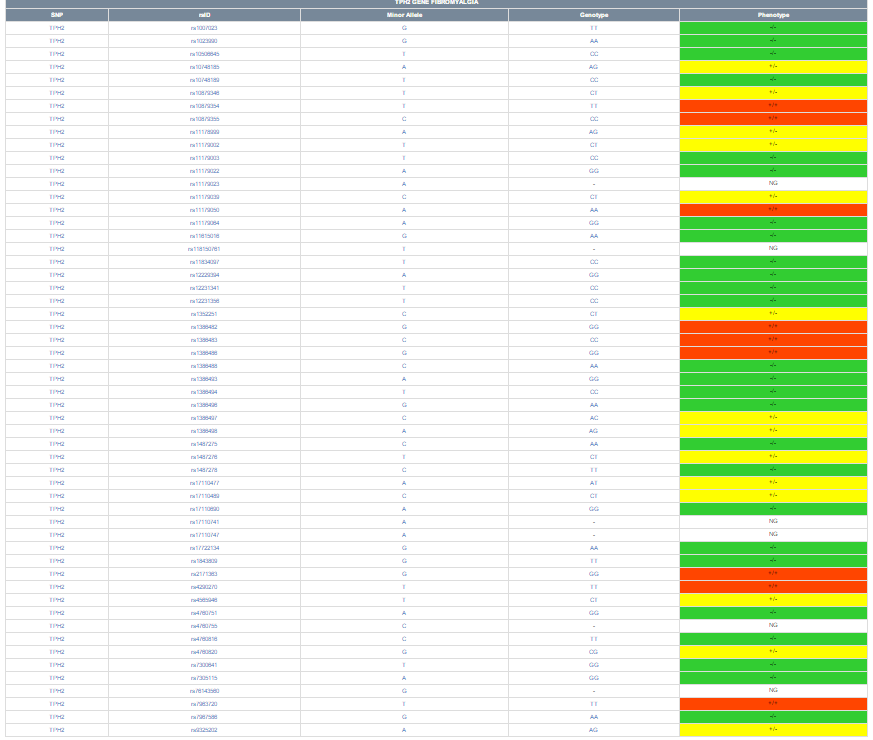
which may be added by clicking https://livewello.com/snps/library?action=preview&index=404236&for=demo for TPH2 GENE FIBROMYALGIA

  • These should always be done with a little caution because errors can happen in preparing them.

My report is below, and as expected having CFS — being likely to have FM is very common.

  • Red: 9/49 — 18% ( > 10%)– Is a concern
  • Green” 14/49 — 28% (< 45%) — Is a concern

The links to other panels and their results is at the bottom

fm


Looking at the associated notes, I see “This gene encodes a member of the pterin-dependent aromatic acid hydroxylase family. The encoded protein catalyzes the first and rate limiting step in the biosynthesis of serotonin, an important hormone and neurotransmitter. The human genome contains two related tryptophan hydroxylases, one on chromosome 11p15-p14 and one on chromosome 12q21. This gene is expressed predominantly in the brain stem. Mutations in this gene may be associated with psychiatric diseases such as bipolar affective disorder and major depression.”

Some more FM Panels are:

So, I appear to have only one serious FM panel, two light ones and three that are excellent — which agrees with FM issues being very minor.

DNA Snp Panels — they are constantly getting bigger

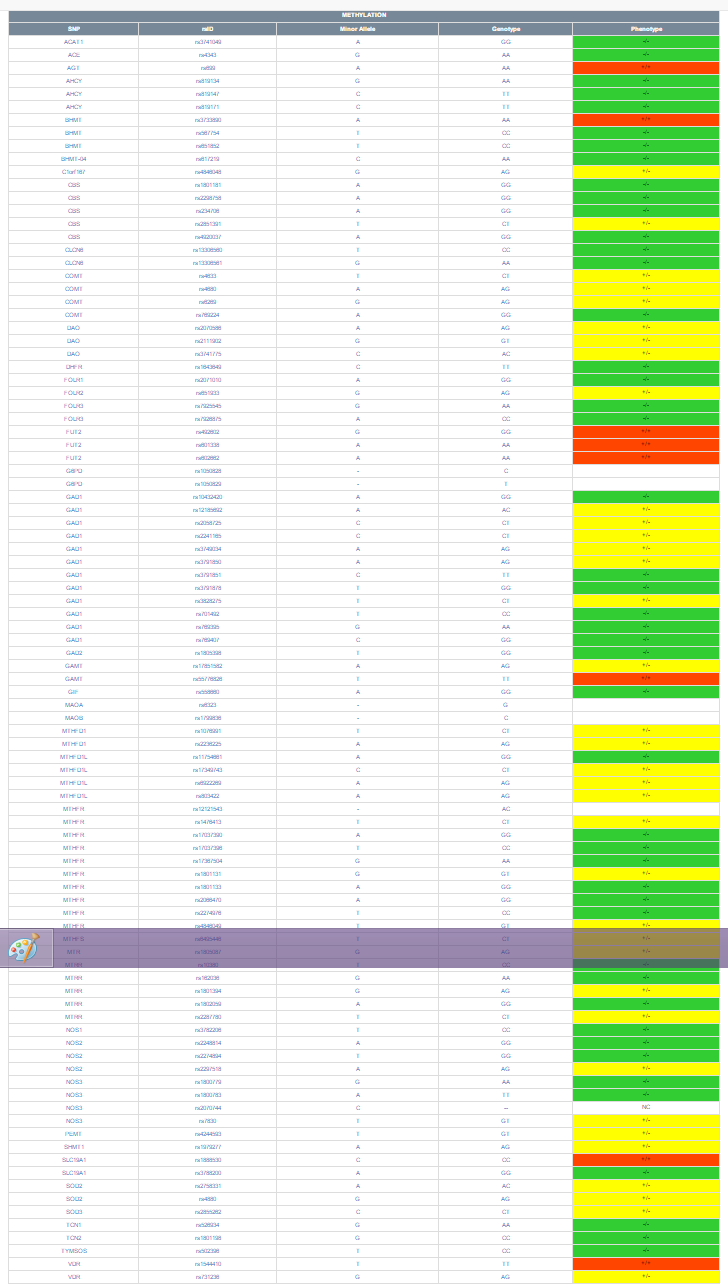
At the start of this series, I posted the Methylation panel from one site which I repeat below. I also added livewello.com panel. You will notice that livewello is much bigger. If you check it again in 6 months — it may be even longer. Discoveries are always being made so the list will be longer and longer.

So, counting the number is likely the wrong way — instead go by percentage – the results will often stay the same. What you do get is more RED issues that will help to better tune you supplements.

  • Red: 1/26 (4%) on one and  6/90 (5%) – if > 10% of concern
  • Green: 17/26 (65%) on one and  46/90 (62%) – if < 45% of concern

Screen Shot 2015-01-04 at 11.28.47 AM

LiveWello.com

myth


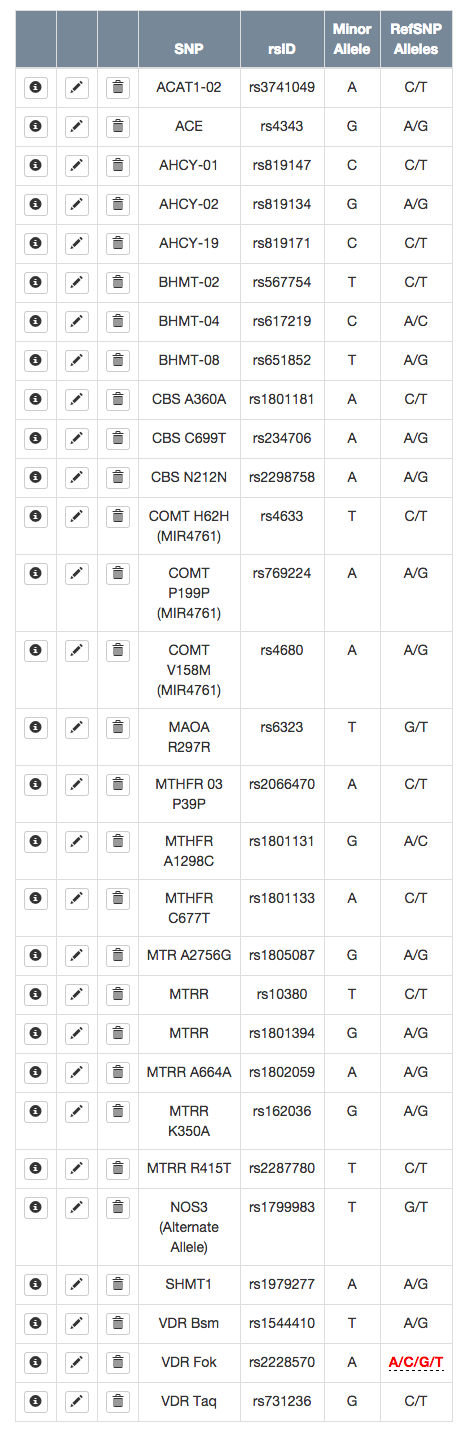
Amy Yasko DNA Nutrigenomics

Livewello.com provides pre-written (and contributed) panels on DNA, for example,

NUTRIGENOMICS TEMPLATE WITH SUPPLEMENT RECOMMENDATIONS BY DR. AMY YASKO

To use them, you need to install it – which is easy:
Screen Shot 2015-01-05 at 9.46.41 AM
Then click the button. The results now appear. In my case — I am clear — the sole item listed is meaning less (DNA consists of (A,C,G,T) only so getting this match will happen to everyone!)
Screen Shot 2015-01-05 at 9.48.56 AM
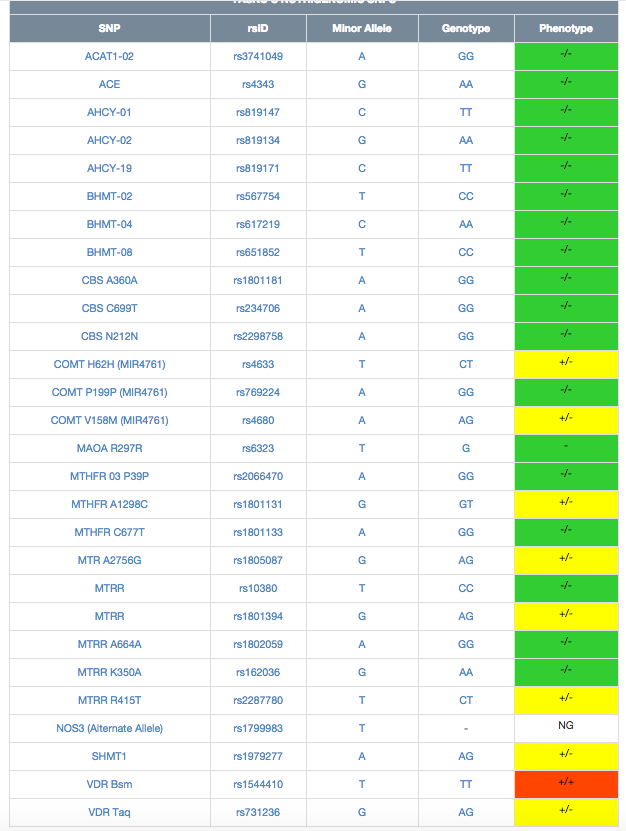
 Which you then need to click Screen Shot 2015-01-05 at 3.41.23 PM to see the results. Mine are below
Screen Shot 2015-01-05 at 4.02.51 PM

With only a single red (1 of 27 or 4%) and many greens (18 of 17 – 66%), the Yasko approach is unlikely to have significant impact on me. So instead of trying it, I move on to something that seems better connected to my DNA.

For the single item that is in Red, I can click the item (VDR Bsm) and read what it is associated with.

Normal function:

The VDR gene provides instructions for making a protein called vitamin D receptor (VDR), which allows the body to respond appropriately to vitamin D. This vitamin can be acquired from foods in the diet or made in the body with help from sunlight. Vitamin D is involved in maintaining the proper balance of several minerals in the body, including calcium and phosphate, which are essential for the normal formation of bones and teeth…..Most VDR gene mutations impair hair growth, leading to alopecia; ”

Whether this accounts for my 1,25D levels going through the roof while I had CFS (a common occurrence with many autoimmune illness) and return to the normal range with remission — I do not know.

So the process is very easy to get the information — what you do with it is another question which usually mean joining specialized groups dealing with these specific issues. Most MDs are not trained in this very new and rapidly developing area.

Canned Coagulation factors – Testing the Hemex Model

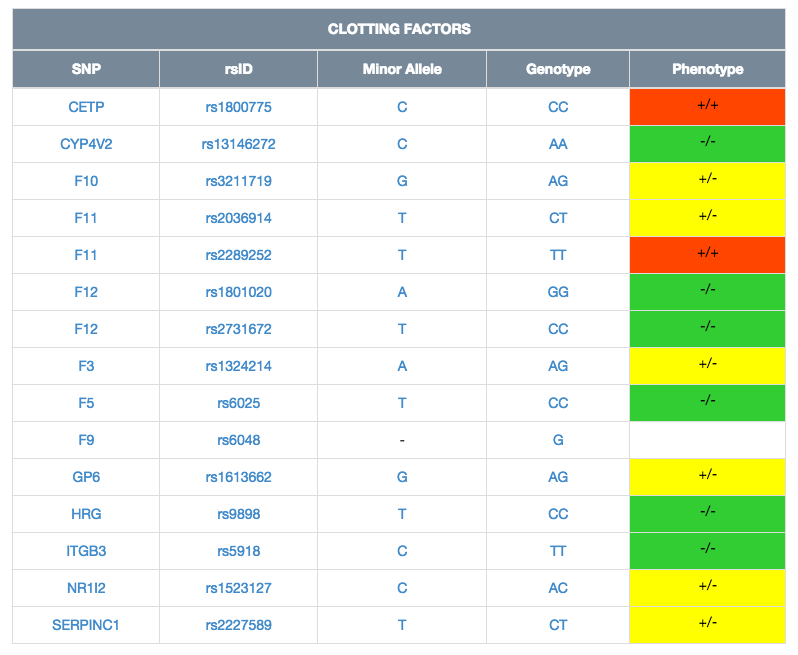
The site https://livewello.com will take your DNA and give a variety of panels looking at various health issues. The cost is $19.95 for the processing and ongoing use of their site. One of their panels is clotting. My results are below. As you can see out of 14 reported items, 2 are red (14%) and  6 are yellow (42%).  I have a rule of thumb to filter results into ‘concern’ or ‘low concern’,

  • > 10% Red with 2 or more ==> Concern
  • < 45% Green ==> Concern

So for me, the Hemex model of having inherited coagulation issues appears to be true.

Screen Shot 2015-01-05 at 9.30.04 AM


On the far left is the SNPs column which are linked to more information. For example, my Red ones goes to

  • CETP ” The protein encoded by this gene is found in plasma, where it is involved in the transfer of cholesteryl ester from high density lipoprotein (HDL) to other lipoproteins.” -“CETP SNP rs1800775 with higher LDL-C” (the bad one) – it leads to  my taking 500mg of flushing niacin daily.
  • F11 – ” TT genotypes for rs2289252 were associated with a significantly higher venous thromboembolism (VTE)”. “two SNPs, rs2289252 and rs2036914 in F11, appear to independently contribute to the risk of deep vein thrombosis (DVT), a contribution that is explained at least in part by an association with FXI levels.” This is why I take Piracetam on a regular basis (Inhibitory effect of piracetam on platelet-rich thrombus formation in an animal model.) and Turmeric Modulation of transcription factors by curcumin.

In short, if you dig into your REDs you will often find supplements that will mitigate your DNA risks. You may also find some that you should not take because while they help others, your DNA is different. The reds are the most important — but the yellow ones should also be reviewed.