Stress Intolerance: the Medical Conditions

A reader asked for more details, so I thought that would do a short listing of some major ones — oh, almost all of these have known microbiome shifts associated with them. Personally, I have two of the items listed, Autism Spectrum and ME/CFS.

Source: US Government Job Accommodation Network looking at conditions with stress intolerance as being potential accommodations by employers

Lack of training in Business

Often the information (including from HR) is just a ” For this reason, employers may need to look for ways to reduce stress and/or remove stressors in the work environment. ” , often with no serious examples of what could be done.

Stress Org lists some of the main sources of stress:

American Psychological Association, American Institute of Stress
Research Date: 7.8.2014

I know that I work in an industry that is often deemed to be high stress, Information Technology — yet for most of my 4 decades, there have been actually little stress: I have had boss that respected my opinion, gave me the resources or time table that I asked for … and I just done what was asked of me.

Problems do occur in IT with people who are ‘full of themselves’, that is, they believe they can walk on water! (I usually wait for a cold winter north of 60 degrees before I walk thpath). My own issues have usually been with managers that believe that the way to get people to work hard is to keep them in a state of crisis and/or under pressure! Wilful stress. When confronted by HR request to produce a low stress environment — they are clueless and will blow off the request as “that’s the nature of this business”. It’s not. It is the nature of all businesses where people are promoted to managers may never have done a single sociology or psychology of business course.

For my first management role in business some 40 years ago, there was 3 months of courses over the first year to insure consistency of management practise. It is little wonder that the Harvard Business Review found that picking a person at random to be a manager perform as well as a carefully interviewed candidate!

One of my favorite bosses said: A good manager is someone that reduces (or hides) uncertainty and stress coming from above from those reporting to him.
What is human sourced probiotics and why do we care?

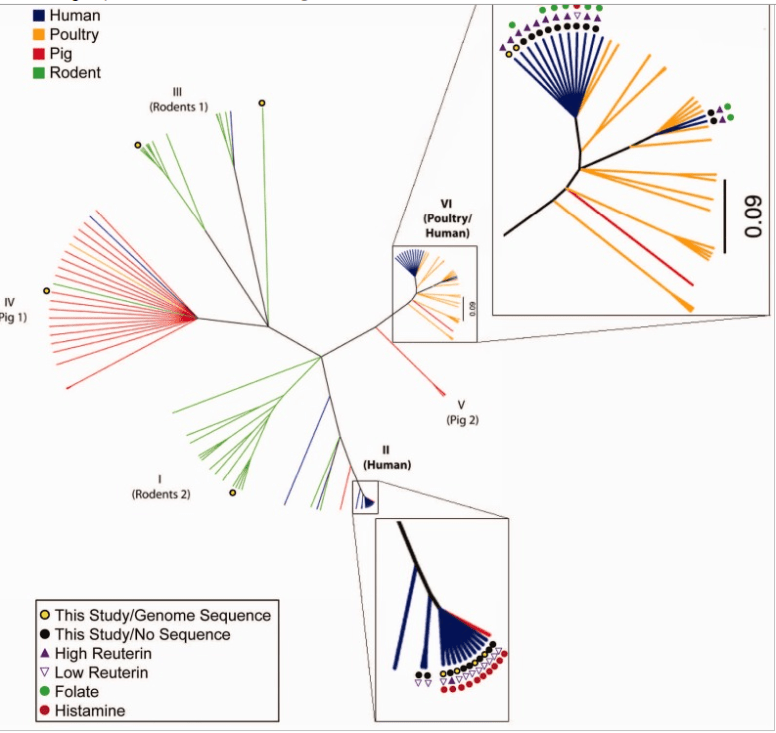
If you look at different strains of a probiotic such as Lactobacillus Reuteri and dig far enough into research papers — you will see charts like the one below.

Reuteri.PNG
From prediction to function using evolutionary genomics: human-specific ecotypes of Lactobacillusreuteri have diverse probiotic functions[2014].

All strains of a Species are not created equal

As you can see above: some produce histamine, some produces folate and produce high amount of Reuterin (the natural antibiotic against infections). For many people, the ideal Lactobacillus Reuteri probiotic would be a folate producer, with no histamine and hgh Reuterin production. This excludes the fact that we also should care about the source.

Interspecies Probiotics do not take up residency

If you look at the above chart, and look at history: all of these creatures have co-existed with mankind (and each other) for millenium. It appears that some strains may be shared between chickens and humans – it’s unusual. There are no common strain between any of them. We know bacteria gets transferred by a kiss (see this post Kisses, Sex and FM/CFS/IBS ) and some intake of bacteria from these creatures would occur…. but none have ever taken up residency.

In Species Probiotics MAY take up residency

This has been demonstrated with a few probiotics that are human sourced: Mutaflor and SymbioFlor-2. It does not occur 100%. My memory (speculation) is that the samples were these studies were the same general ethnic base (Germany) as the source of these strains (in one case, we know it was a German Soldier fighting in the Great War – i.e. E.Coli Nissle 1917). For myself (and my wife), we both have significant German DNA — and they both work for us.

At this point, we hit the end of our current understanding.

The bottom line is simple:

  • If the strain does not come from a human, there is 0% chance of it taking up residency.
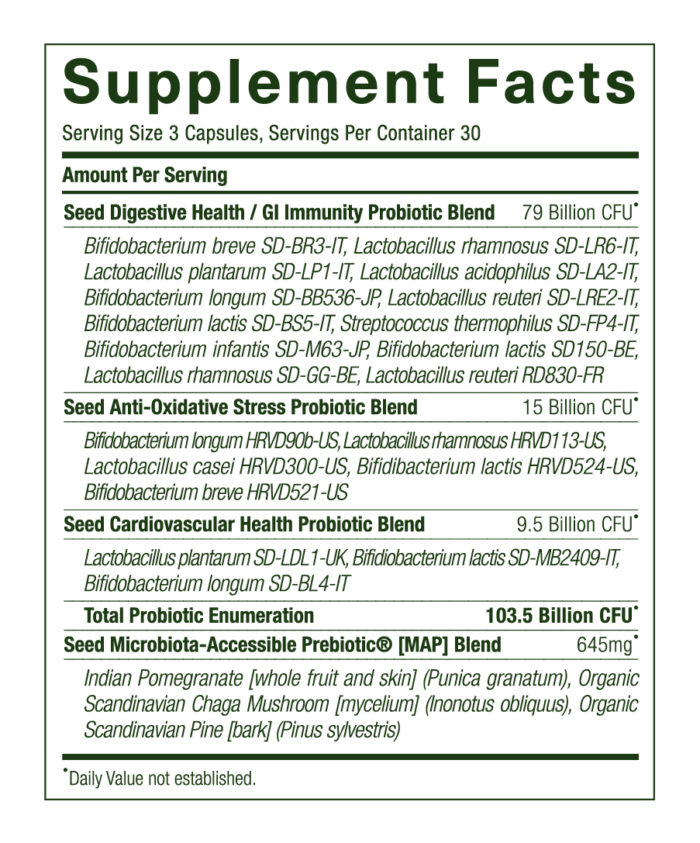
  • If the strain does come from a human, then the odds are better if some of your DNA comes from the same region as the source — and there is just one probiotic, Seed, that identify the source of their human-sourced strains. A Probiotic ahead of the rest of the market, as their label show below
    • US – likely a general blending of many DNA
    • IT – Italy
    • JP – Japan,
    • BE – Belgium,
    • SP – Spain
    • UK – United Kingdom
Another probiotic mixture that passes the bar…

Declaration of possible conflict of interests:
They do have a referral program, if you order via this link, I get free product (no cash).

Another probiotic mixture that passes the bar…

In general, I prefer single species or single strain probiotics that has studies on PubMed.  On occasion, a probiotic mixture makes it to my “second line probiotics to try”. There is a new pair on the market (one for men, one for women) that passes the bar.

What is my bar?

  • All of the strains are human sourced
  • A majority of strains have published studies showing benefits
  • Reasonable cost 

Ideally, the probiotic should persist. This appears to NOT OCCUR with Seed, see  this update on the results after 2 months on Seed.

Seed

This is a new company whose probiotics are available for PRE-ORDER for $49.99/month with a 30 day guarantee (I believe this is a money back if no change)

Considering this is ~100 BCFU/day, the cost is very reasonable.

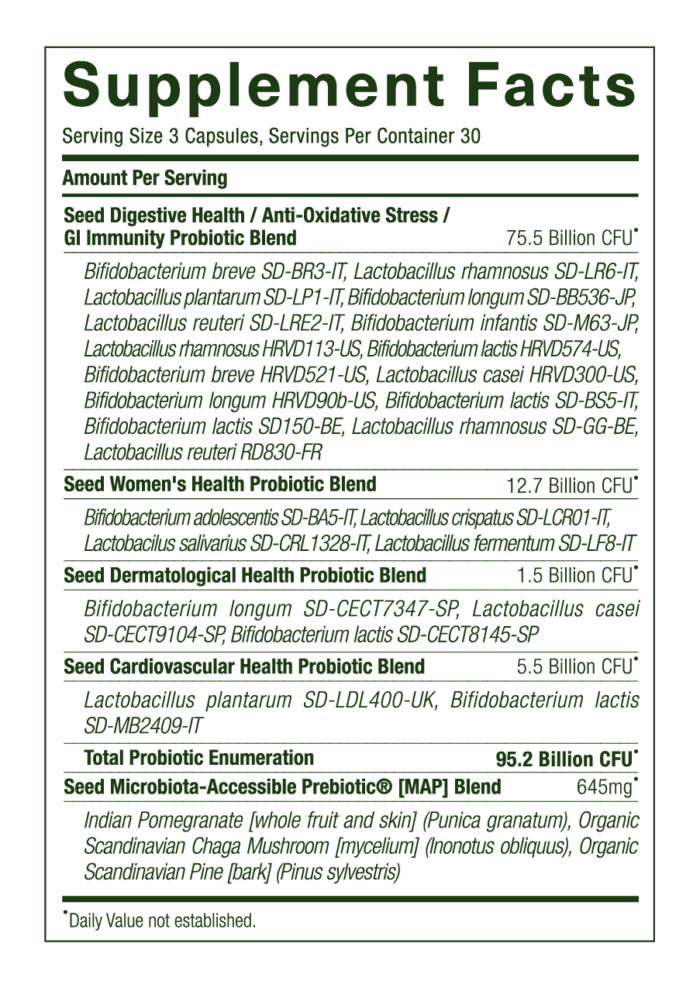
seed

Female Version

Note that the country of origin is included in the strain designation.

Male Version

Bottom Line

This from a technical perspective, beats the pants off the typical health-food store probiotic mixture.

I grabbed one of the above strains (B. lactis SD-MB2409-IT) and did a little digging:

The origin of some of these strains appear to be bart.pl, they have a very informative list of their strains to research studies PDF that can be downloaded here.

They do have a referral program, if you order via this link, I get free product (no cash).

Autism Spectrum successfully treated — but….

I am a (very) high functioning Autism Spectrum. People who hear me speak will often assume that I am an immigrant or that my parents spoke a foreign language at home. Wrong!  I had Rubella / German Measles at 18 months which was associated with my not learning to talk until I was 8 (a classic symptom for autism), just like a strong disposition to mathematics is also associated with autism. As a speculation, the autism may be resulted from the microbiome shift that the Rubella triggered. 60% of ME/CFS onset is reported to be infection triggered and 40% stress. An infection may well do a setup for later ME/CFS by pre-disposing the person for being stress sensitive (stress is an an establish dimension for autism).

Today, Arizona State University released a press release “Autism symptoms reduced nearly 50% two years after fecal transplant‘.

demonstrate long-term beneficial effects for children diagnosed with ASD through a revolutionary technique known as Microbiota Transfer Therapy (MTT), a special type of fecal transplant originally pioneered by Dr. Thomas Borody, an Australian gastroenterologist. Remarkably, improvements in gut health and autism symptoms appear to persist long after treatment. …
A professional evaluator found a 45% reduction in core ASD symptoms (language, social interaction and behavior) at two years post-treatment compared to before treatment began.

An earlier study with only vancomycin (an antibiotic) had found major temporary improvements in GI and autism symptoms, but the benefits were lost a few weeks after treatment stopped despite use of over-the-counter probiotics.

In Australia, Fecal Microbiota Transplantation (FMT) was initially developed by Borody. At his Centre for Digestive Diseases in Sydney, Borody has overseen more than 18,000 FMTs for various disorders since 1987. He pioneered in Australia the use of FMT for colitis and Clostridium difficile infection, and was the first to use oral FMT to treat children with ASD. Only one dose of FMT is usually enough to cure C. Difficile infections, but his patients with autism were far harder to treat. He discovered that three months of daily FMT was required to treat his autism patients, but eventually resulted in significant improvements in both GI and autism symptoms.


The initial study involved a “first-generation” estimate as to optimal dose and duration of treatment, and it was enough for 90% of the children to have substantial benefit. 

The But….

It requires an long course of daily FMT…. not just one or two..


He discovered that three months of daily FMT was required to treat his autism patients, but eventually resulted in significant improvements in both GI and autism symptoms.

This may also be the scenario with other stubborn conditions such as SIBO, FM, Lyme, IBS, ME/CFS. Once a dysfunction becomes established — it is very hard to dislodge it.

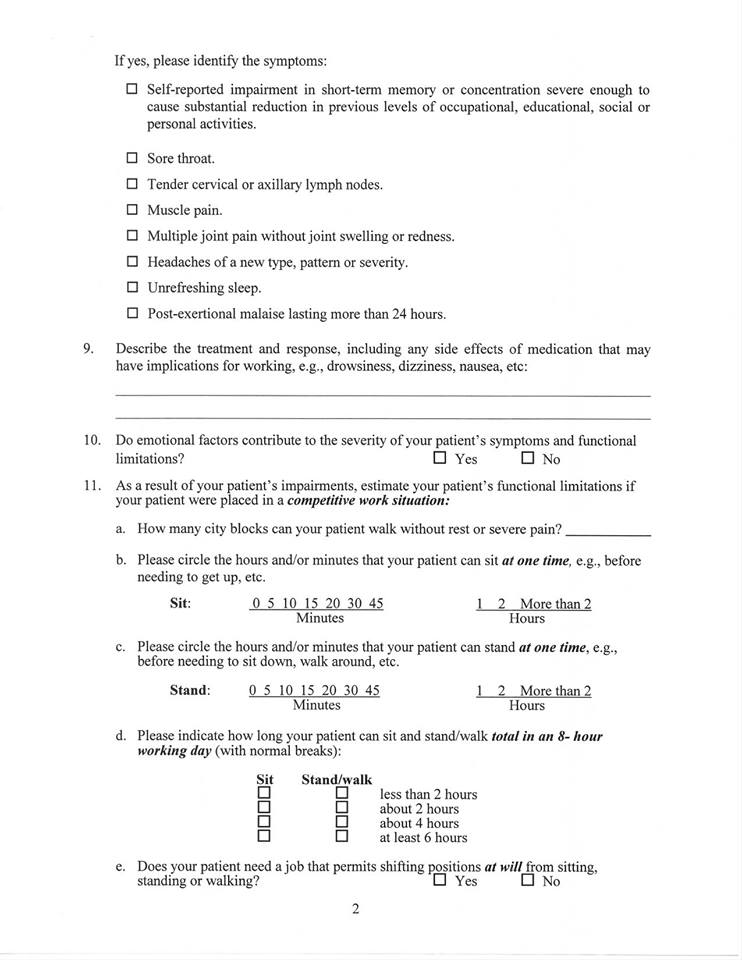
ME/CFS – a nice medical statement for work

I have been on long term disability for ME/CFS, had to deal with school boards for children with ME/CFS and often seen ad-hoc reports created by well meaning MDs. These situations are often legal situations and not medical treatment scenarios — I have seen reports missing the mark — often, making it more difficult to get needed and appropriate support.

Personally I really like page 4: “11.l To what degree can your patient tolerate work stress?”

The 4 page form below was shared by a friend, and I am reposting it here because I believe many people would benefit from it. I would love to see it translated into other languages (if you translate it — please send it to me as a word document and I will include it on my site).

Link to a Word version of the above.