Changes in microbiome due to fever and virus

While doing my monthly review of recent articles on PubMed dealing with the microbiome, I came across

  • Alterations of Gut Microbiome in the Patients With Severe Fever With Thrombocytopenia Syndrome[2018].
    • “Reduced gut microbiota diversity and dramatic shifts of fecal microbial composition in SFTS patients were observed compared with health controls. “
    • Lachnospiraceae and Ruminococcaceae which could produce short-chain fatty acids were clearly dropped. Sutterella which have anti-inflammation properties were reduced too. On the contrary, some common opportunistic pathogens like Enterococcus and Streptococcus and endotoxin-producing bacteria Escherichia which could rise the risk of infections were increased in SFTS patients than healthy people, in addition lactate-producing bacteria Lactobacillaceae also significantly increased in SFTS patients.
    • “the changes of gut microbiota of SFTS patients were closely associated with clinical symptoms”

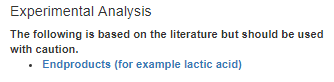
This is in general what I expected to see with my model, especially due to the Bergen experience with a giardiasis outbreak. The increase of lactate producing bacteria is significant because with ME/CFS, a condition that often occurs post viral infection, is often associated with lactic acidosis.

“These results demonstrate that some patients have a disrupted microbiota following Norovirus infection, and therefore may be at elevated risk for long-term health complications.” [2012]

A third article, Antiviral effect of vitamin A on norovirus infection via modulation of the gut microbiome [2016]

  • “We demonstrated the inhibitory effect of vitamin A against MNV replication both in vitro and in vivo. Interestingly, these inhibitory effects occurred directly or indirectly via microbiome changes, particularly on Lactobacillus strains in the gut…In previous studies, Lactobacillus spp. exhibited antiviral effects and alleviated the symptoms caused by rotavirus and influenza viral infections..In this study, we demonstrated that Lactobacillus spp. was enriched by vitamin A intake and significantly inhibited MNV replication. “
  • “the abundance of Proteobacteria was increased by MNV inoculation, consistent with observations in patients whose gut microbiota was perturbed by human norovirus infection”

Bottom Line

A viral or bacterial infection may have significant impact on the microbiome. If the microbiome does not return to a healthy state, a wide variety of other conditions may arise in the days, months and years following.

For Canadian readers: Endocannabinoids

I have usually avoid looking at items that are advocated on ideological wishfulness. A reader forwarded me a link to “The Endocannabinoid System’s Intriguing Role in Gut Health” in the Townsend Letter, October 2018, so it’s time to check current reality.

canna

Microbiome Aspect

The few available studies on mice found no impact on lean mice but significant impact on overweight mice [2015]

  •  increased Akkermansia muciniphila
  • decreased Roseburia
  • decreased Bacteroides/Prevotella
  • decreased Clostridium coccoides
  • decreased Clostridium leptum

And from [2017]

  • increased relative abundance of Akkermansia muciniphila
  • decreased Lanchnospiraceae and Erysipelotrichaceae

Bottom Line

The use of Endocannabinoids is not a simple use or do not use question. There can be negative effects reported with some studies for some conditions as shown in the table above.

It probable vector of benefit is Akkermansia muciniphila. There is active work in both Europe and the US on creating a Akkermansia muciniphila probiotic. Alternative ways of increasing Akkermansia muciniphila are covered in this earlier post.

Initial reflections on Cortene (CT38) drug.

My long time friend Cort Johnson has done four posts on this promising new drug for CFS/ME (and possibly other autoimmune conditions).

My own focus is the microbiome – keeping to a merging of concepts from Occam’s razor and Osler’s Principles. For a new drug that is just starting clinical trials, this presents a challenge.

The model behind this application is the HPA axis, hypothalamic-pituitary-adrenal axis. And specifically three items are cites:

  • Corticotropin-releasing factor
    • CRF1 – low stress,
    • CRF2 – high stress
  • Urocortin 1 (UCN1) – a 40 amino acid peptide that normalizes the above

What related information is on PubMed

Short Version

It appears to be established that CRF shifts are associated with issues associated with intestinal inflammation, gut permeability, and changes in the intestinal microbiota. There is a chicken-and-the-egg question. Did the microbiota change first and the others are consequences OR did things like gut permeability altered the microbiota. My working hypothesis is that the microbiota shift occurred first.

This may also explain why I seem to be able to recover from CFS/ME multiple times. My personality type has been evaluated as a Pollyanna, thus significantly less inclined to be stressed mentally, nor dwelling on the past and with a strong positive future perspective.

Bacteria links:

  • “Both CRF and UCN1 were significantly augmented by Bacteroides vulgatus and Fusobacterium varium at both the mRNA and protein levels. In particular, B. vulgatus stimulated human MoDCs, resulting in extremely high levels of CRF and UCN1. Conclusion: Stimulation of MoDCs by B. vulgatus and F. varium may be associated with CRF/UCN1-related intestinal disorders, such as irritable bowel syndrome and inflammatory bowel disease.” [2014]
  • “. In conclusion, Lactobacillus rhamnosus GG (LGG)  stimulates IL-4, IL-10 and Ucn expression ”  [2010]

How does Cortene work is the question!

My first prediction is simple: it will alter the microbiome. If it’s main mechanism of action is the microbiome, then my second prediction is that will be effective for only a percentage of patients — why? Every patient have a unique, and frequently very different, microbiome.

“Cortene’s drug, CT38, is a CRF2 agonist, i.e., it stimulates CRF2. It is comprised only of amino acids that occur naturally in the human body.” [post]

Bottom Line

This drug is still in early stages and my gut feeling is that it will have limited success for a small number of people.  The CRF/UCN imbalance is very likely real — but my bet is on a microbiome shift being the maintainer and likely cause of this imbalance.

Estrobolome: Microbiome, estrogen and cancer

A reader asked me to do a research dive and post on Estrobolome. This is likely a new word for most of my readers as it was for myself.

” estrobolome, the gut bacterial genes capable of metabolizing estrogens in both healthy individuals and in women diagnosed with estrogen-driven breast cancer ” [2016]

or a more technical definition

 “the aggregate of enteric bacterial genes whose products are capable of metabolizing estrogens”  [2011]

This visual may put things is a clearer perspective: [2016 src]

An external file that holds a picture, illustration, etc. Object name is djw029f1p.jpg

“Recent research suggests that the microbiota of women with breast cancer differs from that of healthy women, indicating that certain bacteria may be associated with cancer development and with different responses to therapy.”[2018]


The differences of genes determine what happens with estrogens.

  • “In the human GI tract, the BG gene is well represented in the bacterial phyla Bacteroidetes and Firmicutes whereas gus is more common in Firmicutes” [2012]

The technical details are  ß-glucuronidase and/or ß-galactosidase +, on which we have some basic taxonomy information [2012]

Genus ß-glucuronidase ß-galactosidase
Collinsella +
Edwardsiella +
Alistipes + +
Bacteroides + +
Bifidobacterium + +
Citrobacter + +
Clostridium + +
Dermabacter + +
Escherichia + +
Faecalibacterium + +
Lactobacillus + +
Marvinbryantia + +
Propionibacterium + +
Roseburia + +
Tannerella + +
Actinomyces +
Alistipes +
Anaerostipes +
Bacteroides +
Barnesiella +
Bifidobacterium +
Blautia +
Butyricicoccus +
Butyrivibrio +
Catenibacterium +
Cedecea +
Cetobacterium +
Citrobacter +
Clostridium +
Collinsella +
Coprobacillus +
Coprococcus +
Dorea +
Dysgonomonas +
Enterobacter +
Enterococcus +
Eubacterium +
Fusobacterium +
Hafnia +
Holdemania +
Klebsiella +
Lactobacillus +
Megamonas +
Mitsuokella +
Odoribacter +
Paenibacillus +
Parabacteroides +
Paraprevotella +
Pediococcus +
Porphyromonas +
Prevotella +
Pseudoflavonifractor +
Roseburia +
Ruminococcus +
Staphylococcus +
Streptococcus +
Subdoligranulum +
Turicibacter +
Weissella +
Yokenella +

I will be adding this information to http://microbiomeprescription.azurewebsites.net analysis underexp

Example:
exa

Additional Literature

  • “Relative abundances of the order Clostridiales and the genus Bacteroideswere directly and inversely related with the ratio estrogen metabolites to estrogen parents, respectively.” [2014]
  • ” However, Methylobacterium radiotolerans was the most significantly enriched and the most prevalent (100% of samples) in tumor tissues, and Sphingomonas yanoikuyae(95% of samples) in paired normal tissues. ” [2014]
  • ” Authors only found higher abundance of Escherichia coli in [cancer] cases compared with healthy controls. [2014]
  • “Absolute numbers of Bifidobacterium and Blautia, and proportion of F Prausnitzii and Blautia were significantly different according to clinical stages [of cancer]. Women with grade III had increased absolute numbers of Blautia sp. compared to women with grade I.
    Significant differences were also found in the absolute numbers of total bacteria and some bacterial groups (F prausnitziiFirmicutesBlautia and Egerthella), according to BMI.” [2015]
  • “Relative abundance of several taxa differed between cases and control: case patients had higher levels of ClostridiaceaeFaecalibacterium, and Ruminococcaceae; and lower levels of Dorea and Lachnospiraceae. ” [2015]

We are still in hypothesis land

” In conclusion, links between the microbiome and estrogen-driven breast cancer are growing, and we hope that research will identify specific characteristics of the gut microbiome that can be used to develop novel approaches for breast cancer risk assessment, prevention, and treatment.” [2016]

Bottom Line

The concept of microbiome influencing estrogen and possibly many cancers seems to be growing in popularity with researchers.  The microbiome shifts for different cancers are likely to be different and is a topic that is likely worth returning to in a year when the body of research would be  far greater.


Antibiotics Resistance Genes

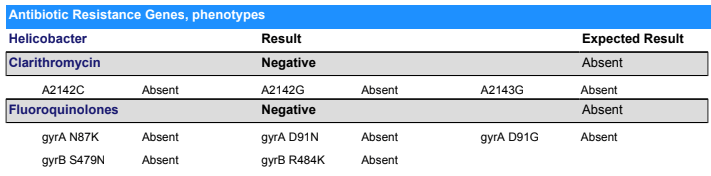
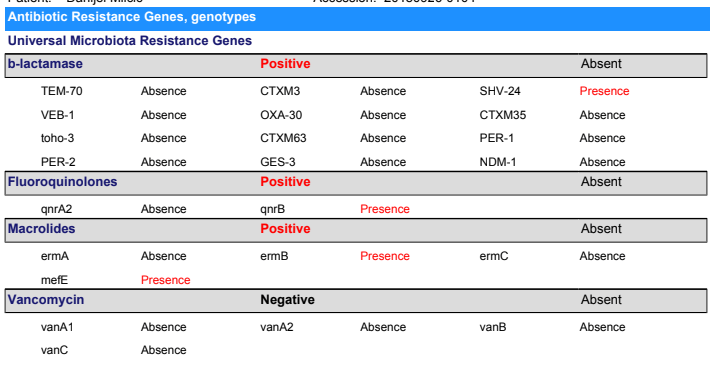
A reader shared their very recent lab results from   GI-MAP DNA Stool Analysis . I found at the bottom of their report something new that I wished was seen on other reports that I have reviewed. The antibiotic resistant genes found in the sample. It appears to have been added in 2018 (2018 Sample Report)

Genes transfer between bacteria, so it is rarely a case of the gene being in one taxonomy only.

“Bacteria can share genes with each other in a process called horizontal gene transfer. This can occur both between bacteria of the same species and between different species and by several different mechanisms, given the right conditions. Gene transfer results in genetic variation in bacteria and is a large problem when it comes to the spread of antibiotic resistance genes…..For example, if a bacterium picks up an antibiotic resistance gene and is subsequently exposed to that antibiotic, this bacterium will be better off than susceptible neighbors and can increase in number.” [Src]

gene1

gene2

A video on this topic.

Bottom Line

Antibiotic resistance is not new. A study on Monks DNA from a 1000 years ago found that the genes were there! [Src] [Summary] – Four monks who lived in the Middle Ages (about 950-1200) and were buried at the monastery of Dalheim, Germany.

“The team found a lot of other interesting things. They also sequenced the genetic material of one of the disease bacteria, T. Forsythia, and found that it has several antibiotic resistance genes.

”This is the first time we see fossil samples from humans with bacteria that have antibiotic resistance – long before we started producing antibiotics industrially,” says Cappellini.

Most antibiotics come from bacteria. Bacteria acquiring resistance to other bacteria is expected in the endless fight between bacteria.

When it comes to dealing with a gut dysfunction, it is likely a good idea to determine what resistance exists in the gut bacteria. A mismatch can easily contribute to further imbalance.