Recommendations are Art and not definitive!

The recommendations are based on studies or trusted sources.  Studies do not always produce the same effect — diet, disease and a dozen other factors may change the conclusion for a study. To illustrate this, let us look at berberine, listed at this page: http://microbiomeprescription.com/Library/GutModifier/?name=berberine

Looking at the results we see some consistency across multiple studies:

We also see some slight disagreement:

And others which are a toss up…

The AI processing of the recommendations attempts to balance these factors (I hope to get the next generation coded this weekend). The recommendations are not guarantees of being effective, just items with better odds.

Items with multiple names

Different studies may describe what may be the same item in different ways. For example:

Or

And for other cases — spelling difference

or

or

This can result in some odd recommendations, with one being on Avoid and one on Take. As the data gets better cleaned up, we should see less of these.

Bottom Line

“When in doubt, leave it out


Symptoms to Bacteria Explorer is released

One of the original intents of the mechanized analysis site at: http://microbiomeprescription.azurewebsites.net was to try to identify which bacteria shifts are related to which symptoms. Over the last week I have been coding and testing a symptom explorer and it is ready for beta release.

It is found at: http://microbiomeprescription.com/Data/SymptomExplorer

Overview

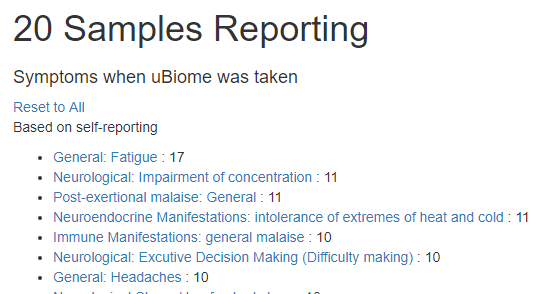
When you open the page, you will see information about the data we have.

ex1

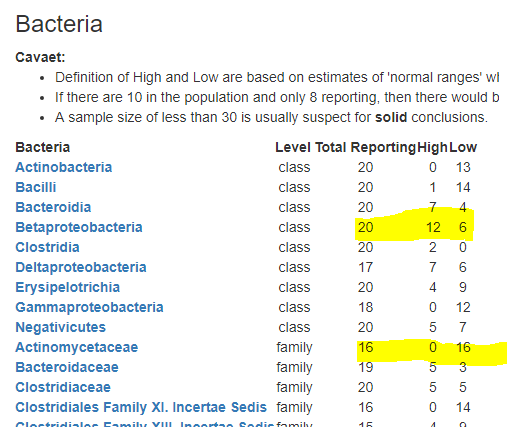
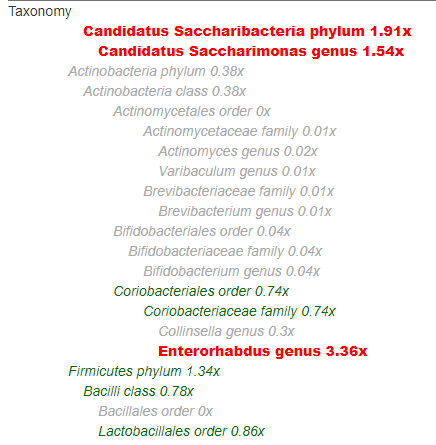
Below this are the significant bacteria seen for what is selected.

ex2

We may see patterns that are dominant. For example, of the samples, Actinomycetaceae is low in 16 of the 20 samples, and because it is reported in only 16, 4 had no measurable amount of this bacteria. The unanswered question is whether this is normal or a characteristic of this subset of the illness. I do not have an answer for that.

Drilling Down

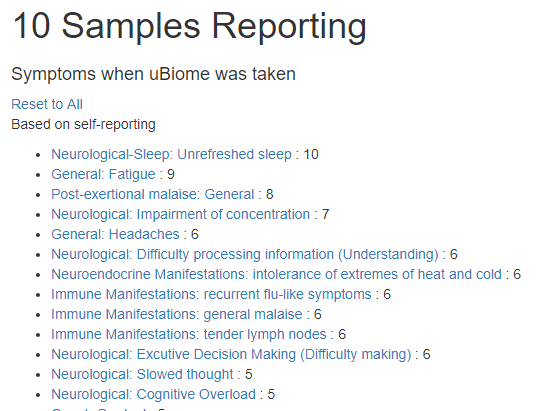
Click on any of the symptoms and the page will be filtered by this symptom. For example

Results in the symptoms also seen with the selection being displayed

ex3

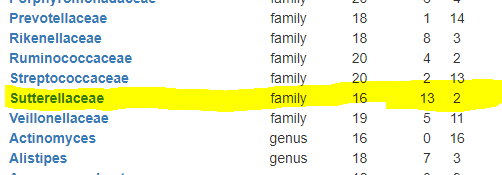
And below it, the bacteria associated.

ex4

For example, it seems that high overgrowth of Sutterellaceae is associated with this condition.

Bottom Line

This is a beta release which will allow people to explore. If you find something very significant, please add it as a comment on this post.

CAUTION: We really need at least 100 samples with symptoms to make progress that would be solid statistically. If you have contributed your uBiome but have not provided symptoms — please consider doing so.

,

Look below for microbiome modifiers added

A reader wrote:

“Hi Ken, what is your take on reducing, I can only find 3 things that may reduce Proteobacterium, L. taurine, and walnuts from your site and Chris’s pubmed study above which shows L. Reuteri works.

It seems to me this would be a great direction.

I’m thinking of adding L. Reuteri and L. Taurine.

thoughts?”

When you want to change something, my old blog posts are not complete. The best source of information is the http://microbiomeprescription.com/ site.

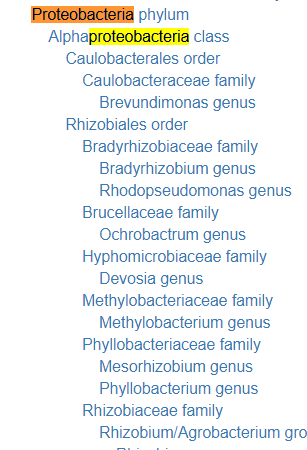
Go to http://microbiomeprescription.azurewebsites.net/Library/Tree and scroll down until you find Proteobacterium. You will notice there are layers of children below it.

Proteo4

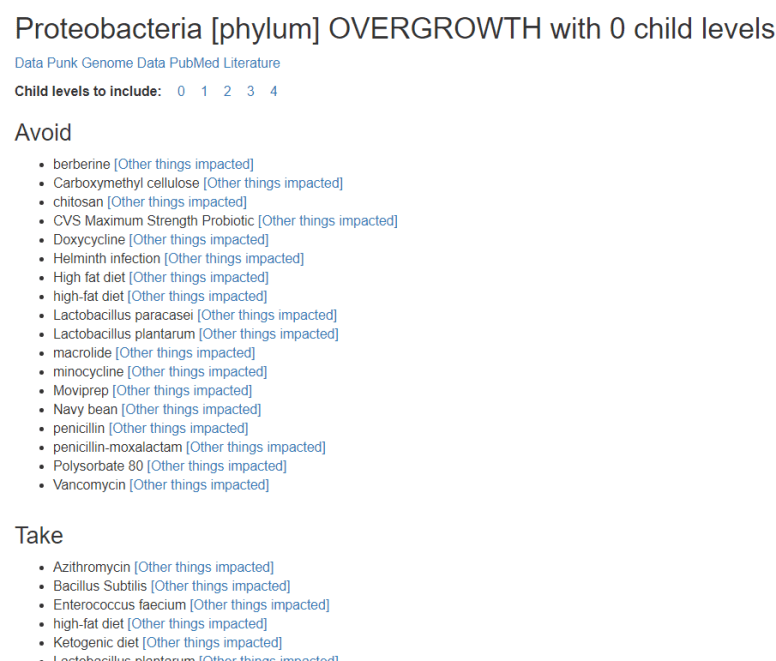
Clicking it will take you the current information in the database as show below.

prot2

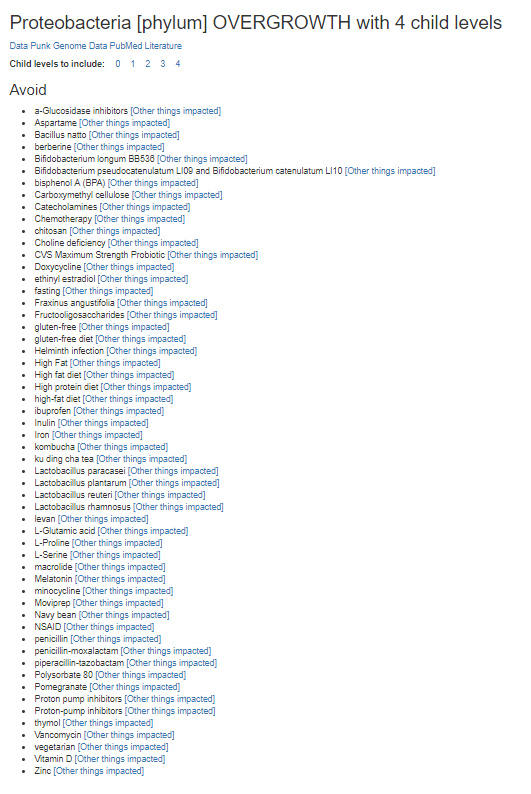
This weekend, I added an enhancement. You see the 0 1 2 3 4 links above. These will take the known information about this bacteria item AND 0-4 children layers and roll up all of the information into one set of recommendations.

  • If it reduces the population of one group of a population, it likely reduces the entire population.

For example, with 4 the number of items are greatly increased.

prot3

This gives you bigger lists (but also more chance of an item appearing on both lists).

Bottom Line

The new site, with the AI and database behind it, produces a much richer list of action items.  I am planning to include this in the AI engine for recommendations at some time in the future — but for the moment, you can manually look at a concern and it’s children.


Charts Added to Bacteria Details

If you log in to the site and go to “Your microbiome tree” page, you will see:

g1

Clicking on any will take you to a detail page.

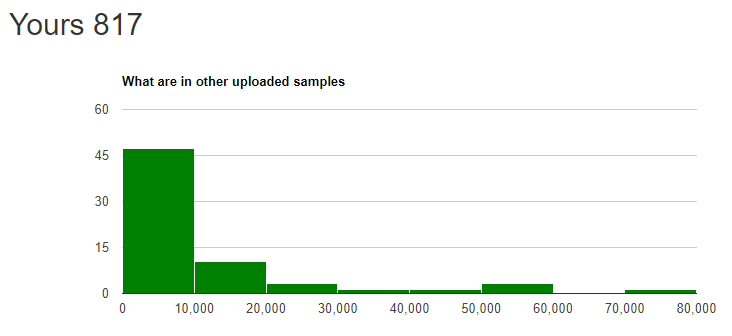
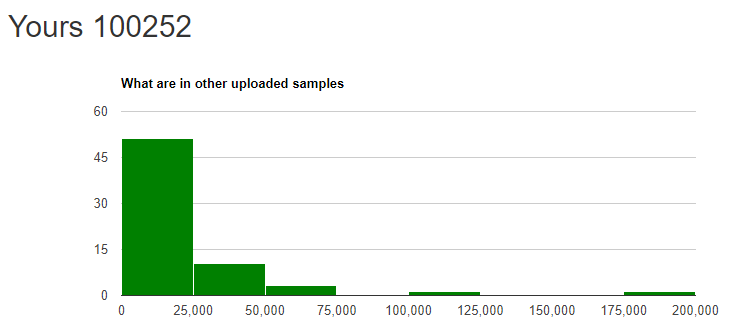
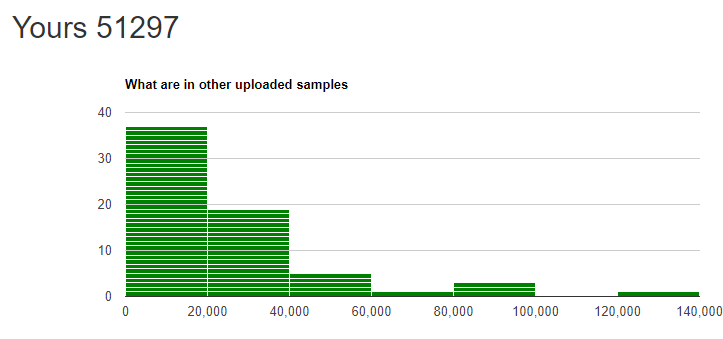
I have added charts of the values seen from our uploaded samples to give people a visual reference. A few examples below

Bifidobacterium

G2

Sarcina

g3

Sutterellaceae

g4


Unpaid Advertisement…

I received this in the mail,  https://shop.ubiome.com/pages/explorer-plus

ExplorerPlus

Or $99/sample versus $89 for the basic kit (one time) or $72 on subscription. What is the difference?

  • More comprehensive access to your entire microbiome, including viruses and fungi
  • Functional metagenomics information, such as insights into what key metabolites and vitamins your bacteria are synthesizing for you
  • More comprehensive probiotic bacteria
  • Downloadable raw data for every organism detected in your sample

Needless to say, I will enhanced the analysis site with the new information when it is available.