Another reader lab report

In an earlier post this week, I mentioned that a single patient microbiome can often be fuzzy to interpret. Regional lab reports where the patient is a match for the general population interms of genetics and diet is the exception.  An example: Estonia and Sweden are a short boat ride away from each other but for L. Fermentum, this species was found only in Estonian children but not in Swedish children [2009].

A reader in Germany sent their result from a German Lab, GanzImmun Diagnostics AG.

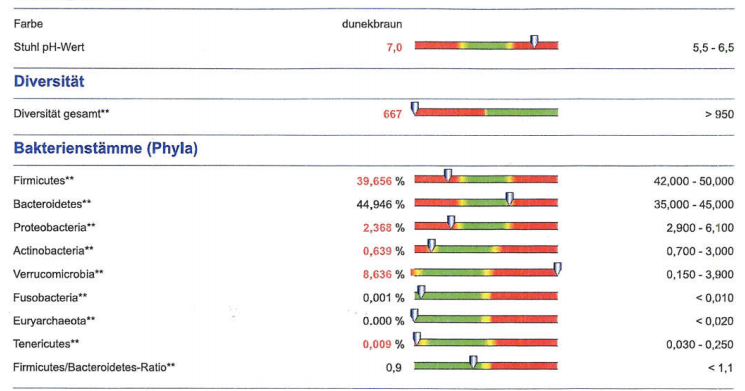
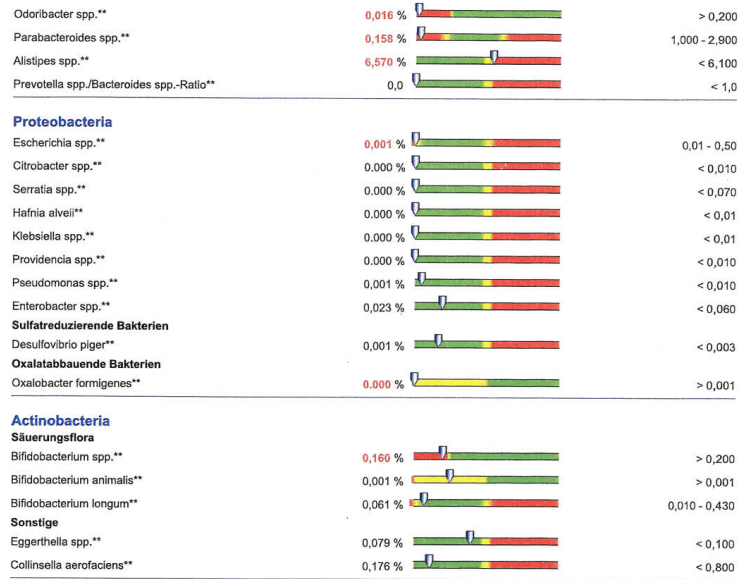
The lab report has a nice presentation of how their results compared to a German reference population. The width of analysis was also good.  Examples are below:
germ1

Germ2

Germ3

germ5

Lacto

Compared to Other Reports

How does this compare to Lipkins results (for those reported above) and other results

And for the classic pattern reported in the 1998 Australian Study and others?

  • Escherichia Coli etc: Study – Low, Patient – Low  🙂
  • Bifidobacterium: Study – Low, Patient – Low 🙂
  • Lactobacillus: Study – Low, Patient – Low 🙂
  • Klebsiella/Enterbacter: Study – High, Patient – Normal 😐
  • Enterococcus: Study – Low, Patient – Normal  😐
  • Firmicutes: 2016 Study – Low, Patient – Low 🙂
  • Bacteroides: 2016 Study – High, Patient – High 🙂

The model postulates that symptoms and microbiome shifts are likely associated. For the classic patterns, we have a good match. For Lipkin’s study, we have a much poorer match, causing the useful of that study further into question.

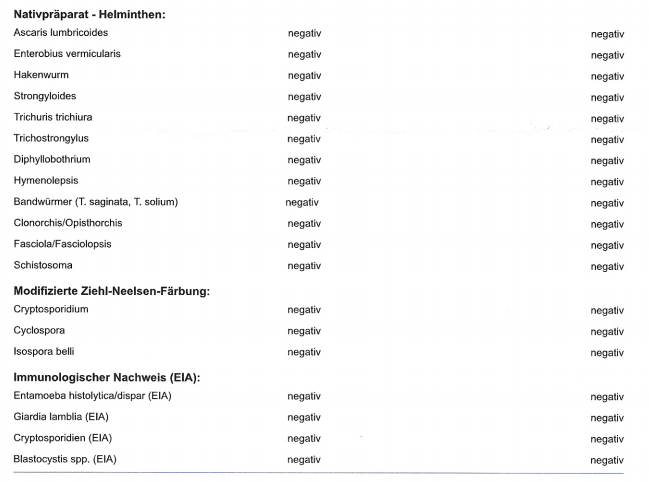
Checking for Infections

All negative, but an impressive list of items.
infect

Additional Charts

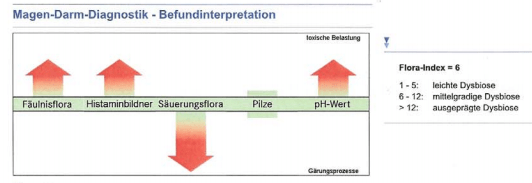
Another chart was very interesting because it shows high histamine (Histaminbildner) producers — a frequent issue with CFS. Fäulnisflora (rotting flora) I suspect is SIBO, again common with CFS. Säuerungsflora(acidifying bacteria) is low  And high pH (alkaline) as the consequence.
histamine

Bottom Line

The first thing that struck me was to reduce pH. A shift in pH results impacts a lot of bacteria (increase or decreases growth).

pH Factors

Normal pH is 5.5 to 6.5, this patient is 7.0. A shift outside of the normal range is usually viewed as an indicator of bacteremia [2012]. Based on Bile Acids: A pH Dependent Antibacterial System in the Gut? [BMJ 1972], bile acid supplementation should be discussed with your medical professional. Drinking diluted vinegarhas often been suggested on alternative-medicine sites. For myself, I prefer eating pickled herring – Bismarckhering because it is natually rich in all of the recommended supplementations for CFS

  • “Pickled herring is one of the best sources of natural vitamin D3. It is also an excellent source of selenium and vitamin B12. 100 grams may provide 680 IU of vitamin D or 170% of the DV, as well as 84% of the DV for selenium and 71% of the DV for vitamin B12. [5][6]” – Wikipedia
  • “Increasing levels of the primary bile acid cholic acid (CA) causes a dramatic shift toward the Firmicutes, particularly Clostridium cluster XIVa” [2013][2017]
  • Western diet deregulates bile acid homeostasis, cell proliferation and tumorigenesis in colon [2017]. “Western-style diets (WD) high in fat and scarce in fiber and vitamin D”
  • “Pickled herring is one of the best sources of natural vitamin D3. It is also an excellent source of selenium and vitamin B12. 100 grams may provide 680 IU of vitamin D or 170% of the DV, as well as 84% of the DV for selenium and 71% of the DV for vitamin B12. [5][6]” – Wikipedia

I will revisit pH (Acid/Alkaline balance) in a future post — there are some complexities (fecal pH versus blood pH) and few studies to reference. A high stool pH is seen with non-specific diarrhea, crohn’s disease, ulcertative colitis, ileostomy [1970], the general spectrum of autoimmune conditions that CFS patients could drift into over time.  Giadia infections (cause of a CFS outbreak in Norway) appears to result in an increase of pH [2001] — suggesting a possible mechanism for CFS onset. The triggering event caused a pH shift which resulted in a change of bacteria. The change of bacteria seized the opportunity to keep the pH favorable to these bacteria. For example, ammonia producing bacteria would cause pH to increase.

  • “A shift to an alkaline environment ..is stressful for bacteria as shown by how Escherichia coli responds to alkali with SOS and heat shock-like responses [18]; [19] ;  [20].”
  • B. subtilis initially grows rapidly and acidifies the medium.” [2005]

“An increase in the relative abundance of Bacteroides spp., Blautia spp., Parabacteroides spp., Coprococcus spp., Ruminococcus spp., and Oscillospira spp. and a decrease of Bifidobacterium spp., Lactobacillus spp., Escherichia spp., and Clostridium spp. were observed during weaning. The change in microbiome composition was accompanied by a gradual increase of fecal pH from 5.5 to 7.” [2016] That is, the result from going from human milk to cow milk in humans. Human milk have a pH of 7.4 [1986] while cow milk has a pH of 6.5 [source] and milk from different mammals are significantly different in composition [2004]

Milk

Antibiotics

The reader asked about antibiotics. I have done some very rough charts on antibiotics and what they work against. The general group that this patient is high in are Bacteroides spp, with specific members being low — adding some complexities. Using Trends in antimicrobial resistance among Bacteroides species and Parabacteroides species in the United States from 2010-2012 with comparison to 2008-2009 [2017].Which suggest metronidazole or chloramphenicol or Carbapenem or beta-lactam/beta-lactamase inhibitor combinations. Based on the CFS patients survey on response to antibiotics, I would opt for metronidazole(a.k.a. Flagyl) as the first choice.

Bottom Line

Doing this analysis, I came across the pH aspect of CFS and will do further digging in the literature. My suggestions to discuss with a medical professional are:

  • Regular intake of food that are high in acid (which is different from food causing an “acid stomach”)
  • Metronizalole
  • Bacillus probiotics, see this post — some may not be suitable for everyone


Bacteremia and death from Probiotics

In the interest of full disclosure — there is a risk of bacterial infection from probiotics and yogurt, even death. The odds appear to be very low (likely a lot lower than many prescription drugs). In some cases, a single case of an issue have been circulated into a alternative-medicine legend that one or another probiotic should be avoided.

Some articles:

Animal Probiotics are called Direct-fed microbials

A reader forward me a link to the USA FDA approved probiotics for animals [FDA page]. The official list for humans is likely further restricted.  There are web-sites that specialize in the sale of these DFMs for animal use.

Approved Probiotics DFM

FDA and Association of American Feed Control Officials (AAFCO) approved microbial species are:

  • Aspergillus niger
  • Aspergillus oryzae
  • Bacillus coagulans
  • Bacillus lentus
  • Bacillus licheniformis
  • Bacillus pumilus
  • Bacillus subtilis
  • Bacteroides amylophilus
  • Bacteroides capillosus
  • Bacteriodes ruminicola
  • Bacteroides suis
  • Bifidobacterium adolescentis
  • Bifidobacterium animalis
  • Bifidobacterium bifidum
  • Bifidobacterium infantis
  • Bifidobacterium longum
  • Bifidobacterium thermophilum
  • Lactobacillus acidophilus
  • Lactobacillus brevis
  • Lactobacillus bulgaricus
  • Lactobacillus casei
  • Lactobacillus cellobiosus
  • Lactobacillus curvatus
  • Lactobacillus delbrueckii
  • Lactobacillus fermentum
  • Lactobacillus helveticus
  • Lactobacillus lactis
  • Lactobacillus plantarum
  • Lactobacillus reuteri
  • Leuconostoc mesenteroides
  • Pediococcus acidilactici
  • Pediococcus cerevisiae (damnosus)
  • Pediococcus pentosaceus
  • Propionibacterium freudenreichii
  • Propionibacterium shermanii
  • Saccharomyces cerevisiae
  • Streptococcus cremoirs
  • Streptococcus diacetilactis
  • Streptococcus faecium
  • Streptococcus intermedius
  • Streptococcus lactis
  • Streptococcus thermophilus

There is no normal or reference microbiome!

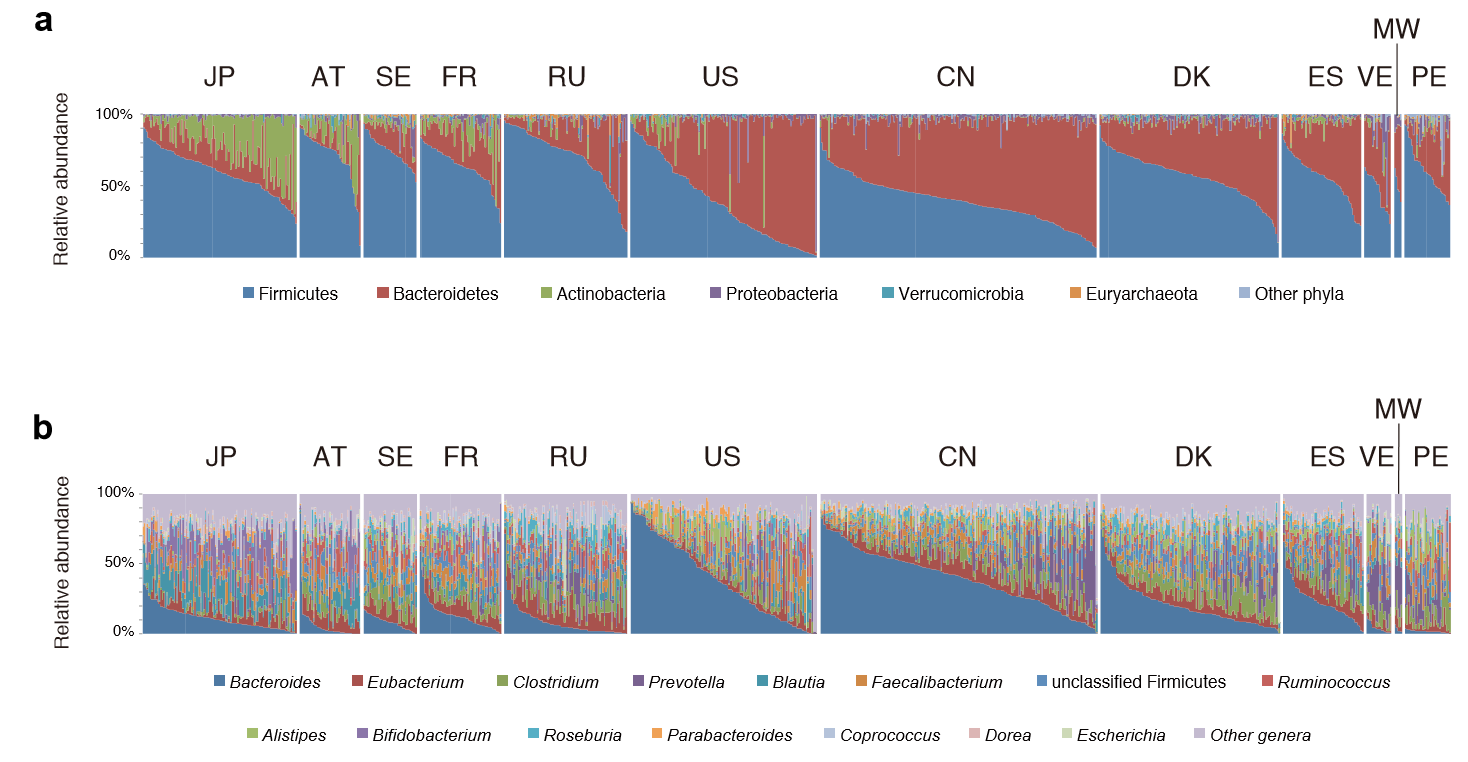
One of the common misconception is that there is a “normal” microbiome that can be used as a reference.  Below is a chart from “Metagenomic sequencing of fecal DNA“. Diet makes a major impact on the distribution and volume of the bacteria.

  • “In a study of gut bacteria of children in Burkina Faso (in Africa), Prevotella made up 53% of the gut bacteria, but were absent in age-matched European children.”[2010]

The chart below is for healthy individuals in 12 different countries.  In some cases neighboring very similar countries (Sweden [SE] and Denmark [DK]) have very different compositions.

world

This great variation means that testing the microbiome can only be done as group of individuals living in the same area with similar eating habits…. An individual result without reference from people with the same eating habits and possibly ethnic background is very fuzzy to interpret. Yes, highlights may be common — like low E.Coli, Lactobacillus and Bifidobacteria….  but they likely apply to no more than 80-90%, the other CFS patients may have different shifts.

Then we also find that DNA also impacts the microbiome,

Host genetic variation drives phenotype variation, and this study solidifies the notion that our microbial phenotype is also influenced by our genetic state. We have shown that the host genetic effect varies across taxa and includes members of different phyla. The host alleles underlying the heritability of gut microbes, once identified, should allow us to understand the nature of our association with these health-associated bacteria, and eventually to exploit them to promote health.

Human genetics shape the gut microbiome , 2014

People have asked me, “Did you get your microbiome done, what was it?” My honest answer was “No, such testing was not available when I last had CFS. I simply assumed that my pattern would be an appropriate match to that reported from the 1998 Australian studies”

Age changes the microbiome

” DNA of the Clostridium leptum group and pathogenic Enterobactericeae increase in the gut microbiome with age and can be detected in the same individual’s coronary plaques along with pathogenic Streptococcus spp., associating with more severe coronary atherosclerosis. ” [2019]

An external file that holds a picture, illustration, etc.
Object name is nutrients-11-01765-g001.jpg

The presence of the BifidobacteriumFaecalibacteriumBacteroides group, and Clostridium cluster XIVa decreased with age up to 66-80 years of age, with differences reaching statistical significance for the latter group. Interestingly, the levels of some of these microorganisms recovered in the very old age group (>80 years), with these older individuals presenting significantly higher counts of Akkermansia and Lactobacillus group than adults and the younger elderly

Age-Associated Changes in Gut Microbiota and Dietary Components Related with the Immune System in Adulthood and Old Age: A Cross-Sectional Study. [2019]

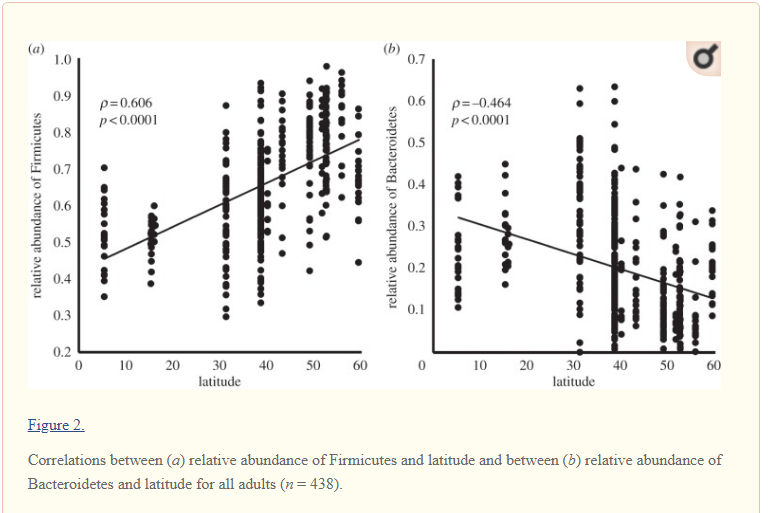
Latitude changes the Microbiome

Latitude means the distance from the equator. This may be due to sunlight-vitamin D levels.

Geographical variation of human gut microbial composition , 2014

If you exercised recently impacts the microbiome

Underlying these macro-level microbial alterations were demonstrable increases in select bacterial genera such as Veillonella (+14,229%) and Streptococcus (+438%) concomitant with reductions in Alloprevotella (-79%) and Subdolingranulum (-50%). To our knowledge, this case study shows the most rapid and pronounced shifts in human gut microbiome composition after acute exercise in the human literature. 

Rapid gut microbiome changes in a world-class ultramarathon runner. 2019

Some Population Studies

“We analyzed the combined microbiome data from five previous studies with samples across five continents. We clearly demonstrate that there are no consistent bacterial taxa associated with either Bacteroides– or Prevotella-dominated communities across the studies. By increasing the number and diversity of samples, we found gradients of both Bacteroides and Prevotella and a lack of the distinct clusters in the principal coordinate plots originally proposed in the “enterotypes” hypothesis. The apparent segregation of the samples seen in many ordination plots is due to the differences in the samples’ Prevotella and Bacteroides abundances and does not represent consistent microbial communities within the “enterotypes” and is not associated with other taxa across studies.” [2016]

” All Egyptian gut microbial communities belonged to the Prevotella enterotype, whereas all but one of the U.S. samples were of the Bacteroides enterotype.

  • The intestinal environment of Egyptians was characterized by higher levels of short-chain fatty acids, a higher prevalence of microbial polysaccharide degradation-encoding genes, and a higher proportion of several polysaccharide-degrading genera.
  • Egyptian gut microbiota also appeared to be under heavier bacteriophage pressure.
  • In contrast, the gut environment of U.S. children was rich in amino acids and lipid metabolism-associated compounds; contained more microbial genes encoding protein degradation, vitamin biosynthesis, and iron acquisition pathways; and was enriched in several protein- and starch-degrading genera.
  • Levels of 1-methylhistamine, a biomarker of allergic response, were elevated in U.S. guts, as were the abundances of members of Faecalibacterium and Akkermansia, two genera with recognized anti-inflammatory effects.
  • The revealed corroborating differences in fecal microbiota structure and functions and metabolite profiles between Egyptian and U.S. teenagers are consistent with the nutrient variation between Mediterranean and Western diets.” [2017]

“This suggests that similarities between the Inuit diet and the Western diet (low fiber, high fat) may lead to a convergence of community structures and diversity. However, certain species and strains of microbes have significantly different levels of abundance and diversity in the Inuit, possibly driven by differences in diet.” [2017]

Bottom Line

IMHO: There is no clear definitive benefit from doing an individual microbiome testing — there is no reference that is reliable for it on an individual basis at a fine level of details. On the other hand, having results showing abnormalities help in several ways:

  • It encourages you to make changes in eating which will usually be for the better
  • It confirms that you have significant shifts and supports the concept that the gut is causing your symptoms.

” This work supports that sex is a critical factor in colonic bacterial composition of an aged, genetically-heterogenous population. Moreover, this study establishes that the effectiveness of dietary interventions for health maintenance and disease prevention via direct or indirect manipulation of the gut microbiota is likely dependent on an individual’s sex, age, and genetic background. ” [2019]

Increasing Parabacteroides Distasonis

In Ian Lipkin et al 2017 study, low Parabacteroides Distasonis was reported (on average) between CFS patients and controls. [Index to all posts on Study] .

  • “PIC and constipation-predominant irritable bowel syndrome(C-IBS) promoted changes in the gut microbiota, characterized by increased relative abundance of Bacteroides ovatus and Parabacteroides distasonis in both models.” [2017]
    • What! Do we have other research disagreeing with Lipkin’s? Not quite, his study did not separate IBS and C-IBS, his bad.
  • ” inoculated male and female germ-free C57BL/6J mice with fecal bacteria from a man with short-term vegetarian and inulin-supplemented diet.  The relative abundance of 13 OTUs were higher in males, such as Parabacteroides distasonis and Blautia faecis, while 33 OTUs were overrepresented in females, including Clostridium groups and Escherichia fergusonii/Shigella sonnei.” [2016]
    • Again, another short coming of Lipkin’s study — no separation between males and females! Seeing this difference of microbiome occurring without an illness involved, implies that gender may be a significant factor! 
  • Rhizoma Coptidis (RC) alkaloids ..whereas, the abundance of Escherichia coli, Desulfovibrio C21_c20, Parabacteroides distasonis was suppressed.” [2016] This is also known as Coptis Root or Huang Lian.
  • “Relative to its baseline, the high red meat  (HRM) + high-amylose maize starch (HAMSB) diet increased the excretion of SCFA by over 20% (P < 0.05) and increased the absolute abundances of the Clostridium coccoides group (P < 0.05), the Clostridium leptum group (P < 0.05), Lactobacillus spp. (P < 0.01), Parabacteroides distasonis (P < 0.001)” [2015]
  • Found in sphagnum-dominated peatlands [2015] – ancestors using peat for fuel would likely be consuming this bacteria (probiotic) naturally.
  • ” The tests showed that imipenem, meropenem and chloramphenicol were the most effective antibiotics (98%, 98% and 92.16% of susceptibility, respectively) followed by ticarcillin/clavulanic acid, piperacillin/tazobactam, rifampin (88.24% susceptibility), moxifloxacin 86.27% and tigecycline 84.31%.” [2014]
  • “we performed a comprehensive culture based analysis of intestinal biopsies from pediatric Crohn’s disease [CD], ulcerative colitis [UC], and control subjects… Parabacteroides distasonis significantly decreased in inflamed tissue.” [2013]
  • “At the species level, the changes evoked by resistant starch Type 4 (RS4) were increases in Bifidobacterium adolescentis and Parabacteroides distasonis,” [2010]
    • See the Definitive Guide to Resistant Starch for more information. This is “man-made and formed via a chemical process.” Examples: Distarch phosphate and “hi-maize resistant starch.”

Bottom Line

I find Lipkin’s report here to be suspect. Too many other studies suggests that low is good — but the common thread of doubt between his and other studies is the lack of analysis by gender which appears to be a significant factor for this bacteria..