Success from two readers using the model

Both of the people below used the model to make major progress on CFS. When you read their accounts you may be a little shocked by the difference of what they did. There is no “step-by-step magical protocol”,  you have to work with what you can get and note your response to things, keep changing until you find the effective combination.

Both of these readers used earth based organism probiotics (i.e. what your ancestors would have been gotten walking through the fields chewing a stalk of grass or other grain (unwashed) in your mouth): Prescript Assist or Equilibrium. Without knowing it, they were taking probiotics in a natural form.  Of course, today most fields are rich is pesticides and such, so chewing grass is  not advised.

There are differences in agricultural practices between two very similar genetic and diet groups. “asthma prevalence is 2–3% among the Amish, who practice traditional farming, and 15% or higher among the Hutterites, who embrace modern farming.”

I suspect two factors: one is residue pesticide levels on the fields (yes, Hutterites use pesticides!); the second factor is that I suspect difference of attitudes to chewing on a stalk of wheat by kids (“No harm, I did it too!” vs “It may have pesticides on it, take it out of your mouth!”)

The very Simple Remission

This case deals with someone that the right probiotic for them happen to trigger the cascade for remission.

“Thank you SO much for your blog!  I recently asked you a question on your blog – I am the gal w IBS based ME CFS who partially recovered (was down to 25-30% of activity, bed/housebound w severe PEM, recovered to about 65-70%), and entirely by chance, taking VSL#3 (I hadn’t discovered your website yet).  I switched over to Prescript Assist, and it hasn’t even been a week yet, and yesterday, for the first time in 6 months I went for a 2 mile walk/jog around my neighborhood.  My mono symptoms have disappeared.  I have an appt. w Dr. xxx  in 2 weeks, which I’m going to keep, but my recovery is something I never could have imagined!  I never would have found Prescript Assist if it wasn’t for your blog and I just can’t thank you enough…it was a Godsend!  I have my life back – I will be able to attend both my sons’ graduations and take my elder son to college in the Fall, which I never imagined I’d be able to do…”

The Hard Fought Remission

This person fought for remission by herbs, probiotics and antibiotics.

“BTW – I’m working full time now!

After a few years of essentially being too weak to leave house or even blog, this is a huge breakthrough for me. I hope I can stay as high-functioning as I am now. Still a bit unsure which intervention pushed me over the edge of functional but very grateful for you and your site. Thank you Ken!
For instance, I likely would have resisted chronic antibiotic use if I hadn’t read your site. And I had given up on going to doctors (although now that I have a job again, I have an appointment with a new integrative doctor 5/22). Antibiotics are definitely the foundation of my recovery. If I had to estimate, I’d assign various treatments this rough spread of credit:
  • 50% – Rotate daily Doxyciline or Kapsida weekdays + Mutaflor or Equilibrium weekends
  • 30% – Once Monthly Rapamycin and/or LDN on Friday nights
  • 20% – Armodafinil + Mt Dew on weekdays + weekend washout to prevent tolerance
Pretty simple model. Doxy kills bad bacteria. Kapsida also works as antimicrobial and seems to potentiate other antibiotics. Bursts of Equalibrium and Mutaflor definitely add baseline wellbeing and energy over antibiotics alone.
Rapamycin resets immune system whenever antibiotics stop working. Amazing to bounce back same day vs random downward tolerance spirals where everything stops working.
LDN serves same function as Rapamycin. It can additionally reset any stimulant tolerance. I try not to take high enough doses of stimulants to develop tolerance there too often so I mostly skip LDN unless I’m really in trouble. It’s definitely the ickiest drug in my mix and probably net bad for anyone long-term.
Armodafinil obviously extends willpower, mood, and vigilance. It’s a band-aid but even half doses are a really good bandaid. It takes me from simply well enough to sit up on the coach and not feel weak –> well-enough to work in an office with others all day.
Don’t really know/understand yet why Mt Dew is only caffeine source that seems beneficial. I’m starting to wonder if caffeine is not what I’m enjoying about Mt Dew. I really don’t get any positive mental effects from coffee or tea or any other soda. Also, even slight variants of Mtn Dew don’t work (like Diet Mt Dew or Mt Dew: White Out). Very strange. I was just looking thru ingredients list as I was writing this to you:
Hmm. This set is actually enough to identify the compound in Mtn Dew that apparently benefiting me:
That seems ridiculous.
Anyway, thanks again for sharing all your research on cfsremission.com. Let me know if there’s ever any way I can help you out. I’d be unemployed, laying on my gf’s couch (hard to pay rent w/ cfs) trying to muster the energy to play PS4 games right now if it weren’t for you.”

Erythorbic acid

NOTE: This does not appear to be in all Mountain Dew. Formula differs from country to country. In Europe, Erythorbic acid is known as E-315. It is not in Spanish  Mountain Dew.

Others names for Erythorbic acid are:

  1. D-araboascorbic acid
  2. erythorbic acid
  3. erythroascorbic acid
  4. isoascorbic acid
  5. isoascorbic acid, disodium salt
  6. isoascorbic acid, monosodium salt
  7. isoascorbic acid, sodium salt
  8. sodium erythorbate

Same citation provided the following information also:

  • Erythorbic acid is readily absorbed and metabolized. Following an oral dose of 500 mg of erythorbic acid to human subjects the blood level curves for ascorbic acid and erythorbic acid showed a similar rise. In five human subjects, an oral dose of 300 mg was shown to have no effect on urinary excretion of ascorbic acid.  http://www.inchem.org/documents/jecfa/jecmono/v28je03.htm
  • These results indicated that the gastrointestinal permeability differed between the two chemicals.
  • In dogs, this resulted in a half-life of approximately 30 minutes for erythorbic acid in the plasma.

  • “The thermal inactivation of Salmonella thompson, Escherichia coli, Staphylococcus aureus, Clostridium perfringens, Candida zeylanoides, Enterococcus faecium and E. faecalis was accelerated by the addition of sodium isoascorbate (1 mmol/l) to phosphate-buffer heating medium but not to complex food mixtures.” [1989]
  • Erythorbic acid is a potent enhancer of nonheme-iron absorption [2004]. “Iron absorption from the test meal without any added enhancer was 4.1%. The addition of erythorbic acid (at molar ratios of 2:1 and 4:1 relative to iron) increased iron absorption 2.6-fold (10.8%; P < 0.0001) and 4.6-fold (18.8%; P < 0.0001), respectively.”

Bottom Line for Erythorbic acid

It appears to be very safe and appears effective against some food bacteria (used as food preservative to preserve food better). It is recognized as an antioxidant. It appears to assist in some fighting of bacteria.

We do not have enough information to recommend or not. We know that it impacts bacteria. We know that it seems to make a significant difference for on CFS sufferer.

The dosage in a bottle of Mountain Dew is likely low, and 500 mg dosages have been tested on humans with no adverse effects.  This suggests for more adventuresome readers, that a dosage of 100-500 mg/day be tried (if you do try, please post results — or no results — on this post).

It is available as a powder, in Spain, some manufacturers listed here
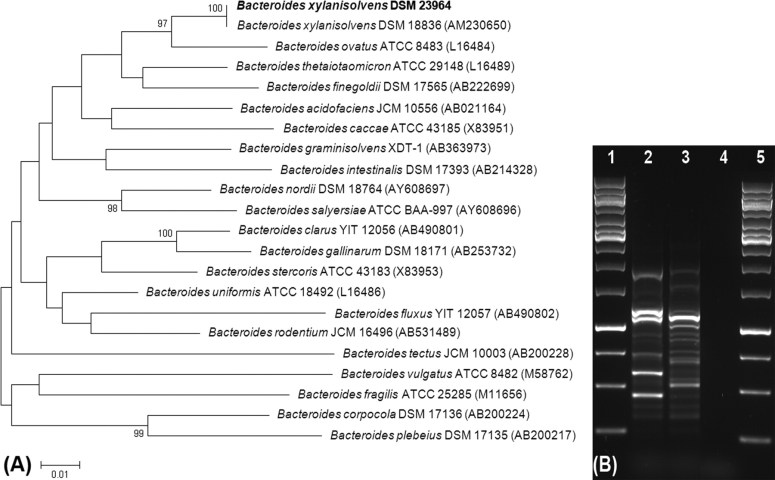
Decreasing Bacteroides Xylanisolvens

In Ian Lipkin et al 2017 study, high Bacteroides Xylanisolvens was reported (on average). [Index to all posts on Study] . “ The human intestine is the only location that Bacteroides xylanivsolvens has been isolated….one of the species involved in breaking down xylan in the human gut, …  and ”Bacteroides fragilis” subspecies A.”[microbewiki]

f1-large

  • Being considered as a probiotic [2011] – not for CFS/FM/IBS please!
  • ” The investigation of the antibiotic susceptibility indicated that strain DSM 23964 was sensitive to metronidazole, meropenem agents, and clindamycin. Resistance to penicillin and ampicillin was identified to be conferred by the β-lactamase cepA gene… Some of them, like B. xylanisolvens, that are not classified as opportunistic pathogens can be expected to contain strains with a favorable safety profile…his strain may possess immune-modulatory properties and is able to produce short fatty acid chains (propionate, succinate) with potential health-beneficial effects. ” [2011]
  • ” utilised the xylan in different ways, and differently from their use of wheat arabinoxylan.” [2017]
  • “while soy, pulse and nut intake was positively associated with the relative abundance of bacteria related to Bacteroides xylanisolvens.” [2016]
  • ” the metabolic plasticity of B. xylanisolvens towards dietary fibres that contributes to its competitive fitness within the human gut ecosystem” [2016]
  • “The bacteria having a pronounced ability to degrade Alginate, mannuronic acid oligosaccharides and guluronic acid oligosaccharides were isolated from human fecal samples and were identified as Bacteroides ovatus, Bacteroides xylanisolvens, and Bacteroides thetaiotaomicron” [2016]
  • ” In gout, Bacteroides caccae and Bacteroides xylanisolvens are enriched yet Faecalibacterium prausnitzii and Bifidobacterium pseudocatenulatum depleted.” [2016] – This is almost the same pattern as reported by Lipkin (3/4 having the same shift). Gout is  too much uric acid in the blood
    • “Ethanol increases production of uric acid by increasing production of lactic acid, hence lactic acidosis.” [wikipedia]
  • “B. xylanisolvens GH99 reveal the structural basis for binding to D-mannose – rather than D-glucose-configured substrates.”[2015]
  • xylanisolvens XB1A cultured with glucose, xylose or xylans,” [2010]
  • ” bacteria grew well on all the substrates chosen to represent dietary fibres: wheat and corn bran, pea, cabbage and leek fibres, and also on purified xylans.” [2010]
  • “. Xylan and sugars were converted by strain XB1AT mainly into acetate, propionate and succinate.” [2008]


Consumes: xylan, unable to utilize starch or to produce indole

Produces: acetate, propionate, succinate

Bottom Line

Reduce food containing xylan or reduce xylan producing bacteria. Soy. nuts and pulse should be reduced or eliminated.

Decreasing Ruminococcus Lactaris

In Ian Lipkin et al 2017 study, high Ruminococcus Lactaris was reported (on average). [Index to all posts on Study] . 

  • “a widespread mechanism of bacterial competition. CDI(+) bacteria deliver the toxic C-terminal region of contact-dependent inhibition A proteins (CdiA-CT) into neighboring target bacteria and produce CDI immunity proteins (CdiI) to protect against self-inhibition…the Ntox28 domain from Ruminococcus lactaris is significantly more thermostable” [2016]
  • “produces acetate, ethanol, succinate, lactate and formate, but very little butyrate, as end products of glucose metabolism.” Isolation and whole genome sequencing of a Ruminococcus-like bacterium, associated with irritable bowel syndrome.[2016]
  • “Enterolactone production was linked to the abundance of two molecular species identified as Ruminococcus bromii and Ruminococcus lactaris…Flaxseeds increase enterolignan production” [2015]

Bottom Line

Avoid

Flaxseed


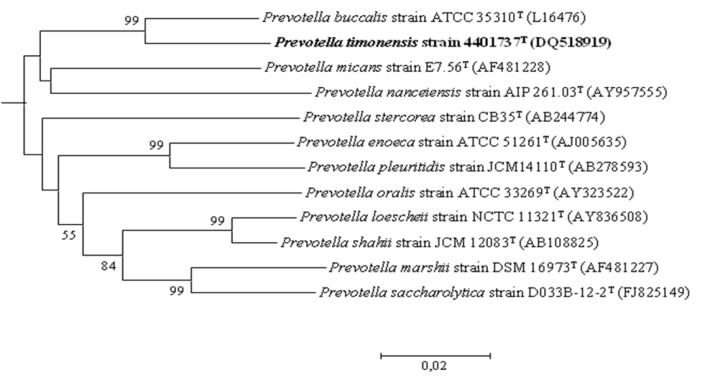
Decreasing Prevotella Buccalis

In Ian Lipkin et al 2017 study, high Prevotella Buccalis was reported (on average). [Index to all posts on Study] . Originally identified in 1982. It appears to be associated with periodontitis and the mouth.

tax

sigs-5098948-f1

  • “In a study of gut bacteria of children in Burkina Faso (in Africa), Prevotella made up 53% of the gut bacteria, but were absent in age-matched European children.”[2010]
  • “All Prevotella strains tested were susceptible to imipenem and amoxicillin/clavulanate, whereas 78.6% of the pigmented Prevotella species and 46.4% of the non-pigmented species were resistant to penicillin (MIC >0.5 μg/ml).” [2015]
  • ” lactamase production was observed for 1 Prevotella buccalis strain.” [2014]
  • “The beta-lactamase positive species Prevotella loescheii, Prevotella buccae, Prevotella buccalis and Actinomyces spp were recovered from the selective amoxicillin plates.” [1997]
  • “Cefpodoxime was found to be active at concentrations of less than or equal to 0.125 mg/l against Prevotella oralis, Prevotella buccalis” [1991]

Betalactamases (β-lactamases) are enzymes (EC 3.5.2.6) produced by bacteria (also known as penicillinase) that provide multi-resistance to β-lactam antibiotics such as penicillins, cephamycins, and carbapenems (ertapenem),” [wikipedia]

Decreasing Anaerostipes Caccae and Eubacterium Hallii

In Ian Lipkin et al 2017 study, high Anaerostipes Caccae and Eubacterium Hallii was reported (on average). [Index to all posts on Study] in CFS patients WITH IBS. ” butyrate-producing and acetate and lactate-utilising bacterium” [Wikipedia]. PubMed has some 18 citations on A.Caccae. It was discovered in 2002.  E. Halli occurs very often in those same articles — so I am doing two strains in one post.

  • “Whereas E. hallii and A. caccae strains used both D- and L-lactate, the remaining strains used only the d form.” [2004] –NOTE: E. hallii was also reported high with IBS in Lipkin’s study. These species being high may be because they are well fed due to D-Lactic Acidosis.
  • “The potential for metabolic cross-feeding between Bifidobacterium adolescentis and lactate-utilizing, butyrate-producing Firmicute bacteria related to Eubacterium hallii and Anaerostipes caccae was investigated in vitro. E. hallii L2-7 and A. caccae L1-92 failed to grow on starch in pure culture, but in coculture with B. adolescentis L2-32 butyrate was formed, indicating cross-feeding of metabolites to the lactate utilizers. Studies with [(13)C]lactate confirmed carbon flow from lactate, via acetyl coenzyme A, to butyrate both in pure cultures of E. hallii and in cocultures with B. adolescentis. Similar results were obtained in cocultures involving B. adolescentis DSM 20083 with fructo-oligosaccharides as the substrate.” [2006]
  • ” The patient was initially treated with vancomycin and piperacillin-tazobactam on admission and with amoxicillin-clavulanate upon discharge. The slow-growing organism was subsequently found to be susceptible to metronidazole and ertapenem.” [2016]
  • Anaerostipes caccae DSM 14662T on oligofructose, the latter strain converted lactate (produced by the former strain[Lactobacillus acidophilus] from oligofructose) into butyrate and gases, but only in the presence of acetate.” [2017]
  • ” only A. hadrus and A. caccae demonstrated augmented butyrate production from L-sorbose or xylitol. These findings suggest that L-sorbose and xylitol cause prebiotic stimulation of the growth and metabolic activity of Anaerostipes spp. in the human colon.” [2017]

Bottom Line

Update on how to reduce the genus

However, eliminating   L-sorbose and xylitol from the diet seems warranted.