Tetracyclines impact on Microbiome

Tetracyclines includes minocycline, doxycycline and other brand names. In this post, I am revisiting what we currently know about the shifts of the microbiome as a result.

My last post on Va In this pncomycin had me discovering some lovely graphics on the shift of the microbiome.

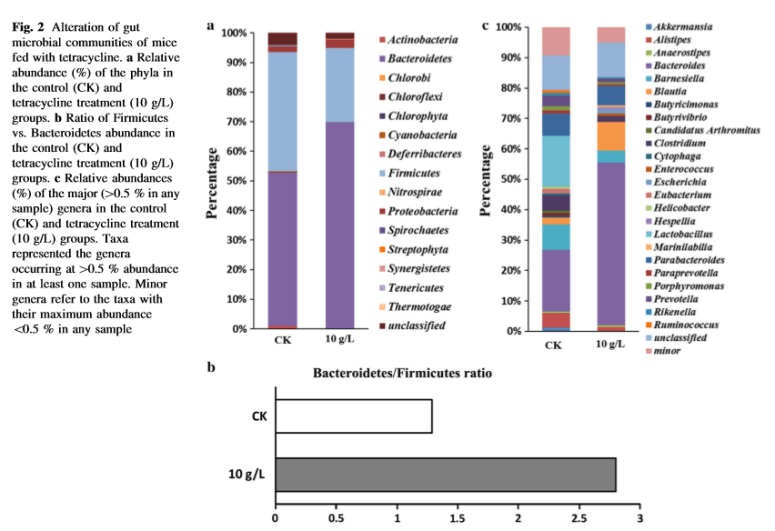
From Metagenomic insights into tetracycline effects on microbial community and antibiotic resistance of mouse gut[2015]. we have the following graphics

tetracycline

Studies of tetracycline on CFS/FM/IBS

  • “After 4-12 months they developed post-Q-fever fatigue syndrome and were treated with intracellular active antibiotics (fluoroquinolones and tetracycline) for 3-12 months. Efficacy of the treatment was observed in two patients, but in one patient the results were not encouraging.” [2007]
  • “Four CFS patients (the CFS group) and 54 controls [the post-Q fever fatigue syndrome (QFS) group] positive for C. burnetii were treated mainly with minocycline or doxycycline (100 mg/day) for 3 months. After treatment, all 58 patients tested negative for C. burnetii infection.” [2005]
  • “These results of an open label study in Japan suggest that minocycline administration is useful for improving chronic nonspecific symptoms considered to be post-Q fever fatigue syndrome caused by C. burnetii infection.” [2004]
  • “post-Q fever chronic fatigue syndrome has been described. … the treatment of choice for acute infection in both diseases is still tetracycline-group antibiotics.” [2007]
  • Used by Prof. Garth L. Nicolson
    • “the recommended treatments for mycoplasmal blood infections require long-term antibiotic therapy, usually multiple 6-week cycles of doxycycline (200-300 mg/d), ciprofloxacin or Cipro (1,500 mg/d), azithromycin or Zithromax (500 mg/d) and clarithromycin or Biaxin (750-1,000 mg/d). Multiple cycles are required,”
  • Used by Dr. Cecile Jadin, MD. Site

Oral Vancomycin Antibiotics -A big reset of the microbiome

A reader wrote with positive results:

“Ever since I developed Sjogren’s,  I started researching a method to get back to normal.  One of the more interesting studies in Pubmed I came across was the use of Vancomycin to manipulate the gut biome for autoimmune recovery, so naturally, I had to try this.
https://www.ncbi.nlm.nih.gov/pubmed/11083284

  Since Vancomycin pretty much stays in the gut similar to Rifaximin, it tends to be safer than most other antibiotics, so I decided to use 250 mg 4 times daily for 14 days, as per a study that was recently run by NYU in another autoimmune related study.”

  • “Vancomycin became available for clinical use >50 years ago but was soon discarded in favor of other antibiotics that were deemed to be more efficacious and less toxic.” [2006 – full text, review of the history of vancomycin]
    • “Prior to its release, vancomycin was used to treat an entity called “postoperative micrococcal colitis” [2]. The response to vancomycin was excellent, and the presence of this disease, also called “acute staphylococcal ileocolitis,” became an indication for the use of vancomycin [29]. Although Clostridium difficile is the primary agent of pseudomembranous enterocolitis, Staphylococcus aureus is clearly an occasional cause of the disorder [30]. Because vancomycin is active against both pathogens and is poorly absorbed from the intestinal tract, it became the drug of choice for treating pseudomembranous enterocolitis [31]”
    • “With the increased use of vancomycin came data suggesting that vancomycin might not be equivalent to β-lactams.”
  • “[In Rats] Vancomycin significantly altered the microbiota, which was restored to control levels by 8 weeks of age. Notably, vancomycin-treated animals displayed visceral hypersensitivity in adulthood without any significant effect on anxiety responses as assessed in the elevated plus maze or open field tests... a temporary disruption of the gut microbiota in early-life results in very specific and long-lasting changes in visceral sensitivity in male rats, a hallmark of stress-related functional disorders of the brain-gut axis such as irritable bowel disorder.” [2014]
    • Visceral hypersensitivity means a general increase in pain sensation experienced in internal organs. It is common in IBS sufferers. [source]
  • “In patients experiencing an acute episode of recurrent Clostridium difficile infection (CDI), a single Fecal transplantation by enema was not significantly different from oral vancomycin taper in reducing recurrent CDI. ” [2017] – in other words, it may be as effective as a fecal transplant… more studies are needed.
    • “To date fecal transplant cures Clostridium difficile infections with more efficacy than vancomycin, and prevents recurrence.” [2015]
  • Short- and long-term effects of oral vancomycin on the human intestinal microbiota [2017]. FULL TEXT
    • “oral vancomycin remains the treatment of choice for severe C. difficile infection (CDI). Despite its effectiveness against CDI (cure rate of ∼90%),”
    • “microbiota alterations induced by vancomycin may promote intestinal colonization by other pathogens, including VRE, Klebsiella pneumoniae or Escherichia coli.10Moreover, oral vancomycin therapy may predispose to other microbiota-related disorders, including obesity, asthma or diabetes.7,11,12
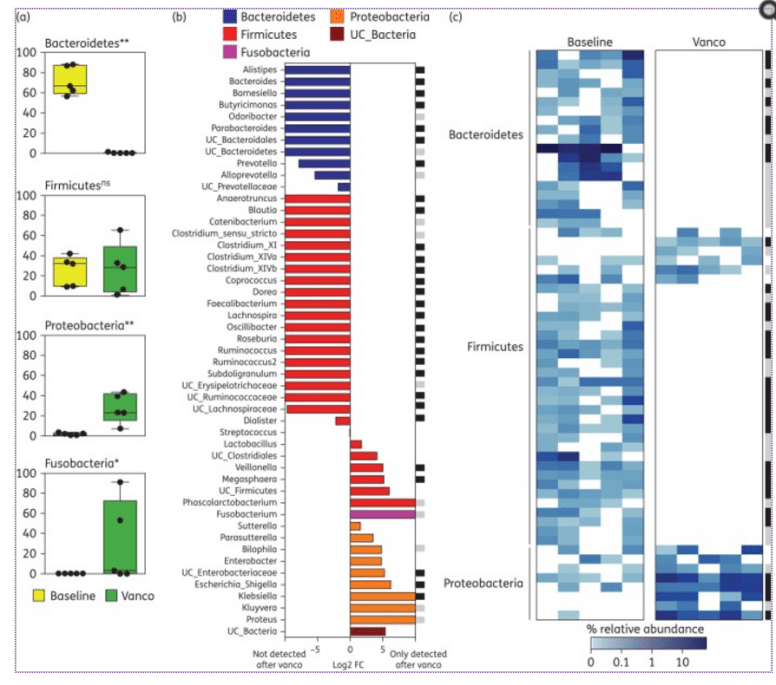
    • “By contrast, microbiota richness was greatly reduced upon vancomycin administration. Following antibiotic cessation, microbiota richness gradually increased, although it never recovered to baseline levels. A similar result was obtained when the Shannon diversity index was calculated (Figure 1c and Figure S3), which takes into account the number of OTUs and their relative proportion. In this case, however, baseline levels were recovered 22 weeks after antibiotic withdrawal.”
van

Bottom Line

Vancomycin seems close to doing a disk format and re-install of the operating system on a PC. You need to reinstall all of your programs (i.e. populate with probiotics) — unfortunately you no longer have most of the installation disks….

If you do use Vancomycin, I would strongly suggest having as many human-sourced probiotics as possible on hand, and start them 2-6 days after the last dosage, for example:

  • Symbioflor-2
  • Mutaflor
  • Lactobacillus Fermentus ME3
  • Biogaia Lactobacillus Reuteri
  • Enterococcus faecium SF68

As well as these SBO

  • Prescript Assist
  • General Biotics Equilibrium


Lactobacillus Salivarius -Friend or Foe?

A reader posted on facebook

Hi Ken, have you heard anything about L. Salivarius being bad for CFS patients? I’m trying Custom Probiotics d-lactate-free formula at the moment. There’s a patient on the PhoenixRising forum who believes L. Salavirus permanently worsened their condition, and also claimed it can destroy beneficial bacteria a la antibiotics. Have you ever read anything along these lines?”

First thing is simple: L. Salivarius does kill other bacteria – the questions is whether it kills the good ones or the bad ones (or kills randomly!). The “antibiotic” that it produces is called a bacteriocin. “bacteriocins are being tested to assess their application as narrow-spectrum antibiotics.[1]

This may depend on the strain — unfortunately, the strain is often not put on to many commercial probiotics.

  • “an up-to-date overview of all L. salivarius strains, isolated from different origins, known as bacteriocin producing and/or potential probiotic.” [2013], from the complete article:
    • … are producers of unmodified bacteriocin of subclasses IIa,IIb and IId…
    • inhibits … Bacillus, Listeria, Enterococcus and Staphylococcus
    • .. against Lactobacillys delbrueckii subsp bulgaricus (used in many yogurts)
    • .. against Enterococcus faecalis, E. faecium and Neisseria gonorrhoeae
    • .. against S. mutans, Streptococcus pneumoniae, Staphylococcus aureus, micrococcus flavus and Salmonella enteritidis
    • … against Campylobacter jejuni
    • .. active against more phylogenetically divergent Gram-positive bacteria and occasionally against Gram-negative bacteria.
    • … against L.monocytogenes…
    • Antibiotic susceptibility profiles showed that the strains of L. salivarius were sensitive to the majority of antibiotics tested..
    • … induces Interleukin (IL)-10… IL-6
      • IL-10 is low in CFS patients [2015] and “CFS/ME patients displayed significant increases in IL-10″[2011]
      • “while low levels of IL-6 suggested early ME/CFS, the reverse was true in subjects over 18 years of age ill for more than 2 years.” [2016]

Studies on CFS/IBS/FM?

Bottom Line

There is no evidence that Lactobacillus salivarius is of any benefit to CFS/FM/IBS/IBD. Within the family is a wide spectrum of bacteriocins – and the lack of positive effects suggests that it does not invoke a shift that is desirable for these conditions. There is reasonable evidence that the report forwarded by a reader may be accurate/true.

I would rank lactobacillus salivarius as a “to be avoided” probiotic.

Blood Pressure and CFS-IBS-FM

A reader contacted me about her blood pressure changing significantly from day to day. I said that I would research and prepare a summary of what is known. High blood pressure is known as hypertension and means pressure over 140. Hypotension is the medical term for low blood pressure (less than 90/60).

  • ” the mean values for the left ventricular end-diastolic diameters, stroke volume index, and cardiac index as well as the mean blood pressure were all significantly smaller in the ME group than in the Controls.” [2016]
  • “As many as [CFS] 50 participants were randomised; mean age 49 (SD 13) years,…. mean baseline office blood pressure 128/78 (18/12) mmHg” [2015] i.e. 17% was over 146.
  • ” CFS-POTS patients experienced significantly lower baseline diastolic blood pressure (P = 0.002), significantly higher heart rate and lower pulse pressures at each standing measurement.” [2014]
    pressure
  • “psychological stress contributes …..heart rate, systolic and diastolic blood pressures, and plasma levels of noradrenaline and adrenaline increased during the interview” [2013]
  • “Serotonin and noradrenaline reuptake inhibitors… elevated blood pressure” [2013]
  • “objectively measured abnormalities of blood pressure variability in CFS and that these abnormalities have the potential to be a bedside diagnostic tool.” [2012]
  • Elevated nocturnal blood pressure and heart rate in adolescent chronic fatigue syndrome [2011].
  • ” In the control group, but not in the [FM] patients, blood pressure was inversely associated with mental performance. This finding is in line with the well known cognitive impairment in hypertension. The lack of this association in FMS confirms previous research showing aberrances in the interaction between blood pressure and central nervous function in the affected patients.” [2012]
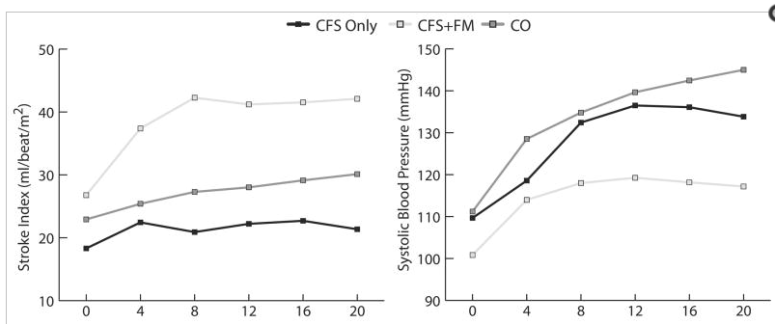
  • From 2012
    press2
  • “The present results extend on our previous work with maximal exercise and show that CFS and CFS + FM differ in their responses to steady-state exercise.” [2012]
    press3
  • Lower ambulatory blood pressure in chronic fatigue syndrome [2009]. “Compared with the control population, the CFS group had significantly lower systolic blood pressure (p < .0001) and mean arterial blood pressure (p = .0002) and exaggerated diurnal variation (p = .009). There was a significant inverse relationship between increasing fatigue and diurnal variation of blood pressure in both the CFS and PBC groups (p < .05).”
  • “Gastroesophageal reflux disease (GERD) and irritable bowel syndrome (IBS) patients had lower blood pressure, “[2015]
  • “[With adolescents]At night (sleep), HR, mean arterial blood pressure and diastolic blood pressure were significantly higher in CFS patients as compared with controls (p < 0.01). During daytime, HR was significantly higher among CFS patients (p < 0.05), whereas blood pressures were equal among the two groups.” [2011]
    • “CFS in adolescents is characterized by reduced systolic blood pressure variability” [2011]

Treatment

  • “There is limited moderate evidence supporting Far  Infra Red Saunas efficacy in normalizing blood pressure”[2009] see this post on Infrared Saunas.
  • “cardiovascular effects of probiotics Lactobacillus fermentum CECT5716 (LC40), or L. coryniformis CECT5711 (K8) plus L. gasseri CECT5714 (LC9) (1:1) …exert cardiovascular protective effects in genetic hypertension ” [2015]

Bottom Line

Recording blood pressure and pulse is a should do for CFS/FM patients. You should record daily at the same time and average the week to observe any trends. There can be significant variation from day to day.  If you are able to do some light steady exercise daily, you should also record the blood pressure every 4 minutes during the exercise(use the above charts for reference). Blood pressure should go up if a treatment is successful.

Lactobacillus acidophilus DDS-1 Strain

I found this probiotic writing my post on Lactose Intolerance .  There were some interesting characteristics of it, so I thought a deeper dive was warranted. It is also known as  Lactobacillus acidophilus strain LA1.

  • The effects of the DDS-1 strain of lactobacillus on symptomatic relief for lactose intolerance – a randomized, double-blind, placebo-controlled, crossover clinical trial [2016]. “The DDS-1 strain of Lactobacillus acidophilus, discovered in 1959 by Dr. Khem Shahani at the University of Nebraska, is a unique strain of L. acidophilus on deposit with the FDA Agricultural Research Service (ARS) with the catalog number B-3208. It is currently manufactured by Nebraska Cultures, Inc. A recent study demonstrated the DDS-1 strain of L. acidophilus to be superior to other strains of lactobacillus in the ability to establish in the human gastrointestinal (GI) tract [43]…can provide symptom benefit compared with placebo among individuals who consume the product for a course of 4 weeks.”
  • ” LA1 induced the production of higher levels of IL-1 alpha and TNF-alpha than other lactobacilli and bifidobacteria.” [1997] Both IL-1 and TNF-alpha are HIGH with CFS so not a good choice. [1999] [2012]
  • “These results do not support a beneficial effect of Lactobacillus acidophilus strain DDS-1 and Bifidobacterium longum strain UABL-14 on plasma lipids” [2008]
  • “The administration of a probiotic mixture containing L. acidophilus DDS-1, B. lactis UABLA-12, and fructo-oligosaccharide was associated with significant clinical improvement in children with atopic dermatitis  (AD), with corresponding lymphocyte subset changes in peripheral blood. The efficacy of probiotic therapy in adults with AD requires further investigation.” [2010]

Bottom Line

This “best of class” lactobacillus acidophilus is NOT what you want to take with CFS or any condition with high TNF-Alpha or IL-1.  My ongoing advice to avoid all lactobacillus acidophilus appears to have some basis.