Lactose Intolerance (LI)

I have known chronic fatigue syndrome (CFS) patients that prior to CFS had no problem with lactose. As CFS progressed they became intolerant.

In reviewing PubMed Studies, I found that CFS patients with lactose intolerance was excluded from some studies of CFS [2002]. Other papers report overlap of IBS and LI [2005]. A 2011 study summarized it nicely “Substantial overlap of symptoms and comorbidities occur not only between irritable bowel syndrome and other functional gastrointestinal disorders but also with gastrointestinal disorders that are not related to motility (eg, celiac disease and lactose intolerance) and to somatic conditions (eg, fibromyalgia and chronic fatigue syndrome).” [2011]

Lactose intolerance as a result of a persistent shift of gut bacteria appears consistent.

Lactose malabsorption and milk products intolerance symptoms are the most common alimentary tract disorders. Lactose intolerance is a result of lactase deficiency or lack of lactase and lactose malabsorption. Three types of lactase deficiency were distinguished:

  • congenital,
  • late-onset lactase deficiency and
  • secondary lactase deficiency.

Lactose intolerance means the appearance of clinical gastrointestinal symptoms after ingestion of lactose. To the clinical symptoms of lactose intolerance belongs: nausea, vomiting, abdominal distension, cramps, flatulence, flatus, diarrhea and abdominal pain.” [2009]

“All the patients with lactase deficiency(LD) were detected to have small intestinal (SI) bacterial overgrowth (BOG). An inverse correlation was found between LD and the degree of SI BOG (r = -0.53; p < 0.001). 73.7% of the patients with moderate LD showed a positive effect of probiotic therapy ….. No improvement occurred in 73.8% of the patients with severe LD.”[2015]

“secondary lactase deficiency (SLD) was detected in 59.4% of patients with postinfectious IBS [i.e. IBS resulted from an infection]. Mild SLD was determined in 43.5% of patients, and severe SLD – in 15.9% of patients.” [2012]

  • lactase deficiency (LD) was identified in 36.5% of the patients with PI-IBS. There was an inverse correlation between the degree of LD and SI BOG. The good therapeutic effect of probiotics in LD suggests that the symbiotic gut microflora positively affects the activity of lactase in the human SIM. No therapeutic effect of probiotics in patients with severe LN serves as the basis for a search for more active probiotic therapy.” [2015]

“The majority of people with lactose malabsorption do not have clinical lactose intolerance. Many individuals who think they are lactose intolerant are not lactose malabsorbers.” [2010]

“A recent meta-analysis permitted to show that almost all lactose intolerants tolerate 12 g of lactose in one intake and approximately 18 g of lactose spread over the day.” [2015]

“In spite of public knowledge and advertising, controlled studies did not prove the beneficial effect of either a lactose-free diet, enzyme supplementation or probiotics in an evidence-based manner.” [2015]

” Most individuals with LI can tolerate up to 12 grams of lactose, though symptoms became more prominent at doses above 12 grams and appreciable after 24 grams of lactose; 50 grams induced symptoms in the vast majority. A daily divided dose of 24 grams was generally tolerated. We found insufficient evidence that use of lactose reduced solution/milk, with lactose content of 0-2 grams, compared to a lactose dose of greater than 12 grams, reduced symptoms of lactose intolerance. Evidence was insufficient for probiotics (eight RCTs), colonic adaptation (two RCTs) or varying lactose doses (three RCTs) or other agents (one RCT). Inclusion criteria, interventions, and outcomes were variable. Yogurt and probiotic types studied were variable and results either showed no difference in symptom scores or small differences in symptoms that may be of low clinical relevance.” [2010]

A 2004 article recommends DNA testing “Attention should be paid to appropriate interpretation of genetic detection in order to avoid potentially harmful reduction in dairy intake or misdiagnosis of secondary lactase deficiency.”  ” These are C/T 13910 and G/A 22018 substitutions.”[2009] “The LCT(T/C-13910) polymorphism is associated with subjective milk intolerance, reduced milk calcium intake,” [2004]

Treatment

  • ” The results indicated a definitive change in the fecal microbiome of lactose intolerant individuals that were clinically responsive to dietary adaptation to short chain galacto-oligosaccharide (GOS), named RP-G28″[2013]
  • ” in 1996, 20 people, with various ethic backgrounds, and who were all poor at digesting lactose, were randomly assigned to take either a small dose of lactose or one of dextrose, a different sugar, for 10 days… Encouraging, the course of small lactose doses did improve tolerance: after the 10-day course of lactose,” [1996]
    • Thus complete avoidance as was advocated for peanuts (the common belief) is likely not ideal
    • ” In the absence of guidelines, the common therapeutic approach tends to exclude milk and dairy products from the diet. However, this strategy may have serious nutritional disadvantages. Several studies have been carried out to find alternative approaches, such as exogenous beta-galactosidase, yogurt and probiotics for their bacterial lactase activity, strategies that can prolong contact time between enzyme and substrate delaying gastrointestinal transit time, and chronic lactose ingestion to enhance colonic adaptation.” [2009]
  • The effects of the DDS-1 strain of lactobacillus on symptomatic relief for lactose intolerance – a randomized, double-blind, placebo-controlled, crossover clinical trial [2016]. “The DDS-1 strain of Lactobacillus acidophilus, discovered in 1959 by Dr. Khem Shahani at the University of Nebraska, is a unique strain of L. acidophilus on deposit with the FDA Agricultural Research Service (ARS) with the catalog number B-3208. It is currently manufactured by Nebraska Cultures, Inc. A recent study demonstrated the DDS-1 strain of L. acidophilus to be superior to other strains of lactobacillus in the ability to establish in the human gastrointestinal (GI) tract [43]…can provide symptom benefit compared with placebo among individuals who consume the product for a course of 4 weeks.”
    • ” Treatment of lactose-maldigesting subjects with and without hypochlorhydria with Lactobacillus acidophilus BG2FO4 for 7 d failed to change breath-hydrogen excretion significantly after lactose ingestion.” [1999] – so it is strain specific
  • “In lactose intolerants, tilactase strongly improves both LBT results and gastrointestinal symptoms after lactose ingestion with respect to placebo. Lactobacillus reuteri also is effective but lesser than tilactase.” [2010]
  • “Feeding yogurt that was pasteurized following fermentation, with only trace amounts of microbial beta-galactosidase activity, results in a threefold increase in lactose malabsorption as compared with feeding yogurt with a viable culture.” [1987]
    • “There is a poor correlation between lactose maldigestion and intolerance; in some studies,” [2001]
  • Beneficial effects of long-term consumption of a probiotic combination of Lactobacillus casei Shirota and Bifidobacterium breve Yakult may persist after suspension of therapy in lactose-intolerant patients [2012]. “Four-week consumption of a probiotic combination of L casei Shirota and B breve Yakult seems to improve symptoms and decrease hydrogen production intake in lactose-intolerant patients. These effects may persist for at least 3 months after suspension of probiotic consumption.”
  • “Sixty patients with moderate secondary lactase deficiency (SLD) were randomized to 2 groups: 1) 41 patients received basic therapy (mesim forte as one tablet t.i.d., no-spa, 40 mg, t.i.d.) and combined probiotic bifiform (Ferrosan) containing Bifidobacterium longum 107, Enterococcus faecium 107 as one capsule t.i.d. for 14 days….After a 14-day course of therapy with the combined probiotic bifiform, restoration of eubiosis in the small bowel lumen was achieved in 70.8% of the patients,” [2013]
  • “the probiotic Bifiform, composed of Bifidobacterium longum 10(7) and Enterococcus faecium 10(7), demonstrated efficiency in correction of mild SLD in patients with postinfectious IBS and can be used to prevent SIBO.” [2012]

Vitamin D and LI

Bottom Line

There is weak evidence that Lactobacillus Reuteri, Lactobacillus casei Shirota (Yakult), Bifidobacterium Breve and  explicitly Lactobacillus acidophilus DDS-1 may reduce LI but will make CFS worst (increase TNF-alpha even higher). Ferrosan Bifiform has stronger evidence. It is surprising that relative few probiotics have been tested. The association with IBS suggests that IBS probiotics may also reduce LI: Prescript Assist, Mutaflor, Symbioflor-2, Align.

Vitamin D levels may play a role, and thus supplementation of 10-15000 IU of vitamin D should be discussed with your medical professional.

Complete lactose avoidance appears to be unnecessary, and may actually make LI worst.

Lactobacillus acidophilus DDS-1 is available as a single probiotic – read this post on it,


Dealing with bad Enterococcus Overgrowth

A reader email me  and stated that he believe that he has an overgrowth of (bad) Enterococcus. I had done an earlier post and thought that I should dig deeper, there are some hints that enterococcus is involved with Chronic Lyme [2007]

Background

“The first description of Enterococcus spp. as agents of infection causing infective endocarditis was reported in 1899 (Maccallum and Hastings 1899); however, enterococci emerged as major multidrug-resistant opportunistic pathogens in the 1990s (Uttley, Collins, Naidoo et al., 1988; Sood, Malhotra, Das et al., 2008). As recently reviewed by Arias and Van Tyne, ‘enterococci epidemiology’ has evolved with antibiotic use and evolution of medical practices (Arias and Murray 2012; Van Tyne and Gilmore 2014). Over the past 30 years, enterococci have become a leading cause of healthcare-associated infections (HCAIs) worldwide (Arias and Murray 2012). Enterococcus faecalis was the first species found to be responsible for infections, but clinical E. faecium strains have been increasingly reported since 2000. A correlation was established between the use of antibiotics in animal feed and human medicine and the emergence of resistant enterococci, in particular of vancomycin-resistant enterococci (VRE) and ampicillin-resistant enterococci (ARE) in fragilized populations (Agudelo Higuita and Huycke 2014).” [2015]

Option #1 Displace the bad Enterococcus

My initial take would be to displace them with good Enterococcus from probiotics:

  1. * Symbioflor-1   Enterococcus faecalis (Germany)
  2. Bioflorin – Enterococcus faecium SF 68 (Germany)
  3. BENOIT Enterococcus AF2 (ITALY)
For additional enterococcus probiotics suggestions see this post.This would typically mean 1-4x the “recommended dosage” – as determined by your knowledgeable medical professional.

Option #2 Probiotics that reduce enterococcs

Option #3 Herbs and Spices

  • “Brillantaisia lamium… Enterococcus faecalis… were the most sensitive to all the tested compounds.” [2011]
  • “the annual herb Acanthospermum hispidum DC. (Asteraceae) …a selective antibacterial activity was observed against pathogenic strains of Staphylococcus aureus and Enterococcus faecalis ” [2012]
  • “Rubus parvifolius L. (Rp) is a medicinal herb that possesses antibacterial activity…inhibited the growth of a wide range of Gram positive and negative bacteria, including … Enterococcus faecalis,[2012]
  • “Conyza sumatrensis (Retz.) E.WALKER (Asteraceae) is a spontaneous annual herb.. the leaf oil exhibited significant in vitro antibacterial activity against Enterococcus faecalis” [2013]
  • “among the most active EOs against MDR E. faecalis strains, O. glandulosum, T. capitata, L. multifida, and A. verticillata EOs are constituted principally by terpenoid phenols,…a good synergetic effect between compounds of Eucalyptus globulus EO against multidrug-resistant bacteria, Staphylococcus aureus and Enterococcus faecalis. [2014]
  • From my earlier post on Enterococcus overgrowth,

CFS is not a Mitochondrial dysfunction

There have been some recent articles and a nice summary from a presentation given (before the articles was published). One of the things that I have observed in some 15 years being involved with the CFS community is that hypothesis never die– despite many studies blowing holes in them. For example the view that CFS is a mitochondrial disease.

Recent research found was that the symptoms (but not the disease) are related to mitochondrial.

What Cornell found (and I agree!)

  1. Do some patients with ME/CFS identified by expert M.D.s actually have a genetic mitochondrial disease? NO
  2. Can mitochondrial genome variation be correlated with susceptibility to ME/CFS?  NO
  3. Is mitochondrial genome variation correlated with particular ME/CFS symptoms or their severity? YES
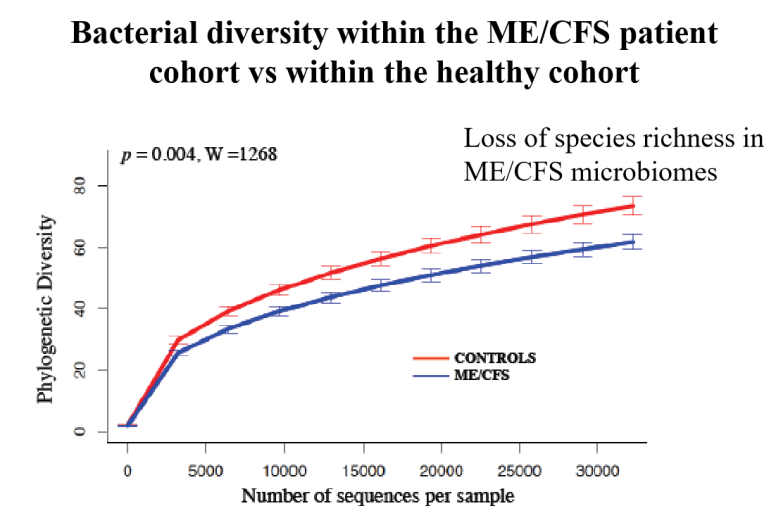
  4. Anti-inflammatory bacterial species are reduced in ME/CFS patients? YES

corn

corn2

Presentations to Watch

What evidence is there of not being DNA etc.

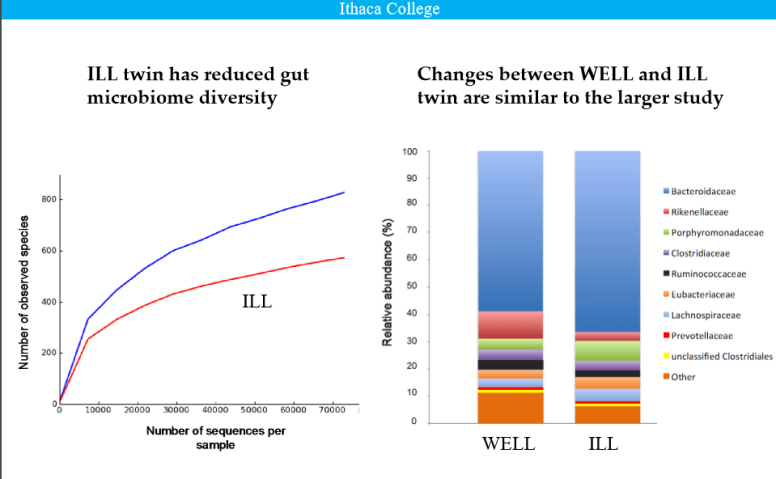
Twin studies — Same DNA, same mitochondria. So what is the difference between having or not having CFS?

twins

Bottom Line

My base hypothesis is that CFS/IBS/ etc is caused by a microbiome shift. This shift decreases TH1 associated bacteria and increases TH2 associated bacteria. The shift to TH2 results in increased histamine release and histamine sensitivity.

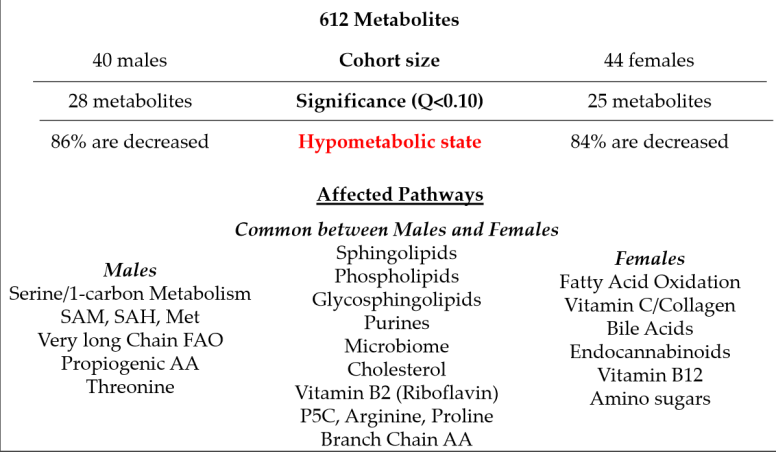
This shift results in alteration of the amino acids and the metabolites produces by the bacteria in the microbiome because different bacteria produce different amino acid and metabolites. For example, B12 is mainly produced by Lactobacilus Reuteri; if the quantity of L. Reuteri drops then a person ends up with low B12 levels.


TH1 / TH2 ratio and Probiotics

A reader asked:

“I was wondering…have you done a blog post on probiotics that might help shift the Th1-Th2 balance?”

“T(H)2-cytokines increase the production of IgE and stimulate mast cells [aka histamine release] and eosinophils, whereas T(H)1-cytokines, such as IFN-gamma, may suppress IgE synthesis and stimulate the expression of the secretory piece of IgA.”[2008]

“Type 1 Th cells (Th1 cells) secrete IL-2, interferon-gamma (IFN-γ) and tumour necrosis factor (TNF), whereas type 2 Th cells (Th2 cells) produce IL-4, IL-5, IL-6 and IL-13. ” [1998]

IMHO, there will be limited literature.  Much of the literature is for specific strains that are not available commercially.

Bottom Line

For most of the probiotics reported above, they induce TH1 and reduce TH2. Alternatively, the loss of these families of bacteria in CFS patients could explain the shift to TH2. The degree of shift each probiotic does varied greatly from strain to strain.  In other words, if you favor the TH2 – shift hypothesis for CFS, then you should definitely be taking probiotics. There are a few probiotics that decreases TH1.. so  “taking a probiotic” is not a magic formula.

The observed shift in CFS patients microbiome would explain the shift towards TH2 seen in CFS patients

Personally, I believe that the TH1/TH2 shift is a simplification that masks a lot of details on which cytokines are involved. For example, which one of the IL-4, IL-5, IL-6 and IL-1 are high? Only one may be — we should be treating the specifics and not doing a shotgun approach.


Lactobacillus fermentum

I came across this while examining environmental illness. There are two features that makes Lactobacillus fermentum ME-3 DSM-14241 of special interest:

  • It is human sourced — thus there is a reasonable chance that it may take up residence
  • It produces glutathione — very unusual

Last, it is available on Amazon.com (this specific strain)


Pub Med Literature Review

  • ” L. fermentum ME-3 is a unique strain of Lactobacillus species, having at the same time the antimicrobial and physiologically effective antioxidative properties and expressing health-promoting characteristics if consumed. Tartu University has patented this strain in Estonia (priority June 2001, patent in 2006), Russia (patent in 2006) and the USA (patent in 2007).” [2009] [Full text– an interesting read]
    • ” the strains of the L. fermentum species were also found from some other Estonian children, yet not from Swedes!”
  • “The consumption of Reg’Activ Cholesterol  (containing Lactobacillus fermentum ME-3) in clinically asymptomatic volunteers with borderline-high values of risk factors for cardiovascular disease (BMI, HbA1c%, LDL cholesterol) for 4 weeks had a positive effect on blood lipoprotein, oxidative stress and inflammatory profile.” [2016]
  • ” this study show that probiotic L. fermentum ME-3 contains both glutathione peroxidase and glutathione reductase. We also present that L. fermentum ME-3 can transport GSH from environment and synthesize GSH. This means that it is characterized by a complete glutathione system: synthesis, uptake and redox turnover ability that makes L. fermentum ME-3 a perfect protector against oxidative stress. To our best knowledge studies on existence of the complete glutathione system in probiotic LAB strains are still absent and glutathione synthesis in them has not been demonstrated.” [2010]
  • “only L. casei spp. (including L. casei 114001) and L. fermentum ME-3 revealed pronounced ability to suppress oxidation of luminol (by 43-65,8%) and microsomal lipid peroxidation (by 57,9-89,5%).” [2009]
  • Available in some cheeses in Europe (Baltic area) [2004]

Histamines?

  • “The gene encoding for the multi-copper oxidase was sequenced and detected also in other amine-degrading strains of Lb. fermentum, … was able to degrade all the BAs were singly used as adjunct starter for decreasing the concentration of histamine and tyramine in industrial Caciocavallo cheese.” [2016]
  • Lactobacillus fermentum (two strains) caused very low (4.2% – 8.8%) histamine release.” [2002]
  • Histamine release induced by … L. fermentum was lower (at a range of 2.4%-8.2%).” [2000]

Blood-Brain Barrier

  • ” one of the  L. fermentum (LAC 42) showed activity also against Pseudomonas aeruginosa and Klebsiella pneumoniae… Our data on this antibacterial molecule suggest that it is a compound with low molecular weight and with highly hydrophilic component.” [2016] – low molecular weight is needed to cross the blood-brain barrier.
  • “the current study demonstrated that probiotic consumption(Including L.F) for 12 weeks positively affects cognitive function and some metabolic statuses in the Alzheimer’s disease patients.” [2016]

From Patent Filing

  • “has a high anti-microbial effect on Escherichia coli, Shigella sonnei, Staphylococcus aureus, Salmonella typhimurium, and moderate activity against Helicobacter pylori strains.”
  • “Up to the present no strain of lactobacilli with an extensive anti-microbial effect against numerous pathogens and opportunistic pathogens has been described.” – this one does!!!!
  • “The innate resistance of Lactobacillus fermentum ME-3 against antimicrobial preparations (TMP-SMX, ofloxacin, aztreonam, cefoxitin and metronidazole) allows to use it as a preparation accompanying antibiotic treatment in case of gastrointestinal and uroinfections”
  • For making Yogurt: “Lactobacillus fermentum ME-3 pure culture in 0.15% MRS-agar is used for producing the yoghurt, additionally the pure cultures of Lactobacillus plantarum and Lactobacillus buchneri are seeded into fresh goat milk autoclaved for 20 min at 110° C. Three cultures of these strains of lactobacilli are mixed in equal proportions together with 2% of Streptococcus thermophilus and are added in 0.2% of content into autoclaved goat milk.”

Sources