The histamine production model of CFS

Some researchers believe that over production of histamines contributes significantly to CFS. The article Freshness Counts: Histamine Intolerance gives a nice simple description with just enough technical details to make me happy, especially since it was written by a MD. One section caught my eye

To turn a garden variety amino acid into a powerful biogenic amine, you need to remove its carboxyl group. To accomplish this you need a special enzyme called a decarboxylase (fancy word for “enzyme that chops off carboxyl groups”).

Many species of bacteria and yeast contain the enzyme histidine decarboxylase(HDC), which turns histidine into histamine. So, when meat (or fish) is not immediately consumed or frozen, bacteria get straight to work breaking down the amino acids within it, and one of the by-products is histamine.

The MD focused on bacteria and yeast before it was consumed – that is, acquired during the storage and preparation process of the food. I find myself asking the opposite question — what about those after it is consumed.  The microbiome (gut bacteria etc) contains bacteria and yeast too!

So over to PubMed, and the first article(2014) was shockingly on target.

“The model probiotic organism Lactobacillus reuteri ATCC PTA 6475 is indigenous to the human microbiome, and converts the amino acid L-histidine to the biogenic amine, histamine.”

Is this why some CFSers have very severe reactions to probiotics? They may increases an already elevated level of histamines? The article continues onward to describe how a specific gene (eriC) is involved. Another 2013 article look at other aspects of L.Reuteri species and histamine production.

This also has been seen with a strain of streptococcus thermophilus as described in this 2012 article. This species is common in yogurt.

Another article(2013) found “species were identified as Bacillus licheniformis A7 and B. coagulans SL5. ” The species Bacillus Coagulans is found in commercial probiotics – however, I do not believe they use this strain.  As a reminder to readers, bacteria is broken down into families, species. strains equivalent to Humans, Italians, Mafia. There are good strains (Michelangelo, Galileo, etc) and bad strains (Mafia god-father).  Be very careful not to think that “All italians are in the mafia” or “All italians are great artists”. Both are incorrect. Similarly, with bacteria:  Some species are very good (like E.Coli Nissle 1917) and some are very bad (many other E.Coli strains).

A 2010 article reports: “Lactobacillus plantarum, L. brevis and L. casei/paracasei, and Enterococcus faecium and Enterococcus faecalis were identified as tyramine/histamine producers in the sausages.” These are all common in typical commercial probiotics.

There are 200+ article on pubmed dealing with this area.

So how to deal with this issue?

A 2013 article looked at the use of spices and found clove oil, lemongrass and sweet basil oil were effective against one species. A 1996 study found “Cinnamon and clove exhibited a significant inhibitory effect,  whereas turmeric and cardamom had a moderate effect.”

How does this relates to the Microbiome Model?

It actually agrees completely. If the stable dysfuctional gut bacteria is rich in strains that produces histidine decarboxylase(HDC) we are in complete agreement. The model states that the symptoms are due to a stable dysfunction (which will vary from person to person). This is just such a subset where histamines are the inducer of the symptoms.
CFS: Appropriate Brain Scans

Brain Scans

Brain “fog” and cognitive issues have often resulted in brain scans being done of CFS patients. A brain scan does not usually help with treatment; it simply suggests why some symptoms occur. The typical report conclusion is hypoperfusion, meaning too little blood getting to the brain tissue. CFS patients have frequently had several types of brain scans with modern technology. The main methods are:

  • Magnetic Resonance Imaging (MRI)
  • Positron Emission Tomography (PET)
  • Transcranial Doppler Sonography (TDS)
  • Single-photon emission computerized tomography (SPECT)

SPECT scans have been the most consistent for finding issues with the CFS patients, with 80% finding distinct abnormal results.

Magnetic Resonance Imaging

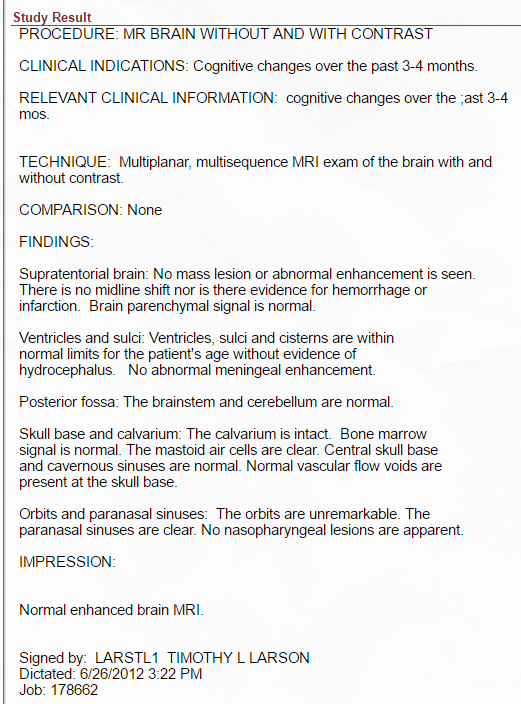
Magnetic resonance imaging (MRI) studies are hit-and-miss for showing abnormalities. Approximately 27% – 32%  of CFS patients show abnormal scans. Approximately 14% of chronic Lyme patients show abnormal scans. MRIs are often normal and of limited usefulness (except to exclude other conditions). MRIs are affected by Jarisch-Herxheimer Reactions (JHR); this implies MRI results will change as symptoms wax and wane. Similarly, if the patient has done fatiguing tasks recently, the MRI results may change.

MRI scans are useful; one study found that 35% of abnormal scans (10% of CFS patients scanned) suggest other known medical causes. CFS subjects with MRI brain abnormalities report being more physically impaired than those patients without brain abnormalities. MRIs are useful for excluding other possible causes for the fatigue.

MRI studies found varying issues (i.e. lack of consistency) for CFS patients.

  • Abnormalities seen in 78% of EBV-associated CFS patients
  • Abnormalities in 14% of chronic Lyme patients
  • Decrease in grey matter volume, 1% decrease per year with CFS. (2011)
  • Decrease in white matter volume with level of fatigue, also seen with chronic Lyme
  • Greater effort—exertion—to process auditory information
  • Greater activity in several cortical and subcortical regions during the fatiguing cognitive task
  • Increased activation in the occipito-parietal cortex, posterior cingulate gyrus and parahippocampal gyrus, and decreased activation in dorsolateral and dorsomedial prefrontal cortice
  • MRI abnormalities consisted of foci of T2-bright signal in the periventricular and subcortical white matter and in the centrum semiovale
  • No abnormal patterns in rate and extent of brain atrophy, ventricle volume, white matter lesions, cerebral blood flow or aqueduct CSF flow
  • Significant differences in brain activation between two groups as the demands of the task increased
  • “CFS, as diagnosed by Centers for Disease Control and Prevention criteria, is not a clinical entity reliably associated with reduced GMV [using MRI] “. [2017]
  • “We found a significant decrease in WM volumes in the left inferior fronto-occipital fasciculus (IFOF) in CFS while in normal controls it was unchanged [comparing MRI results taken 6 years apart” [2016]
  • “Abnormal regressions were detected in nuclei of the brainstem vasomotor centre, midbrain reticular formation and hypothalamus, but also in limbic nuclei involved in stress responses and in prefrontal white matter [of individual patients]. Group comparisons of CFS and NC did not find MRI differences in these locations” [2016]
  • “changes of uncertain significance were identified by MRI and lumbar puncture in a few patients.” [2016]
  • Other studies found changes in state when MRI was done doing challenges etc. i.e. speed of response was different from normal controls

As an unexpected fact, Crohn’s disease also shows MRI variations. Results for irritable bowel syndrome are mixed.

References:

Example of one CFS patient — below is same patient with a SPECT scan

MRI

Positron emission tomography

Reference

Transcranial Doppler Sonography

  • Cerebral blood flow is less effective with POTS (slower response)
  • Less cerebral blood flow in patients with CFS than controls
  • Shorter time to orthostatic symptoms in patients with CFS

Reference

SPECT

Single-photon emission computerized tomography (SPECT) scans are the most reliable for CFS.

  • 80% of CFS patients show abnormal scans
  • 70% of chronic Lyme patients have abnormal scans

    • Abnormalities in perfusion to the frontal, temporal, and parietal lobes
  • SPECT abnormalities appeared to correlate with clinical status
  • Defects were located predominantly in the frontal and temporal lobes. Midcerebral uptake index was found to be significantly lower
  • Lower cortical/cerebellar rCBF ratios in CFS patients
  • In monozygotic twins (one with CFS, one without CFS), the same patterns were seen
  • 80% of CFS patients had lower than average global cerebral blood flow
  • CFS patients had diffuse regional cerebral blood flow
  • Abnormal cerebral perfusion patterns in CFS patients
  • CFS patients had reduced absolute cortical blood flow in rather broad areas
  • CFS patients had reduced cortical blood flow in the distribution of both right and left middle cerebral arteries
  • Blood flow in the left basal ganglia and thalamus was markedly higher in CFS patients
  • Serum TGF-beta and cerebral blood flow abnormalities were accentuated after exercise in CFS patients

Similar results were seen with Chronic Lyme Disease.

Reference

Below is the SPECT scan of the CFS person that had a normal MRI

SPECT

My own experience

Family member had > 60% abnormalities with SPECT (done by Dr. Daniel Amen himself). My MRI was completely normal, my SPECT was not.

IMHO: Obtaining a SPECT scan is one of the best diagnostic tests for CFS for two reasons:

  • 80% chance of getting a positive result if you have CFS
  • It shows that the issue is a physical neurological issue and not a psychological issue.

Do not get talked into a MRI with claims that it is “equivalent or better”.

NEW STUDY: SPECT IS BEST FOR BRAIN INJURY DIAGNOSIS AND TREATMENT

Treatment?

My model is that this abnormality/symptom is caused by fibrin or fibrin like deposit that prevents delivery of oxygen to brain tissue. How to deal with this? IMHO Fibronolytics are a start.

Bottom Line

With the microbiome shift as the maintainer (not cause) of CFS/FM/IBS, the difference in brain scans likely depends on how the shift happens on an individual patient. A 2017 study found that CFS without IBS, CFS with IBS can be reliably determine from critical shifts of just a few bacteria families. Similarly, Dr. Mayer reported in May 2017, that “For people with IBS research shows for the first time that there is an association between the gut microbiota and the brain regions involved in the processing of sensory information from their bodies. The results suggest that signals generated by the brain can influence the composition of microbes residing in the intestine and that the chemicals in the gut can shape the human brain’s structure.” [2017]

What we really need is a study done where:

  • Each of the above scans are done on a group of patients, with their microbiome done at the same time.
    • Neurological testing at the same time would be a nice to have
  • Every year this is repeated.
  • All of the data is pushed thru big data/ai analysis and we identify which bacteria causes which shifts on which scans…

Lazy diagnosis: You have Chronic Fatigue Syndrome!

Recently I saw this posted:

World-renowned Ehlers-Danlos Syndrome (EDS) expert, rheumatologist Professor Rodney Grahame (University College London) points out that, in America, almost 650,000 cases of EDS are missed ANNUALLY, based on studies that suggest almost 95% of cases presenting to clinics are missed, most often diagnosed with other things (Fibro/ME/csf, etc.). 

The reality (or challenge) of CFS research is that many people are misdiagnosis and walk around believing they have CFS because their MDs have not done due diligence. It is likely a good time to list conditions that can present similar to CFS. An item like EDS can be tested (in fact, with 23andMe.com, you may be able to determine if you have the genetic mutation for less than the cost of a single MD appointment)

Autoimmune Disease Interstitial Pneumonia

This was first seen with the onset of interstitial pneumonia spread in Nagoya, Japan in 1995 with 313 chronic pneumonia patients

  • Deemed the same as CFS by some
  • Recurrence of active pneumonia was seen

Chronic Cerebrospinal Venous Insufficiency

  • A CFS diagnosis is often seen prior to this diagnosis
  • Prevalence is 62.5% for patients with multiple sclerosis, 45.8% for patients with Other Neurological Diseases (CFS?), 42.1% for patients with Clinically Isolated Syndrome, and 25.5% for Healthy Controls
  • Associated with IBS, CMV and inflammatory factors

Chronic Epstein Barr virus infection

This was an early name for CFS. Some researchers separate out a subgroup based on specific symptoms seen.

Chronic Lyme

  • 37% of candidate CFS-diagnosis patients tested positive for Lyme
  • Late persistent Lyme disease or Post-Treatment Lyme Syndrome overlaps with CFS
  • Both Lyme and CFS lack reliable tests with the desired accuracy

PO: Some of the Lyme tests will give a false positive if EBV is active (which is often seen in CFS). Neither condition has definitive tests. See Chronic Lyme – A Review

Chronic Post-SARS Syndrome

Professor Emeritus Moldofsky has identified striking similarities with CFS. This is likely just a variation of Post Infection Syndrome.

Ciguatera poisoning

In some cases, symptoms are matches for other conditions, for example, chronic ciguatera fish poisoning, which exhibits similar symptoms and laboratory manifestations as CFS.

Endometriosis

There is some overlap with this condition. Both CFS and endometriosis patients have the following:

  • Higher rates of:
    • Hypothyroidism
    • Fibromyalgia
    • Chronic Fatigue Syndrome
    • Rheumatoid arthritis
    • Systemic lupus erythematosus
    • Sjogren’s syndrome
    • Multiple sclerosis

Eosinophilia-myalgia syndrome

Eosinophilia-myalgia syndrome is indistinguishable from Chronic Fatigue Syndrome.

Gulf War Syndrome

  • GWS patients more often experience headache, diarrhea, and night sweats than others
  • Gulf War illness exhibits similar characteristics to macrophagic myofaciitis, which is caused by aluminum in vaccinations
  • Gene expression in GWS, however, is different from CF

Macrophagic myofasciitis

This condition was first reported in 1998 and is associated with aluminum hydroxide in various vaccines. This syndrome meets both Center for Disease Control and Oxford criteria for Chronic Fatigue Syndrome in about half of macrophagic myofasciitis patients. Aluminum levels are high in many CFS patients.

Young-Onset Monogenetic Parkinsonism

A misdiagnosis of CFS has been seen. On the flip side, since 2015, Parkinson has been associated with microbiome shifts. See PubMed.

Pfisteria

This is also known as Possible Estuary Associated Syndrome (PEAS). Characterized by multiple-system symptoms similar to CFS, deficits in neuropsychological tests of cognitive function, and rapid and severe decrements in visual contrast sensitivity

Phosphate Diabetes

This presents with symptoms similar to CFS; one study found that 10% of CFS patients had been misdiagnosed and had phosphate diabetes.

Sarcoidosis Remission

Clinical remission (47%) of sarcoidosis can result in symptoms matching CFS.

Sjogren’s syndrome

  • Fatigue is often seen
  • 32% of patients with CFS meet criteria
  • Associated with Fibromyalgia
  • Affected population (mainly female, onset at ages 40 to 50) similar
  • B-cells are important player (see Rituximab and CFS remission)
  • Falls into Fibromyalgia/Chronic Fatigue Syndrome disease spectrum
  • Remission reported from Rituximab and immunoglobulin

Traumatic Brain Injury

CFS has been described by some as a disease-caused brain injury. Brain infection and injury can result in over-production of cytokines including TNF. TNF is produced by glia in the brain, and the appropriate level is required for the correct operation of the brain.

Fatigue level was significantly correlated with the following three factors in traumatic brain injury:

  • 55% of patients with TBD have poor sleep quality
  • 36% of patients with TBD have anxiety disorders
  • 65% of patients with TBD have vitamin D deficiency

Misdiagnosis

The following conditions appear to be distinct from CFS but may receive a CFS diagnosis if there is not sufficient due-diligence.

Differential Diagnoses

The Canadian Definition explicitly cites that the following conditions should be excluded before a CFS diagnosis is given:

  • Addison’s disease
  • Cushing’s Syndrome
  • Hypothyroidism
  • Hyperthyroidism
  • Iron deficiency
  • Other treatable forms of anemia
  • Iron overload syndrome
  • Diabetes mellitus
  • Cancer
  • Treatable sleep disorders:
    • upper airway resistance syndrome
    • obstructive or central sleep apnea
  • Rheumatological disorders:
    • rheumatoid arthritis
    • lupus
    • polymyositis

There are a variety of illnesses which are suggested as being different from CFS in the medical literature. These include:

  • Chiari Malformation
  • Chronic anemia
  • Chronic heart disease
  • Chronic infections (e.g., AIDS)
  • Chronic Lyme Disease
  • Connective tissue diseases
  • Drug abuse
  • Endocrine diseases: Addison disease, hypothyroidism
  • Fibromyalgia
  • Inflammatory bowel disease
  • Liver disease
  • Multiple Chemical Sensitivities
  • Multiple Sclerosis
  • Neoplastic disease
  • Primary haemochomatosis (2% probability)
  • Psychiatric Disorders
  • Renal disease
  • Thyroid disease

IACFS/ME lists over sixty differential diagnoses. Some of these are not strictly exclusory. As an example, Vitamin B12 or D deficiency is seen in CFS patients; if CFS resolves when the deficiency is treated, then it is differential.

Gut Bacteria Testing — the harsh reality

Please read also a more detail analysis of test results done in March 2014, start here.

There are many companies offering gut bacteria testing. Unfortunately, the families of bacteria covered by commercial tests are just a fraction of those in the human gut. A recent study was blunt “The proportion of the human gut bacterial community that is recalcitrant to culture remains poorly defined.” [2011] or to put it in the common tongue: “We have no idea of what percentage of the gut bacteria that we can culture (and thus test)”

This is the root of the problem – the best, most funded researchers in the world are literally in a bacterial fog! If you having a good cognitive mind day, you should read Extending Our View of Self: the Human Gut Microbiome Initiative (HGMI)

Today, the best hope for meaningful test results in likely the http://americangut.org/ project. They are clear in expectations “The bad news is that much of this information is still mysterious because we don’t know the complete genomes of most of the microbes in there, but the good news is that you can get an insight into the gene functions, not just which microbes are there.”[*].

  • Will my MD know what it means? I really doubt it, the experts do not!
  • What is the benefit? My hope is that by enough CFS patients doing it and sharing their results, we may identify some common aspects. No immediate benefit to you.

With no testing available, how can you propose a model?  Honestly, my model lacks the amount of technical, detailed, hard supporting studies that I would prefer. A model is, or should be, the best (and simplest) fit to all of the data available. It is your best guess. A model also should have predictive abilities — in this case, taking things that reduce the known overgrowth and other things to increases the known undergrowth should reduce symptoms. For me it has. For some of my readers, it has too.

We will likely not get the type of data that I would like for another 10 years, getting specific probiotics for another 20-30 years. I am just trying to work off the best that we currently know and what is commercially obtainable….

Key CFS Symptoms — the Big Data answer

I had been thinking about doing a post on CFS symptoms (i.e. creating a checklist to track your status). This morning I found the perfect article in International Journal of Machine Learning and Computing which is available in full for free. If you have not worked professional as a data scientist or statistician, you may find it geek (fortunately I have).

  • Samuel P. Watson, Amy S. Ruskin, Valerie Simonis, Leonard A. Jason, Madison Sunnquist, and Jacob D. Furst, “Identifying Defining Aspects of Chronic Fatigue Syndrome via Unsupervised Machine Learning and Feature Selection,” International Journal of Machine Learning and Computing vol.4, no. 2, pp. 133-138, 2014.

The bottom line is that they found 54 symptoms that predicted better if a person had CFS then any of the current research definitions.

The top 15 (in order of importance are below)

  1. Fatigue/extreme tiredness
  2. Next day soreness or fatigue after non-strenuous, everyday activities
  3. Minimum exercise makes you physically tired
  4. Physically drained or sick after mild activity
  5. Dead, heavy feeling after starting to exercise
  6. Feeling unrefreshed after waking up in the morning
  7. Problems remembering things
  8. Muscle weakness
  9. Difficulty finding the right word to say or expressing thoughts
  10. Only able to focus on one thing at a time
  11. Pain or aching in your muscles
  12. Difficulty paying attention for a long period of time
  13. Mentally tired after the slightest effort
  14. Absent-mindedness or forgetfulness
  15. Sensitivity to noise

I am hoping to be able to balance the rest of them (as well as create a program that uses this information)… stay tune.

I find this to be a very important list because:

  • If you have none of these and have a CFS diagnosis — your diagnosis is probably very wrong.
  • If you have all of them (as I have had during CFS periods), your diagnosis is likely correct.
  • Some only — I am waiting to get more information to build a program that would calculate those odds.