I have implemented an upload for Microba, an Australian firms that claims “With the most comprehensive microbiome test available”. Instructions on how to do a download and upload is in this video:
I have tried several times in the past to do it. One of the biggest problems is that they do not use NCBI reference numbers or names. In fact, many of the bacteria they name — you will not find a single study on PubMed with that name. In other words — valueless information.
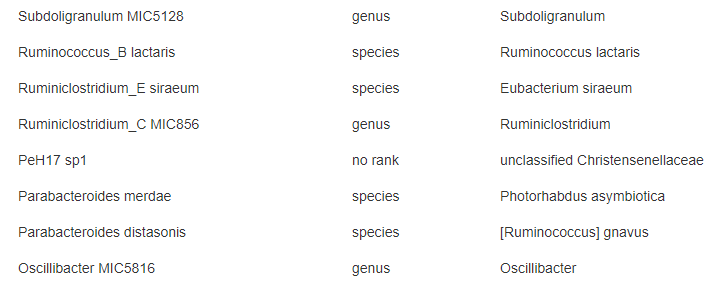
I have a mapping of their interesting names to NCBI names on line (and it will grow as samples are added and new names are added). The mapping is located here. I have repeatedly email them to make a download with NCBI taxon numbers available without success.
Left side is their name, right side is NCBI name. CAG-### is very vague.Some additional “delights”
Only Selected Layers are Reported
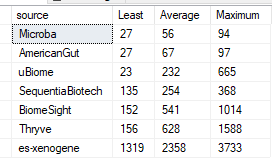
They report only on the Phylum, Family, Genus and Species levels. Excluded are Orders, Classes and Strains. After the mapping, we are typically left with less than 100 bacteria taxonomy versus many more from other providers. I do not know how they define “With the most comprehensive microbiome test available”. Most means better than ALL…
This is made worse by the use of atypical names for bacteria. If you are high “Peh17” and go to PubMed to see what will lower it, or what conditions are associated with it — you hit a blank page. They may provide advice — but the basis of that advice cannot be independently checked.
The sum of all Species/Genus/Family is 100%. This implies that they have identified every bacteria — impossible. They have scaled the numbers of the bacteria that they detected to 100%. A person with actually 40% of one bacteria in their gut could see a report of 45%, 65%, 85% — depending on what other bacteria is the.
The report is to 0.01% that is 100 / 1,000,000, a coarse measurement than some other tests.
Bottom Line
For those of you who have already tested with Microba, you can upload and MicrobiomePrescription will do as much as it can with that information. If you decided to do a retest— I would not recommend using Microba for the reasons sited above. I have heard that the UK firm BiomeSight is making it easier for Australians to use their service. I have heard that duties and shipping costs makesThryve Inside more expensive than BiomeSight.
Expect it to be a few days before 100% of your sample is ready — any new odd-ball names has to be researched and entered into the mapping table. At upload, you will likely be 80+% processed immediately.
Every advertising agency will tell anyone manufacturing a product … include some probiotic and your sales will improve. There is no need to show any evidence that it makes any health impact, popular internet myth will sell it!
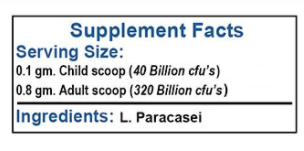
A reader toss this product at me– which to her looks good. It hits most of the advertising advice: cite organic. cite probiotics. cite human probiotics for extra selling power!Includes superatives with no real meaning — like potent.
If an adequate label is defined as one that contains specific (and valid) bacterial names (genus and species), with no spelling errors and a clear statement of number of viable organisms that are expected, then only 8 (32%) products were properly labeled. If a more stringent definition of an adequate label is used, which includes a requirement that the product identify the specific bacterial strain that is present, then no products were adequately labeled.
Manufacturer can states that there is probiotics in a product without one single living probiotic bacteria being in the product after manufacturing. Food stabilizers, mishandling and preservatives will often kill off these bacteria quickly. “Only 4/15 (27%) products that had specific claims of viable organisms met or exceeded their label claim.” The rest of the products did not claim any viable organism (which the product shown above makes no claim for viable organism).
How much is needed to be healthful?
“It has been suggested that probiotic products should contain at least 107 CFU per ml or g ” [2001] . i.e. 10 million CFU
If we look at some probiotics on the market we see 400,000 million CFU/g
So, 1 gm of the above probiotic in 40,000 gm of ice cream (that is 40 kilograms or 88 lbs!) would reach that criteria – a very low bar.
They may be telling fairy tales about the contents!
“Organisms were improperly identified in 9/21 (43%) human and 8/23 (35%) veterinary products. Contents of 5/20 (25%) human and 3/17 (18%) veterinary products were misspelled. In only 9 human and 2 veterinary products were the contents adequately identified.” [2003]
“Studies organized worldwide and summarized in this article have shown that inconsistencies and deviations from the information provided on the product label are surprisingly common. Frequently strains are misidentified and misclassified, products are occasionally contaminated, sometimes with even facultative or obligatory pathogens, strains are not viable, the labeled number of colonies cannot be verified, or the functional properties are diminished to the extent that preclude the proposed health benefit. ” [2017]
My Source Choices
Given that most advertised probiotics are very questionable, I tend to single strain providers. Often they own the rights to their specific strains, have research papers published with their explicit product/strains and thus have a strong vested interest in keeping their product honest. They include:
Many manufacturers are focused on claims that results in better sales. They are not serious probiotics researchers or developers. They are serious entrepreneurs sensitive to what sells.
“Antibiotic-associated diarrhea (AAD) showed a robust preventative correlation with three strains: Saccharomyces boulardii I-745, three lactobacillus strains (L. acidophilus CL1285 + L. casei Lbc80r + L. rhamnosus CLR2), and Lactobacillus casei.” [2020]
etc… This is a yeast, not a bacteria, (thus viable units is not an issue). It does illustrate what you should demand to see before buying any probiotics. Hard studies with positive effect!
Why are the quick suggestions I get very opposite the ones from the advanced suggestions? soy is a top add in one and a top avoid in the other for instance. Many other similar situations.
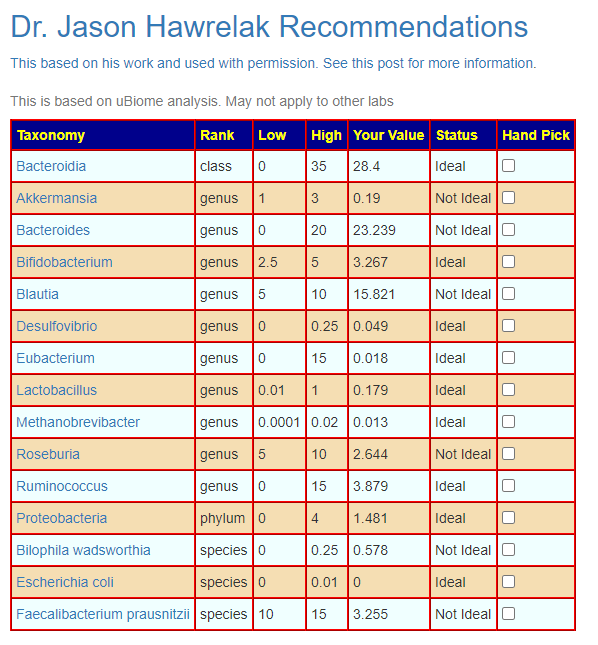
This is a good question. Quick Suggestions are based on the recommended ranges for a small group of bacteria from Dr. Jason Hawrelak, used with his permission. An example is below. This is not specific to any health issue.
For other suggestions, the bacteria picked determine the suggestions. Every bacteria has a different profile — so depending on which ones are selected, the suggestions will be different.
Some common ways of selecting the bactera:
Outliers – those too high or low compared to others. A crude method.
Bacteria which are high or low for a specific medical condition where your pattern matches
Bacteria which matches one or more symptoms where your pattern matches
Hand pick all of the bacteria using any criteria that you wish to apply.
We DO NOT KNOW what is the best way — it will likely be different for each person. We do not know which bacteria are “noise” and can be ignored in all cases.
If you look at the “Expert Consensus” page on your sample, you will see that there is disagreement. For some bacteria you will find some experts saying a specific level is too high and others for the same level saying it is too low.
I do not have a “safe suggestion” for anyone. I have built tools that allow various models of what is desired to be applied. I strongly recommend reading the following two posts to better understand the issues:
It means there are NO ABSOLUTE ANSWERS — they can never be…. it is like asking what is the height of a human (which varies by race and year of birth) and they asking what can I do to increase (or decrease) my height.
What you can get (especially if you are eating a ‘western diet’) is a feel of probable causes and things that will probably help. It has worked for me. It has worked for many readers who have tried it. Even in the face of “disagreement in technical details”, there can be strong patterns seen from the fuzzy data, see One Stool, Two Samples, One Lab — What the shit!.
You may wish to check my you-tube videos . I have plans to do a mini-course suite of them in the next few months.
A reader sent me the message below and gave permission to use his sample. I had, about a year ago, wrote The taxonomy nightmare before Christmas… that looks at the differences between lab results using the sample sample (as represented by a FASTQ digital file). We now try one more variation.
Last september I did (again) test my microbiome with Thryve. Because I had some general doubts about the validity of stool samples, I ordered two tests and took two different samples of the same stool and send them in under two different names. …the results confirmed my doubts as I got different bacteria levels of the ten strains Thryve shows in their overview.
STRAINS
% sample 1
% sample 2
akkermansia
0,2
0,4
alistipes
0,02
7,2
bacteroides
0,02
3,4
bifido
2,6
1
blautia
10,3
3,3
eubacterium
7,2
4,1
faecalibact.
1,7
11,6
lactobac.
1,1
2,2
roseburia
1,9
2
ruminococcus
26,6
13,8
So I do not doubt the reliability of each sample, but see that the validity of the sample is the problem. The results of a sample seem to be more or less random and not representative of the microbiome in general. …so I think that any advice given, based on the results of one sample is arbitrary. If we are to take the importance of the microbiome seriously, we will have to consider a new way of getting a representative sample to have a solid base for interventions concerning our health.
Sampling Statistics
The typical sample seems to contain a round a 100,000 bacteria and is usually reported out of a million (scaled up). “Bacteria in faeces have been extensively studied. It’s estimated there are nearly 100 billion bacteria per gram of wet stool. ” [src] The sample that you sent it was likely no more than one milligram.
To use the “if I was a Martian” model… It is like a spaceship abducting a boatload of people in the Mediterranean…. If the boat is a cruise ship full of fat diabetic elderly Americans you will get one result. If the boat are full of starving Nigerians children trying to become refugees in Europe, a very different result. That is a disturbing concept when you mind is fixed on a deterministic precise definitive result. It’s a sample folks! For most industrial processes, dozens (or hundreds) of samples are required to get quality assurance. For the nerds, some readings: [2015] [Wikipedia]
Example: Two employees working for the same company at the same job earning the same amount and living in the same community. You stop each of them and take a sample of how much money they have in their wallet. Would you expect them to have the same amount? Would they have the same number of pennies? dimes? quarters? Credit Cards?
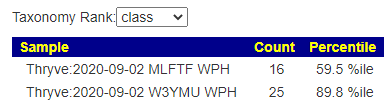
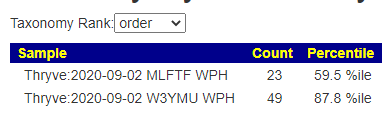
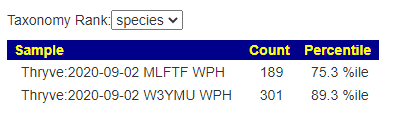
I would expect differences in samples to increase as you move down the rank. It is similar to asking at one level [European, African, Asian] on the abducted ship above. At the next level [Swede, Dane, Italian, etc] , the counts between sample will diverge as you do more detail classification.
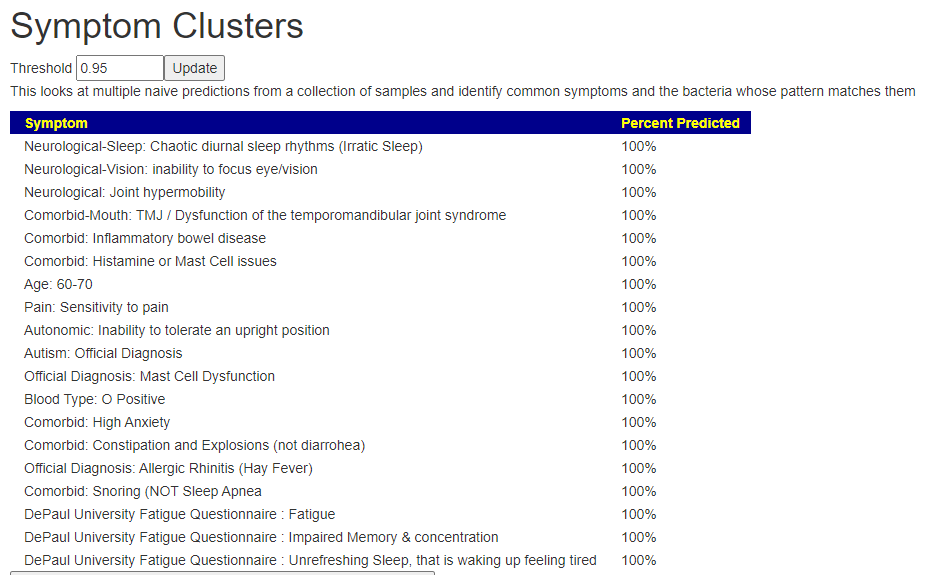
This is an illustration on why I do fuzzy logic on predicting symptoms with good success according to readers. Using studies from PubMed have been reported to produce poor results according to readers.
When the two samples are used to predict symptoms, we have a strong convergence. While the actors may be different, their impact are similar.
Adjusting for Natural Variation
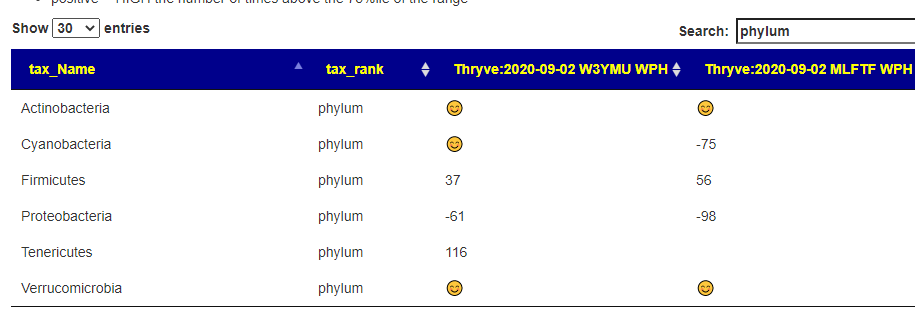
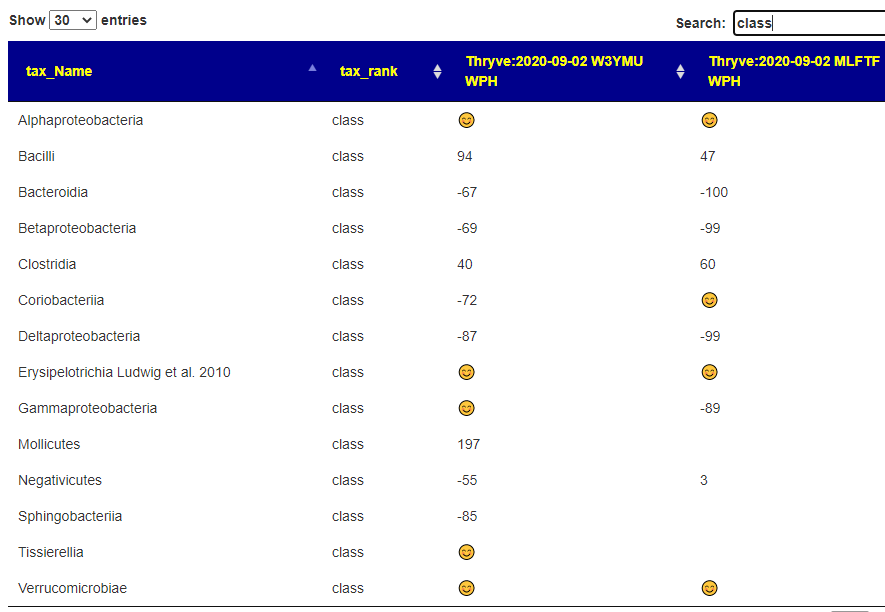
Using counts without context is a good way to get upset without justification. I use percentiles to provide context and have a comparison page (which I need to revise). At the phylum level we see general agreement between the samples. One rare phylum was lacking in one sample (not found in 30% of Thryve Samples but only 6% of BiomeSight – hint: download the FASTQ files and process them thru BiomeSight [for free!]).
Medical Condition Matches
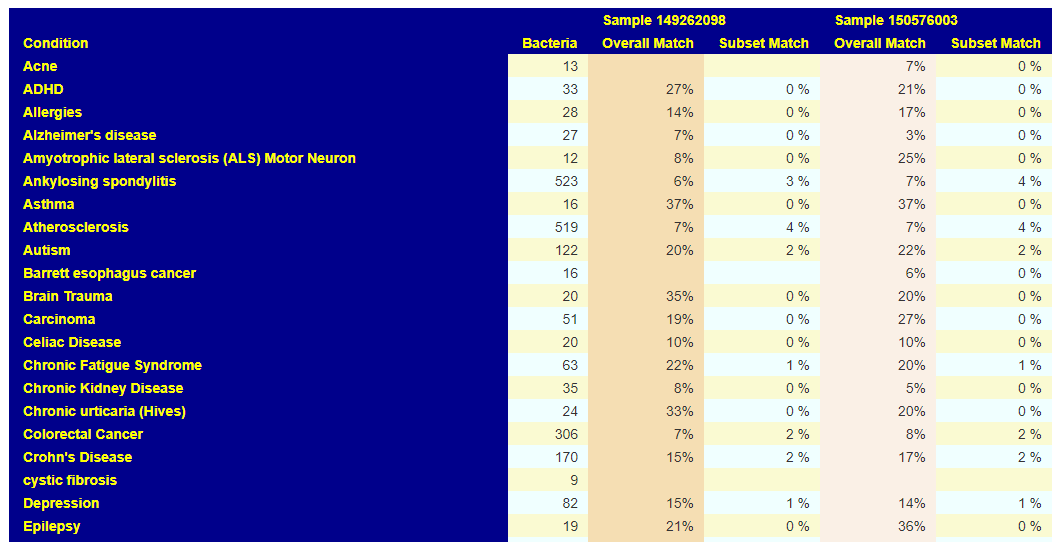
Going over to Pub Med Medical condition matches, we see a striking similarity between the samples as shown below. So for detecting medical conditions — they are almost identical to each other (despite the differences in bacteria)
End Products Predictions
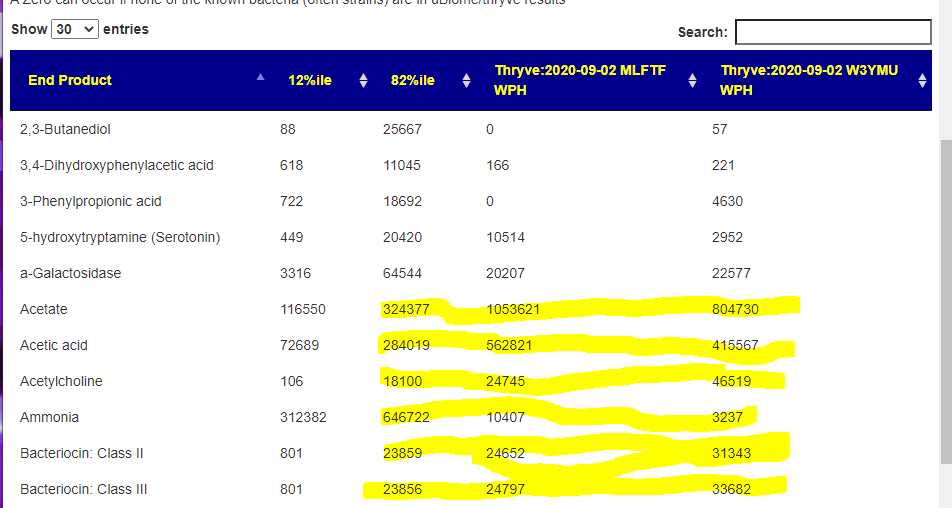
Again, we have strong agreement between the samples using 3 buckets.
Both below 12%ile (i.e. Low)
Both below 82%ile (i.e. High)
Both in normal range
This means for this type of diagnostic evaluation — they appear to be the same.
Bottom Line
There are several questions that need to be asked (and an answer to one):
To the folks at Thryve (and Biomesight.com), why are the numbers so different?
For users of my analysis site: https://microbiomeprescription.com/, for diagnostic purposes there are few differences! We have general agreement for:
End Product Production
Medical Studies Matches
Symptom Matches
Detecting high or low levels by percentile
The critical difference between the information lab providers and my site is interpretation sophistication.
So, to answer the reader’s question “The numbers are in major disagreement, but the diagnostic significance of the whole sample is in strong agreement”. Doing the lab analysis is worth it — just ignore the lab’s “value added” suggestions/information.
Rosefrom BiomeSight and Richard from Thryve are both invited to submit a blog post (send to me as a Word Document) to get their thoughts and analysis shared.
Challenge to the same two people: Take one stool, do 100 samples from it and process them all. Make the data public — or get an academic to write an article on the consistency (or inconsistency) of data from a single sample. How many distinct samples are needed to get convergence of numbers (and how much convergence). The numbers will vary according to lab equipment and process.
“Alterations of the gut microbiome in anorexianervosa have been demonstrated, but their clinical relevance remains unclear. ” [2020]
“We have recently reported specific fecal metabolomic changes in acute and short-term weight restored patients with anorexianervosa (AN). In this study we explored the association between those metabolomic changes and patients’ gut microbiome” [2020]
The Microbiome is only a Part — but the easiest to modify
For almost all of the above conditions there are known DNA mutations associated (SNPs). We know that there is an interaction between the DNA and the microbiome — effectively the microbiome is an organ. Organs have compatibility issues when transplanted. A similar failure to take has been observed with Fecal Matter Transplant.
The simplest model to understand what is happening is this: the DNA favors bacteria that favors the DNA desired behavior (be it good or bad). Basic self-serving “microbiome forming” by the DNA. Over time, the DNA may alter its behavior due to environmental factors like stress (epigenetics) and in a few cases, RNA from a virus may be taken up into the DNA. In reality, it is estimated that up to 50% of your DNA originated from a virus [Src 2020]… ongoing incorporation of new virus fragments remains a possibility.
The question is how do you stop the undesirable behavior? You could attempt to alter the DNA — that is very experimental with considerable risk. You could use drugs that appear to inhibit the undesirable behavior — drugs tried at random on a population in a study with positive results. Often we do not know the mechanism of the drug — simply that they worked.
My more unconventional approach is to “strong arm” the bacteria. Yes, DNA is encouraging one pattern — but with food, diet, supplements it appears possible to alter the pattern. I have seen my own SPECT scan go from appearing to be early Alzheimer’s disease back to normal by this method.
Is 100% recovery expected — no, improvement is expected. Often very significant improvement. Is there actual evidence? FMT or Fecal Matter Transplant is the clearest demonstration… you change the gut bacteria and see if there are changes!
Clinical trials with FMT have been performed in patients with autism spectrum disorder and showed beneficial effects on neurological symptoms. For multiple sclerosis and Parkinson’s disease, several animal studies suggested a positive effect of FMT, supported by some human case reports. For epilepsy, Tourette syndrome, and diabetic neuropathy some studies suggested a beneficial effect of FMT, but evidence was restricted to case reports and limited numbers of animal studies. For stroke, Alzheimer’s disease and Guillain-Barré syndrome only studies with animal models were identified. These studies suggested a potential beneficial effect of healthy donor FMT. … Whether positive findings from animal studies can be confirmed in the treatment of human diseases awaits to be seen. Several trials with FMT as treatment for the above mentioned neurological disorders are planned or ongoing, as well as for amyotrophic lateral sclerosis.





 CFS Remission