List of common CFS Symptoms — What’s missing?

I am working on a website to automate uBiome analysis. Part of the process is to record symptoms at the time that the ubiome sample was taken. The purpose of this information is to try to identify certain symptoms with certain shifts in the microbiome.

I am working off the Canadian Definition with links to http://me-pedia.org/ for explanations. The list is below.

Bottom Line

Please go thru the above and identify if all of your symptoms are there. If not what is missing.  Thanks!

Autonomic Manifestations

     nausea (More Information)
     bladder dysfunction (More Information)
     cardiac arrhythmias (More Information)
     Cortisol disorders or irregularity
     delayed postural hypotension (More Information)
     exertional dyspnea (More Information)
     extreme pallor (More Information)
     irritable bowel syndrome (More Information)
     light-headedness (More Information)
     Neurally mediated hypotension (NMH) (More Information)
     Orthostatic intolerance (More Information)
     palpitations (More Information)
     Postural orthostatic tachycardia syndrome (POTS) (More Information)
     urinary frequency dysfunction (More Information)

Comorbid

     Cancer
     Cushing Syndrome
     Electromagnetic Sensitivity (EMF)
     Fibromyalgia (More Information)
     Hypothyroidism (More Information)
     IBS (More Information)
     Mold Sensitivity / Exposure
     Multiple Chemical Sensitivity

Comorbid-Mouth

     Bruxism – Jaw cleanching / Teeth grinding
     Dry Mouth
     Gingivits / Gum Disease
     Periradicular periodontitis inflammatory / chronic lesion around roots of teeth
     TMJ / Dysfunction of the temporomandibular joint syndrome

General

     Fatigue (More Information)
     Headaches (More Information)
     Myalgia (pain) (More Information)

Immune Manifestations

     Alcohol Intolerant
     chemical sensitivities. (More Information)
     general malaise (More Information)
     medication sensitivities.
     new food sensitivities (More Information)
     Abdominal Pain
     Bloating
     Constipation
     Diarrhea
     Genitorinary / Nocturia – Urinary issues
     Hair loss
     High Altitude Intolerance
     recurrent flu-like symptoms (More Information)
     recurrent sore throat (More Information)
     tender lymph nodes (More Information)
     Thick blood / Hypercoagulation

Infection

     Epstein-Barr virus (More Information)
     Human Herpesvirus 6 (HHV6) (More Information)
     Lyme (More Information)
     Mycoplasma (More Information)
     Parasite – Other
     Parasites – Giardia (More Information)
     Parvovirus (More Information)
     Q Fever (Coxiella burnetii) (More Information)
     Varicella Zoster Virus

Neuroendocrine Manifestations

     abnormal appetite (More Information)
     cold extremities (More Information)
     intolerance of extremes of heat and cold (More Information)
     marked diurnal fluctuation (More Information)
     marked weight change (More Information)
     subnormal body temperature (More Information)
     sweating episodes (More Information)
     Air Hunger
     anorexia (More Information)
     Dry Eye
     Excessive adrenaline
     Laboured breathing
     loss of adaptability (More Information)
     Muscle weakness
     Neuralgia (More Information)
     Paraesthesia (tingling burning of skin) (More Information)
     recurrent feelings of feverishness (More Information)
     worsening of symptoms with stress. (More Information)

Neurological – Vision

     Blurred Vision
     inability to focus eye/vision (More Information)

Neurological

     Impairment of concentration (More Information)
     Spatial instability and disorientation (More Information)
     Ataxia (lack of volunatary muscle control)
     Cognitive Overload
     Confusion (More Information)
     Difficulty processing information (Understanding) (More Information)
     Difficulty reading
     Disorientation (More Information)
     Dysautonomia (More Information)
     emotional overload (More Information)
     Excutive Decision Making (Difficulty making)
     fasciculations (More Information)
     High degree of Empathy before onset
     Joint hypermobility
     Myoclonic jerks or seizures
     Neuropathy (More Information)
     Seasonal Affective Disorder (SAD) (More Information)
     Short-term memory issues (More Information)
     Slowed speech
     Slowed thought (More Information)
     Word-finding problems (More Information)

Neurological-Audio

     hypersensitivity to noise (More Information)
     Tinnitus (ringing in ear) (More Information)

Neurological-Sleep

     Chaotic diurnal sleep rhythms (Irratic Sleep) (More Information)
     Inability for deep (delta) sleep
     Insomnia
     Night Sweats
     Prolonged Sleep
     Sleep Apnea (More Information)
     Sleep Reversal
     Unrefreshed sleep (More Information)
     Vivid Dreams/Nightmares

Neurological-Vision

     Acquired or exertional dyslexia
     Impaired Depth Perceptions
     photophobia (Light Sensitibity) (More Information)

Onset

     Gradual
     less than 02 years since onset
     less than 04 years since onset
     less than 08 years since onset
     less than 16 years since onset
     less than 32 years since onset
     over 31 years since onset
     Sudden

Post-exertional malaise

     inappropriate loss of physical and mental stamina, (More Information)
     General (More Information)
     Rapid cognitive fatigability, (More Information)
     Rapid muscular fatigability, (More Information)

Intent

The data collected will be available without any personal information (i.e. email, age, gender, etc) as an “R” data set for people interested in doing research.

The OCD CFS Suffer

A reader wrote and something triggered Obsessive-Compulsive Disorder (OCD) like behavior with him. He suspect stress (which is well known to alter the microbiome).  I remember that a physician in France had great success (80+% remission) of psychological issues using the rickettsia antibiotic protocol (i.e. Cecile Jadin) which alters gut bacteria — so let us review our current state of knowledge for OCD. For a general review of microbiome and mental illness see this paper.

PubMed Data

  • OCD is associated with “a history of complicated birth (OR = 5.54, P<.001), less family history of OCD (OR = 0.42, P = .014),”  [2011] – both of these are associated with microbiome inheritance and transference.
  • ” The results indicated that the induction of locomotor sensitization and compulsive checking was accompanied by changes in several communities of bacteria belonging to the order Clostridiales (class Clostridia, phylum Firmicutes), and predominantly in Lachnospiraceae and Ruminococcaceae families of bacteria. It is suggested that changes in these microbes may serve to support the energy use requirements of compulsive checking and obsessive-compulsive disorder.” [2017]
  • “Both stress and antibiotics are proposed as mechanisms by which gut microbiota are altered preceding the onset of OCD symptomology. In this light, pediatric autoimmune neuropsychiatric disorders associated with streptococcal infections (PANDAS) leading to episodic OCD is explained not by group A beta-hemolytic streptococcal infections, but rather by prophylactic antibiotics that are administered as treatment. ” [2014]
  • Obsessivecompulsive-like behaviors in house mice are attenuated by a probiotic (Lactobacillus rhamnosus GG) [2014]

  • Serum Cytokine Profiles of Children with Obsessive-Compulsive Disorder Shows the Evidence of Autoimmunity. [2016]
    • “Interleukin-17A, tumor necrosis factor-α, and interleukin-2 levels were significantly higher in obsessive compulsive disorder patients,”

Bottom Line

Using DataPunk.Net we have:

Lachnospiraceae

INHIBITED BY

ENHANCED BY


Ruminococcaceae

INHIBITED BY

ENHANCED BY


And last,

  • Lactobacillus rhamnosus GG  (Culturelle® Probiotics)

Considering that Christmas is a few days away, load up on the sugar and fat for medicinal purposes 🙂  — see disclaimer below. Not responsible for weight gain.

This is an education post to facilitate discussing this approach with your medical professionals. It is not medical advice for the treatment of any disease. Always consult with your medical professional before doing any  changes of diet, supplements or activity. Some items cites may interfere with prescription medicines.


Treating Blastocystis Hominis

A reader asked me for a summary of the latest treatments for this parasite. It may be a trigger for IBS and thus CFS.

“Blastocystis exhibits low host specificity, and many different species of Blastocystis can infect humans and by current convention, any of these species would be identified as Blastocystis hominis. Blastocystis is one of the most common human parasites in the world and has a global distribution….95% of papers published in the 10 years prior identified it as causing illness in immunocompetent individuals… Researchers have reported that patients with Irritable bowel syndrome may provide a reliable source for xenic Blastocystis isolates” [Wikipedia] Note: some people can have it with no apparent symptoms.

PubMed Literature

There are 890+ studies on PubMed.

  • “For refugees to North America… 36.4% from Asia have positive results” [2017]
  • ” 1 in 200 ready-to-eat packaged salads in Italy were found to have it”[2017] – no published test results for the USA…
  • Examination of potential healthy donors for FMT, 15 / 116 (13%) had one or more parasites. [2015]
  • Modulating the Gut Micro-Environment in the Treatment of Intestinal Parasites.[2016]
    • ” Reported prevalence ranges from 2%–50% with the highest rates reported for developing countries with poor environmental hygiene. Infection appears to be more common in adults than in children [12,13].”
  • “It has been well described a positive association between IBS and Blastocystis hominis infections, one of prevalent parasites in Chile. In other countries, is also described a relationship between IBS and amebiasis and giardiasis. ” [2016]
  • Eradication of Blastocystis hominis prevents the development of symptomatic Hashimoto’s thyroiditis: a case report.[2015]
  • Hypoalbuminemia as a predictor of diarrhea caused by blastocystis hominis.[2013]
  • Low efficacy of metronidazole in the eradication of Blastocystis hominis in symptomatic patients: Case series and systematic literature review. [2017]
  • “Eradication of Blastocystis is essential in some cases where it is the only infectious agent and patient is suffering from some symptoms. In such cases, metronidazole is the drug of choice but its efficacy is relatively low in some cases. Other agents used include trimethoprim-sulfamethoxazole, paromomycin, and furazolidone.” [2016]6 had
  • Examination of potential healthy donors for FMT, 15 / 116 (13%) had one or more parasites. [2015]
  • In vitro effect of some Egyptian herbal extracts against Blastocystis hominis. [2015]
    • “Cultured fecal samples of B. hominis have identified several forms of the organism; vacuolar, granular, amoeboid and cyst forms within 24 hr. Nitazoxanide treatment significantly (P < 0.001) lowered the parasite number after 48 hr. (mean, 337.5 ± 17.67) /ml. The reduction rate after 48 hr. compared to PBS was 93.33%. Ginger treatment significantly (P < 0.002) lowered the number of the parasite after 48 hr. (mean, 335 ± 7.07)/ml. Moreover, garlic treatment also significantly (P < 0.002) lowered the number of the parasite after 48 hr. (mean, 382.5 ± 10.60)/ml.”
  • Blastocystis: Consensus of treatment and controversies.[2013]
    • “Recently, the finding of different subsets of Blastocystis exhibiting resistance to metronidazole and associated with variable degrees of symptoms has underscored the importance of typing the subsets of the parasite in order to foretell the clinical response and the need to treat. ”
      tp-3-35-g001
    • ” A 2006 text described an USA patient returning from Nepal with chronic Blastocystosis who was treated without success over a period of 3 years with iodoquinol, paramomycin, doxycycline, albendazole, tinidazole, ornidazole, quinacrine, nitazoxanide, rifaximin, furazolidone, cotrimoxazole, itraconazole, ketoconazole, and various combinations of these drugs.[17]”
    • ” In at least 10% of IBS patients, Blastocystis cannot be successfully treated with metronidazole.”
    • “TMP-SMX has been shown to have good effects on the cure rate and the clinical symptoms in patients with Blastocystis infection…Whether the drug has a direct effect on the parasite itself or kills the essential intestinal bacteria for the survival of Blastocystis is not clear”
    • In a randomized single blinded clinical trial in symptomatic children who had Blastocystis positive stools, both clinical and parasitological cure rates were 94.4% with S. boulardii in comparison with 73.3% achieved in the metronidazole treated group. These findings challenge the existing guidelines for treatment.[8]
    • A few traditional Chinese medicinal herbs have also been examined for in vitro activity against Blastocystis (Brucea javanica and Coptis chinensis). Their inhibitory activity was not as great as with similar concentrations of metronidazole.
    • Blastocystis isolates from IBS patients mostly genotype-1 have demonstrated increased susceptibility to garlic at 0.01 mg/ml. Other investigational agents such as ginger, black pepper, and white cumin did not have significant inhibitory effect in drug susceptibility assays

Bottom Line

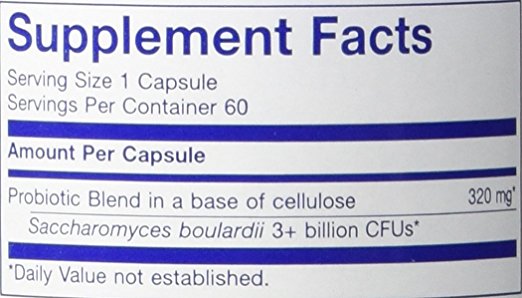
For non-prescription treatment, Garlic (high dosages) and Saccharomyces boulardii (250mg take 2x/day) appears to be most favorable.

  • Warning: S. Boulardii is 250 mg of it alone (around 3 BCFU is my best estimate), not a 250 mg capsule containing some of it and other stuff bringing the capsule up to 250mg. For example:
    61isdwaohvl-_sx522_

For prescription treatment, metronidazole concurrent with trimethoprim-sulfamethoxazole (TPM-SMX) appears most favorable.

This is an education post to facilitate discussing this with your medical professionals. It is not medical advice for the treatment of any condition. Always consult with your medical professional before doing any  changes of diet, supplements or activity. Some items cites may interfere with prescription medicines.

Addressing Muscle Weakness

With the model, there may be a lack of metabolites which will vary from person to person. The response will further vary according to DNA. A reader asked specifically about how to treat muscle weakness that often occurs after stress.

In this post, I will attempt to identify treatment options for muscle weakness

The PubMed Literature

Bottom Line

Avoid:

  • Germanium supplements
  • Red rice yeast
  • Statins

Take

  • Creatine – typically 20 g per day for 5 days) [1995] 3-5 g/day [Src]
  • L-Carnitine  – 250 mg/day  up to 2 g of lcarnitine every 12 h. [2004]
  • Thiamine (Vitamin B1) – “. All (IBD) patients were assigned to receive high doses of thiamine orally. Depending upon the body weight of each patient,
    dosage ranged from 600 mg/day (60 kg) to 1,500 mg/day (90 kg)” [2013]
  • Pyridoxine (Vitamin B6) – “120 mg vitamin B6; “[1999] [1983]
  • Vitamin D3
  • Potassium (One banana = 422 mg –  it is thought that 1600 to 2000 mg is adequate [Mayo Clinic – includes list of potassium rich food]
  • CoQ10 – if statins or red rice yeast contributed

This is an education post to facilitate discussing this with your medical professionals. It is not medical advice for the treatment of any condition. Always consult with your medical professional before doing any  changes of diet, supplements or activity. Some items cites may interfere with prescription medicines.

Increasing Oxalobacter Formigenes

For updated information see Microbiome Prescription

uBiome’s Smart Gut associate low levels with various conditions.

Oxalobacter formigenes (O. formigenes) is a nonpathogenic, Gram-negative, obligate anaerobic bacterium that commonly inhabits the human gut and degrades oxalate as its major energy and carbon source. Results from a case-controlled study suggested that lack of O. formigenes colonization is a risk factor for recurrent calcium oxalate stone formation. Hence, O. formigenes colonization may prove to be an efficacious method for limiting calcium oxalate stone risk.” [2016]

There appears to be a probiotic in progress:

DataPub.Net

Proteobacteria -> Betaproteobacteria -> Burkholderiales -> Oxalobacteraceae -> Oxalobacter -> Oxalobacter formigenes

INHIBITED BY

ENHANCED BY

PubMed etc

We have  180+ studies for Oxalobacter Formigenes

Disease

Diet

Prebiotic

Probiotic

Antibiotics

Bottom Line

Avoid

Take