Increasing Butyrivibrio Crossotus

For updated information see Microbiome Prescription

uBiome’s Smart Gut associate low levels with various conditions. Most of the studies deal with rumens (cows etc)

DataPub.Net

Firmicutes -> Clostridia -> Clostridiales -> Lachnospiraceae -> Butyrivibrio -> Butyrivibrio crossotus

For grand parent we have:

INHIBITED BY

ENHANCED BY

PubMed etc

We have 6+ studies for Butyrivibrio Crossotus, and  470+ studies for Butyrivibrio

Disease

Diet

  • “There was also a correlation between Lactobacillus ruminis and sialidase, as well as Butyrivibrio crossotus and xylanase/xylosidase.” [2017]
  • “Supplementation with marine[fish and algae] oils decreased the numbers of Butyrivibrio producers” [2017]

Prebiotic

Probiotic

Antibiotics

Bottom Line

Avoid

Take

Recommendations for microbiome-savvy physicians?

A reader asked for any recommendations of a microbiome savvy/understanding physician in Germany. Actually, the same applies to almost every country…. If you have suggestions, post them here as comments.

Reducing Citrobacter Freundii

For updated information see Microbiome Prescription

Doctor’s Data tests will reports on C. Freundii and this is a summary of what can be done to reduce it. Citrobacter (genus) material is included.

DataPub.Net

Gammaproteobacteria -> Enterobacteriales -> Enterobacteriaceae -> Citrobacter -> Citrobacter freundii 

Nothing

PubMed etc

“our lab showed that exposure to the prolonged-restraint stressor prior to a challenge with C. rodentium alters the intestinal microbiota community structure, including a reduction of beneficial genera such as Lactobacillus, which may contribute to stressor-enhanced C. rodentium-induced infectious colitis”  [2013]

Disease

  • “Urinary tract infections… abnormal inflammatory changes in the intestine, sometimes even resulting in necrotic changes….linked to neonatal meningitis” [edu]

Diet

Prebiotic

  • “Mice with pretreatment of L acidophilus, inulin, and both show reduced intestinal inflammation following Cr infection compared with controls” [2012]

Probiotic

  • “Preadministration and coadministration of a probiotic mixture containing Lactobacillus helveticus and Lactobacillus rhamnosus  ameliorated C. rodentium” [2012]
  • “While L. reuteri treatment did not reduce all aspects of stressor-enhanced infectious colitis, it did significantly reduce pathogen translocation from the colon to the spleen.”[2013]
  • “. The results showed that administration of a combination of probiotics including Lactobacillus rhamnosus ATCC 53103, Lactobacillus acidophilus ATCC 4356 and Lactobacillus plantarum A significantly increased the production of CD11c+ dendritic cells in the spleen (3.62% vs phosphate buffered saline (PBS)-treated control, P<0.01) and mesenteric lymph nodes (MLNs)… for  a model of Citrobacter rodentium-induced colitis” [2016]

Antibiotics

  • “usually treated with antibiotics like fluoroquinolones, carbapenems and cephalosporins. The treatment plan depends up on the vulnerability of the microbe to the antibiotics and the site of the infection. Conversely, there is a growing alarm over the levels of resistance of C. freundii to a number of antibiotics. Supportive treatment is given as well to hasten cure. ” [edu]
  • Further details.

Bottom Line

Avoid

  • Thymol

Take

  • Fiber
  • Fish Oil with Milk Fat
  • Inulin
  • Lactobacillus plantarum
  • Lactobacillus rhamnosus
  • Lactobacillus acidophilus
  • Lactobacillus Reuteri
  • Lactobacillus helveticus
  • Selenium
  • Vitamin E
  • Vitamin D
  • Vitamin B12
  • White button mushrooms

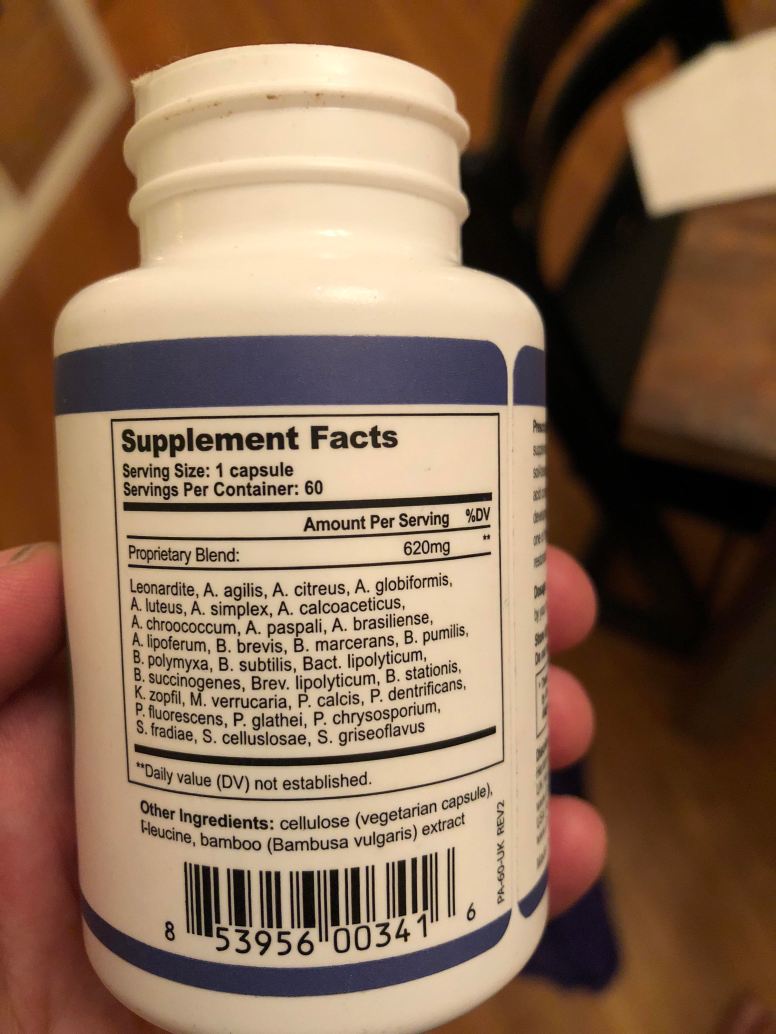
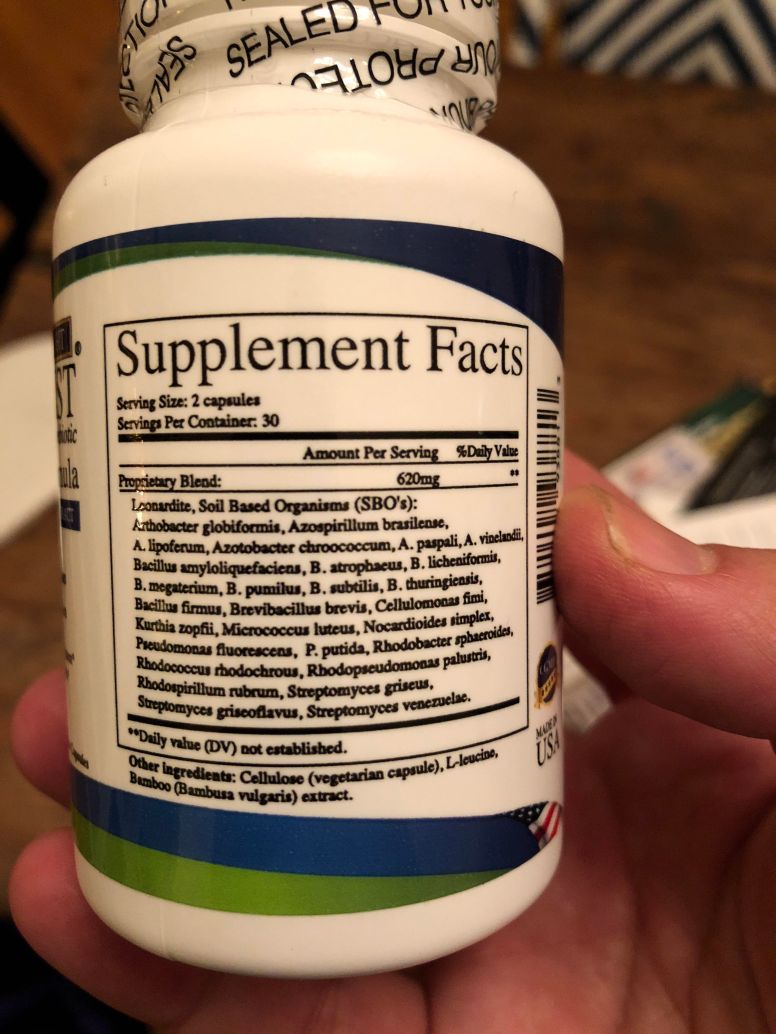
Change of formula for Prescript Assist

NOTICE: THIS POST HAS BEEN ALTERED DUE TO THREAT OF LEGAL ACTION. See communications received in comments.

There has been a change of formula for Prescript Assist.  This makes the existing documentation on the benefit of Prescript Assist for IBS questionable.

Prior Page with links to studies.

  • Over half of the prior species have been removed
  • The number of Firmicutes has increased significantly
    • If you have a Firmicutes to Bacteroidetes ratio < 1.6:1 on a uBiome test, it may be of benefit
    • If you have a Firmicutes to Bacteroidetes ratio > 2.5:1 on a uBiome test, it may make things worse

Old Formula

PS2.jpg

New Formula

PS1.jpg

Comparison

From original post with documentation links to benefits

Only in New

Bottom Line

Revised: There are at this point of time there are not studies on PubMed dealing with the ingredients listed on the current bottles of this product.

A microbiome caused by a C.Difficile cousin?


Reader Notes

Standard Items:

  • Lactobacillus: 0x
  • Bifidobacterium: 2.09x – identified by species
    • Bifidobacterium adolescentis
    • Bifidobacterium longum
  • Akkermansia:  0x
  • Diversity:  40%ile
  • Firmicutes to Bacteroidetes:  2.2:1 (Normal 2.1:1)

This does not feel like a normal CFS microbiome… and a first cousin to C. difficile may be the root cause of symptoms.

Uncommon Bacteria

Bacteria name Rank % of Samples
Leptotrichia Genus 1.5%
Anaerovorax Genus 3.2%
Aggregatibacter Genus 4.7%

High Bacteria

Bacteria
Ratio
Romboutsia: 6.10 X
Erysipelatoclostridium: 3.11 X
Parabacteroides:  2.13 X
Pseudobutyrivibrio: 1.94 X
Dorea: 1.88 X

Romboutsia is a new genus to show up.

References

Bottom Line Suggestions For New Ones

The lists below are done by merging the lists from the deep dives linked above. Some items may encourage one genus and discourage another genus — those are removed (unless it seems that it strongly predominates on one). The impact on Lactobacillus, Bifidobacterium and E.Coli are intentionally ignored [See this post for the logic]. This is all based on applying logic to the results of studies — thus theoretical. This is an addition (not a replacement) to this overview post.

Avoid

  • Amoxicillin-Clavulanate antibiotics
  • Animal-based diet
  • Barley
  • Bifidobacterium longum
  • Black Tea
  • Canole Oil
  • Dairy
  • Helminth infections
  • Inulin (common in many probiotics)
  • Isoniazid-
  • Lactobacillus casei
  • Lactobacillus paracasei
  • Lactobacillus rhamnosus
  • Lingonberries
  • Pomegranates
  • Proton-pump inhibitors (PPI)
  • Pyrazinamide
  • Resistant Starch
  • Resveratrol (Grapes, wine)
  • Rhubarb
  • Rifampin-
  • Saccharomyces boulardii
  • Sleepless nights
  • Stress
  • Teas *
  • Walnuts

Take

Items with * are specific to Romboutsia, and should be a high priority.

  • Bile salts *
  • Capsaicin(chili peppers)
  • Cranberry *
  • Flaxseed
  • Galactooligosaccharides
  • high-fat diet
  • Ketogenic diet
  • Lactobacillus reuteri
  • L-glutamine
  • Metronidazole antibiotics
  • Oral Iron Supplements
  • Plantain bananas *
  • Polymannuronic acid
  • Vitamin D3
  • β-glucan

Personal Comments

It is interesting to note all of the items rich in  polyphenols are on the avoid list except for cranberries. At the species level we found Bifidobacterium longum which is on the avoid list.

Second, this does not feel like a typicla CFS microbiome. The dominant, unusual genus, Romboutsia, being a first cousin to  C. difficile  [2014] may be the cause of the CFS-like symptoms.

This is an education post to facilitate discussing this approach with your medical professionals. It is not medical advice for the treatment of any condition. Always consult with your medical professional before doing any  changes of diet, supplements or activity. Some items cites may interfere with prescription medicines.