Bacteremia and death from Probiotics

In the interest of full disclosure — there is a risk of bacterial infection from probiotics and yogurt, even death. The odds appear to be very low (likely a lot lower than many prescription drugs). In some cases, a single case of an issue have been circulated into a alternative-medicine legend that one or another probiotic should be avoided.

Some articles:

Animal Probiotics are called Direct-fed microbials

A reader forward me a link to the USA FDA approved probiotics for animals [FDA page]. The official list for humans is likely further restricted.  There are web-sites that specialize in the sale of these DFMs for animal use.

Approved Probiotics DFM

FDA and Association of American Feed Control Officials (AAFCO) approved microbial species are:

  • Aspergillus niger
  • Aspergillus oryzae
  • Bacillus coagulans
  • Bacillus lentus
  • Bacillus licheniformis
  • Bacillus pumilus
  • Bacillus subtilis
  • Bacteroides amylophilus
  • Bacteroides capillosus
  • Bacteriodes ruminicola
  • Bacteroides suis
  • Bifidobacterium adolescentis
  • Bifidobacterium animalis
  • Bifidobacterium bifidum
  • Bifidobacterium infantis
  • Bifidobacterium longum
  • Bifidobacterium thermophilum
  • Lactobacillus acidophilus
  • Lactobacillus brevis
  • Lactobacillus bulgaricus
  • Lactobacillus casei
  • Lactobacillus cellobiosus
  • Lactobacillus curvatus
  • Lactobacillus delbrueckii
  • Lactobacillus fermentum
  • Lactobacillus helveticus
  • Lactobacillus lactis
  • Lactobacillus plantarum
  • Lactobacillus reuteri
  • Leuconostoc mesenteroides
  • Pediococcus acidilactici
  • Pediococcus cerevisiae (damnosus)
  • Pediococcus pentosaceus
  • Propionibacterium freudenreichii
  • Propionibacterium shermanii
  • Saccharomyces cerevisiae
  • Streptococcus cremoirs
  • Streptococcus diacetilactis
  • Streptococcus faecium
  • Streptococcus intermedius
  • Streptococcus lactis
  • Streptococcus thermophilus

There is no normal or reference microbiome!

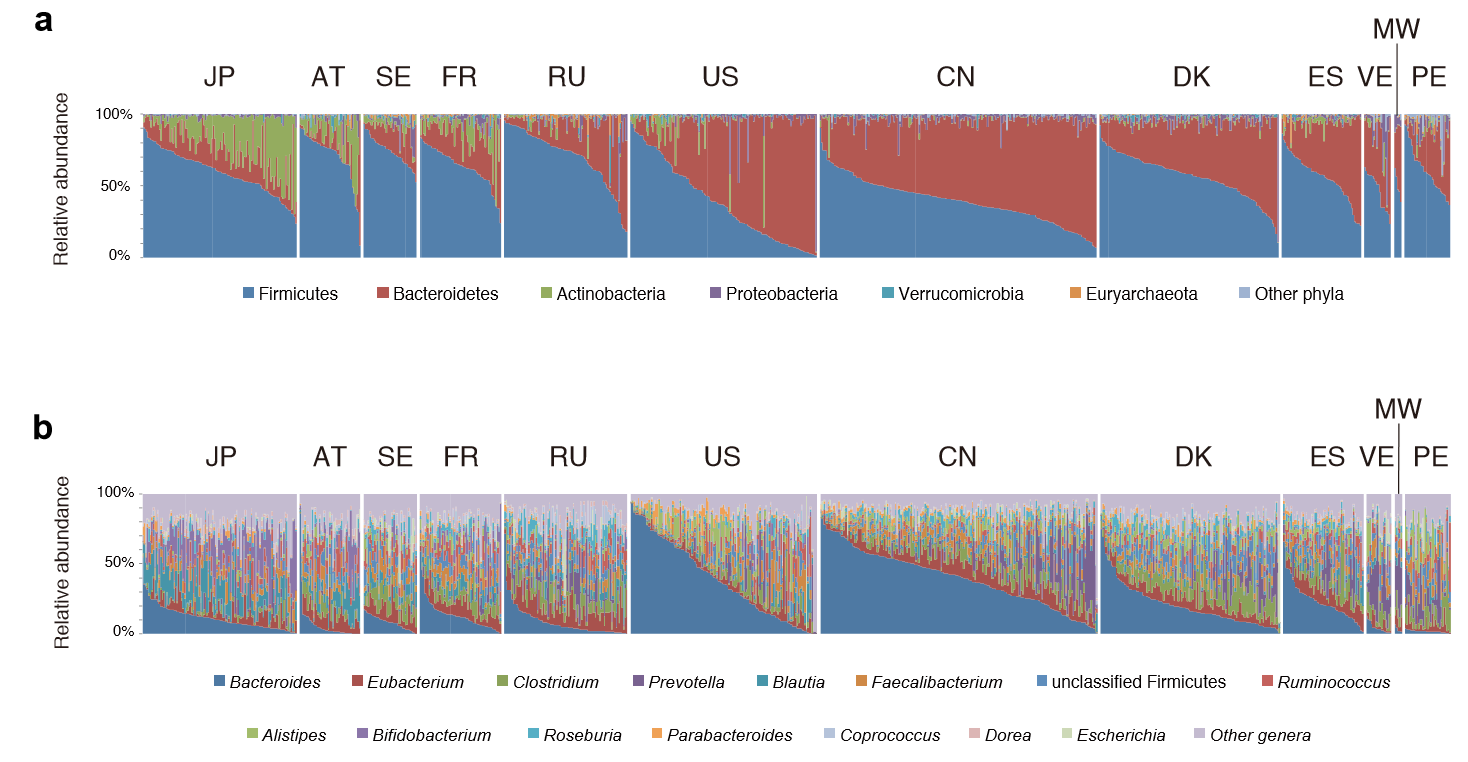
One of the common misconception is that there is a “normal” microbiome that can be used as a reference.  Below is a chart from “Metagenomic sequencing of fecal DNA“. Diet makes a major impact on the distribution and volume of the bacteria.

  • “In a study of gut bacteria of children in Burkina Faso (in Africa), Prevotella made up 53% of the gut bacteria, but were absent in age-matched European children.”[2010]

The chart below is for healthy individuals in 12 different countries.  In some cases neighboring very similar countries (Sweden [SE] and Denmark [DK]) have very different compositions.

world

This great variation means that testing the microbiome can only be done as group of individuals living in the same area with similar eating habits…. An individual result without reference from people with the same eating habits and possibly ethnic background is very fuzzy to interpret. Yes, highlights may be common — like low E.Coli, Lactobacillus and Bifidobacteria….  but they likely apply to no more than 80-90%, the other CFS patients may have different shifts.

Then we also find that DNA also impacts the microbiome,

Host genetic variation drives phenotype variation, and this study solidifies the notion that our microbial phenotype is also influenced by our genetic state. We have shown that the host genetic effect varies across taxa and includes members of different phyla. The host alleles underlying the heritability of gut microbes, once identified, should allow us to understand the nature of our association with these health-associated bacteria, and eventually to exploit them to promote health.

Human genetics shape the gut microbiome , 2014

People have asked me, “Did you get your microbiome done, what was it?” My honest answer was “No, such testing was not available when I last had CFS. I simply assumed that my pattern would be an appropriate match to that reported from the 1998 Australian studies”

Age changes the microbiome

” DNA of the Clostridium leptum group and pathogenic Enterobactericeae increase in the gut microbiome with age and can be detected in the same individual’s coronary plaques along with pathogenic Streptococcus spp., associating with more severe coronary atherosclerosis. ” [2019]

An external file that holds a picture, illustration, etc.
Object name is nutrients-11-01765-g001.jpg

The presence of the BifidobacteriumFaecalibacteriumBacteroides group, and Clostridium cluster XIVa decreased with age up to 66-80 years of age, with differences reaching statistical significance for the latter group. Interestingly, the levels of some of these microorganisms recovered in the very old age group (>80 years), with these older individuals presenting significantly higher counts of Akkermansia and Lactobacillus group than adults and the younger elderly

Age-Associated Changes in Gut Microbiota and Dietary Components Related with the Immune System in Adulthood and Old Age: A Cross-Sectional Study. [2019]

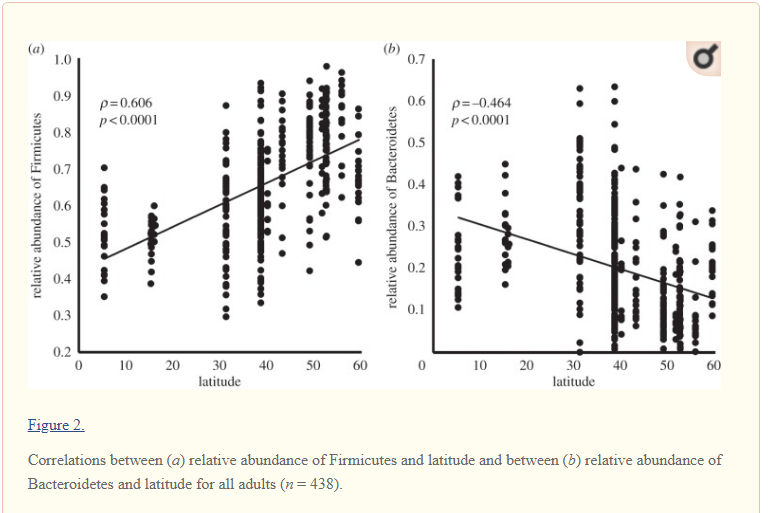
Latitude changes the Microbiome

Latitude means the distance from the equator. This may be due to sunlight-vitamin D levels.

Geographical variation of human gut microbial composition , 2014

If you exercised recently impacts the microbiome

Underlying these macro-level microbial alterations were demonstrable increases in select bacterial genera such as Veillonella (+14,229%) and Streptococcus (+438%) concomitant with reductions in Alloprevotella (-79%) and Subdolingranulum (-50%). To our knowledge, this case study shows the most rapid and pronounced shifts in human gut microbiome composition after acute exercise in the human literature. 

Rapid gut microbiome changes in a world-class ultramarathon runner. 2019

Some Population Studies

“We analyzed the combined microbiome data from five previous studies with samples across five continents. We clearly demonstrate that there are no consistent bacterial taxa associated with either Bacteroides– or Prevotella-dominated communities across the studies. By increasing the number and diversity of samples, we found gradients of both Bacteroides and Prevotella and a lack of the distinct clusters in the principal coordinate plots originally proposed in the “enterotypes” hypothesis. The apparent segregation of the samples seen in many ordination plots is due to the differences in the samples’ Prevotella and Bacteroides abundances and does not represent consistent microbial communities within the “enterotypes” and is not associated with other taxa across studies.” [2016]

” All Egyptian gut microbial communities belonged to the Prevotella enterotype, whereas all but one of the U.S. samples were of the Bacteroides enterotype.

  • The intestinal environment of Egyptians was characterized by higher levels of short-chain fatty acids, a higher prevalence of microbial polysaccharide degradation-encoding genes, and a higher proportion of several polysaccharide-degrading genera.
  • Egyptian gut microbiota also appeared to be under heavier bacteriophage pressure.
  • In contrast, the gut environment of U.S. children was rich in amino acids and lipid metabolism-associated compounds; contained more microbial genes encoding protein degradation, vitamin biosynthesis, and iron acquisition pathways; and was enriched in several protein- and starch-degrading genera.
  • Levels of 1-methylhistamine, a biomarker of allergic response, were elevated in U.S. guts, as were the abundances of members of Faecalibacterium and Akkermansia, two genera with recognized anti-inflammatory effects.
  • The revealed corroborating differences in fecal microbiota structure and functions and metabolite profiles between Egyptian and U.S. teenagers are consistent with the nutrient variation between Mediterranean and Western diets.” [2017]

“This suggests that similarities between the Inuit diet and the Western diet (low fiber, high fat) may lead to a convergence of community structures and diversity. However, certain species and strains of microbes have significantly different levels of abundance and diversity in the Inuit, possibly driven by differences in diet.” [2017]

Bottom Line

IMHO: There is no clear definitive benefit from doing an individual microbiome testing — there is no reference that is reliable for it on an individual basis at a fine level of details. On the other hand, having results showing abnormalities help in several ways:

  • It encourages you to make changes in eating which will usually be for the better
  • It confirms that you have significant shifts and supports the concept that the gut is causing your symptoms.

” This work supports that sex is a critical factor in colonic bacterial composition of an aged, genetically-heterogenous population. Moreover, this study establishes that the effectiveness of dietary interventions for health maintenance and disease prevention via direct or indirect manipulation of the gut microbiota is likely dependent on an individual’s sex, age, and genetic background. ” [2019]

Increasing Parabacteroides Distasonis

In Ian Lipkin et al 2017 study, low Parabacteroides Distasonis was reported (on average) between CFS patients and controls. [Index to all posts on Study] .

  • “PIC and constipation-predominant irritable bowel syndrome(C-IBS) promoted changes in the gut microbiota, characterized by increased relative abundance of Bacteroides ovatus and Parabacteroides distasonis in both models.” [2017]
    • What! Do we have other research disagreeing with Lipkin’s? Not quite, his study did not separate IBS and C-IBS, his bad.
  • ” inoculated male and female germ-free C57BL/6J mice with fecal bacteria from a man with short-term vegetarian and inulin-supplemented diet.  The relative abundance of 13 OTUs were higher in males, such as Parabacteroides distasonis and Blautia faecis, while 33 OTUs were overrepresented in females, including Clostridium groups and Escherichia fergusonii/Shigella sonnei.” [2016]
    • Again, another short coming of Lipkin’s study — no separation between males and females! Seeing this difference of microbiome occurring without an illness involved, implies that gender may be a significant factor! 
  • Rhizoma Coptidis (RC) alkaloids ..whereas, the abundance of Escherichia coli, Desulfovibrio C21_c20, Parabacteroides distasonis was suppressed.” [2016] This is also known as Coptis Root or Huang Lian.
  • “Relative to its baseline, the high red meat  (HRM) + high-amylose maize starch (HAMSB) diet increased the excretion of SCFA by over 20% (P < 0.05) and increased the absolute abundances of the Clostridium coccoides group (P < 0.05), the Clostridium leptum group (P < 0.05), Lactobacillus spp. (P < 0.01), Parabacteroides distasonis (P < 0.001)” [2015]
  • Found in sphagnum-dominated peatlands [2015] – ancestors using peat for fuel would likely be consuming this bacteria (probiotic) naturally.
  • ” The tests showed that imipenem, meropenem and chloramphenicol were the most effective antibiotics (98%, 98% and 92.16% of susceptibility, respectively) followed by ticarcillin/clavulanic acid, piperacillin/tazobactam, rifampin (88.24% susceptibility), moxifloxacin 86.27% and tigecycline 84.31%.” [2014]
  • “we performed a comprehensive culture based analysis of intestinal biopsies from pediatric Crohn’s disease [CD], ulcerative colitis [UC], and control subjects… Parabacteroides distasonis significantly decreased in inflamed tissue.” [2013]
  • “At the species level, the changes evoked by resistant starch Type 4 (RS4) were increases in Bifidobacterium adolescentis and Parabacteroides distasonis,” [2010]
    • See the Definitive Guide to Resistant Starch for more information. This is “man-made and formed via a chemical process.” Examples: Distarch phosphate and “hi-maize resistant starch.”

Bottom Line

I find Lipkin’s report here to be suspect. Too many other studies suggests that low is good — but the common thread of doubt between his and other studies is the lack of analysis by gender which appears to be a significant factor for this bacteria..

Success from two readers using the model

Both of the people below used the model to make major progress on CFS. When you read their accounts you may be a little shocked by the difference of what they did. There is no “step-by-step magical protocol”,  you have to work with what you can get and note your response to things, keep changing until you find the effective combination.

Both of these readers used earth based organism probiotics (i.e. what your ancestors would have been gotten walking through the fields chewing a stalk of grass or other grain (unwashed) in your mouth): Prescript Assist or Equilibrium. Without knowing it, they were taking probiotics in a natural form.  Of course, today most fields are rich is pesticides and such, so chewing grass is  not advised.

There are differences in agricultural practices between two very similar genetic and diet groups. “asthma prevalence is 2–3% among the Amish, who practice traditional farming, and 15% or higher among the Hutterites, who embrace modern farming.”

I suspect two factors: one is residue pesticide levels on the fields (yes, Hutterites use pesticides!); the second factor is that I suspect difference of attitudes to chewing on a stalk of wheat by kids (“No harm, I did it too!” vs “It may have pesticides on it, take it out of your mouth!”)

The very Simple Remission

This case deals with someone that the right probiotic for them happen to trigger the cascade for remission.

“Thank you SO much for your blog!  I recently asked you a question on your blog – I am the gal w IBS based ME CFS who partially recovered (was down to 25-30% of activity, bed/housebound w severe PEM, recovered to about 65-70%), and entirely by chance, taking VSL#3 (I hadn’t discovered your website yet).  I switched over to Prescript Assist, and it hasn’t even been a week yet, and yesterday, for the first time in 6 months I went for a 2 mile walk/jog around my neighborhood.  My mono symptoms have disappeared.  I have an appt. w Dr. xxx  in 2 weeks, which I’m going to keep, but my recovery is something I never could have imagined!  I never would have found Prescript Assist if it wasn’t for your blog and I just can’t thank you enough…it was a Godsend!  I have my life back – I will be able to attend both my sons’ graduations and take my elder son to college in the Fall, which I never imagined I’d be able to do…”

The Hard Fought Remission

This person fought for remission by herbs, probiotics and antibiotics.

“BTW – I’m working full time now!

After a few years of essentially being too weak to leave house or even blog, this is a huge breakthrough for me. I hope I can stay as high-functioning as I am now. Still a bit unsure which intervention pushed me over the edge of functional but very grateful for you and your site. Thank you Ken!
For instance, I likely would have resisted chronic antibiotic use if I hadn’t read your site. And I had given up on going to doctors (although now that I have a job again, I have an appointment with a new integrative doctor 5/22). Antibiotics are definitely the foundation of my recovery. If I had to estimate, I’d assign various treatments this rough spread of credit:
  • 50% – Rotate daily Doxyciline or Kapsida weekdays + Mutaflor or Equilibrium weekends
  • 30% – Once Monthly Rapamycin and/or LDN on Friday nights
  • 20% – Armodafinil + Mt Dew on weekdays + weekend washout to prevent tolerance
Pretty simple model. Doxy kills bad bacteria. Kapsida also works as antimicrobial and seems to potentiate other antibiotics. Bursts of Equalibrium and Mutaflor definitely add baseline wellbeing and energy over antibiotics alone.
Rapamycin resets immune system whenever antibiotics stop working. Amazing to bounce back same day vs random downward tolerance spirals where everything stops working.
LDN serves same function as Rapamycin. It can additionally reset any stimulant tolerance. I try not to take high enough doses of stimulants to develop tolerance there too often so I mostly skip LDN unless I’m really in trouble. It’s definitely the ickiest drug in my mix and probably net bad for anyone long-term.
Armodafinil obviously extends willpower, mood, and vigilance. It’s a band-aid but even half doses are a really good bandaid. It takes me from simply well enough to sit up on the coach and not feel weak –> well-enough to work in an office with others all day.
Don’t really know/understand yet why Mt Dew is only caffeine source that seems beneficial. I’m starting to wonder if caffeine is not what I’m enjoying about Mt Dew. I really don’t get any positive mental effects from coffee or tea or any other soda. Also, even slight variants of Mtn Dew don’t work (like Diet Mt Dew or Mt Dew: White Out). Very strange. I was just looking thru ingredients list as I was writing this to you:
Hmm. This set is actually enough to identify the compound in Mtn Dew that apparently benefiting me:
That seems ridiculous.
Anyway, thanks again for sharing all your research on cfsremission.com. Let me know if there’s ever any way I can help you out. I’d be unemployed, laying on my gf’s couch (hard to pay rent w/ cfs) trying to muster the energy to play PS4 games right now if it weren’t for you.”

Erythorbic acid

NOTE: This does not appear to be in all Mountain Dew. Formula differs from country to country. In Europe, Erythorbic acid is known as E-315. It is not in Spanish  Mountain Dew.

Others names for Erythorbic acid are:

  1. D-araboascorbic acid
  2. erythorbic acid
  3. erythroascorbic acid
  4. isoascorbic acid
  5. isoascorbic acid, disodium salt
  6. isoascorbic acid, monosodium salt
  7. isoascorbic acid, sodium salt
  8. sodium erythorbate

Same citation provided the following information also:

  • Erythorbic acid is readily absorbed and metabolized. Following an oral dose of 500 mg of erythorbic acid to human subjects the blood level curves for ascorbic acid and erythorbic acid showed a similar rise. In five human subjects, an oral dose of 300 mg was shown to have no effect on urinary excretion of ascorbic acid.  http://www.inchem.org/documents/jecfa/jecmono/v28je03.htm
  • These results indicated that the gastrointestinal permeability differed between the two chemicals.
  • In dogs, this resulted in a half-life of approximately 30 minutes for erythorbic acid in the plasma.

  • “The thermal inactivation of Salmonella thompson, Escherichia coli, Staphylococcus aureus, Clostridium perfringens, Candida zeylanoides, Enterococcus faecium and E. faecalis was accelerated by the addition of sodium isoascorbate (1 mmol/l) to phosphate-buffer heating medium but not to complex food mixtures.” [1989]
  • Erythorbic acid is a potent enhancer of nonheme-iron absorption [2004]. “Iron absorption from the test meal without any added enhancer was 4.1%. The addition of erythorbic acid (at molar ratios of 2:1 and 4:1 relative to iron) increased iron absorption 2.6-fold (10.8%; P < 0.0001) and 4.6-fold (18.8%; P < 0.0001), respectively.”

Bottom Line for Erythorbic acid

It appears to be very safe and appears effective against some food bacteria (used as food preservative to preserve food better). It is recognized as an antioxidant. It appears to assist in some fighting of bacteria.

We do not have enough information to recommend or not. We know that it impacts bacteria. We know that it seems to make a significant difference for on CFS sufferer.

The dosage in a bottle of Mountain Dew is likely low, and 500 mg dosages have been tested on humans with no adverse effects.  This suggests for more adventuresome readers, that a dosage of 100-500 mg/day be tried (if you do try, please post results — or no results — on this post).

It is available as a powder, in Spain, some manufacturers listed here