Addressing Peroxynitrite

The pubmed studies cited in my last post on environmental illness or syndrome suggests addressing peroxynitrite as a course of action. This post drill into a single aspect this area. We do not have studies indicating if it is effective.

Herbs

  • “The potency of scavenging activity was in the following order:
    • Apis cerana Fabricius (Propolis) >
    • Rosmarinus officinalis L (Rosemary) >
    • Pseudolarix amabilis (Nelson) Rehd. (Pine Bark PE) >
    • Echinacea Moenck. (Echinacea);
    • the remaining twenty-eight herbs performed unsatisfactorily for their scavenging activity.” [2010]
  • “The potency of scavenging activity following the addition of authentic ONOO(-) was in the following order:
    • witch hazel bark > …  Hamamelitannin, the major active component of witch hazel bark, was shown to have a strong ability to scavenge ONOO(-).
    • rosemary >
    • jasmine tea >
    • sage >
    • slippery elm >
    • black walnut leaf >
    • Queen Anne’s lace >Z
    • Linden flower. [2002]
  • “In the ONOO(-) assay, H. baylahuen and Buddleia globosa showed the highest activities.” [2006]

Supplements

  • ALA – “Superoxide production and peroxynitrite (ONOO-) formation were reduced with alpha-linolenic acid supplement” [2013]
  • Grape Seed Extract – “grape seed extract counteracted the inhibitory effect of peroxynitrite on human plasma clotting” [2012]
  • NOT: Coenzyme Q(10), vitamin E, selenium, and methionine “confirmed  increased antiviral cytokine and peroxynitrite plasma levels.”
  • “creatine displayed a significant ability to remove ABTS+, O(*-)(2), and OONO- when compared with controls.” [2002] creatine is low in CFS.

Probiotics

VSL#3 has been studied [2014] with undesired results, “increased expression of NADPH oxidase subunits, angiotensin converting enzyme, AT1 receptors and angiotensin II, and formation of ROS and peroxynitrite were observed.”

Lactobacillus fermentum ME-3 (DSM14241, LfME-3) reports a reduction [2015]. This is available on Amazon. This probiotic produces Glutathione and is human sourced. I will be doing a post on it in a few days.
Environment Sensitivity

I include the following under environment sensitivity

  • multiple chemical sensitivity (MCS)
  • electromagnetic sensitivity (EMF)
  • noise sensitivity (Misopboniahyperacusis, diplacousis, and polyacousis.)
  • light sensitivity (Photophobia) which can trigger sleep reversal
    • ” the most common conditions associated with photophobia are migraine, blepharospasm, and traumatic brain injury.” [2016]
    • “Their most common ocular condition was dry eyes,”[2012]
      • “Certainly there have been no major randomized controlled trials of treatment of photophobia. Most of the literature consists of case-reports and a few studies with small numbers of subjects.”

With CFS (and by themselves), if you have one of these, you are much more likely to have another of them. In other words, they may all be different manifestation of the same root issues with variations of symptoms due to DNA, epigenetic (DNA being activated by environmental factors), and microbiome.

  • “About one fourth of the general population report environmental intolerance (EI) to odorous/pungent chemicals, certain buildings, electromagnetic fields (EMFs), and/or sounds.” [2016]
    • “All four EI groups, compared to the referents, reported significantly poorer sleep quality, more non-restorative sleep, more daytime sleepiness, more obstructive breathing and higher prevalence of nocturnal insomnia than the referents.”
  • “In population-based surveys, the prevalence of EHS has ranged from 1.5% in Sweden to 13.3% in Taiwan. Provocation studies on EMF have yielded different results, ranging from where people with EHS cannot discriminate between an active RF signal and placebo, to objectively observed changes following exposure in reactions of the pupil, changes in heart rhythm, damage to erythrocytes, and disturbed glucose metabolism in the brain.” [2015]
  • “As inflammation appears to be a key process resulting from electromagnetic field (EMF) and/ or chemical effects on tissues, and histamine release is potentially a major mediator of inflammation, we systematically measured histamine in the blood of patients. Near 40% had a increase in histaminemia (especially when both conditions were present), indicating a chronic inflammatory response can be detected in these patients.” [2015]
    • “Nitrotyrosin, a marker of both peroxynitrite (ONOO°-) production and opening of the blood-brain barrier (BBB), was increased in 28% the cases.”
    • “Protein S100B, another marker of BBB opening was increased in 15%.”
    • “Circulating autoantibodies against O-myelin were detected in 23%, indicating EHS and MCS may be associated with autoimmune response.”
    • “increased Hsp27 and/or Hsp70 in 33% of the patients.”

“For the first time, auditory-related perceptual disorders were studied in MCS. A strong association between Weinstein’s Noise Sensitivity Questionnaire (WNS) , Khalfa’s Hyperacusis Questionnaire (HQ). results and MCS symptoms severity has been highlighted. These findings suggest that decreased sound tolerance and noise sensitivity could be considered as possible new aspects of this syndrome, contributing to its peculiar phenotype.” [2016]

  • “The brain responses at the recognition threshold (fecal odor) and normal perceived levels (sweet and fecal odors) were stronger in patients with MCS than in controls.” [2016]
  • ” chemical sensitivity clearly does exist (pulse rate differences between positive responses and placebo)” [1991]
  • “heightened sensitivity to noise (hyperacusis) and touch (hyperaesthesia)… the serology showed an apparent infective pre-cursor to the illness with evidence of possible autoimmune serology.” [2012]
  • “These patients were taken off all medication and not fed until the leg pain and swelling disappeared, which was four to seven days… The five-year follow-up in the group showed two 48-hour episodes of phlebitis cleared by home bed rest and food abstenance. In contrast, the control group had more than 60 episodes of phlebitis at home and 41 episodes in the hospital.” – 101 vs 2….[1981]
    • Ten randomly selected patients with recurrent non-traumatic thrombophlebitis of unknown etiology were studied using a comprehensive environmental control method. All cleared their phlebitis without medications. Using withdrawal and challenge of incitants, eight of 10 patients had their phlebitis reproduced. The numerous single triggering agents were common-place inhaled and ingested foods and chemicals. [1976] ” Multiple incitants were found in each patient.” [1977]
    • Thrombophlebitisvein inflammation
  • “Twelve highly selected patients with non-arteriosclerotic cardiac arrhythmias and/or chest pain refractory to medication and having symptoms related to smooth muscle sensitization were studied in a rigidly controlled, relatively fume- and particle-free environment. The majority of signs and symptoms cleared in 10 patients without medication while under environmental control, and in 10 of the 12 patients all arrhythmias were reproduced with controlled, repeated individual-blind and double-blind incitant challenges.” [1978]

Treatment of any of these sensitivity have generally been unsuccessful for most patients. The following is a review of recent pubmed articles in this area (and a few classic ones)

  • Trigeminal neurons detect cellphone radiation: Thermal or nonthermal is not the question[2016]. see  trigeminal nerve. The nerve changes  were not the result of heat from the cell phone.
  • ” Based on our current understanding, a treatment approach that minimizes the adverse effects of peroxynitrite – as has been increasingly used in the treatment of multisystem illnesses – works best.” [2015]
  • “The biopsies taken from skin lesions of patients with EHS indicated on infiltration of the skin layers of the epidermis with mastocytes and their degranulation, as well as on release anaphylactic reaction mediators such as histamine, chymase and tryptase. The number of people suffering from EHS in the world is growing describing themselves as severely dysfunctional, showing multi organ non-specific symptoms upon exposure to low doses of electromagnetic radiation, often associated with hypersensitivity to many chemical agents (Multiple Chemical Sensitivity-MCS) and/or other environmental intolerances (Sensitivity Related Illness-SRI).” [2015]
  • History of chemical sensitivity and diagnosis[2016]:
    • “. In our experience, 80% of the EMF-sensitive patients had chemicalsensitivity when studied under less-polluted conditions for particulates, controlled natural gas, pesticides, and chemicals like formaldehyde.”
  • Characterization of air freshener emission: the potential health effects. [2015]
    • “The use of these products may be associated with an increase in the measured level of terpene, such as xylene and other volatile air freshener components,”
    • “The constituents of air fresheners can react with ozone to produce secondary pollutants such as formaldehyde…..including benzene, phthalate, and limonene,”
    • “this work shows that use of some consumer cleaning agents can yield high levels of volatile organic compounds, including glycol ethers–which are regulated toxic air contaminants–and terpenes that can react with ozone to form a variety of secondary pollutants including formaldehyde and ultrafine particles.” [2006]
  • Triggers for MCS can include [2015]:
    • formaldehyde, (less than 0.2 ppm [1981])
    • pesticide, (less than 0.0134 ppm [1981])
    • cigarette smoke,
    • ethanol,
    • petroleum alcohol (less than 0.5 ppm [1981])
    • phenol, (less than 0.0024 ppm [1981])
    • chlorine, (less than 0.33 ppm [1981])
    •  perfume
    • volatile organic compounds (VOCs) including:
      • formaldehyde,
      • orris root,
      • newsprint,
      • terpenes,
      • terpenoids.
    • ” Terpenes and terpenoids are a diverse class of organic compounds produced by a variety of plants, particularly conifers…Often patients cannot clear their symptoms from exposure to chemicals unless terpenes and terpenoids are avoided and neutralized along with chemical avoidance and treatment.”
      • Comment: There may be an interaction with allergies to conifers here..
        7% of the allergic population are allergic to conifers [1970] a.k.a. Christmas Tree Allergy.
      • “Terpenes are biogenic volatile organic compounds (VOCs) that are also contained in many consumer products.” [2013]
    • “Results suggest that traffic emission sources of OCpri and quasi-ultrafine particles lead to increased systemic inflammation and platelet activation and decreased antioxidant enzyme activity in elderly people with CAD.” [2008]

Bottom Line

Environmental illness seems to be a consequence of modern life. From the electronics waves passing thru us each day, the chemical additives in foods and ongoing level of stress and uncertainty. Genetics and epigenetics play a role — some people are resistant (think of George Burns — who smoked cigars until he was 100 with no cancer) and others are very susceptible.

What to do?

  • Reduce EMF exposure — that can be hard and expensive to do.
    • My family have made some progress here. Moving to a 10 hectares (25 acres lot) in a rural area — we have no over-the-air TV signals, no neighbor WiFi signals. All of our computer are hard-wired to the internet. When I am in the city, I often seen 30-60 wifi sources appear on my phone. Mobile phones are placed in Aircraft mode if we are at home (phone calls will go to our PCs instead because we are using Google FI service)
  • Eliminate chemical additives – this means preparing food from scratch. Scents and fragrences are much harder to address.
    • We remove residue chemicals  from our clothes, with a outdoor shed (with ozonators) that we put our street clothes into as soon as we get home

The above mitigates a worsening of symptoms — reversal is another challenge. The chemical  FeTMPyP appears effective against peroxynitrite but there are no human studies for environmental illness. In a future post, I will dive into possible ways of dealing with peroxynitrite.

TNF-Alpha and Probiotics

My last post looked at faecal calprotectin and which probiotics can lowere it.  This caused me to look explicitly at TNF-alpha(or tumor necrosis factor-α) and probiotics. We saw that one strain of Lactobacillus Acidophilus increases TNF-alpha.  TNF-Alpha is high in CFS patients (and most autoimmune patients)[2016] and should not be raised higher.

” is a cell signaling protein (cytokine) involved in systemic inflammation and is one of the cytokines that make up the acute phase reaction. It is produced chiefly by activated macrophages, although it can be produced by many other cell types such as CD4+ lymphocytes, NK cells, neutrophils, mast cells, eosinophils, and neurons.[3]” [Wikipedia]

TNF-Alpha reducing probiotics

  • DECREASE : Bacillus coagulans..significant decrease in the production of pro-inflammatory cytokines, such as TNF-α [2016]
  • DECREASES: Clostridium butyricum (CB) capsules. [2016]
  • DECREASE: Saccharomyces cerevisiae RC016 [2016]
  • DECREASE: Lactococcus chungangensis CAU 28(T)…reduced the release of β-hexosaminidase and histamine in human mast cell cells..  suppressed the production of … tumor necrosis factor-α [2016]
  • DECREASE: B. lactis HN019 … a significant decrease in tumor necrosis factor-α [2016]
  • DECREASE: clostridium butyricum CGMCC0313.1… reduced tumor necrosis factor (TNF)-α level [2016]
  • DECREASE: Bifidobacterium breve, Lactobacillus casei, Lactobacillus bulgaricus and Lactobacillus acidophilus [2016]
  • DECREASE: Lactobacillus plantarum HM218749 [2016]
  • DECREASE: “Pseudomonas bacteria demonstrated that probiotic therapy inhibited septicemic accumulation of the pathogen in remote organs. In addition, probiotic therapy successfully suppressed the infection-dependent induction of TNF-α and interleukins 6 and 10 in the liver.” [2016]
  • DECREASE: “a probiotic mixture, including Lactobacillus and Bifidobacterium species,” [2016]
  • DECREASES: B. bifidum, L. acidophilus and Ba. coagulans [2016]
  • DECREASES: Clostridium leptum [2016]
  • DECREASES: VSL#3 [2016]
  • DECREASES: Lactobacillus plantarum WLPL04 [2016]
  • NONE:  Lactobacillus planetarum A7 [2016]
  • INCREASES: Pediococcus pentosaceus [2017]
  • INCREASES: Bacillus cereus [2016]
  • INCREASES:  Lactobacillus plantarum BF-LP284 (H-Lp) [2016]
  • INCREASES: Lactobacillus rhamnosus GG [2016]
  • INCREASES: Lactobacillus delbrueckii subsp. lactis CIDCA 133 “The production of TNF-α (a protective cytokine in B. cereus infections) by dendritic cells was increased in the presence of lactobacilli[2016].

Available Probiotics

  • Mutaflor… expression of the pro-inflammatory cytokines IL-6 and TNF-α was higher [2012]


Faecal Calprotectin in CFS and IBS

A reader posted on my CFSRemission facebook page:

Hi, Ken! You are doing great, but really great job, and I have to say that you surpassed all my colleagues, medical doctors, regrading knowledge about CFS, not to mention effective treatment advices. Do you know something about role of Faecal calprotectin in diagnose of intestinal problems as cause of CFS? Best regards and – keep the ball rolling !!! (namely, my Faecal calprotectin is negative, but test show reduced and changed intestinal flora, together with IBS symptoms)
  XXXXX M.D.
To answer this I head to PubMed, as usual. CFS patients have cognitive issues (and MDs often have no-time issues).

General Background

  • [Background] “Calprotectin is a heterodimeric protein which belongs to the calcium-binding protein S100 family. Calprotectin is released by leukocytes at the site of inflammation and it can be detected in the feces where it remains stable for about a week. Hence, increased fecal calprotectin (FC) levels are found in several inflammatory conditions, mainly the inflammatory bowel diseases (IBD).”[2016]
    • ” the calprotectin levels in 86% of paediatric faecal samples and 95% of samples from adults correlated with the endoscopic evidence, reflecting the high sensitivity of the test in all age groups…. controversy remains regarding the predictive value of faecal calprotectin in patients in remission…. may also help to spare patients from unnecessary endoscopy when calprotectin levels are low. ” [2016] – so 5% chance of false negative.
  • “With several faecal calprotectin (FC) assays on the market, it has been difficult to define a uniform threshold for discriminating between remission and active disease in patients with inflammatory bowel disease (IBD). We aimed to compare the results of different FC-assays in IBD patients, followed over time…. Cross-comparisons revealed overall poor agreement between the assays as well as differences in the dynamics of FC. These findings suggest that standardisation of the method is needed to implement FC as a disease monitoring tool at large-scale.” [2017]

CFS and Microbiome

CFS and IBS are co-morbid.  To be more accurate 16% of CFS has IBS while 5% of non-CFS patients have IBS. So a CFS diagnosis does not mean that you have IBS — the odds are 3.3 time greater that you have IBS if you have CFS. [2012] In fact, it is almost a toss up of which came first for patients that have both:  CFS before or at same time as IBS – 50%, CFS after IBS – 50%. [2012]

I could only find a single study on calprotectin and CFS.

  • “The faecal calprotectin levels were normal in all patients (< 50 mg/kg faeces) although 3 patients had occasionally higher values (one sample per patient on days 14, 42 and 70 respectively).” [2009] There were 15 patients in the study so 3/15 = 20% had occasionally higher values (and above we had a report of 16% with IBS) so we have agreement between the studies.

As a CFS diagnostic tool, faecal calprotectin is of no apparent use (for IBS, that is not the case).

Probiotics

Given faecal calprotectin and IBS association, I looked at probiotics results for this specific measure. NOTE: some of these studies were on infants — uncertain if they apply to adults.

  • NONE: Lactobacillus plantarum 299 and Bifidobacterium infantis Cure 21 [2016]
  • NONE: Bacillus coagulans GBI-30, 6086 (BC30); GanedenBC(30) [2015] – inferred
  • NONE:  Lactobacillus rhamnosus HN001 and Lactobacillus acidophilus NCFM [2012]
  • NONE: Lactobacillus acidophilus (L. acidophilus) NCFMTM (ATCC 700396) and Bifidobacterium lactis (B. lactis) Bl-04 (ATCC SD5219)” Neither the probiotic treatment, nor pollen season had any significant effects on the fecal calprotectin concentrations.” [2009]
  • NONE/Little:  lactobacilli (La-5) and bifidobacteria (Bb-12)  “Calprotectin levels did not change significantly after intervention. “[2003]
  • Improved:  Bifidobacterium breve PS12929 and Lactobacillus salivarius PS12934. [2015]
  • ” detected as high fecal calprotectin, predicted asthma and AD by the age of 6 years and was linked to low abundance of fecal Escherichia“[2015]
  • Improved: Lactobacillus reuteri [2014]
  • Improved: mixture of Lactobacillus casei, Lactobacillus rhamnosus, Streptococcus thermophilus, Bifidobacterium breve, Lactobacillus acidophilus, Bifidobacterium infantis (child-specific), Lactobacillus bulgaricus [2013]
  • Improved:  Bifidobacterium lactis Bb12 [2008]
  • Improved: Lactobacillus GG [2004]
  • WORST: Lactobacillus reuteri DSM 17938 “The probiotic-treated group had a significantly higher fecal calprotectin level than the placebo group after 2 months of treatment” [2012]

Bottom Line

For IBS with high Calprotectin levels, the studies suggest the following probiotics:

  • E.Coli probiotics (Mutaflor, Symbioflor-2)
  • Lactobacillus GG
  • Bifidobacterium breve PS12929 and Lactobacillus salivarius PS12934
  • Bifidobacterium lactis Bb12


Corn/Soy may be a no-no for some CFS patients

A reader forward a recent study that suggest that corn (at least corn in a region that GMO corn may exist) may be not suitable to CFS patients.

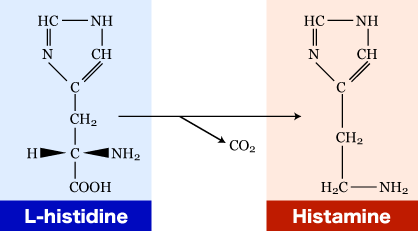
CFS patients often have issues with excessive histamine. In my recent post on Amino Acids, histidine was found to be HIGH in CFS patients. “increases in 3-methylhistidine (P < 0.05) and tyrosine (P < 0.05) were observed” [2007] ” The urinary excretions of histamine, N tau-methylhistamine, imidazole acetic acid, and its conjugate(s) were higher in patients with histidinemia than in controls, and these levels of excretion were correlated with the plasma histidine level. The urinary histamine levels of patients with eczema-like dermatitis were twice that of those without dermatitis.” [1984]

histamine_01

So what is the problem of corn?

“Glyphosate tolerant genetically modified (GM) maize NK603 was assessed as ‘substantially equivalent’ to its isogenic counterpart by a nutrient composition analysis in order to be granted market approval.” This study may potentially apply to Glyphosate tolerant genetically modified (GM) Soy.

” Other similar biogenic amines, such as N-acetyl-cadaverine, N-acetylputrescine and putrescine were also found to be present at higher levels in NK603 in our investigation…In certain contexts some of these polyamines have been found to be protective whereas in other situations they can be a cause of toxicity. On the one hand, toxicological effects such as nausea, headaches, rashes and changes in blood pressure are provoked by the consumption of foods with high concentrations of polyamines56… Putrescine and cadaverine have been reported as potentiators of the effects of histamine, and both have been implicated in the formation of carcinogenic nitrosamines with nitrite in meat products”

From: “Mesnage, R. et al. An integrated multi-omics analysis of the NK603 Roundup-tolerant GM maize reveals metabolism disturbances caused by the transformation process. Sci. Rep. 6, 37855; doi: 10.1038/srep37855 (2016).”

Putrescine and cadaverine

If you have issues with histamines, you want to avoid foods relatively high in these substances.

  • “The symptoms of histamine poisoning generally resemble the symptoms encountered with IgE-mediated food allergies (Taylor and others 1989) and usually appear shortly after the food is ingested with a duration of up to 24 h. Symptoms may be gastrointestinal (nausea, vomiting, diarrhea), circulatory (hypotension), cutaneous (rash, urticaria, edema, localized inflammation), and neurological (headache, palpitations, tingling, flushing or burning, itching). ” [FDA]
    • “very large amounts of histamine could be given orally without causing adverse effects. He attributed this to the conversion of histamine to inactive N-acetylhistamine by intestinal microflora.” (So a shift in microflora could cause histamine issues).
    • Sea Food was found to be high in these chemicals.
    • The above link gives tables of the bacteria producing significant amounts of histamines (i.e. Proteus spp.,  Morganella morganii, Proteus morganii, Klebsiella spp.,  Enterobacter aerogenes and E. cloacae, etc)
  • “no tolerable levels in foods have been established so far. The present study suggests tolerable levels in cheese, fermented sausages, fish, sauerkraut and seasonings that are based on toxicological threshold levels, occurrence of diamines in foods and food consumption in Austria.” [2012]

Bottom Line

General Corn and Soy products may not be suitable for CFS patients with histamine issues.  I personally know someone that will have a histamine reaction to a low amount of soy in any food — she must check every label to insure that there is none.