Low Iron – A Gut Bacteria Connection

Recently I came across a PubMed article on iron deficiency with inflammatory bowel disease (IBD) which found “Shifts in gut bacterial diversity and composition associated with iron treatment are pronounced in IBD participants. Despite similar clinical outcome, oral administration differentially affects bacterial phylotypes and faecal metabolites compared with IV therapy…. Both per oral (PO) and IV treatments ameliorated iron deficiency, but higher ferritin levels were observed with IV…. PO treatment was associated with decreased abundances of operational taxonomic units assigned to the species Faecalibacterium prausnitzii, Ruminococcus bromii, Dorea sp. and Collinsella aerofaciens. ” [2016]

The superiority of IV over Oral  with IBD is cited in other articles:

  • “Intravenous iron treatment is better tolerated and more effective than oral iron treatment in improving ferritin.” [2012]
  • “Patients who received IV iron had a greater rise in serum ferritin and were less likely to stop treatment due to adverse events, when compared with those who received PO iron.” [2015]

Iron and CFS

This appears to impact a subset of CFS patients.

  • “The results indicate that  [CFS] patients had significantly increased serum aluminum and decreased iron compared to controls. In the females, serum iron and dehydroepiandrosterone sulphate were significantly decreased and correlated.” [2001]
  • “We reviewed, in this study, symptoms and syndromes associated with iron deficiency with or without anemia: fatigue, cognitive functions, restless legs syndrome, hair loss, and chronic heart failure. Iron is absorbed through the digestive tract. …Pathogenic micro-organisms or intestinal dysbiosis are suspected to influence iron absorption.” [2014]
  • Iron insufficiency and hypovitaminosis D in adolescents with chronic fatigue and orthostatic intolerance [2011].
  • “Although the cause of primary Restless legs syndrome (RLS) is still unknown, there is a strong connection between central metabolism of iron as well as dopamine levels and RLS manifestation.” [2011]

Probiotics and Iron

A quick summary is in “Gut microbes may play key role in iron status

Bacteria and Iron

I have heard people express the opinion that some bacteria, like Lyme, need iron, that you should avoid iron supplements. To me this is a gross and perhaps, dangerous simplification. It is like saying, “Mafia are Italians, so to solve the Mafia problem, we need to deport all of the Italians” (or Japanese, or Muslims, or…).

“A Syracuse University research team… discovered that some bacteria are equipped with a gene that enables them to harvest iron from their environment or human host in a unique and energy efficient manner.”[2008] Thus an overgrowth of Actinomycetes may result in iron deficiency.

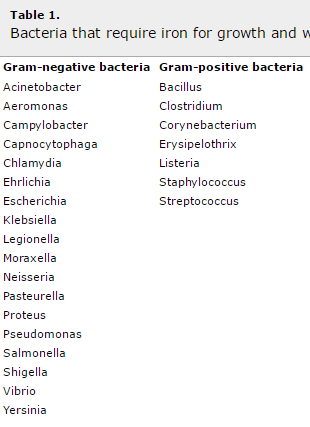
Below is a table from [2006], some strains are good and other are bad. “Macrophages use iron for production of hydroxy-radical and superoxide reactions, which are necessary for microbial killing. Presumably, as a survival strategy, bacteria, which also require iron for survival, have adapted the ability to sequester iron from the host, thereby limiting the availability to macrophages.” [2007]
ironbacteria

Bottom Line

First thing is that you cannot deal with all issues at the same time. You must choose which one you will direct your efforts towards improving. The gut bacteria dysfunction was a cascade of changes, and unwinding it means addressing one issue at a time. Where to start? There is no literature indicating the fulcrum that should be our start point — so my suggestion is simple: the very worst symtpom!!

If you have low iron and thus tiredness, low hemoglobin (and thus oxygen), insomnia, etc, you may wish to try to address that first. From the literature above, besides eating iron rich food, you should take, if available:

Streptococcus thermophilus is in most yogurts (see Probiotic Yogurt for a list, for example Chobani contains none), the problem is usually which strain is used!

You should also consider taking IV Iron, it improves the gut bacteria more than oral iron. In general, “The present results suggest that Fe[Iron] supplementation enhances the concentration of beneficial gut microbiota metabolites and thus may contribute to gut health.” [2014]

Note that all of these are specific strains. Streptococcus thermophilus JB004 did not show strong effects.

You should also avoid Mutaflor, Symbioflor-2, Bifidobacterium bifidum which will decrease iron availability.

Probiotic Gummies -bacillus coagulans GBI-30

At Costco today, I noticed a product and checking the label I found that it was a single strain. A quick check on PubMed, found enough interesting items to toss one in the cart.

My usual reaction to seeing ‘probiotic gummies’ is to dismiss it as marketing…

gummies


Bottom Line

Give me gummies! This was a totally unexpected find.

WARNING: This is a histamine producer. See this post on bacillus and histamines. It is not suitable for all CFS patients.


P.S.  Schiff also sells it in capsules — but taking Gummies is much more fun!


83% accuracy in ME/CFS diagnosis with microbiome analysis

This week  there was a new study published “Reduced diversity and altered composition of the gut microbiome in individuals with myalgic encephalomyelitis/chronic fatigue syndrome.” Jun 23, 2016. [Full Text]

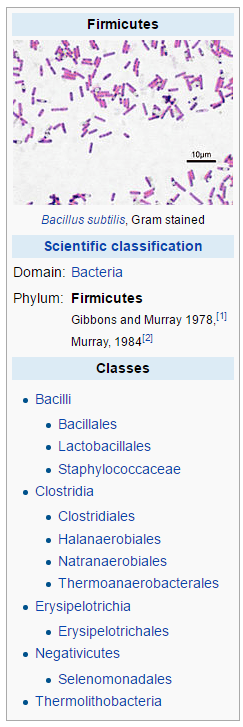
“We observed that bacterial diversity was decreased in the ME/CFS specimens compared to controls, in particular, a reduction in the relative abundance and diversity of members belonging to the Firmicutes phylum. In the patient cohort, we find less diversity as well as increases in specific species often reported to be pro-inflammatory species and reduction in species frequently described as anti-inflammatory. Using a machine learning approach trained on the data obtained from 16S rRNA and inflammatory markers, individuals were classified correctly as ME/CFS with a cross-validation accuracy of 82.93 %.”
40168_2016_171_fig5_html

  • “Both found that D-lactic acid-producing Enterococcus andStreptococcus species were strongly over-represented in ME/CFS patients and that among anaerobic bacteria, Prevotella was a bacterial genus found to be in excess in subjects with ME/CFS.”

Of course, the reader will likely ask – What are the Firmicutes? Check out Wikipedia or see image below.

firm

Of course, 18 years ago this was reported in Australia at the 1998 Alison Hunter Memorial Clinical and Scientific Meeting. “For the anaerobes, the mean percentage distribution of Bacteroides spp. for the control subjects and CFS patients was 92.8% and 91% respectively; Bifidobacterium spp, 7.1% and 2%; Lactobacillus spp., < 1% and 0%.”

In 2009 Sheedy, reported the overgrowth of d-lactic producing bacteria in CFS/ME patients and states ” Given the fact that this might explain not only neurocognitive dysfunction in CFS patients but also mitochondrial dysfunction, these findings may have important clinical implications.” That is two major set of symptoms come from the bacteria shift.

In 2013, by Kenny De Meirleir “A highly significant separation could be achieved between Norwegian controls and Norwegian patients: patients presented increased proportions of Lactonifactor and Alistipes, as well as a decrease in several Firmicutes populations”

As well as difference seen with exercise reported in 2015, ” Upon exercise challenge, there were significant changes in the abundance of major bacterial phyla in the gut in ME/CFS patients not observed in healthy controls.”
bact

  • “Of note is the significant increase in the relative abundance of Bacilli in blood samples collected from ME/CFS patients at the 48 hour time point. We also observed rapid changes in the relative abundances of the Clostridium XIVa and IV clusters, belonging to the phylum Firmicutes, in blood samples collected 15 min after maximal exercise from ME/CFS patients, but not healthy controls (Fig 3).”

The Awkaward Questions for Physicians and Researchers

With this information being known for 18 years and multiple specialized probiotics being effective for IBS (see this post for the literature), why are there no published studies on the use of the IBS successful probiotics on CFS/ME?

My model is in 100% agreement with this study,  this site attempts to read the literature, find good candidate probiotics, herbs and even antibiotics and suggest them. They worked for me and have worked for a number of readers – especially one that was almost wheel chair bound in Spain a year ago — who just messaged me that she spent the entire day cleaning the house — spotless. Her 3rd day of working all day long without payback.

There was another study (not CFS/ME) that found 93% accuracy for multiple conditions from microbiome samples… a k a stool samples.


Faecalibacterium prausnitzii – A key player for a SMALL subset

A reader write a comment on one of my earlier posts

“I’ve had CFS since I was 11. I, at 46, just had a gut microflora test from ubiome. The analysis below is from ubiome data, through the metagenomics RAST server. I note that the Faecalibacterium prausnitzii are rather abundant, as well as various butyrate producing bacterium. E. coli is nonexistant, and bifidobacterium are quite sparse.”

and then provide details from ubiome.

I responded (see above) with a quick first past of what I found on PubMed for Faecalibacterium prausnitzii. Below is a greater dive. REMEMBER this appears to be a SMALL subset of CFS patients, without uBiome results, do no assume it applies to you. Most CFS patients are LOW for Faecalibacterium prausnitzii [see this post], as is also seen with Crohn’s Disease and UC, there is a very low level of Faecalibacterium prausnitzii.

  • Abundance and diversity of GI microbiota rather than IgG4 levels correlate with abdominal inconvenience and gut permeability in consumers claiming food intolerances. “The abundance and diversity of microbiota significantly correlates with low Calprotectin values (R=-0.35; p=0.01) and with higher abundance of Faecalibacterium prausnitzii (R=0.78; p<0.01) and Akkermansia (R=0.82; p<0.01). ” (http://www.ncbi.nlm.nih.gov/pubmed/24502607 ). For your none statistical types, R=0.78 is almost a straight line relationship!!
  • “One study demonstrated a strong association between high abundance of Faecalibacteriumprausnitzii and decreased levels of butyrate and propionate, and established eczema.” [2016]
  • “F. prausnitzii phylotypes[strains] differed in obese with and without developed diabetes type two.” [2016]
  • “In particular, subject 137 was a standout example whereF. prausnitzii was found to contribute less than 5% to the overall community, whereas its metaproteome exceeded more than 10% of all proteins, indicative of the very high gene expression activity of this bacterial group. The majority of the F. prausnitzii KOs were involved in amino acid metabolism, but almost half of theF. prausnitzii peptides could not be designated to any specific function”
  • “whereas depletion of Faecalibacterium prausnitzii and reduced butyrate biosynthesis are shared in each of the metabolic [gout] syndromes.” [2016]
  • Rifaximin appeared to influence mainly potentially detrimental bacteria, such as Clostridium, but increasing the presence of some species, such as Faecalibacterium prausnitzii.” [2015]
  • “In the metabolic syndrome patients, red wine polyphenols significantly increased the number of fecal bifidobacteria and Lactobacillus (intestinal barrier protectors) and butyrate-producing bacteria (Faecalibacterium prausnitzii and Roseburia) at the expense of less desirable groups of bacteria such as LPS producers (Escherichia coli and Enterobacter cloacae).” [2016] i.e. Grape Seed Extract
  • Faecalibacterium prausnitzii subspecies-level dysbiosis in the human gut microbiome underlying atopic dermatitis[2016].
  • “Phylogroup I was found in 87% of Healthy subjects but in under 50% of IBD patients (P = 0.003). In contrast, phylogroup II was detected in >75% of IBD patients and in only 52% of H subjects (P = 0.005). This study reveals that even though the main members of the F. prausnitzii population are present in both H subjects and individuals with gut diseases, richness is reduced in the latter and an altered phylotype distribution exists between diseases.” [2015] – Different strains impacts the gut differently. A shift to the bad strains results in IBD.

Treatment Options

  • “However, fast non-preferential degradation of all chain length fractions of oligofructose (extracellularly) and efficient degradation of the short chain length fractions of inulin by B. angulatum LMG 11039(T) and B. longum LMG 11047 made it impossible for F. prausnitzii DSM 17677(T) to compete for the available substrate.” [2016]
  • “numbers of lactobacilli, bifidobacteria (P<0.001) and Faecalibacterium prausnitzii (P<0.05) were higher in the low-fat/high-fiber pigs  than in high-fat/low-fiber pigs,” [2016]
  • “This case study investigated changes of gut microbiota with an omega-3 rich diet. Fecal samples were collected from a 45-year-old male who consumed 600 mg of omega-3 daily for 14 days. After the intervention, species diversity was decreased, but several butyrate-producing bacteria increased. There was an important decrease in Faecalibacterium prausnitzii and Akkermansia spp. Gut microbiota changes were reverted after the 14-day washout.” [2016]
  • “In particular, several experiments involving downshifts to pH 5.5 resulted in Faecalibacterium prausnitzii replacing Bacteroides spp. as the dominant sequences observed.” [2016]  i.e. increasing pH in stomach…
  • “he aim of this study was to test the effect of consuming two healthy diets: a Mediterranean diet and a low-fat high-carbohydrate diet, for 2years in the gut microbiota of MetS patients and those in the control group….Our results suggest that the Mediterranean diet could be a useful tool to restore potentially beneficial members of the gut microbiota, although the stability of these changes over time still remains to be assessed.” [2016] — note Low Fat may be the dominant cause of the study result (instead of the Med. diet).
  • “correlation to vacuum cleaning frequency, with an increase in Faecalibacterium prausnitzii for mothers” [2015] — vacuum less often!
  • Increased gut microbiota diversity and abundance of Faecalibacterium prausnitzii and Akkermansia after fasting: a pilot study[2015]. – do not fast
  • “The optimal pH for growth [for F P] ranged between 5.5 and 6.7, while most isolates were inhibited by of the lowest concentration of bile salts tested (0.1%)… Antimicrobial resistance profile showed that most isolates of Faecalibacterium sp. were resistant against ciprofloxacin and sulfamethoxazole-trimethoprim. More than 50% of the isolates were resistant to tetracycline, amikacin, cefepime and cefoxitin. A total of 19 different combinations of multidrug resistance were observed among the isolates.” [2014]
    • “A relatively higher resistance to chotosan hydrolyzates was detected in F. prausnitzii” [2012]
    • “The relative abundance of Faecalibacterium prausnitzii was unaffected except with thymol [Thyme Oil] at 500 p.p.m. of essential oils tested”

Bottom Line Suggestions

This is explicit to those with major Faecalibacterium prausnitzii overgrowth and assuming that is target #1. 

  • Do not bother asking for antibiotics, they are likely to have little effect and will likely cause greater harm.
  • Change you diet to low fiber and high fat (contrary to the typical “healthy eating” advice). Do not fast.
  • Thyme oil is your best choice.
  • Supplement with bile salts, for example Swanson Iron Bile Salts, which should increase your pH also.
  • 600 mg of Omega 3 daily

As always, consult with your knowledgeable medical professional, before starting.


Moderating Histamines – more herbs

This post will likely be expanded and revised over the next week.

From some of the feedback that I got on the last post on  astragalus, I thought that I would dive into PubMed to find additional histamine moderating herbs.  If there is severe histamine sensitivity, it can make following my model very challenging.  My impression is to first ignore the microbiome and moderate the histamine response, then start working on the microbiome with some histamine-tolerance having been obtained. Many of the herbs may be challenging to get for many people.


For more , see the publications of Tae Young Shin on Pub Med, evaluating tradition Korean / Chinese herbs for histamine and allergy impacts appears to be his speciality.