Some Responses To Probiotics

Probiotics are bacteria. These probiotics produce chemicals (technically antibiotics) against other bacteria.  There are several ways that other bacteria may react to these antibiotics

  • “Ignore them” – typically those that produce similar antibiotics
  • “Stop reproduction” – the population of bacteria die off with age
  • “Kill and spill their guts” – this is typically the scenario that results in a herx. THOSE bacteria are often full of toxins
  • “Kill and stay encapsulated – toxins are not released into system”

The model assumes that each person bacteria mixture is unique, as well as the bacteria mixture when it goes bad and create CFS or FM or….

Over the last week I got some feedback on how various people have responded. A table of responses reported is below. I will add more as they are reported to me (so email or comment your experience)

Probiotic Response
Miyarisan I was doing 2 miyarisan twice a day and it wasn’t causing any problems so I spiked it up to 5 (……whoops) and I think I need to build up to that slower.
I may be in herx territory here.
Prescript Assist I’m doing okay-ish–have begun one of the probiotics you recommended and it’s given me a mini-herx. Or that’s what seems to be happening.
Mutaflor gave me severe headache and herx.
Culturelle has given me severe sore throat, and I have verified it’s the Culturelle. Dr. REDACTED seems to believe it’s because it upregulates immune system and the throat often contains huge viral loads with people that have a lowered immunity.
Culturelle I didn’t get much from the Prescript Assist or Mutaflor but I know that Culturelle kicked my butt. Didn’t notice a lot from it at first from 1 cap/day, started making 24hr yoghurt from it, was on the yoghurt for a couple of weeks, then had to stop due to negative reactions. Tried to cut down first but even 1 tablespoon of the yoghurt then caused these reactions, stayed off it altogether for a month or so and tried 1 capsule yesterday and have gotten the same effects just from 1 capsule! Side efffects/reactions/herx/whatever for me included bad insomnia, v disturbed sleep, much heavier sweating after light exercise, acid reflux, very bad blocked nose on waking, rosacea type symptoms and much increased thirst. I felt a bit batter on in at times which is why i stuck with it, but the bad reactions, especially lack of sleep made me feel a lot worse really quickly.


A silver lining for treatment — or not

Silver(Ag) particles have been used as an antibiotic for a long time but fell into disuse with modern antibiotics (how can one patent silver(Ag)!).

“biochemical responses to the toxicity of Ag were very different in different bacteria, indicating the complex toxic mechanism of Ag nanoparticles (NPs). Ag NPs are toxic to a great variety of organisms, including bacteria, fungi, algae, protozoa etc.,” [2015]

I spotted an interesting article

“The use of silver in medicine dates back thousands of years, and scientists have long known that the metal is a potent antibacterial agent. Silver ions perform their deadly work by punching holes in bacterial membranes and wreaking havoc once inside. They bind to essential cell components like DNA, preventing the bacteria from performing even their most basic functions…Reservoirs of silver nanoparticles had built up in their corpses, indicating that the dead bacteria act like sponges, soaking up silver as they die. The stored silver can leach out to the environment, “especially if the environment contains other sponges for that silver,” says chemist David Avnir of the Hebrew University of Jerusalem” [ScienceMag] May, 2015.

So what would happen in the gut? Are certain families of bacteria more prone to absorbing/being killed by the silver OR is silver a “nuclear bomb” that kills the entire population?

  • E. Coli appears resistant, killed E. hirae [2015]
  • Killed Enterococcus within 3 hrs, Killed Citrobacter in 6 hrs [2015]
    • The longer kill time means that the silver could be cleared before Citrobacter is eliminated.
  • Gram Negative bacteria tolerates, d Variovorax paradoxus tolerates [2004]
  • Resistant: Escherichia coli, Salmonella typhimurium, Pseudomonas aeruginosa, Staphylococcus aureus …there is an association of antibiotic resistance with metal resistance [1977]
  • Resistant Enterobacteriaceae [2015]
  • Effective Streptococcus [1978]
  • Effective Bifidobacterium [2002]
  • Effective Lactobacillus [2014]

I took the above and added it to my post on matrix of bacteria shifts seen in CFS and it came out as a -2, not a good match for CFS.

Vitamin 25D and 1,25D measure – one reduces symptoms and one indicates CFS state

Terms:

  • Vitamin 25D aka Calcifediol – is the inactive VitaminD, effectively the storage available to the body. This is what is in Vitamin D capsules
  • Vitamin 1,25D aka Calcitriol — is the active amount of Vitamin D.

A few years ago there was a protocol popularized by a Ph.D. in Mechanical Engineer that saw high 1,25D and came to the mechanical conclusion that pushing 25D to Zero so there is no 1,25D.  As some patients  approach 0 Vitamin 25D, their symptoms reduced or disappear. Others had horrible side effects.  Why? It turns out that 1,25D is your body fighting autoimmune diseases (like CFS). When you run out of Vitamin 25D, then the immune systems partially shuts down. No fighting of the infections, no symptoms.

This post will look at 25D and 1,25D:

Vitamin 25D

Vitamin D is very important for patients. Studies have found that 22% – 65% of CFS patients are technically deficient ( less than 20 ng/mL) . While for Fibromyalgia 61%- 80% of Fibromyalgia patients are technically deficient.

In terms of results, significant improvement is seen when blood level of 25(OH) D exceeded 50 ng/ mL (125 nmol/L). What type of improvement do studies report?

    • Decrease or elimination of headaches
    • Decrease or elimination of hypersomnia
    • Decrease or elimination of orthostatic intolerance
    • Decrease or elimination of impaired memory
    • Decrease or elimination of palpitation
    • Decrease or elimination of mood disturbance
    • Decrease or elimination of restless leg syndrome
    • Treatment with high-dose vitamin D resulted in clinical improvement in all FM patients
    • There are also studies finding some patients went into remission seen with 2000-10000 IU/day (with magnesium and phosphate supplements)

A level of at least 50+ ng/mL (125 nmol/L) appears to be a critical threshold for improvement. This is in the normal range, but towards the upper end. A few studies:


  • “A significant negative correlation between vitamin D level and widespread pain index was found.”[2012]
  • “Low levels of vitamin D were found associated with antithyroid antibody presence, abnormal thyroid function, increased thyroid volume, increased TSH levels, and adverse pregnancy outcome in women with autoimmune thyroid disease [2015]
  • “observational studies support a beneficial role of vitamin D in the management of thyroid disease,” [2015]
  • ” improvement became more significant when their blood level of 25(OH) D exceeded 50 ng/ mL.”[2011]
  • ” a positive association of vitamin D deficiency with a variety of nonspecific bone pain, particularly in women” [2010]
  • “Musculoskeletal pain is associated with very low levels of vitamin D in men” [2010]
  • “Resolution of hypersomnia following identification and treatment of vitamin d deficiency.” [2010]
  • “Vitamin D deficiency is a major risk factor for central nervous system (CNS) demyelinating diseases including multiple sclerosis (MS)” [2012]
  • “This study demonstrates for the first time a direct antiviral effect of vitamin D in an in vitro infectious virus production system.”[2011]
  • “vitamin D can suppress intracellular growth of M tuberculosis in vitro. Vitamin D also induced the expression of cathelicidin, which is involved in the first line of defense in TB patients” [2011]
  • “Vitamin D(3) skews cytokine responses toward an antiinflammatory profile,.. Candida albican” [2011]
  • Interesting that Epstain-Barr interfers with Vitamin D actions!!!! [2010]
  • “We previously demonstrated that vitamin D3 (D3) deficiency increases and D3 supplementation decreases experimental autoimmune encephalomyelitis (EAE) risk in a female-biased manner.” [2015]
  • “vitamin D is the environmental factor that most strongly influences autoimmune disease development.”[2015]
  • “This review discusses the accumulating evidence pointing to a link between vitamin D and autoimmunity.” [2004]

Vitamin 1,25D

A large number conditions that have been documented to have a high Vitamin 1,25D result(Calcitriol) when tested.

  • ” Results showed a strong positive association between these autoimmune conditions[ multiple sclerosis, lupus, psoriasis, osteoporosis, osteoarthritis, metabolic syndrome, fibromyalgia and chronic fatigue syndrome] and levels of 1,25-D >110 pmol/L. However, there was little association with vitamin D deficiency or the other inflammatory markers, meaning that the results challenge the assumption that serum levels of 25-D are a sensitive measure of the autoimmune disease state.” [2009]
  • “In granulomatous disease such as lymphoproliferative disorders, sarcoidosis, tuberculosis, and inflammatory bowel disease,”[emedicine]
  • “postural orthostatic tachycardia syndrome” – remission with calcitriol treatment [2012]
  • “1,25-dihydroxyvitamin D(3) (1,25-(OH)(2) D(3) ), inhibits autoimmune T-cell responses in MS.”[2011]
  • “1,25(OH)2D3 may represent a promising new MS treatment.” [2015]
  • Calcitriol exerts anti-inflammatory effects in keratinocytes treated with autoantibodies from a patient with bullous pemphigoid. [2015]
  • “1,25-dihydroxyvitamin D has been shown to trigger the production of antimicrobial peptides with a direct pathogen-killing capacity.” [2014]
  • “The active form of vitamin D, 1,25-dihydroxyvitamin D3 [1,25(OH)2D3], has been shown to inhibit the development of autoimmune diseases, including inflammatory bowel disease (IBD).” [2004]
  • “we describe 1,25(OH)(2)D(3) as an immunomodulator targeting various immune cells, including monocytes, macrophages, dendritic cells (DCs), as well as T-lymphocytes and B-lymphocytes, hence modulating both innate and adaptive immune responses.” [2010]

Vitamin D and the Gut

Bottom Line

My own experience and limited literature has 1,25D going sky high when CFS is active (the lab retested my 1,25D because it was so high that they though that they had made an error). It returned to the normal level when I moved into remission. It is an indicator of the body fighting whatever is causing CFS. Vitamin 25D should be at the high end of the normal scale, very close to the top of the normal range.

  • Health: High 25D, low 1,25D
  • Sick with severe symptoms: Low 25D, high 1,25D

At 15,000 IU/day of Vitamin D3, with a 30% inefficiency — and assuming very low Vitamin D it will take approximately 70-80 days to get closer to the optimal point. Symptom improvement should not be expected to be seen for 45-90 days. For some people it may happen sooner.

Vitamin D Toxicity Myth

A reader wrote that her physician freaked out when she was told that the reader was consuming 15,000 IU of Vitamin D3. The physician was sure that she would have vitamin toxicity within a month!!

One of the problems is that labs use “local population” to define normal ranges for almost all lab results. For Vitamin D, this means that if you live in a vitamin D deficient area, you may be deficient and in the normal range!

Historically the old recommended dietary allowance was 200 IU/Day. In 2011, it was raised to 600 IU/day.

This was the level to prevent rickets. It was not the level to produce optimal health or minimize the risk of cancer or diabetes.

  • “Several diseases have been linked to vitamin D deficiency, such as hypertension, diabetes, depression, Alzheimer’s disease, Parkinson’s disease, multiple sclerosis, and chronic pain syndromes such as fibromyalgia. ” [2013]
  • Vitamin D deficiency was defined as a serum 25-hydroxyvitamin D concentrations ≤20 ng/mL (50 nmol/L). The overall prevalence rate of vitamin D deficiency was 41.6%,” [2011]
  • “Older adults are advised to maintain serum 25(OH)D concentrations >75 nmol/L.” [2006]
    • Dr. Mercola recommends 45-50 ng/ml or 115-128 nmol/l [source]
  • Vitamin D intakes required to maintain serum 25(OH)D concentrations of  >80 nmol/L in 97.5% of the sample[of men and women aged 20-40 y] were … 41.1μg/d (1640 IU), respectively.” [2008]
  • “The clinical trial evidence shows that a prolonged intake of 250 mug (10,000 IU)/d of vitamin D(3) is likely to pose no risk of adverse effects in almost all individuals in the general population; this meets the criteria for a tolerable upper intake level.” [2007]
  • “Evidence from clinical trials shows, with a wide margin of confidence, that a prolonged intake of 10,000 IU/d of vitamin D(3) poses no risk of adverse effects for adults,” [2009]
    • NOTE: there was no evidence going 50% higher has any risks. The studies just tested the 10,000IU level.
  • Vitamin D, important for maintaining bone health in Crohn Disease[CD], may have potential as a treatment for the core inflammatory disease process. There is plausible evidence in favour of vitamin D as an anti-inflammatory from animal models, epidemiological and cross sectional studies of CD.”[2015]
    • “Active Crohn’s disease was associated with low serum 25-OH vitamin D.”[2013]
    • “In addition, low vitamin D has been associated with disease activity in CD patients, and supplementation appears to be beneficial in improving clinical scores and reducing inflammation.” [2014]
    • Vitamin D is an inexpensive supplement which has been shown to improve IBD outcomes.”[2014]
    • “people with IBD may remain in remission longer when treated with oral vitamin D…suggest that vitamin D may modify the immune response in IBD.” [2015]

Vitamin Council writes:

  • “vitamin D toxicity is more likely to develop if you take 40,000 IU/day everyday for 3 months or more.
  • take more than 300,000 IU in a 24 hour period.”

There is a formula that was developed for dosages to be received over several weeks

(IU)=40x(TargetLevel-serum 25-OHD(3))xbody weight (kg).

So, if my target is 128 nmol/l [Dr. Mercola] and I weight 120 kg and my current level is 20 nmol/l then:

(IU) = 40 (128 -20) x 120 = 40 * 108 x 120 = 648,000 IUs.

At 10000 IU/day, it would take 2 months to get that much in, provided there are no problem with absorption of Vitamin D (the above was done on healthy individuals).
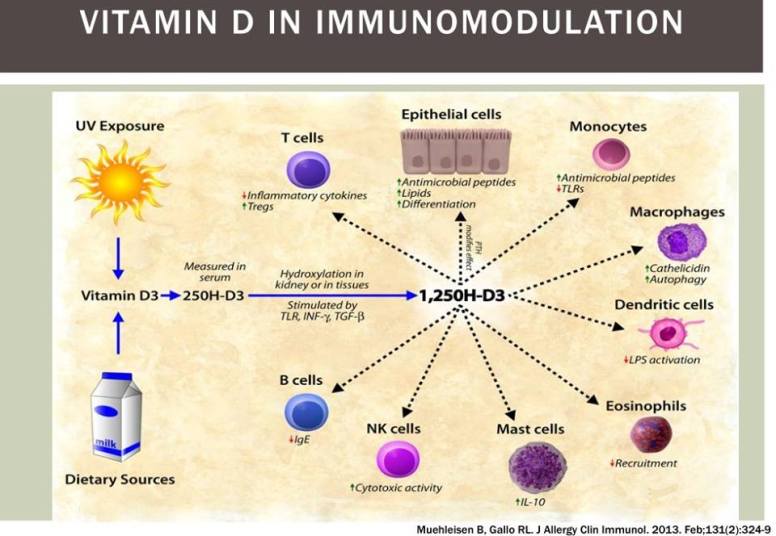
vitD

“Absorption occurs primarily in the proximal small intestine and is influenced by gastric, pancreatic and biliary secretions, micelle formation, diffusion through the unstirred-water layer, brush-border-membrane uptake, and transport out of the intestinal cell (24). Any process resulting in malabsorption of intestinal fat may impair the absorption of vitamin D. In one study, absorption of tritium-labeled (3H)-vitamin D in normal subjects ranged from 62.4% to 91.3% of the initial oral dose (10). In patients with celiac disease, biliary obstruction absorption and chronic pancreatitis, absorption fell to 50%, < 28% and < 18% of the oral dose, respectively.” [2011]

“The researchers found that Crohn’s Disease patients had on average a 30 percent decrease in their ability to absorb vitamin D2 when compared to normal subjects.” [2011]

Working on the premise that CFS and FM are microbiome dysfunctions, they will likely also suffer from diminished absorption of Vitamin D. A paper by Anna Dorothea Höck, MD cites “Chronic fatigue syndrome, a condition of vitamin D resistance?”

Bottom Line

Studies have established that 10,000 IU/day is safe for well absorbing people with a wide confidence interval. With Crohn’s and other disease with microbiome disturbance, a 30% loss of absorption is seen, then 14285 IU/day is needed to net the 10,000 IU’s above.

Also, Vitamin D alters the microbiome.

The classic study with CFS is by  Hock, her’s [2009] update

What about toxicity? Well, it turns out that there have been very very very few cases of toxicity occurring — typically a prescription error had 50,000 IU/d and three months later, toxicity appear — which disappeared with stopping the vitamin D. A list of all of the known cases is here [2011], another case had 200,000 IU/d and toxicity appeared after two months.

“According to Dr. Heaney, there are no reported cases of elevated serum calcium below 30,000 IU’s of vitamin D per day, and for the most part, there are none below 50,000 IU’s.” [Dr. Mercola]

Igenex testing for Lyme — an Opinion

A reader wrote:

“Dear CFS Remission, I have had ‘CFS’ for 17 years but I think I may have been misdiagnosed. My new doctor highly suspects some bug and wants me to do the full lyme test at iGeneX. I have never tested for thick blood and wonder if this could influence test results.”

logoigenex

My Opinion

The lyme test will likely give a weak positive. Not because you have Lyme but because you have had EBV or related virus in the past. Remember, we never get rid of a virus — instead, our immune system keep it suppress (usually).

With CFS, virii can become mildly reactivated — and this is just enough to give a false-positive for Lyme. Mine did. To my physician, it allowed her to justify the multiple rotating antibiotics (which we negotiated one by one) that worked the last time with me. Justifying the use of antibiotics is one of the biggest hurdles for MDs — despite success with them being reported. It is NOT pro-forma medical practice for CFS.

If you can arrange to have you microbiome tested in detail (i.e. ubiome.com or others) BEFORE you start the antibiotics — it should show significant shifts from normal. You want to make sure that the antibiotics prescribed are ALSO effective for reducing those overgrowths. The oldest detail studies on this shift that I am aware of are from Australia

  • Faecal Microbial Growth Inhibition in Chronic Fatigue/Pain Patients [1998]
  • Two Case Studies of Successful Treatment of CFS/M.E. [1999]

You can attempt to explain the model to your new MD. if s/he gets it then you could point to my blog and it’s pathological links to PubMed literature. Simplest explanation is this:

Infections trigger a shift in gut bacteria which often are the source for symptoms. On occasion, after the infection is eliminated, the gut bacteria shift does not return to normal and the symptoms persists. The original cause was the infection. The ongoing cause is the gut bacteria shift.

This is why fecal transplants resulting in remission works (at least temporarily).  This is why MDs Jadin (South Africa), Bottelo (France), and Prof. Nicolson (US) have a good rate of remission with their antibiotic protocols for CFS [antibiotics do alter gut bacteria].

Coagulation Impact

This should not influence the test. If you get tested for coagulation, it needs to be “throwing the book” at testing — that is all known coagulation abnormality, including testing for genetic defects. Dave Bergs result found that when testing for all defects in CFS patients that around 85-90% had detectable genetic defects and in researching, I found a professor class notes estimating that we know only about 80% of the cause or identification for hyper-coagulation. My own defect, Prothrombin G20210A, a european mutation only identified in the 1990’s illustrated that if I went to generic coagulation testings on my 2nd time with CFS — I would have been given a “No coagulation” report. Going to Hemex labs, specialists, came back with coagulation and inherited factor.  Hence, “throwing the book” at coagulation testing is wise.