Reducing Dorea genus

The  bacteria is dorea formicigenerans reported to be low in most CFS patients by Ian Lapkin et al 2017 paper

For updated information see Microbiome Prescription

DataPunk.NetDataPunk.Net

Parent means this bacteria parent, Lachnospiraceae   is influenced (this and other siblings may be my inference).

INHIBITED BY

ENHANCED BY

INHIBITED BY

PubMed Data

There are 70+ studies on PubMed (300 by the author Dórea )

  • Disease:
    • ” This resulted from an approximately 1.5-fold increase in numbers of Dorea, ” [2011]
    • “We observed an increased abundance of Psuedomonas, Mycoplana, Haemophilus, Blautia, and Doreagenera in Multiple sclerosis  patients, [2016]
    • “patients in remission from Crohn’s disease had increased proportions of Dorea longicatena” [2016]
    • ” Dorea, … were significantly increased in Autism spectrum disorders” [2017] [2016]
    • “Parkinson’s disease  reduced content of Dorea,” [2017]
    • ” Dorea …were underrepresented among subjects with food sensitization.” [2017]
    • “Dorea spp. were found in an increased in abundance in both pediatric and adult irritable bowel syndrome patients (Rajilić-Stojanović et al., 2011; Saulnier et al., 2011), which probably could explain the symptom of bloating, experienced by the majority of these patients.”
  •  Diet:
    • ” At the genus level, consumption of 3 g/d HMW β-glucan increased Bacteroides (P < 0.003), tended to increase Prevotella (P < 0.1) but decreased Dorea (P < 0.1), ” [2016]
    • “The barley group had higher abundances of Akkermansia, Ruminococcus, Blautia, and Bilophila. Turicibacter and Roseburia were more abundant in the malt group, and [reduced] Parabacteroides, Dorea” [2015]
      • “High Molecular Weight Barley β-Glucan .. decreased Dorea” [2016]
      • “whole-grain barley and barley malt, decreases” [2015]
    • “23 healthy subjects were randomised into two study groups consuming a bowel preparation (Moviprep)…increased the levels of Proteobacteria, Fusobacteria and bacteria related to Dorea formicigenerans.” [2015]
    • ” At the genus level, Dialister, Dorea, Pseudobutyrivibrio, and Veillonella, belonging to the Firmicutes phylum, had statistically significant reduction with l-glutamine” [2015]
    • Stressor-induced increases in circulating IL-6 and MCP-1 were significantly correlated with stressor-induced changes in 3 members of the microbiota, Dorea spp., Coprococcus spp., and Pseudobutyrivibrio spp.” [2011]
    • “The relative abundance of sequences from several genera belonging to the Lachnospiraceae (eg, RuminococcusRoseburiaBlautia, and Dorea) was lower in high … vitamin D quartiles. “
    • ” the animal-based diet caused a significant increase in the relative abundance of Bilophila, Odoribacter, Dorea and Ruminococcus (belonging to Lachnospiraceae) and a significant decrease in the level of Bifidobacterium after five days of intake. ” [2016]
    • “Among others, bacteria of the order Lactobacillales, the family Enterococcaceae and genera Enterococcus and Doreashowed a trend towards increased abundance in Tc+ (Helminth infections) ” [2016]
    • ” iron sulfate (Oral) treatment was associated with decreased abundances of operational taxonomic units assigned to the species Faecalibacterium prausnitziiRuminococcus bromiiDorea sp. and Collinsella aerofaciens. “
    • “Alcohol …  significant reductions in genra Clostridium IV and XIVb (p<0.001), Dorea (p<0.01), [2017]
  • Prebiotics:
    • “galactooligosaccharides (GOS) ..showed a decrease in Dorea “[2009]
    • “prebiotic (fructo-oligosaccharides (FOS) and inulin mixture)..revealed a lower abundance of Dorea” [2017]
  • Probiotics:
    • Lactobacillus rhamnosus hsryfm 1301,…was changed significantly after probiotic intervention for 28 d (P < 0.05). A positive correlation was observed between Ruminococcus spp. and serum triglycerides, Dorea spp. ” [2014] [2013]
    • Bifidobacterium longum increases two strains that increase Dorea. {Pdf]
      relationships
  • Antibiotics:
    • “decreased after treatment only in the antibiotic (amoxicillin, tetracycline and metronidazole for 2 weeks)  group. Eubacterium rectale, Dorea formicigenerans,” [2005]

Bottom Line

Avoid

Take

Familial Risk of CFS/IBS etc

It is generally view to be low. I would be inclined to say slow. I came across this study today that found that for another microbiome dysfunction that the partner showed significant shifts.  If you have a partner, you may want to have them do a uBiome test occasionally.

To the Study…

Partners of patients with ulcerative colitis exhibit a biologically relevant dysbiosis in fecal microbial metacommunities. Jul, 2017

“Fecal samples were collected from eight ulcerative colitis (UC) patients and their healthy partners ….

Fecal microbial communities were more similar among UC patients than their healthy partners (P = 0.024). UC individuals had a lower relative abundance of bacteria belonging to the Firmicutes, especially BlautiaClostridiumCoprococcus and Roseburia (P < 0.05). Microbiota dysbiosis was detected in UC patients and their healthy partners. Relevant genera included AkkermansiamBacteroidesEscherichiaLactobacillalesKlebsiella and Parabacteroides.

“In 1994, an investigation of 10 couples showed that individuals with IBD symptoms before marriage influenced their partners, resulting in similar symptoms in couples[12]. However, these results mainly focused on clinical symptoms and did not involve the gut microbial community.”

“Although there was no direct evidence that gut microbiota could spread between IBD patients and normal individuals, the results of this study suggested that fecal microbiota likely influence each other during long-term cohabitation with UC patients. Remarkably, our results indicated that the fecal microbiota composition was more similar among UC patients than among healthy individuals (Figure (Figure1).1). These findings further demonstrated that the gut microbiota composition, and alterations to it, plays a crucial role in the occurrence of UC.”

“Gut dysbiosis is considered one of the factors inducing inflammation in chronic IBD; however, its role in the etiology of ulcerative colitis is controversial. There have been many studies on fecal microbiota in recent years. The present study used a very sensitive method to assess bacterial strains and compared the microbiota in patients with inflammatory bowel disease with that of their healthy partners. The study assessed some type of bacteria only found in patients with UC. These bacteria are difficult to detect using less sensitive methods.”

Decreasing Parabacteroides genus

For updated information see Microbiome Prescription

DataPunk.Net Data

ENHANCED BY

ANTIBIOTIC RESISTANCE

PubMed Data

There are 175+ studies on PubMed.

  • Disease:
    • “Despite this, there were significant correlations between the relative abundance of bacteria in the families Rickenellaceae and Ruminococcaceae, and the Parabacteroides and Dialister genera and temperament (i.e., Fear in girls and Activity Level and High-Intensity Pleasure in boys). ” [2015]
    • “Opportunistic pathogenic taxa, such as, Klebsiella spp., Streptococcus spp., and Parabacteroides merdae were frequently distributed in hypertensive gut microbiome,” [2017]
    • ” In contrast, Parabacteroidesdistasonis, which was reduced in multiple sclerosis  patients, ” [2017]
    • “We also found significant decreases in the numbers of Bacteroides, Parabacteroides… with food sensitization” [2016]
    • “Multiple sclerosis  decreased abundance of Parabacteroides” [2016]
    • Parabacteroides distasonis, …are depleted in metabolic syndrome  patients ” [2016]
    • ” relative abundance of Bacteroides, Parabacteroides, Faecalibacterium, and Prevotella was reduced in Sjögren syndrome ” [2016]
    • Parabacteroides species (increased in functional constipation) ” [2016]
    • ” while genera … Parabacteroides, .. were correlated with negative mood. ” [2016]
    • “we observed a decrease in the relative abundance of Alistipes, Bilophila, Dialister, Parabacteroides, and Veillonella in the Autism spectrum disorders  cohort, ” [2017]
    • Parabacteroides distasonis significantly decreased in inflamed tissue ,, in  inflammatory bowel disease” [2013]
    • Parabacteroides significantly decreased in IBS and UC” [2010]
    • Parabacteroides  increased .. in primary osteoporosis (OP) patients, osteopenia (ON) [2017]
    • “In Crohn’s disease, Parabacteroides distasonis was the most represented, ” [2017]
    • Parabacteroides distasonis, Klebsiella variicola, etc., were enriched in gestational diabetes mellitus  patients, ” [2017]
  • Diet:
    • “The abundance of Parabacteroides distasonis (P = .025) and Faecalibacterium prausnitzii (P = .020) increased after long-term consumption of the Med diet and the low-fat, high-complex carbohydrate diet diet, “[2016]
    • “resistant starch  diet caused significant shifts in microbial composition/diversity, with increases in Parabacteroides, ” [2016]
      • “resistant starch type 4 … enrichment of three Bacteroides species and one each of Parabacteroides” [2016] [2010]
      • “Proportions of the genus Parabacteroides significantly increased with Soluble corn fiber  dose” [2016]
    • “Rhizoma Coptidis (coptis root, which is also known as rhizoma coptidis and Huang Lian) alkaloids … Parabacteroides distasonis was suppressed.” [2016]
    • “free high-fat…  and.. restrictive high-fat diet …. decreased abundance of Parabacteroides bacteria” [2016]
    • “Canola oil… elevating Parabacteroides” [2016]
    • “Lingonberries increased the cecal relative abundance of bacterial genera Bacteroides, Parabacteroidesand Clostridium. ” [2016]
    • “Supplementation with rhubarb extract changed the microbial ecosystem (assessed by 16S rDNA pyrosequencing) in favor of Akkermansia muciniphila and Parabacteroides goldsteinii. ” [2017]
    • “Oral administration of resveratrol…  an increased relative abundance of Bacteroides and Parabacteroides” [2017]
    • “increase in Firmicutes and Parabacteroides, were seen in Alcholol fed group ” [2017]
    • “both the low- and high-capsaicin diets…decreased the Bacteroides and Parabacteroides abundances at the genus level. ” [2017]
  •  Probiotics:
    • “Lactobacillus casei Shirota  supplementation led to enrichment of Parabacteroides. ”  [2015]
    • Increase of L. Gasseri was seen with increase of Parabacteroides in some studies. [2011]
    • “one of two strains of human-derived Lactobacillus reuteri …after treatment with either probiotic strain was mediated in part by reductions in the relative proportions of Klebsiella and Parabacteroides in the feces. ” [2012]
    • “Lactobacillus rhamnosus GG … encourages formation of biofilms with Parabacteroides”[2016]
    • “The Parabacteroides genus was significantly increased in the healthy volunteers who received L. paracasei CNCM I-4034 after the second washout.” [2015]
  •  Antibiotics:
    • “In half or more studies, the resistance rates in Bacteroides/Parabacteroides spp. to amoxicillin-clavulanate or ampicillin-sulbactam and clindamycin rose…. No resistance changes were found to tigecycline, in Bacteroides/Parabacteroides spp.  ” [2015]
    • “Although metronidazole susceptibility was universal, nim genes were not present. ” [2014]
    • “Amoxicillin-Clavulanate  associated changes included reduced prevalence of the genus Roseburia and increases in Escherichia, Parabacteroides, ” [2017]

Bottom Line

Avoid

  • Lactobacillus rhamnosus GG
  • Lactobacillus paracasei
  • Lactobacillus casei Shirota (Yakult)
  • Lingonberries
  • Canole Oil
  • Resveratrol (Grapes, wine)
  • Rhubarb
  • Resistant Starch
  • Proton-pump inhibitors (PPI)
  • Amoxicillin-Clavulanate antibiotics

Take

  • Lactobacillus reuteri
  • Capsaicin (chili peppers)
  • high-fat diet
  • Metronidazole antibiotics

Decreasing Barnesiella genus

Impact of various items on Barnesiella and other genus

For updated information see Microbiome Prescription

DataPunk.Net

INHIBITED BY

PubMed Data

There are 30+ studies on PubMed

Disease

  • “The relative proportions of Blautia, Bryantella, Collinsella, Lactobacillus, Marvinbryantia, Turicibacter, Barnesiella, and Parabacteroides were significantly correlated with weight loss induced by tea extracts.” [2017]
  • Barnesiella are enriched in active [Relapsing Multiple Sclerosis] disease when compared to control and stable disease”[2017]

Diet:

  • Aspirin increases it.[2015]
  • ” Barnesiella species were increased (p = 0.03, 0.02, and 0.02, respectively) in the microbiome of  mice feed feed gluten containing food”, [2013]

Prebiotics

  • ” the addition of medium-dose xylitol to a regular and HFD in experimental mice reduced the abundance of fecal Bacteroidetes phylum and the genus Barnesiella, ” [2017]
  • “oligosaccharides 2-fucosyllactose and 3-fucosyllactose…increased the levels of bacteria of the Porphyromonadaceae family in the intestinal gut, more precisely members of the genus Barnesiella ” [2014]
  • ” oligofructose …increases in the content of phylotypes primarily aligning within the Families Porphyromonadaceae (Genus Barnesiella) ” [2015]

Probiotics:

  • ” after the end of probiotic [ Lactobacillus kefiri LKF01 DSM32079 (LKEF) ] administration Bacteroides, Barnesiella, Butyricicomonas, Clostridium, Haemophilus, Oscillibacter, Salmonella, Streptococcus, Subdoligranolum, and Veillonella were significantly reduced ” [2017]

Bottom Line

Avoid

  • Aspirin (other NSAID’s are fine)
  • Glutten
  • oligofructose

Take

  • Bile supplements
  • Xylitol
  • Lactobacillus kefiri

Theortical Protocol for Fecal Transplants for CFS/IBS etc

Fecal transplants for CFS/IBS etc typically result in almost immediate resolution of symptoms — followed weeks or months later with relapse.  Fecal transplant for Clostridium difficile has a high persistent success rate. (“of the approximately 200 cases reported, regardless of route, a mean success rate of 96% has been achieved.27” [2011])

So why the difference? In one case we are talking of displacing a single bacteria species (C. difficile); in the CFS case, we are having to both replace/reduce multiple strains AND restart other strains.

Determining suitable donor to match the patient

For C.difficile —  any apparently healthy donor (i.e. does not have C. difficile) is a viable candidate.

For CFS, the donor criteria should be:

  • Normal levels of
    • Lactobacillus
    • Bifidobacterium
    • E.Coli
    • Akkermansia

Matching uBiome profiles

It should be apparent that the donor should not have any bacteria genus > 1.5x that the recipient has > 1.5x.

Updated: “No bacteria genus > 1.5x should be on the list of common bacteria genus overgrowths listed at Overview of this Blog and the Microbiome.

Ideally, at the strain level (of any existing bacteria of the recipient) — Lactobacillus, Bifidobacterium and E.Coli should be extremely close matches.

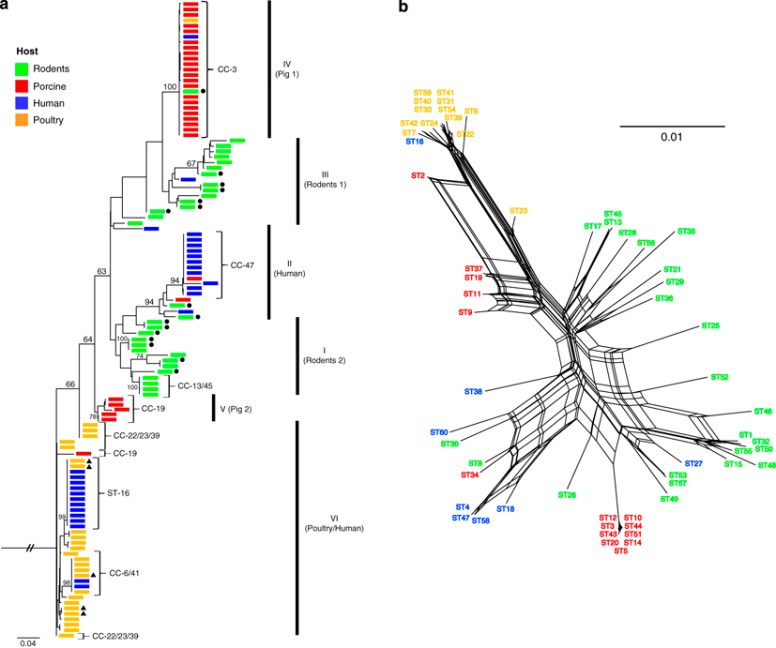
To illustrate this aspect, examine this chart of L.Reuteri strains [Source 2009]

figure-2-phylogenetic-analysis-of-116-strains-of-lactobacillus-reuteri-based-on-the

Pre-Transplant Preparation

6 weeks before the transplant, the recipient should be on a probiotic and diet regime based on their own uBiome to reduce the over growth.

Track microbiome shift immediately before and after transplant

To better improve the transplant method, I would advocate the following uBiome (or equivalent) samples be taken:

  • Two days before transplant of both recipient and donor (or on donation day)
  • Two, four, eight, sixteen, thirty-two, sixty-four days after the transplant

Recipient should keep on the probiotic and diet regime based on their own uBiome for at leasy 30 days after the transplant.

Logic: We want to suppress the overgrowth before the transplant and keep it suppressed while the transplant gets established.

To the best of my research, I have not seen any studies tracking the microbiome regularly after a transplant…. there appear to be process happenings with the failures that we need to understand better.

Again, this is just a theoretical protocol applying logic to known facts.