Decreasing Alistipes genus

In my last post, the reader was high in the Alistipes genus.  Ian Lipkin et. al [2017] study  [Index to all posts on Study] found a strain of this was low in this study, and I did a post on  Increasing one specific strain of Alistipes. Remember that CFS is determined from having a few of a list of symptoms. In my model, symptoms are caused by shifts of bacteria. Different shifts, different symptom sets.

For updated information see Microbiome Prescription

DataPunk.Net Data

NUTRIENTS/ SUBSTRATES

INHIBITED BY

ENHANCED BY

INHIBITED BY

PubMed Data

There are just 100 pub med articles in total on Alistipes.

  • Symptoms: “Most notably, the major depressive disorder groups had increased levels of Enterobacteriaceae and Alistipes but reduced levels of Faecalibacterium.” [2015]
  • Probiotics:
    • “The findings show that the six species of Bifidobacterium differed in their ability to relieve constipation. B. longum, B. infantis and B. bifidum were the most effective in relieving constipation, B. adolescentis and B. breve were partially effective and B. animalis was not effective. Furthermore, edible Bifidobacterium treated constipation by increasing the abundance of Lactobacillus and decreasing the abundance of Alistipes, Odoribacter and Clostridium. .” [2017]
    • ” the relative abundance of Alistipes, Odoribacter, Ruminococcus, Blautia and Desulfovibrio were higher … In the caeca of broilers fed with B. subtilis ” [2016]
    • “Fecal Alistipes sp., Clostridium sp., Roseospira sp., beta proteobacterium were decreased and Bifidobacterium was increased after supplementing with B. subtilis natto. ” [2014]
  • Antibiotics:
    • “At the genus level, there were declines in Christensenella, Gordonibacter and Anaerotruncus in the florfenicol group, in Lactobacillus in the azithromycin group, and in Alistipes, Desulfovibrio, Parasutterella and Rikenella in both the antibiotic groups. ” [2017] – Note: zithro decrease lactobacillus
    • “In general, the community changes induced by the three β-lactam antibiotics showed consistency in inhibiting Papillibacter, Prevotella and Alistipes while inducing massive growth of Clostridium.” [2015]
  • “At the genus level, oligosaccharide treatment increased the levels of Lactobacillus and Bifidobacterium and decreased the levels of Odoribacter, Alistipes and Bacteroides” [2017]

Bottom Line

Avoid

  • Generic Bacillus probiotics

Take

Overview of this Blog and the Microbiome

My ideas on this blog have evolved, as more and more information becomes available. This post is an attempt to bring readers up to date with my current thinking. I am striving to be transparent in my logic — showing the evidence I am working from, and my thought processes.


Notes to Treating Physicians     Quick Self Start on treating CFS


Analysis of Microbiome/stool with recommendations

Site: has moved to https://microbiomeprescription.com/

  • Over 30 different tests are supported. See this page

The data is available in an online collaborative python workbook for analysis. See this post.


Microbiome Definition of CFS/FM/IBS

A coarse condition that results from:

  • Low or no Lactobacillus, AND/OR
  • Low or no Bifidobacteria , AND/OR
  • Low or no E.Coli , AND/OR
  • A marked increase in number of bacteria genus (as measured by uBiome) to the top range
    • Most of these genus are hostile to/suppress Lactobacillus, Bifidobacteria, E.Coli
    • Several are two or more times higher than normally seen
    • The number of bacteria genus goes very high (using uBiome results), but most of them are low amounts.
      (“Death by a thousand microbiome cuts” and not “Death by a single bacteria blow”)
  • The appearance of rarely seen bacteria genus in uBiome Samples.

A finer definition would be a condition with a significant number of abnormalities in the ‘Autoimmune profiles see this page for the current criteria (i.e. over 25%).

The specific genus and their interactions determine the symptoms seen — likely due to the over- or under-production of metabolites (chemicals). Other autoimmune conditions may share these core shifts. The specific high and low bacteria determine the symptoms if the person was the DNA/SNP associated with the symptoms.

Replace the metabolites produced by the missing bacteria

Replacing the metabolites should result in the reduction of symptoms associated with a deficiency of these metabolites.

See this post for the study references. These items should/could be done continuously.

Other Supplements Reported to Help

Bootstrapping Bifidobacterium and Lactobacillus

The items below were found in studies to increase bifidobacterium and lactobacillus:

Unless the bifidobacterium and lactobacillus (B&L) are human sourcedthere is almost zero chance of taking up residency. Taking probiotics will not allow B&L to get established. In fact, there are grounds to believe that most commercial probiotics actually reduce your  native B&L. You want to encourage your native B&L. See this post for citations.

Bootstrapping E.Coli

The E.Coli probiotics below are human sourced and known to take up residency in the human gut.

  • Core: D-Ribose a preferred food that it uses
  • Mutaflor probiotics — E.Coli Nissle 1917
  • Symbioflor 2 — multiple strains

Dealing with the other microbiome shifts

The other microbiome shifts appear to be in different clusters of microbiome shifts. This 2017 paper by Peterson, Klimas, Komaroff, Lipkin (and a stack of other CFS researchers) makes that clear in its title: “Fecal metagenomic profiles in subgroups of patients with myalgic encephalomyelitis/chronic fatigue syndrome”.

The best way at present to proceed is to order an analysis from uBiome. (Disclosure: I have no financial interest in this company.) When your get your results back, log in, click on the “Compare” tab, then go to “Genus,” and click on “ratio” twice, so the results are in descending order.

This is the “hit list” of what you are trying to reduce. DataPunk provides a nice summary of what we know about these. See, for example, Alistipes:

At this point, we run into a logistical challenge.  You want to avoid items that are “Enhanced By” (which is in common across all of the high items) and take the items that are “Inhibited By” (which are not on any of the “Enhanced By” lists).  You may also wish to reduce foods that are high in items listed in “Nutrients/Substrates.”  It becomes a jig-saw puzzle! I have done this exercise for many readers’ uBiome results:

I have discovered that DataPunk is not absolutely current, and have started creating posts based on its data, and then added studies from 2016 and 2017 to the page. Past pages are below, for current list MicrobiomePrescription site.

General Suggestions (no uBiome results)

Some of these items are contraindicated with a few uBiomes that I have reviewed. This likely is why person B reports no results while person A reports improvement. Example: Magnesium is usually very helpful — but there are a few cases where it encourages overgrowth of undesired  bacteria.

Probiotics

Most probiotics do not take up residency. They are “here today, gone tomorrow”. Their primary role in my model is producing natural antibiotics against other bacteria. For example:

Probiotics should be rotated: 2 weeks on a specific one, then several weeks off. As a general rule, you want about  6-12 B CFU taken three times a day (or 2-3 times the recommended dosage) — but work up slowly because you may get be a major herx! In general, do not take Lactobacillus with Bifidobacteria or with E.Coli etc. Keep to one family per cycle. You do not want them to kill off one another!

Why 3x per day? Because almost none of them are detected after 12-24 hrs. So to keep them — and the production of natural antibiotics — going, you need to keep taking them during the day. See this post for citations.

The following probiotics commonly seem to help people with CFS/Lyme/Fibro:

Some probiotics, however, may make your symptoms worse! And, unfortunately, most commercial probiotics contains some of these. At the moment Bifidobacterium animalis, Saccharomyces boulardii and Lactobacillus acidophilus are on my best to totally avoid list.

  • “. The findings show that the six species of Bifidobacterium differed in their ability to relieve constipation. B. longum, B. infantis and B. bifidum were the most effective in relieving constipation, B. adolescentis and B. breve were partially effective and B. animalis was not effective. Furthermore, edible Bifidobacterium treated constipation by increasing the abundance of Lactobacillus and decreasing the abundance of Alistipes, Odoribacter and Clostridium. .” [2017]

On my neutral list (no clear benefit) is Lactobacillus Plantarum.

Teas

Some teas can also be antibiotics (among other roles). There are two teas that seem to produce significant results quickly:

Again, rotate and, if practical, change brands too. Their antibiotic compounds are different from different sources.

Herbs and Spices

The best choice needs examination of your microbiome (i.e. uBiome results) and doing the work cited above.  Survey results found:

  1. Neem and Oregano with 80% improving
  2. Olive Leaf and Licorice with 56% improving
  3. Thyme with 50% improving
  4. Wormwood and Tulsi with 33% improving

Other things

If you do not know your microbiome, then see https://cfsremission.com/reader-surveys-of-probiotics-herbs-etc/  for suggestions. Your results will vary because your microbiome vary.

Thick blood is an issue also — but here things gets more complicated and not suitable for this recap.

Antibiotics can have a role — but getting prescriptions for the right ones can be a major challenge.

Metabolism Shifts

From volunteered data, we can identify some distinctive shifts, see Metabolism Explorer Summary

Bottom Line

Working with the microbiome and autoimmune is like working with fragments of the dead sea scrolls. For many bacteria we can identify it — what inhibits or encourages it is not known to modern medical science.  We have extremely thin slices of knowledge –Almonds enhances Bifidobacterium, Lactobacillus (B&L)  as do sesame seeds. What about sunflower seeds? Peanuts? Cashews? We find that Walnuts help the bacteria that inhibits B&L — so we cannot safely generalize to “all seeds/nuts are helpful”.

In many cases, we find that healthy diet or supplements demonstrated to work for normal people have the opposite effect on CFS and other altered microbiome conditions. This is made even worst because most of the studies were done on males and most people with CFS are females. We end up having to swim up-stream thru good and valid suggestions — that are just wrong for us.

My model is simple to understand and allows us to filter many suggestions and candidates. With the availability of uBiome testing (without needing a prescription!) we have entered the age of explicit treatment based on your unique microbiome. We do not know the role of many bacteria involved. We do not know what will inhibit or enhanced all of these bacteria. Frustrating little knowledge!

On the flip side, many readers have reported significant improvement, reduction of prescription medication, etc. so the model and suggestions have potential and thus hope of remission! Microbiome studies are exploding on PubMed, a lot of research is being done and we can often borrow their results.

This is an education post to facilitate discussing this approach with your medical professionals. It is not medical advice for the treatment of any medical condition. Always consult with your medical professional before doing any  changes of diet, supplements or activity. Some items cites may interfere with prescription medicines.

Old Blog Landing Page

My ideas on this blog have evolved, as more and more information becomes available. This post is an attempt to bring readers up to date with my current thinking. I am striving to be transparent in my logic — showing the evidence I am working from, and my thought processes.


Notes to Treating Physicians     Quick Self Start on treating CFS


Analysis of Microbiome/stool with recommendations

Site: has moved to http://microbiomeprescription.azurewebsites.net

The data is available in an online collaborative python workbook for analysis. See this post.


Microbiome Definition of CFS/FM/IBS

A coarse condition that results from:

  • Low or no Lactobacillus, AND/OR
  • Low or no Bifidobacteria , AND/OR
  • Low or no E.Coli , AND/OR
  • A marked increase in number of bacteria genus (as measured by uBiome) to the top range
    • Most of these genus are hostile to/suppress Lactobacillus, Bifidobacteria, E.Coli
    • Several are two or more times higher than normally seen
    • The number of bacteria genus goes very high (using uBiome results), but most of them are low amounts.
      (“Death by a thousand microbiome cuts” and not “Death by a single bacteria blow”)
  • The appearance of rarely seen bacteria genus in uBiome Samples.

A finer definition would be a condition with a significant number of abnormalities in the ‘Autoimmune profiles see this page for the current criteria (i.e. over 25%).

The specific genus and their interactions determine the symptoms seen — likely due to the over- or under-production of metabolites (chemicals). Other autoimmune conditions may share these core shifts. The specific high and low bacteria determine the symptoms if the person was the DNA/SNP associated with the symptoms.

Replace the metabolites produced by the missing bacteria

Replacing the metabolites should result in the reduction of symptoms associated with a deficiency of these metabolites.

See this post for the study references. These items should/could be done continuously.

Other Supplements Reported to Help

Bootstrapping Bifidobacterium and Lactobacillus

The items below were found in studies to increase bifidobacterium and lactobacillus:

Unless the bifidobacterium and lactobacillus (B&L) are human sourcedthere is almost zero chance of taking up residency. Taking probiotics will not allow B&L to get established. In fact, there are grounds to believe that most commercial probiotics actually reduce your  native B&L. You want to encourage your native B&L. See this post for citations.

Bootstrapping E.Coli

The E.Coli probiotics below are human sourced and known to take up residency in the human gut.

  • Core: D-Ribose a preferred food that it uses
  • Mutaflor probiotics — E.Coli Nissle 1917
  • Symbioflor 2 — multiple strains

Dealing with the other microbiome shifts

The other microbiome shifts appear to be in different clusters of microbiome shifts. This 2017 paper by Peterson, Klimas, Komaroff, Lipkin (and a stack of other CFS researchers) makes that clear in its title: “Fecal metagenomic profiles in subgroups of patients with myalgic encephalomyelitis/chronic fatigue syndrome”.

The best way at present to proceed is to order an analysis from uBiome. (Disclosure: I have no financial interest in this company.) When your get your results back, log in, click on the “Compare” tab, then go to “Genus,” and click on “ratio” twice, so the results are in descending order.

This is the “hit list” of what you are trying to reduce. DataPunk provides a nice summary of what we know about these. See, for example, Alistipes:

At this point, we run into a logistical challenge.  You want to avoid items that are “Enhanced By” (which is in common across all of the high items) and take the items that are “Inhibited By” (which are not on any of the “Enhanced By” lists).  You may also wish to reduce foods that are high in items listed in “Nutrients/Substrates.”  It becomes a jig-saw puzzle! I have done this exercise for many readers’ uBiome results:

I have discovered that DataPunk is not absolutely current, and have started creating posts based on its data, and then added studies from 2016 and 2017 to the page. Past pages are below, for current list MicrobiomePrescription site.

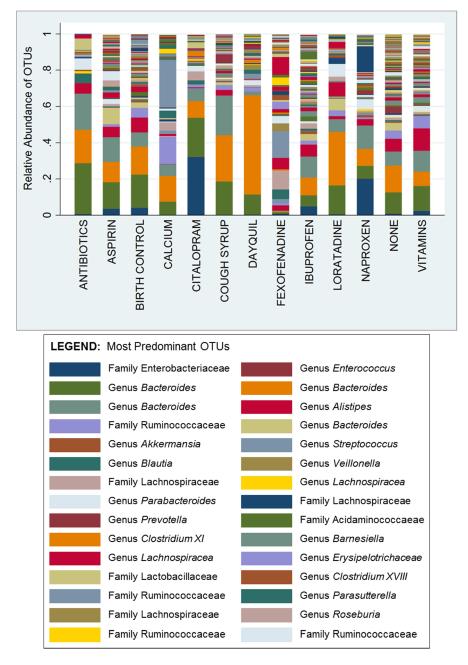
nihms-731256-f0001

Src: https://www.ncbi.nlm.nih.gov/pmc/articles/PMC4754147/

General Suggestions (no uBiome results)

Some of these items are contraindicated with a few uBiomes that I have reviewed. This likely is why person B reports no results while person A reports improvement. Example: Magnesium is usually very helpful — but there are a few cases where it encourages overgrowth of undesired  bacteria.

Probiotics

Most probiotics do not take up residency. They are “here today, gone tomorrow”. Their primary role in my model is producing natural antibiotics against other bacteria. For example:

Probiotics should be rotated: 2 weeks on a specific one, then several weeks off. As a general rule, you want about  6-12 B CFU taken three times a day (or 2-3 times the recommended dosage) — but work up slowly because you may get be a major herx! In general, do not take Lactobacillus with Bifidobacteria or with E.Coli etc. Keep to one family per cycle. You do not want them to kill off one another!

Why 3x per day? Because almost none of them are detected after 12-24 hrs. So to keep them — and the production of natural antibiotics — going, you need to keep taking them during the day. See this post for citations.

The following probiotics commonly seem to help people with CFS/Lyme/Fibro:

Some probiotics, however, may make your symptoms worse! And, unfortunately, most commercial probiotics contains some of these. At the moment Bifidobacterium animalis, Saccharomyces boulardii and Lactobacillus acidophilus are on my best to totally avoid list.

  • “. The findings show that the six species of Bifidobacterium differed in their ability to relieve constipation. B. longum, B. infantis and B. bifidum were the most effective in relieving constipation, B. adolescentis and B. breve were partially effective and B. animalis was not effective. Furthermore, edible Bifidobacterium treated constipation by increasing the abundance of Lactobacillus and decreasing the abundance of Alistipes, Odoribacter and Clostridium. .” [2017]

On my neutral list (no clear benefit) is Lactobacillus Plantarum.

Teas

Some teas can also be antibiotics (among other roles). There are two teas that seem to produce significant results quickly:

Again, rotate and, if practical, change brands too. Their antibiotic compounds are different from different sources.

Herbs and Spices

The best choice needs examination of your microbiome (i.e. uBiome results) and doing the work cited above.  Survey results found:

  1. Neem and Oregano with 80% improving
  2. Olive Leaf and Licorice with 56% improving
  3. Thyme with 50% improving
  4. Wormwood and Tulsi with 33% improving

Other things

If you do not know your microbiome, then see https://atomic-temporary-42474220.wpcomstaging.com/reader-surveys-of-probiotics-herbs-etc/  for suggestions. Your results will vary because your microbiome vary.

Thick blood is an issue also — but here things gets more complicated and not suitable for this recap.

Antibiotics can have a role — but getting prescriptions for the right ones can be a major challenge.

Metabolism Shifts

From volunteered data, we can identify some distinctive shifts, see Metabolism Explorer Summary

Bottom Line

Working with the microbiome and autoimmune is like working with fragments of the dead sea scrolls. For many bacteria we can identify it — what inhibits or encourages it is not known to modern medical science.  We have extremely thin slices of knowledge –Almonds enhances Bifidobacterium, Lactobacillus (B&L)  as do sesame seeds. What about sunflower seeds? Peanuts? Cashews? We find that Walnuts help the bacteria that inhibits B&L — so we cannot safely generalize to “all seeds/nuts are helpful”.

In many cases, we find that healthy diet or supplements demonstrated to work for normal people have the opposite effect on CFS and other altered microbiome conditions. This is made even worst because most of the studies were done on males and most people with CFS are females. We end up having to swim up-stream thru good and valid suggestions — that are just wrong for us.

My model is simple to understand and allows us to filter many suggestions and candidates. With the availability of uBiome testing (without needing a prescription!) we have entered the age of explicit treatment based on your unique microbiome. We do not know the role of many bacteria involved. We do not know what will inhibit or enhanced all of these bacteria. Frustrating little knowledge!

On the flip side, many readers have reported significant improvement, reduction of prescription medication, etc. so the model and suggestions have potential and thus hope of remission! Microbiome studies are exploding on PubMed, a lot of research is being done and we can often borrow their results.

This is an education post to facilitate discussing this approach with your medical professionals. It is not medical advice for the treatment of any medical condition. Always consult with your medical professional before doing any  changes of diet, supplements or activity. Some items cites may interfere with prescription medicines.

Reducing Clostridium Genus

A reader forwarded their uBiome results and it was high in Clostridium. Another high bacteria is clostridium asparagiforme reported by Ian Lapkin et al 2017 paper [Index to all posts on Study].

LATEST INFORMATION IS HERE

This page is no longer being updated.

The Clostridium genus is associated with Crohn’s Disease (some 300+ hits on PubMed) and thus having high levels have a risk of evolving into Crohn’s disease (typical or atypical) and likely a friendlier environment for C. difficile to occur.

Clostridium genus includes Clostridium difficile (Peptoclostridium difficile).. the later is inhibited by Plantain bananas, Bile salts, Lactobacillus casei, Lactobacillus rhamnosus,  Saccharomyces sp. boulardii Enterococcus.

DataPunk.Net Data

NUTRIENTS/ SUBSTRATES

  • D-Glucose

INHIBITED BY

  • Trametes versicolor
  • Resistant starch (type II)
  • Polymannuronic acid
  • Navy bean (Cooked)

ENHANCED BY

INHIBITED BY

PubMed Literature

  • “Results showed that co-culture with B. longum IPLA20022 and B. breve IPLA20006 in the presence of short-chain fructooligosaccharides, but not of Inulin, as carbon source significantly reduced the growth of the pathogen. With the sole exception of B. animalis Bb12, whose growth was enhanced,” [2016]
  • “The strain B. longum IPLA20022 showed the highest ability to counteract the cytotoxic effect of C. difficile acting directly against the toxin” [2016]
  • ” cinnamon, rosemary, and turmeric were active against selected Clostridium spp.” [2017]
  • “B. licheniformis improved the growth of the chickens challenged with [Clostridium perfringens] pathogens.” [2017]
  • “Among those, seven Paenibacillus polymyxa strains showed the highest antibotulinal activity and the largest antimicrobial spectrum against C. botulinum strains. ” [2002] – this is in Prescript Assist Probiotics
  • “Ocimum basilicum L. (basil), Rosmarinus officinalis L. (rosemary), Origanum majorana L. (marjoram), Mentha × piperita L. var. Piperita (peppermint), Thymus vulgaris L. (thyme) and Pimpinella anisum L. (anise) against C. perfringens strain…. Minimum inhibitory concentration values were 1.25mgmL(-1) for thyme, 5.0mgmL(-1) for basil and marjoram, and 10mgmL(-1) for rosemary, peppermint and anise.  ” [2016]
  • “The best antimicrobial activity against C. butyricum was found at Abies alba Mill.[European Silver fir oil], against C. intestinale was found at Abies alba Mill.Mill.[European Silver fir oil], against C. perfringens was found at Satureia montana[Winter Savory] and against C. ramosum was found at Abius alba and Carum carvi.[Caraway] ” [2014]
  • ” The most susceptible to chitosan were bacteria belonging to genera Bacteroides and Clostridium (91-97% growth inhibition).” [2006]
  • “Tannic acid, propyl gallate and methyl gallate, but not gallic acid, were found to be inhibitory to the growth of intestinal bacteria Bacteroides fragilis ATCC 25285, Clostridium clostridiiforme ATCC 25537, C. perfringens ATCC 13124, C. paraputrificum ATCC 25780,” [1998]
  • ” Moreover there was a significant decrease in the proportion of Bacteroides, Clostridium and Staphylococcus genera in the faeces of cocoa-fed animals” [2012]
  • “. Slow digestible carbohydrates (human milk glycan, inulin and fructooligosaccharide), insoluble complex carbohydrates and protein diets favor the growth of Bacteroides, Clostridium and Bifidobacterium” [2013]
  • “While this synbiotic yogurt can increase bifidobacterial numbers and decrease clostridial numbers (but not enterobacterial numbers) in some individuals, it cannot modulate these microbial groups in the majority of individuals.” [2012]

Bottom Line

Avoid

  • Bifidobacterium animalis

Take

  • Bifidobacterium longum and Bifidobacterium Breve
  • Bacillus licheniformis (it does produce histamines, see this post)
  • Lactobacillus casei
  • Lactobacillus rhamnosus probiotics
  • Prescript Assist
  • Streptococcus Probiotics
  • Chitosan supplements
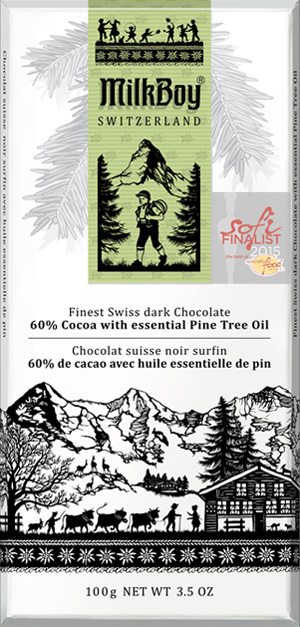
  • Have Chocolate! There is one chocolate that I just picked up which may be interesting to try: from MilkBoy in Switzerland
    swiss-chocolate

The herb/spice that seems to be the best candidate is Silver Fir — it impacts multiple species, it is not a common item. You may wish to try more common ones cited above first.

Silver Firsee this technical summary, This page cites options for taking it.

  • “The internal use of Fir Needle Essential Oil is restricted. It should not be used orally because it can be severely sedative in action and produces excess heat sensation in the body. Fatal allergic reaction to it may also be possible even with smallest doses.”
  • Italian Seller for Resin.

Yogurt: No evidence that it will help.

This is strictly an educational post. Always consult with a knowledgeable medical profession before any changes of supplements, diet or medicine.

Reducing Anaerostipes Genus

For updated information see Microbiome Prescription

Some CFS uBiome are high in this. In Ian Lipkin et al 2017 study, high Anaerostipes Caccae and Eubacterium Hallii was reported (on average) for the sample population.

Caution on this applying to all CFS patients. The sample may have been biased towards patients taking inulin as prescribed by MDs or via some probiotics.

High Anaerostipes have not been seen in most uBiome samples that I have reviewed from readers. I did an earlier post for a specific strain here.

This post describes what feeds or inhibits it.

For updated information see Microbiome Prescription

From DataPunk.net

NUTRIENTS/ SUBSTRATES

  • D-Glucose

INHIBITED BY

  • Flaxseed

ENHANCED BY

  • Walnuts
  • Saccharomyces boulardii

INHIBITED BY

From PubMed

  • Symptoms:
    • Anaerostipes were correlated with negative mood. ” [2016]
  • Food:
    • “Anaerostipes, were increased by whole black raspberries” [2017]
    • Fructose Diet may help [2017] – Glucose feeds it, Frucrose does not.
  • Probiotics:
    • “Probiotic (Lactobacillus paracasei DG ) intake induced an increase in Proteobacteria (P = 0.006) and in the Clostridiales genus Coprococcus (P = 0.009), whereas the Clostridiales genus Blautia (P = 0.036) was decreased; a trend of reduction was also observed for Anaerostipes (P = 0.05) and Clostridium (P = 0.06). ” [2014]
    • “Two strains, Bifidobacterium pseudocatenulatum LI09 and Bifidobacterium catenulatum LI10,… the depletion of the SCFA-producing bacteria Anaerostipes,” [2017]
    • “A. caccae L1-92 failed to grow on starch in pure culture, but in coculture with B. adolescentis L2-32 butyrate was formed,” [2006]
    • Reduced by E.Coli Nissle 1917 [2017]
  • Prebiotics: – in general, most are bad (do not decrease)
    • “long-chain arabinoxylans (LC-AX) and the well-established prebiotic inulin (IN) were shown to stimulate bacterial groups with known butyrate-producers (Roseburia intestinalis, Eubacterium rectale, Anaerostipes caccae) ” [2011]
    • “These findings suggest that L-sorbose and xylitol cause prebiotic stimulation of the growth and metabolic activity of Anaerostipes spp. in the human colon.” [2017]
    • “We observed increased relative abundances of Bifidobacterium and Anaerostipes spp. on inulin consumption” [2016]
    • ” 5 g Lactulose were required daily for 5 days in this study to exert the full beneficial prebiotic effect consisting of higher bacterial counts of ….Anaerostipes,” [2017]
  • Antibiotics:
    • “was subsequently found to be susceptible to metronidazole and ertapenem.” [2016]
    • “The group M6 (exposed to macrolides within 6 months) had a distinct microbiota composition evident even at the phylum level… and Anaerostipes were reduced in the group M6, whereas the genera Clostridium and Dorea were increased.” [2015]

Bottom Line

I recently talked to a uBiome reader with Anaerostipes overgrowth being 450% above normal.  It was revealed that the reader was regularly feeding this genus without knowing it (thus encouraging the overgrowth). How?

  • Chicory root!!! – the main source of inulin commercially!
  • “The highest content of Arabinoxylans is found in Rye, followed by  wheat, barley, oats, rice, sorghum,..” [2013]
  • Sorbose was included in some of their probiotics and supplements
  • Xylitol was used regularly for mouth wash

By conventional alternative and regular medicine they were doing the right thing for the general population, but it may have been a mismatch for themselves!

Avoid

  • Glucose foods (fructose [fruit sugar] appears to be fine)
  • Raspberries
  • Butyrate producing probiotics
  • Bifidobacterium adolescentis
  • inulin
  • xylitol
  • L-sorbose
  • arabinoxylans
  • Chicory root

Take

  • Streptococcus probiotics
  • Lactobacillus paracasei
  • Mutaflor (E.Coli Nissle 1917)
  • Flaxseed

NOTE: A reader forwarded me a contact to a custom probiotic supplier, I have inquired about the cost and availability of such formulations.

This is an educational post and not intended as medical advice. Always consult with a knowledgeable medical professional.